Introduction
You have a product idea. You need a prototype. But with so many options—3D printing, CNC machining, vacuum casting, stereolithography—how do you choose? Each method offers distinct advantages in speed, precision, material, and cost. Selecting the right one can mean the difference between a successful development cycle and wasted time and resources. At Yigu Technology, we help clients navigate these choices daily. This article covers the top rapid prototyping options, their strengths and limitations, and how to select the right one for your project.
What Is Rapid Prototyping?
Rapid prototyping is a group of techniques used to quickly create physical models from three-dimensional CAD data. It transforms abstract ideas into tangible objects that can be tested, evaluated, and refined.
Role in Product Development
| Role | Description |
|---|---|
| Conceptualization | Turns ideas into tangible models stakeholders can see and interact with |
| Feasibility testing | Tests functionality, ergonomics, and aesthetics |
| Iterative design | Enables multiple refinement cycles based on feedback |
| Communication | Clarifies design intent for clients, investors, and teams |
| Market testing | Tests market response before committing to production |
What Are the Top Rapid Prototyping Options?
3D Printing (Additive Manufacturing)
3D printing builds objects layer by layer from digital files. It is the most versatile and accessible rapid prototyping technology.
Material options:
- Plastics: PLA, ABS, PETG—general-purpose prototyping
- Resins: High-detail models via SLA
- Metals: Titanium, stainless steel, aluminum—functional prototypes and end-use parts
- Composites: Carbon fiber-reinforced polymers—enhanced strength and durability
Applications:
- Aerospace and automotive: Lightweight components, complex geometries
- Medical: Custom prosthetics, implants, surgical guides
- Consumer goods: Rapid iteration, small batch production
- Education: Teaching tools, student projects
Advantages:
- Unmatched design freedom
- Fast turnaround (hours to days)
- No tooling required
- Wide material selection
Limitations:
- Lower precision than CNC for tight tolerances
- Surface finish may require post-processing
- Slower for high volumes
CNC Machining
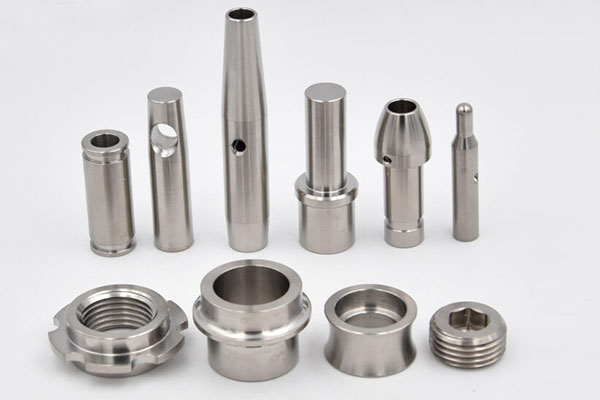
CNC machining uses computer-controlled machinery to precisely cut materials from solid blocks. It is a subtractive manufacturing process.
Typical materials:
- Metals: Aluminum, steel, brass, titanium
- Plastics: ABS, polycarbonate, Delrin
- Woods and composites: Depending on application
Applications:
- High-precision components
- Metal prototypes
- Functional testing with production-grade materials
- Tooling and fixtures
Advantages:
- High precision (±0.01–0.05 mm)
- Excellent surface finish
- Wide material range
- Production-grade material properties
Limitations:
- Higher cost for complex designs
- Material waste (30–70%)
- Longer lead times than 3D printing
- Geometry limited by tool access
Vacuum Casting
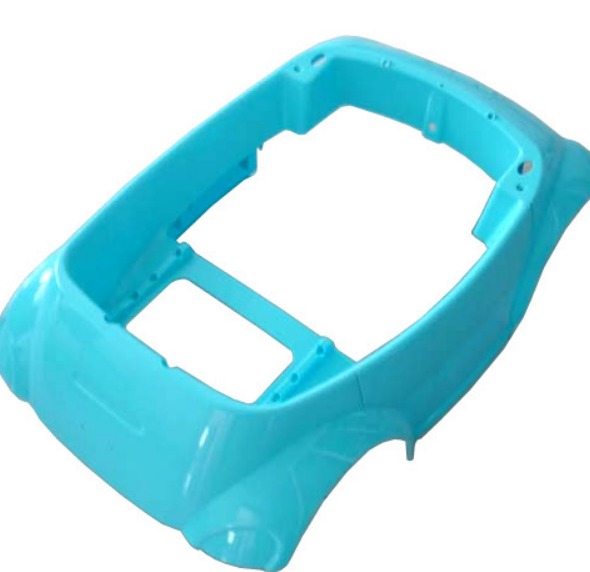
Vacuum casting uses a silicone mold (created from a master pattern) to cast multiple replicas in urethane resin.
Process:
- Master pattern created via 3D printing or CNC
- Silicone mold is poured around the master
- Urethane resin is cast into the mold under vacuum
- Parts are demolded and finished
Applications:
- Small to medium batches (10–50 parts)
- High-quality surface finish
- Production-like material properties
- Bridge production before hard tooling
Materials:
- Polyurethane resins (ABS-like, rubber-like, clear, high-temperature)
- Epoxy
- Silicone
Advantages:
- Excellent surface finish (injection-molded appearance)
- Good material properties
- Cost-effective for small batches
- Quick turnaround (5–10 days)
Limitations:
- Silicone mold life limited to 10–50 parts
- Not suitable for high volumes
- Requires master pattern
Stereolithography (SLA)
SLA is one of the earliest 3D printing technologies. It uses a UV laser to cure liquid photopolymer resin layer by layer.
Process:
- UV laser traces each layer's cross-section
- Resin solidifies where laser hits
- Build platform lowers, and process repeats
Applications:
- High-detail aesthetic models
- Jewelry and dental applications
- Medical devices and surgical guides
- Master patterns for vacuum casting
Advantages:
- Extremely high precision (±0.05–0.1 mm)
- Excellent surface finish (smooth, glass-like)
- Fine details and intricate geometries
- Smooth surfaces often require minimal post-processing
Limitations:
- Higher material cost
- Parts can be brittle
- Requires post-curing and support removal
- Limited to photopolymer resins
How Do These Options Compare?
| Method | Precision | Surface Finish | Material Range | Speed | Cost per Part (1–10 units) | Best For |
|---|---|---|---|---|---|---|
| 3D printing (FDM) | ±0.1–0.5 mm | Fair (layer lines) | Thermoplastics | Fast | $10–$100 | Concept models, early iterations |
| 3D printing (SLA/DLP) | ±0.05–0.1 mm | Excellent (smooth) | Photopolymer resins | Moderate | $50–$300 | High-detail, aesthetic prototypes |
| 3D printing (SLS) | ±0.1–0.3 mm | Fair–Good (grainy) | Nylon, composites | Moderate | $100–$500 | Functional parts, complex geometries |
| CNC machining | ±0.01–0.05 mm | Excellent | Metals, plastics | Slow–Moderate | $200–$2,000 | High-precision, production-grade materials |
| Vacuum casting | ±0.1–0.2 mm | Excellent | Polyurethane, epoxy | Moderate | $150–$400 (10+ units) | Small batches, production-like parts |
How Do You Choose the Right Option?
Criteria for Selection
| Criteria | Questions to Ask |
|---|---|
| Material properties | Does the part need strength, flexibility, heat resistance, or biocompatibility? |
| Precision requirements | What tolerances are required? Will the part assemble with others? |
| Surface finish | Does the prototype need a smooth, aesthetic finish? Or is function the priority? |
| Complexity | Does the design have internal channels, undercuts, or intricate details? |
| Volume | How many parts are needed? 1? 10? 100? |
| Timeline | When is the prototype needed? Days? Weeks? |
| Budget | What is the available budget for prototyping? |
Decision Matrix
| If You Need… | Recommended Method |
|---|---|
| Low-cost concept model | FDM 3D printing |
| High-detail aesthetic prototype | SLA or DLP 3D printing |
| Functional part with complex geometry | SLS 3D printing |
| High-precision metal part | CNC machining |
| Small batch of production-like parts | Vacuum casting |
| Production-grade material properties | CNC machining or SLS |
Example Scenarios
Scenario 1: A startup developing a new smartwatch needs to test ergonomics and aesthetics.
- Choice: SLA 3D printing
- Why: High detail, smooth surface finish, accurate fit testing
Scenario 2: An automotive engineer needs to test a metal bracket under load.
- Choice: CNC machining in aluminum
- Why: Production-grade material, high precision, structural testing
Scenario 3: A medical device company needs 20 prototypes for surgeon testing.
- Choice: Vacuum casting
- Why: Production-like material properties, small batch, good surface finish
Scenario 4: A product designer needs to iterate quickly on a new enclosure shape.
- Choice: FDM 3D printing
- Why: Low cost, fast turnaround, easy design changes
What Are the Industry Applications?
Aerospace and Automotive
- 3D printing (SLS, SLM): Lightweight components, complex geometries
- CNC machining: High-precision metal parts, structural components
- Applications: Engine parts, brackets, wind tunnel models
Medical
- SLA/DLP: Custom implants, surgical guides, dental models
- Vacuum casting: Small batches of medical device housings
- Applications: Patient-specific devices, surgical planning models
Consumer Goods
- FDM/SLA: Form factor testing, ergonomic studies
- Vacuum casting: Small batches for market testing
- Applications: Wearables, electronics enclosures, kitchen appliances
Industrial Equipment
- CNC machining: Metal prototypes, functional testing
- SLS: Durable plastic components
- Applications: Gear systems, housings, custom tooling
Yigu Technology's Perspective
As a custom manufacturer of plastic and metal parts, Yigu Technology offers multiple rapid prototyping options.
What we have learned:
- No single method fits all: The best approach depends on your specific requirements.
- Match method to stage: Use FDM for early concepts. Use SLA for detail. Use CNC for final validation.
- Consider the full cost: A cheaper prototype that does not meet your testing needs is false economy.
- Plan for iteration: Even with the right method, expect multiple cycles. Budget accordingly.
We help clients navigate these choices—recommending methods based on material, precision, volume, timeline, and budget.
Conclusion
Rapid prototyping offers multiple paths from digital design to physical part. Each method has distinct advantages:
- 3D printing (FDM): Low cost, fast—ideal for concept models
- 3D printing (SLA/DLP): High detail, smooth finish—ideal for aesthetics and precision
- 3D printing (SLS): Functional parts, complex geometries—ideal for testing
- CNC machining: High precision, production-grade materials—ideal for metal parts and final validation
- Vacuum casting: Small batches, production-like properties—ideal for bridge production
Selecting the right option requires balancing material properties, precision, surface finish, complexity, volume, timeline, and budget. By understanding each method's strengths and limitations, you can choose the approach that accelerates your development, reduces risk, and brings better products to market faster.
Frequently Asked Questions
What is the fastest rapid prototyping method?
FDM 3D printing is typically fastest for simple parts (hours). SLA and SLS take longer (hours to days). CNC machining is slowest (days). The fastest method depends on part complexity and required precision.
Which method offers the highest precision?
CNC machining offers the highest precision (±0.01–0.05 mm). SLA and DLP offer very high precision for plastic parts (±0.05–0.1 mm). SLS and FDM are less precise.
What is the most cost-effective method for a single prototype?
FDM 3D printing is most cost-effective for single prototypes. A small FDM part can cost $10–$50. SLA and CNC are more expensive but offer better quality.
Can rapid prototyping produce production-grade parts?
Yes. SLS produces durable nylon parts. CNC machining produces metal and plastic parts with production-grade properties. SLM produces high-strength metal parts. However, for high-volume production (10,000+ units), traditional methods like injection molding are more cost-effective.
How do I choose between 3D printing and CNC machining?
Choose 3D printing for complex geometries, low volumes, and when speed is critical. Choose CNC machining for high precision, production-grade materials, and when tight tolerances are required. Many projects use both—3D printing for early iterations, CNC for final validation.
Contact Yigu Technology for Custom Manufacturing
At Yigu Technology, we offer a full range of rapid prototyping options: FDM, SLA, SLS, CNC machining, and vacuum casting. We help clients select the right method based on their specific requirements.
If you are developing a new product and need guidance on choosing the right prototyping option, contact our engineering team. Let us help you balance cost, speed, and quality to bring your ideas to life.