Introduction
A turbine blade with complex curved surfaces. A medical implant requiring micron-level accuracy. An electric vehicle component that must be lightweight yet strong. These parts share one thing: they are nearly impossible to produce efficiently on a standard 3-axis machine. CNC 5-axis machining centers solve this problem by adding two rotational axes to the traditional three linear movements. This capability transforms manufacturing—enabling complex geometries, tighter tolerances, and faster production. But with table-tilting and head-tilting configurations, varying spindle speeds, and different control systems, choosing the right machine requires careful consideration. This guide explores 5-axis technology, its advantages, applications, and key selection criteria to help you match the right machine to your production needs.
What Is 5-Axis Machining?
Moving Beyond Three Axes
Traditional 3-axis machining moves the cutting tool along three linear axes:
- X-axis: Horizontal movement (left-right)
- Y-axis: Lateral movement (front-back)
- Z-axis: Vertical movement (up-down)
The workpiece remains fixed in one orientation. This works for parts with features accessible from a single direction. But for complex geometries—undercuts, angled surfaces, deep cavities—3-axis machines require multiple setups. Each repositioning adds time and introduces alignment errors.
5-axis machining adds two rotational axes to the three linear movements:
| Axis | Rotation | Description |
|---|---|---|
| A-axis | Around X | Tilts the workpiece or tool forward/backward |
| B-axis | Around Y | Tilts left/right |
| C-axis | Around Z | Rotates horizontally |
A 5-axis machine can move the cutting tool and the workpiece simultaneously along all five axes, maintaining optimal cutting angles throughout the operation.
How It Works
The core of 5-axis machining lies in its ability to orient the cutting tool relative to the workpiece. Advanced software translates CAD models into toolpaths that guide the machine through complex movements. The machine executes these instructions with precision, often completing in one setup what would require three or four setups on a 3-axis machine.
What Are the Key Features of 5-Axis Centers?
Complex Part Production
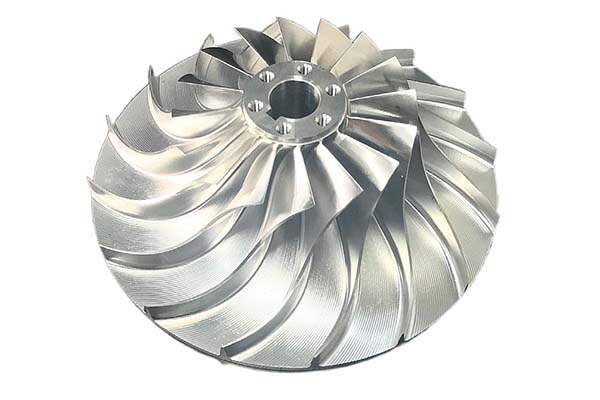
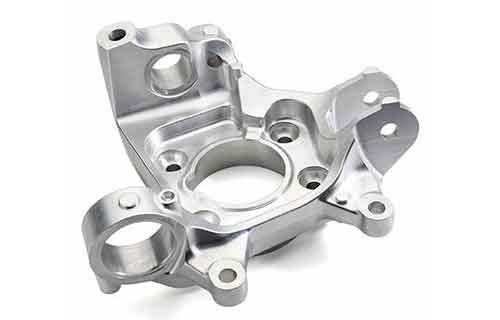
5-axis machines excel at parts with intricate shapes: impellers, turbine blades, medical implants, and mold cavities. The ability to approach the workpiece from multiple angles enables features that are impossible with 3-axis machining.
Reduced Setup Time
A part that requires four separate setups on a 3-axis machine often completes in one setup on a 5-axis machine. This eliminates:
- Workpiece repositioning time
- Alignment errors between setups
- Multiple tool change sequences
Result: Setup time reductions of 50–70% for complex parts.
Improved Surface Finish
Because the tool maintains an optimal angle to the surface, 5-axis machining produces smoother finishes. The step-over distance between tool paths can be much smaller, and the tool never cuts with its “heel” dragging against the material. Many parts come off the machine with finishes that previously required secondary polishing.
High Accuracy
5-axis machines achieve tolerances that 3-axis machines cannot match:
| Application | Typical Tolerance |
|---|---|
| General 3-axis | ±0.02–0.05 mm |
| High-precision 3-axis | ±0.01 mm |
| 5-axis machining | ±0.005–0.01 mm |
The elimination of multiple setups removes cumulative alignment errors, making tighter tolerances achievable.
What Are the Advantages of 5-Axis Machining?
Precision for Complex Parts
The ability to produce parts with complex geometries and tight tolerances is the primary advantage. In aerospace, turbine blades require airfoil shapes held to ±0.005 mm. In medical, hip implants need bearing surfaces with Ra 0.4 μm finish. 5-axis machining delivers these requirements consistently.
Time and Cost Savings
While the initial investment is higher, the return on investment comes through:
- Reduced cycle time: 30–50% faster for complex parts
- Lower labor costs: Fewer setups, less operator intervention
- Reduced scrap: Fewer errors from repositioning
- Extended tool life: Better cutting angles distribute wear
Example: A part requiring four setups on a 3-axis machine (2 hours each) might complete in one setup on a 5-axis machine (3 hours total). Time savings: 5 hours per part. Over 500 parts, that is 2,500 hours of machine time saved.
Design Freedom
5-axis machining liberates designers. Features that previously required creative workarounds—undercuts, angled holes, complex curves—become standard. This enables:
- Lightweighting (removing material where not needed)
- Improved functionality (optimized fluid flow, better stress distribution)
- Part consolidation (multiple components combined into one)
What Types of 5-Axis Machining Centers Exist?
Table-Tilting Machines
In this configuration, the workpiece table tilts and rotates. The spindle head remains stationary in orientation.
How it works:
- Table moves along X, Y, Z
- Table tilts (A-axis) and rotates (C-axis)
Advantages:
- Generally more affordable
- Excellent for smaller parts
- Good chip evacuation (chips fall away)
Limitations:
- Workpiece size limited by table capacity
- Heavy parts may strain tilting mechanisms
Best for: Smaller parts, medical implants, aerospace components under 300 mm.
Head-Tilting Machines
In this configuration, the spindle head tilts and rotates. The table moves linearly.
How it works:
- Spindle head tilts (A-axis) and rotates (B-axis)
- Table moves along X, Y, Z
Advantages:
- Handles larger, heavier workpieces
- More rigid for heavy cutting
- Table remains stable—no workpiece movement during tilting
Limitations:
- Higher cost
- More complex kinematics
Best for: Large parts, heavy cutting, automotive components, large aerospace structures.
Comparison
| Feature | Table-Tilting | Head-Tilting |
|---|---|---|
| Workpiece size | Small to medium | Medium to large |
| Weight capacity | Lower | Higher |
| Cost | Lower | Higher |
| Rigidity | Good | Excellent |
| Chip evacuation | Excellent | Moderate |
| Typical applications | Medical, small aerospace | Automotive, large aerospace |
What Materials Can 5-Axis Machines Handle?
5-axis machining centers process a wide range of materials:
| Material Category | Examples | Typical Applications |
|---|---|---|
| Metals | Aluminum, steel, stainless, titanium, Inconel | Aerospace, automotive, medical |
| Plastics | PEEK, acrylic, polycarbonate, UHMWPE | Medical, electronics, prototypes |
| Composites | Carbon fiber, fiberglass | Aerospace, automotive, sports equipment |
| Ceramics | Alumina, zirconia | Medical implants, wear parts |
Material considerations:
- Harder materials (titanium, Inconel) require rigid machines with high torque spindles
- Composites require careful toolpath design to prevent delamination
- Plastics require heat management to prevent melting
What Technology and Capabilities Matter?
Spindle Specifications
| Application | Recommended Spindle Speed |
|---|---|
| Aluminum, plastics | 15,000–30,000 RPM |
| Steel, stainless | 8,000–15,000 RPM |
| Titanium, Inconel | 6,000–10,000 RPM (high torque) |
High-speed spindles (20,000+ RPM) enable efficient machining of aluminum and plastics. High-torque spindles (50+ Nm) handle tough materials like titanium.
Control Systems
The control system is the machine’s brain. Leading brands include:
- Fanuc: Reliable, widely supported
- Siemens: Advanced 5-axis capabilities
- Heidenhain: Precision positioning, excellent for complex contours
Key features to look for:
- High-speed processing (for smooth 5-axis motion)
- Collision avoidance software
- Thermal compensation
- Easy programming interface
Tooling and Attachments
5-axis machines accommodate a wide range of tooling:
- Cutting tools: End mills, drills, taps, specialty cutters
- Tool holders: Shrink-fit, hydraulic, collet chucks
- Workholding: Vises, chucks, vacuum fixtures, custom soft jaws
For complex parts, custom fixturing may be required to hold the workpiece during multiple orientations.
Quality Control Integration
Modern 5-axis centers often integrate quality control:
In-process probing:
Probes measure critical features during machining. If a dimension drifts, the control adjusts tool offsets automatically.
Post-process verification:
Some machines include integrated CMM (Coordinate Measuring Machine) capabilities, verifying parts without moving to a separate inspection station.
Result: Real-time quality control reduces scrap and ensures consistency.
Where Are 5-Axis Machines Used?
Aerospace and Defense
Parts: Turbine blades, structural components, UAV frames, radar housings
Why 5-axis: Complex airfoil shapes, tight tolerances (±0.005 mm), single-setup machining of multiple surfaces
Example: A leading aerospace manufacturer used 5-axis machining to produce turbine blades, reducing machining time by 40% while improving surface finish.
Automotive Manufacturing
Parts: Engine components, transmission parts, suspension systems, battery trays (EV)
Why 5-axis: Lightweighting (removing material where not needed), complex cooling channels, single-setup production
Trend: EV manufacturers use 5-axis machines to produce lightweight structural components that improve vehicle range.
Medical Device Production
Parts: Custom implants, orthopedic devices, surgical instruments
Why 5-axis: Patient-specific geometries, tight tolerances, biocompatible materials (titanium, PEEK)
Example: A medical device manufacturer used 5-axis machining for custom orthopedic implants, ensuring each implant met strict regulatory standards and improved patient outcomes.
High-End Consumer Electronics
Parts: Smartphone enclosures, laptop frames, watch cases
Why 5-axis: Complex curves, thin walls, high-quality surface finish
What Should You Consider When Choosing?
Production Needs
Part complexity:
- Simple parts with no undercuts → 3-axis may suffice
- Complex geometries, angled features → 5-axis essential
Part size and weight:
- Small parts (<300 mm) → Table-tilting
- Large parts (>300 mm) or heavy workpieces → Head-tilting
Volume:
- Prototypes and small batches → Flexibility priority
- High-volume production → Speed and automation priority
Material Compatibility
Ensure the machine can handle your materials:
- Titanium, Inconel: High torque spindle, rigid construction
- Aluminum, plastics: High-speed spindle (15,000+ RPM)
- Composites: Effective dust collection, proper toolpath support
Budget
| Machine Type | Typical Cost Range |
|---|---|
| 3-axis mill | $50,000–$100,000 |
| 4-axis mill | $75,000–$150,000 |
| Table-tilting 5-axis | $150,000–$300,000 |
| Head-tilting 5-axis | $250,000–$500,000+ |
Cost justification: Calculate ROI based on setup time reduction, cycle time improvement, and increased capability.
Support and Training
5-axis machining requires specialized knowledge. Ensure the supplier provides:
- Comprehensive training for programmers and operators
- Technical support for troubleshooting
- Maintenance training and service contracts
Future Scalability
Choose a machine that can grow with your business:
- Spindle options for different materials
- Automation-ready (pallet changers, robotic loading)
- Software upgrades for advanced capabilities
A Real-World Comparison
| Requirement | Table-Tilting 5-Axis | Head-Tilting 5-Axis |
|---|---|---|
| Small medical implants | Excellent | Overkill |
| Large aerospace structures | Limited | Excellent |
| Heavy cutting (steel) | Good | Excellent |
| High-speed aluminum | Excellent | Good |
| Budget-conscious | Better | Higher cost |
| Floor space | Smaller footprint | Larger footprint |
Conclusion
CNC 5-axis machining centers deliver precision and versatility that 3-axis machines cannot match. They reduce setups, improve accuracy, enable complex geometries, and expand material capabilities. Table-tilting machines offer cost-effective solutions for smaller parts. Head-tilting machines handle large workpieces and heavy cutting. The right choice depends on your parts—size, complexity, material—and production volume. While the initial investment is significant, the return comes through faster cycles, reduced labor, and the ability to take on work that would be impossible otherwise. For manufacturers producing complex, high-precision components, 5-axis machining is not just an option—it is a competitive necessity.
FAQs
What is the primary difference between a 3-axis and a 5-axis CNC machine?
A 3-axis machine moves the cutting tool along three linear axes (X, Y, Z). A 5-axis machine adds two rotational axes (typically A and B), allowing the tool to approach the workpiece from multiple angles. This enables complex geometries, undercuts, and single-setup machining of multiple surfaces.
Can 5-axis machines handle all types of materials?
Yes. 5-axis machines process metals (aluminum, steel, titanium, Inconel), plastics (PEEK, acrylic, polycarbonate), composites (carbon fiber, fiberglass), and ceramics. The key is matching spindle specifications and tooling to the material. Hard materials require high-torque spindles; soft materials benefit from high-speed spindles.
How do I know if my parts are suitable for 5-axis machining?
If your parts require intricate geometries, tight tolerances (±0.01 mm or tighter), complex angles, undercuts, or would otherwise require multiple setups on a 3-axis machine, 5-axis machining is likely the right choice. Parts with features on multiple faces or curved surfaces particularly benefit.
What is the difference between table-tilting and head-tilting 5-axis machines?
Table-tilting machines tilt and rotate the workpiece table. They are generally more affordable and suitable for smaller parts. Head-tilting machines tilt and rotate the spindle head, handling larger, heavier workpieces with greater rigidity. Choose based on your part size, weight, and required cutting forces.
How much does a 5-axis machining center cost?
Costs range from $150,000 for entry-level table-tilting machines to $500,000+ for high-end head-tilting machines with advanced controls and automation. The investment is justified by reduced cycle times (30–50% faster for complex parts), lower labor costs, and the ability to machine parts that would be impossible or impractical on 3-axis equipment.
Contact Yigu Technology for Custom Manufacturing
At Yigu Technology, we operate a fleet of 5-axis machining centers—both table-tilting and head-tilting configurations—to handle parts ranging from small medical implants to large aerospace structures. Our engineering team selects the right machine and tooling strategy for your material and geometry. We combine 5-axis capability with rigorous quality control—CMM inspection, surface finish verification, and in-process probing—to deliver components that meet tight tolerances. Whether you need complex prototypes or high-volume production, we have the equipment and expertise to deliver. Contact us to discuss your 5-axis machining project.