Introduction
Glass-filled nylon sounds like exactly what you need. Stronger than regular nylon. Stiffer. More stable. Perfect for parts that actually have to work—gears, brackets, housings.
But then you try printing it. The part warps halfway through. The surface feels like sandpaper. Your brass nozzle wears out after one print. And that expensive filament? Wasted.
I've been there. At Yigu technology, we've printed enough glass-filled nylon to know what works and what doesn't. This material delivers amazing results when you handle it right. But "right" matters more than with any other filament.
This guide walks through everything—material properties, printer setup, applications, and troubleshooting. By the end, you'll know how to get strong, stable parts from glass-filled nylon every time.
What Makes Glass-Filled Nylon Special?
The Basic Idea: Nylon Plus Glass
Glass-filled nylon is exactly what it sounds like—nylon plastic with tiny glass fibers mixed in. The fibers, typically 10-40% by weight, transform the material's properties.
Think of it like concrete. Concrete alone is okay. Add steel rebar, and suddenly it's structural. The glass fibers act like rebar, reinforcing the nylon matrix.
The result combines the best of both:
- Nylon's toughness and flexibility
- Glass's stiffness and dimensional stability
Strength and Stiffness Numbers
The numbers tell the story. Compare 30% glass-filled nylon to pure nylon:
| Property | Pure Nylon | 30% Glass-Filled | Improvement |
|---|---|---|---|
| Tensile strength | 40-50 MPa | 80-120 MPa | 2-3x stronger |
| Stiffness (modulus) | 1-2 GPa | 4-8 GPa | 4x stiffer |
| Shrinkage during printing | 2-3% | 0.5-1% | Much more stable |
| Heat deflection | ~80°C | 120-150°C | Handles higher temps |
For practical parts, this means:
- Thinner walls for the same strength
- Less warping during and after printing
- Higher temperature capability—safe near engines or machinery
- Better dimensional accuracy—parts fit where they're supposed to
The Trade-Off: Impact Resistance
Nothing's free. Glass fibers make nylon stiffer but also more brittle. Pure nylon bends before breaking. Glass-filled nylon snaps under sudden impact.
For parts that see shock loads, this matters. A gear that meshes smoothly? Fine. A part that might get dropped? Maybe not.
The ideal applications use glass-filled nylon where stiffness matters more than toughness.
How Does Glass-Filled Nylon Compare to Other Materials?
| Material | Strength | Stiffness | Impact Resistance | Heat Resistance | Cost |
|---|---|---|---|---|---|
| Pure nylon | Medium | Low | Excellent | Medium | Low |
| Glass-filled nylon | High | High | Medium | High | Medium |
| Carbon-filled nylon | Very High | Very High | Medium | High | High |
| ABS | Medium | Medium | Medium | Medium | Low |
| PETG | Medium | Medium | Good | Medium | Low |
| PLA | Low | Medium | Poor | Low | Very Low |
Glass-filled nylon sits in a sweet spot—much better than standard plastics, much cheaper than carbon fiber composites.
What Challenges Come with Printing Glass-Filled Nylon?
The Abrasion Problem
Glass fibers are sharp. Really sharp. They grind through standard brass nozzles like sandpaper through butter.
A single spool of glass-filled nylon can destroy a brass nozzle. The hole wears oval. Extrusion becomes inconsistent. Prints fail.
The fix: Hardened steel nozzles. They cost more but last 10-20 times longer with abrasive materials. For glass-filled nylon, they're not optional.
Moisture Sensitivity
Nylon loves water. It absorbs moisture from the air—up to several percent of its weight. Wet filament prints terribly:
- Popping and sizzling sounds
- Steam bubbles in the extrusion
- Rough, porous surfaces
- Weak layer adhesion
The fix: Dry your filament. Store it in a dry box. Print from a sealed container. If it's been sitting out, dry it at 80-100°C for 4-6 hours before use.
Warping Tendency
Glass-filled nylon warps less than pure nylon. But "less" isn't "none." Large, flat parts can still lift from the bed.
The fix:
- Heated bed at 80-90°C
- Enclosure to maintain temperature
- Good bed adhesion (PEI sheets work well)
- Brim or raft for large parts
High Temperatures
You need heat. Glass-filled nylon prints at 240-260°C—hotter than most common filaments. Your printer must handle these temperatures consistently.
The fix: Verify your hotend can maintain these temps. All-metal hotends work best. PTFE-lined ones may degrade.
How Do You Set Up Your Printer for Glass-Filled Nylon?
Hardware Requirements
| Component | Requirement | Why |
|---|---|---|
| Nozzle | Hardened steel, 0.4-0.6 mm | Glass fibers destroy brass |
| Hotend | All-metal recommended | High temps needed |
| Bed | Heated to 80-90°C | Prevents warping |
| Enclosure | Highly recommended | Stable temperature |
| Extruder | Direct drive preferred | Better control with stiff filament |
Print Settings
Start with these parameters:
| Setting | Value | Notes |
|---|---|---|
| Nozzle temperature | 240-260°C | Higher for more flow, better bonding |
| Bed temperature | 80-90°C | Use adhesive if needed |
| Print speed | 30-60 mm/s | Slower improves layer adhesion |
| Layer height | 0.1-0.2 mm | Thinner for strength, thicker for speed |
| Infill | 80-100% for structural parts | Lower for non-critical |
| Infill pattern | Rectilinear, aligned with stress | Maximizes fiber orientation |
| Cooling fan | Low or off | Gradual cooling prevents warping |
Orientation Matters
Glass-filled nylon prints strongest along the direction of fiber alignment. During extrusion, fibers tend to orient along the print path.
This means:
- Print parts with long axes horizontal when possible
- Align critical load paths with print direction
- Consider layer orientation for strength needs
For a gear, printing it standing up (layers perpendicular to rotation) puts layer lines where teeth engage—weak. Printing it flat (layers parallel to rotation) aligns fibers with tooth loads—strong.
What About SLS Printing of Glass-Filled Nylon?
Selective Laser Sintering (SLS) offers another path to glass-filled nylon parts. Instead of filament, it uses powder.
Advantages of SLS
- No supports needed—powder supports the part
- Complex geometries possible
- Consistent properties in all directions
- Better surface finish than FDM
SLS-Specific Parameters
| Parameter | Typical Range | Notes |
|---|---|---|
| Particle size | 50-150 μm | Affects detail and finish |
| Laser power | 150-200 W | Higher for better fusion |
| Scan speed | 1000-2000 mm/s | Balances speed and quality |
| Layer thickness | 0.1-0.15 mm | Typical for most parts |
| Powder reuse | Mix 50% new with 50% used | Maintains quality |
Powder Handling
Glass-filled nylon powder needs care:
- Keep it dry—moisture ruins sintering
- Store in sealed containers
- Reuse powder carefully—overused powder degrades
- Filter to remove agglomerates
What Are the Best Applications for Glass-Filled Nylon?
Industrial Parts
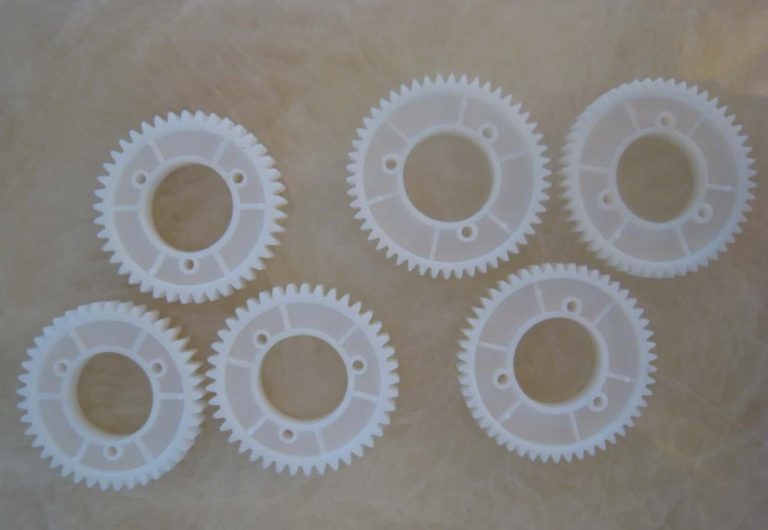
Gears benefit from glass-filled nylon's stiffness and wear resistance. They run quieter than metal, last longer than pure plastic.
Bushings and bearings use the material's low friction and dimensional stability. Properly designed, they run without lubrication in many applications.
Tooling fixtures need stiffness to hold parts accurately. Glass-filled nylon delivers without the weight of metal.
Real example: A factory needed custom assembly fixtures. Machining aluminum took weeks and cost thousands. 3D-printed glass-filled nylon fixtures worked in days for hundreds. They held tolerances for years.
Automotive Components
Under-hood parts face heat. Glass-filled nylon handles 120-150°C—safe near engines.
Sensor housings need dimensional stability to seal against moisture. Glass-filled nylon maintains shape where other plastics creep.
Brackets carry loads while saving weight. A glass-filled nylon bracket might weigh 50% less than aluminum while handling similar loads in non-critical applications.
Electronics Enclosures
Industrial electronics need protection. Glass-filled nylon enclosures resist:
- Moisture
- Chemicals
- Impact
- Temperature swings
They also shield EMI better than pure plastics when specially formulated.
Robotics Parts
Robot arms need stiffness to position accurately. Glass-filled nylon arm links provide it without the mass of metal. Faster movement, lower energy, same precision.
Grippers need strength at the fingers and compliance where they touch. Multi-material printing can combine glass-filled nylon for structure with flexible materials for grip.
Aerospace Applications
Every gram counts in flight. Glass-filled nylon brackets and interior parts save weight while meeting flame resistance requirements.
Small satellites use printed glass-filled nylon components where strength-to-weight ratio matters more than ultimate material properties.
How Do You Finish Glass-Filled Nylon Parts?
Surface Finish Challenges
Glass-filled nylon prints rough. The glass fibers expose at the surface, creating a textured, sometimes prickly finish.
For many industrial applications, this is fine. For consumer products, it's not.
Sanding
Sanding smooths the surface:
- Start with 200-400 grit to knock down high spots
- Progress to 600-800 grit for smoother finish
- Finish with 1000+ grit if needed
Wear a mask—glass dust is nasty stuff.
Sealing
After sanding, seal the surface:
- Epoxy coatings fill remaining texture and protect
- Spray paint with primer fills and colors
- Clear coats seal exposed fibers
For food contact or medical applications, ensure coatings are appropriate.
Vapor Smoothing
Some nylons respond to vapor smoothing. Glass-filled versions less so—the fibers remain exposed. But chemical smoothing can improve surface quality.
Tumble Polishing
For SLS parts, tumble polishing with ceramic media smooths surfaces without manual work. Multiple parts process together, reducing labor.
What Problems Will You Encounter?
Warping
Symptoms: Corners lifting, part detaching from bed
Causes: Uneven cooling, poor adhesion, temperature gradients
Fixes:
- Enclose the printer
- Increase bed temperature
- Use brim or raft
- Apply proper bed adhesive
- Slow first layer speed
Poor Layer Adhesion
Symptoms: Parts split along layer lines
Causes: Low temperature, fast printing, moisture
Fixes:
- Increase nozzle temperature
- Slow down printing
- Dry filament thoroughly
- Increase infill overlap
Stringing and Oozing
Symptoms: Hairy parts, thin strings between features
Causes: High temperature, retraction settings
Fixes:
- Optimize retraction distance and speed
- Reduce temperature slightly
- Enable wiping or coasting features
Nozzle Wear
Symptoms: Inconsistent extrusion, underextrusion, ruined prints
Causes: Glass fibers eroding brass nozzle
Fixes:
- Switch to hardened steel nozzle
- Check nozzle regularly for wear
- Replace at first sign of trouble
Rough Surface
Symptoms: Textured, abrasive finish
Causes: Exposed glass fibers, normal for material
Fixes:
- Post-process with sanding and coating
- Accept as functional surface
- Try different fiber percentage
How Do You Choose the Right Glass-Filled Nylon?
Fiber Percentage
| Percentage | Properties | Best For |
|---|---|---|
| 10-20% | Moderate stiffness, good toughness | General parts, some impact |
| 30% | High stiffness, balanced properties | Structural parts, gears, brackets |
| 40%+ | Maximum stiffness, brittle | Ultra-stiff, low-impact applications |
Higher fiber content means:
- More stiffness
- More dimensional stability
- Lower impact resistance
- More nozzle wear
- Rougher surface
Formulations
Different brands vary. Look for:
- Consistent fiber distribution—quality manufacturers ensure even mixing
- Good bonding between fibers and nylon
- Clean burning—some formulations smoke less
- Color options—natural, black, custom
Specialized Versions
- UV-stabilized for outdoor use
- Heat-stabilized for continuous high temperatures
- Flame-retardant for electronics enclosures
- FDA-compliant for food contact
Yigu Technology's Perspective
At Yigu technology, we print glass-filled nylon daily. It's one of our most requested materials for clients who need parts that actually work.
What we've learned:
- Hardware matters most. A printer that works for PLA will fail with glass-filled nylon. Invest in the right setup.
- Moisture is the enemy. We dry filament before every print, even from sealed packages. It makes that much difference.
- Orientation isn't optional. Designing for fiber alignment doubles strength in critical directions.
- Post-processing completes the part. Sanding and coating transform functional prints into finished products.
For our clients, glass-filled nylon fills the gap between cheap plastics and expensive metals. A bracket that costs $5 to print replaces a machined part costing $200. It carries the load. It fits the space. It lasts.
We help clients navigate the trade-offs. Need maximum stiffness? Go 40% fiber. Need some impact resistance? 30% balances well. Need smooth surface? We'll build in post-processing from the start.
Custom manufacturing means matching material to application. Glass-filled nylon is one of our most versatile tools.
Conclusion
Glass-filled nylon delivers on its promises—strength, stiffness, stability—when you handle it right.
The material transforms nylon with glass fibers, creating composites that:
- Withstand higher loads
- Resist heat better
- Hold dimensions tighter
- Last longer in use
But printing it demands more:
- Hardened steel nozzles
- Controlled temperatures
- Dry filament
- Careful orientation
- Post-processing for finish
The effort pays off. Glass-filled nylon parts outperform standard plastics and often replace metal at fraction the cost and weight.
For industrial applications, automotive components, robotics, and anywhere parts need to actually work, glass-filled nylon belongs in your toolkit.
FAQ
Why is my glass-filled nylon print warping?
Warping usually comes from uneven cooling or poor bed adhesion. Use a heated bed at 80-90°C, an enclosure to maintain temperature, and a strong bed adhesive like PEI sheets or glue stick. Add a brim for large parts. Ensure your enclosure keeps temperatures stable—drafts cause warping.
How can I improve the surface finish of glass-filled nylon prints?
Start with sanding—200-400 grit to remove texture, then finer grits to smooth. Follow with primer and paint to seal exposed fibers. For SLS parts, tumble polishing works well. Some users apply thin epoxy coatings for glass-smooth finishes.
Is glass-filled nylon suitable for outdoor use?
Yes, with caveats. It resists moisture better than pure nylon and handles temperature swings well. However, UV exposure degrades most formulations over time. For long-term outdoor use, choose UV-stabilized versions or apply UV-resistant coatings.
What nozzle should I use for glass-filled nylon?
Hardened steel, 0.4-0.6 mm diameter. Brass nozzles wear out in one spool—maybe less. Hardened steel lasts 10-20 times longer. Check regularly for wear; replace at first sign of extrusion problems.
Can I print glass-filled nylon on a stock Ender 3?
Possibly, with upgrades. You'll need a hardened steel nozzle and likely an all-metal hotend to reach 250-260°C safely. An enclosure helps greatly with warping. The stock printer can work, but expect to modify it.
How strong are glass-filled nylon parts compared to aluminum?
Stiffness is lower—aluminum is about 70 GPa modulus versus 4-8 GPa for glass-filled nylon. But strength-to-weight ratio can be competitive. For non-critical loads, glass-filled nylon often replaces aluminum successfully at half the weight and much lower cost.
Does glass-filled nylon absorb moisture?
Yes, but slower and less than pure nylon. It still benefits from drying before printing. In use, moisture absorption is minimal enough for most applications. For precise parts in humid environments, account for slight dimensional changes.
Contact Yigu Technology for Custom Manufacturing
Ready to use glass-filled nylon for your next project? Yigu technology specializes in custom manufacturing with advanced materials. We've printed thousands of parts in glass-filled nylon and know how to get consistent, reliable results.
We can help with:
- Design for additive manufacturing—optimizing your parts for strength and printability
- Material selection—choosing the right fiber percentage and formulation
- Printing—on industrial equipment with proper parameters
- Post-processing—finishing parts to your specifications
- Testing—validating that parts meet requirements
Contact us to discuss your project. Tell us what you're making and what it needs to do. We'll recommend the best approach and deliver parts that perform.