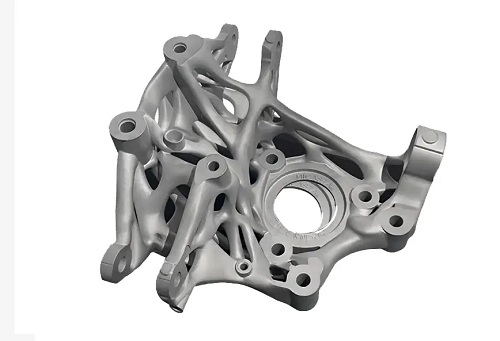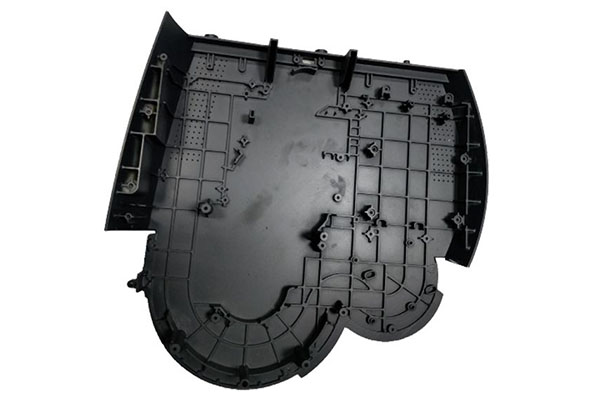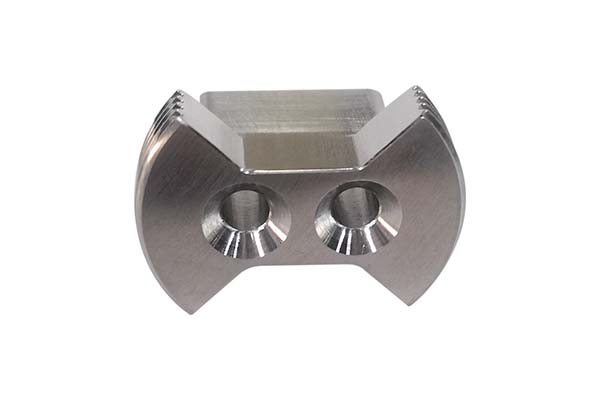
Metal 3D printing is changing how we make things—from jet engine parts to medical implants. This guide explores the technologies, advantages, and real-world applications that are transforming manufacturing as we know it.
Introduction
When most people think of 3D printing, they imagine plastic toys or prototypes. But metal printing takes additive manufacturing to an entirely different level. Also called metal 3D printing or additive manufacturing, this technology builds strong, durable metal parts layer by layer—opening possibilities that traditional methods can't match.
At Yigu Technology, we've watched metal printing evolve from a lab curiosity to a production tool that's reshaping entire industries. Aerospace companies now fly with printed parts in their engines. Surgeons implant custom-printed devices tailored to individual patients. Car manufacturers prototype and produce components in days instead of months.
This guide walks you through everything you need to know about metal printing. You'll learn how it works, what technologies exist, where it's being used, and how it compares to traditional manufacturing. By the end, you'll understand why metal printing isn't just another manufacturing trend—it's a fundamental shift in how we make metal parts.
What Exactly Is Metal Printing?
Let's start with the basics and build from there.
The Core Concept
Metal printing is a form of additive manufacturing that creates metal parts by building them up layer by layer. Instead of starting with a solid block and cutting away material (like machining), or pouring molten metal into a mold (like casting), metal printing adds material only where it's needed.
The process starts with a digital 3D model, just like any other 3D printing. Specialized software slices this model into ultra-thin layers—sometimes just 20-50 microns thick. Then a printer reads these sliced files and fuses metal powder together, one layer at a time, until the part is complete.
Think of it like building a complex structure with Lego bricks, but each brick is microscopic and fused by laser or electron beam.
How Is It Different from Plastic 3D Printing?
The basic principle is the same—layer by layer construction. But metal printing introduces challenges you don't see with plastics:
- Much higher temperatures: Metals melt at hundreds or thousands of degrees
- Oxidation risks: Hot metal reacts with oxygen, so printing often happens in inert gas or vacuum
- Residual stresses: Heating and cooling metal creates internal stresses that must be managed
- Support structures: Metal parts need supports anchored to the build plate to prevent warping
- Post-processing: Most metal prints need heat treatment and support removal
Despite these challenges, metal printing delivers parts with properties comparable to wrought or cast metals—sometimes even better.
What Are the Main Metal Printing Technologies?
Several different approaches to metal printing exist. Each has strengths and weaknesses.
Selective Laser Melting (SLM)
SLM uses a high-power laser to fully melt metal powder. The laser scans each layer, melting powder completely into solid metal. After each layer, a roller spreads fresh powder, and the process repeats.
Key characteristics:
- Energy source: Laser
- Environment: Inert gas (argon or nitrogen)
- Precision: High—feature sizes down to 50-100 microns
- Materials: Stainless steel, titanium, aluminum, cobalt-chrome
- Surface finish: Good, but rougher than machined
SLM produces fully dense parts (over 99% density) with mechanical properties matching wrought materials. It's the most common metal printing technology for industrial applications.
Electron Beam Melting (EBM)
EBM uses an electron beam instead of a laser. The beam scans powder in a vacuum chamber, melting it into solid layers.
Key characteristics:
- Energy source: Electron beam
- Environment: Vacuum
- Precision: Moderate (slightly lower than SLM)
- Speed: Fast—electron beams scan quickly
- Materials: Conductive metals (titanium, nickel alloys)
EBM runs hotter than SLM—the powder bed pre-heats to near melting temperature. This reduces residual stresses but creates a rougher surface finish. It's excellent for titanium parts in aerospace and medical implants.
Direct Metal Laser Sintering (DMLS)
DMLS is similar to SLM but technically different. While SLM fully melts powder, DMLS sinters it—fusing particles together without complete melting. In practice, the terms are often used interchangeably.
Key characteristics:
- Similar to SLM in most respects
- Works with a wide range of metal alloys
- Good for complex geometries
- Slightly lower density than fully melted parts
Binder Jetting
Binder Jetting takes a different approach. Instead of melting powder, it deposits a liquid binder onto powder layers, gluing particles together. The "green" part then goes to a furnace where the binder burns out and metal particles sinter together.
Key characteristics:
- Energy source: None during printing (thermal in furnace)
- Environment: Ambient during printing
- Speed: Fast—can print many parts simultaneously
- Materials: Wide range of metals
- Surface finish: Good
- Post-processing: Required (furnace sintering)
Binder jetting excels at high-volume production of smaller parts. It's faster than laser-based methods and doesn't need support structures during printing.
Technology Comparison at a Glance
| Technology | Energy Source | Environment | Precision | Speed | Best For |
|---|---|---|---|---|---|
| SLM | Laser | Inert gas | High | Moderate | Dense, high-performance parts |
| EBM | Electron beam | Vacuum | Moderate | High | Titanium, large parts |
| DMLS | Laser | Inert gas | High | Moderate | Wide material range |
| Binder Jetting | Binder + furnace | Ambient | Moderate | High | Small parts, high volume |
What Materials Work With Metal Printing?
Metal printing works with many alloys—some familiar from traditional manufacturing, others developed specifically for additive processes.
Common Materials and Their Applications
| Material | Properties | Typical Applications |
|---|---|---|
| Stainless Steel | Corrosion-resistant, strong, affordable | Tools, brackets, medical instruments, prototypes |
| Titanium (Ti6Al4V) | Excellent strength-to-weight, biocompatible | Aerospace components, medical implants, high-performance parts |
| Aluminum (AlSi10Mg) | Lightweight, good thermal conductivity | Automotive parts, heat exchangers, lightweight structures |
| Cobalt-Chrome | Wear-resistant, biocompatible | Dental implants, orthopedic implants, turbine blades |
| Inconel (Nickel alloys) | Heat-resistant, corrosion-resistant | Jet engine parts, exhaust systems, high-temperature applications |
| Tool Steel | Hard, wear-resistant | Molds, dies, cutting tools |
| Copper | Excellent conductivity | Heat sinks, electrical components, induction coils |
Material Considerations
Not every alloy prints equally well. Factors that matter:
- Powder quality: Spherical particles flow better and pack more evenly
- Size distribution: Consistent particle sizes create uniform layers
- Oxygen content: Low oxygen prevents oxidation during melting
- Recyclability: Unused powder can often be reused, but degrades over time
Real example: A client needed titanium parts for a medical implant application. We used Ti6Al4V powder with tight specifications—spherical particles, controlled size distribution, low oxygen. The printed parts matched the strength requirements and passed biocompatibility testing on the first try.
Where Is Metal Printing Being Used Today?
Metal printing has moved far beyond research labs. Here's where it's making a real impact.
Aerospace: Lighter, Stronger, More Complex
Aerospace leads in metal printing adoption—and for good reason. Every gram saved on an aircraft saves fuel over its lifetime. Metal printing delivers lightweight designs impossible with traditional methods.
Case Study: GE Aviation Fuel Nozzle
The LEAP engine fuel nozzle is metal printing's most famous success story. Previously, this nozzle required 20 separate parts welded together. Each joint was a potential failure point. Manufacturing was complex and time-consuming.
Redesigned for metal printing, the nozzle became one integrated part. No welds. Fewer failure points. And the new design included complex internal passages that optimized fuel-air mixing.
Results:
- 25% lighter than the previous design
- 5x more durable
- Fuel efficiency improved
- Production time slashed
GE now prints over 100,000 of these nozzles—proof that metal printing works at scale.
Industry data: According to a 2024 report, aerospace metal printing is growing at 25% annually. Parts printed for aircraft include brackets, ducting, heat exchangers, and structural components. Weight savings of 30-50% are common compared to machined parts.
Medical: Perfectly Personalized
Medicine might be metal printing's most impactful application. Every patient is different, and metal printing handles that variation perfectly.
Case Study: Custom Hip Implants
A patient with complex bone damage needed a hip implant. Standard implants wouldn't fit correctly. Using CT scan data, we designed and printed a custom titanium implant matching the patient's exact anatomy.
The printed implant included porous structures where bone could grow into the surface, creating permanent fixation. The surgeon reported perfect fit during surgery, and the patient recovered faster than with standard implants.
Other medical applications:
- Dental crowns and bridges: Custom-fit, printed in cobalt-chrome or titanium
- Surgical guides: Patient-specific tools that make surgeries more accurate
- Spinal cages: Porous structures that promote bone fusion
- Craniofacial implants: Custom replacements for damaged skull bone
Research finding: A 2023 study found that patients receiving custom 3D-printed implants had 30% faster recovery times and fewer complications than those with standard implants.
Automotive: Faster Development, Better Parts
Car manufacturers use metal printing for prototyping and production.
Case Study: Volkswagen
Volkswagen began metal printing engine components for their high-performance vehicles. Traditional prototyping took months. With metal printing, they test new designs in days instead of weeks.
For low-volume production (under 1,000 units), metal printing often beats traditional methods on cost. No tooling investment means each part costs the same whether you make 10 or 100.
Applications in automotive:
- Prototypes: Test parts before committing to production tooling
- Custom parts: Personalization for luxury or performance vehicles
- Spare parts: Print on demand instead of warehousing
- Lightweighting: Reduce weight in unsprung components
Tooling and Molds: Smarter Manufacturing
Metal printing creates tools that perform better than traditionally made ones.
Conformal cooling channels are the classic example. In injection molding, cooling determines cycle time. Traditional machining creates straight cooling lines. Metal printing lets you design cooling channels that follow the part shape exactly—conformal cooling.
Results:
- 30-50% faster cycle times
- Better part quality (less warping)
- Longer mold life
Real example: A mold with conformal cooling printed for a client reduced cycle time from 60 seconds to 35 seconds. That 40% improvement meant thousands of dollars in annual savings.
How Does Metal Printing Compare to Traditional Methods?
Choosing between metal printing and traditional manufacturing depends on your specific needs.
Detailed Comparison Table
| Aspect | Metal Printing | Casting | Forging | Machining |
|---|---|---|---|---|
| Design Freedom | Very high—complex geometries, internal features | Limited—requires draft angles, cores | Limited—simple shapes | Moderate—tool access limits |
| Material Utilization | High (90%+)—little waste | Low (30-50%)—risers, gates waste material | Medium (60-70%)—trimming waste | Low (20-40%)—chips waste |
| Tooling Cost | None | High (molds) | High (dies) | Moderate (fixtures) |
| Per-Part Cost (Low Volume) | Moderate—no tooling amortization | High—tooling cost dominates | High—tooling cost dominates | Moderate—setup time |
| Per-Part Cost (High Volume) | Higher than traditional | Low | Low | Low |
| Lead Time (First Part) | Days | Weeks to months | Weeks to months | Days to weeks |
| Mechanical Properties | Good—comparable to wrought | Good—depends on process | Excellent—grain flow aligned | Excellent |
| Surface Finish | Moderate—rough as-printed | Good | Good | Excellent |
| Size Range | Limited by machine (typically <500mm) | Very large possible | Very large possible | Very large possible |
When to Choose Metal Printing
Metal printing makes sense when:
- Complexity is high – Internal channels, lattices, organic shapes
- Volume is low – Under 1,000 parts, often under 100
- Customization matters – Each part can be different at no extra cost
- Speed is critical – Get parts in days instead of months
- Weight matters – Optimized designs save material and weight
When Traditional Methods Win
Traditional manufacturing remains better for:
- Simple shapes at high volume
- Very large parts beyond printer build volumes
- Lowest possible cost for simple geometries
- Proven materials with established supply chains
What Are the Challenges with Metal Printing?
Metal printing isn't magic. It comes with real challenges.
Cost and Investment
Industrial metal printers cost $500,000 to $1.5 million. Even desktop metal printers run $50,000-150,000. Material costs are high—$50-500 per kilogram depending on the alloy.
Post-processing equipment adds more cost. Heat treatment furnaces, support removal tools, and inspection systems are essential for production-quality parts.
Process Complexity
Metal printing isn't "hit print and walk away." It requires:
- Specialized expertise to design parts for the process
- Parameter development for each material and geometry
- Quality control throughout the process
- Post-processing for every part
Design Constraints
While metal printing offers more design freedom than traditional methods, it still has limits:
- Overhangs need supports – Angles steeper than 45 degrees typically require support
- Minimum feature sizes – Thin walls, small holes have practical limits
- Surface roughness – As-printed surfaces are rougher than machined
- Residual stress – Parts can warp if not designed and processed correctly
Quality Assurance
Ensuring every printed part meets specifications requires:
- Process monitoring during printing
- NDT inspection (CT scanning, ultrasound) for critical parts
- Mechanical testing of witness samples
- Traceability throughout production
What Does the Future Hold?
Metal printing continues to evolve rapidly. Here's what we're watching.
Faster Printing
Multi-laser machines now print with 2, 4, or even 8 lasers working simultaneously. This cuts build times dramatically—a part that took 24 hours now prints in 6 with four lasers.
Lower Costs
As machines improve and competition increases, prices drop. Desktop metal printers under $50,000 now exist. Material costs slowly decrease as production volumes rise.
Better Materials
New alloys designed specifically for printing appear regularly. These materials optimize for printability while delivering target properties. Expect more options with better performance.
Larger Build Volumes
Printer sizes keep growing. Machines with 500mm x 500mm x 500mm build volumes are now common. Some reach 1 meter or more. This opens new applications for large parts.
Hybrid Manufacturing
Combining printing with machining in one machine—print near-net shape, then machine critical features—reduces handling and improves accuracy.
Conclusion
Metal printing is fundamentally changing how we manufacture metal parts. It's not replacing all traditional methods—casting, forging, and machining remain essential. But for the right applications, metal printing delivers value that traditional methods can't match.
The key takeaways:
- Design freedom enables geometries impossible with other methods
- Customization costs nothing extra—every part can be unique
- Speed from design to part collapses development cycles
- Material efficiency reduces waste dramatically
- Performance improvements come from optimized designs
At Yigu Technology, we've seen metal printing transform how our clients develop products. Aerospace components fly lighter and stronger. Medical implants fit patients perfectly. Automotive prototypes test faster than ever.
The technology still has challenges—cost, complexity, and quality assurance require expertise. But as machines improve, materials expand, and knowledge spreads, metal printing will only become more accessible and valuable.
If you're considering metal printing for your next project, start with a clear understanding of what you need. Match those needs to the technology's strengths. And work with partners who have been there before—the learning curve is real, but the results are worth it.
Frequently Asked Questions
What are the most common materials used in metal printing?
Stainless steel, titanium (Ti6Al4V), aluminum alloys, cobalt-chrome, and Inconel (nickel alloys) are most common. Each serves different applications—titanium for aerospace and medical, aluminum for lightweight parts, stainless steel for general use.
How accurate is metal printing compared to traditional methods?
Metal printing achieves typical tolerances of ±0.1-0.2mm. For comparison, machining can reach ±0.025mm or better. However, metal printing excels at complex internal features that machining can't create at all.
Is metal printing cost-effective for small-scale production?
Yes—especially for complex parts. With no tooling costs, metal printing often beats casting or forging for runs under 100-500 units. Simple parts in higher volumes still favor traditional methods.
What post-processing do metal printed parts need?
Most parts need support removal, heat treatment to relieve stress, and surface finishing. Critical applications may require machining of mating surfaces and non-destructive inspection (CT scanning).
Can metal printing produce fully dense parts?
Yes. SLM and EBM produce parts over 99.5% dense—comparable to wrought materials. Mechanical properties typically match or exceed cast materials and approach wrought properties.
How long does metal printing take?
Build time depends on part size, height, and number of parts. A small bracket might print in 4-6 hours. A large part filling the build volume could take 2-3 days. Post-processing adds additional time.
What industries use metal printing most?
Aerospace leads in adoption, followed by medical, automotive, and tooling. Each industry values different benefits—aerospace wants weight savings, medical wants customization, automotive wants speed.
Do I need special training to design for metal printing?
Yes. Designing for metal printing requires understanding of support structures, thermal management, and process limitations. Many parts designed for traditional methods need redesign to print successfully.
Contact Yigu Technology for Custom Manufacturing
Ready to explore metal printing for your next project? At Yigu Technology, we combine years of manufacturing experience with advanced metal 3D printing capabilities. Whether you need prototypes, custom parts, or small production runs, we deliver precision results with professional quality. Our team helps with design optimization, material selection, and post-processing options. [Contact us today] to discuss your project—we'll help you determine if metal printing makes sense for your application and deliver parts that meet your specifications.