If you have ever wondered how a digital design turns into a physical object, 3D printing fabrication holds the answer. Also called additive manufacturing, this process builds objects layer by layer from the ground up. Unlike traditional methods that cut away material, 3D printing adds material only where needed. This guide walks you through how it works, what makes it different, and where it delivers real value. You will learn the key steps, explore real-world applications, and understand why this technology matters for prototyping and production.
How Does Additive Manufacturing Differ?
Traditional manufacturing often starts with a solid block. You cut, drill, or mill away material until the final shape remains. That approach creates waste. It also limits design complexity.
3D printing fabrication reverses this logic. It starts with nothing. Then it adds material in precise layers. The result is less waste and the ability to create shapes that would be impossible with a drill or a saw.
| Aspect | 3D Printing Fabrication | Traditional Manufacturing |
|---|---|---|
| Material Waste | Low—material added only where needed | High—especially in subtractive processes |
| Design Complexity | Handles complex geometries with ease | Complex designs add cost and difficulty |
| Production Volume | Ideal for small batches and custom items | More cost-effective for high volumes |
| Tooling Requirements | Minimal—no custom molds or dies | Often requires expensive tooling |
Real-world example: A medical device company needed a custom surgical guide with internal channels. Traditional machining would have required multiple setups and generated significant waste. With 3D printing, the part printed in one piece with zero material waste.
What Are the Key Steps in the Process?
The journey from idea to physical object follows a clear sequence. Each step affects the final quality.
Step 1: Create the Digital Model
Every 3D printed part starts as a digital file. You have two main ways to create it.
CAD Software lets you design from scratch. Programs like SolidWorks, AutoCAD, and Fusion 360 give you precise control over dimensions, tolerances, and internal features. Engineers use these tools to define every detail before printing begins.
3D Scanning captures an existing object. A scanner uses lasers or structured light to record the shape. This works well for replicating parts without original drawings or for preserving artifacts.
Step 2: Slice the Model
The 3D model cannot print as one solid block. It needs to be sliced into thin horizontal layers.
Slicing software like Cura or PrusaSlicer takes your file and divides it. You choose the layer height, which controls surface smoothness and print time.
- 0.1 mm layer height: Smoother surface, longer print time.
- 0.3 mm layer height: Faster print, visible layer lines.
The software also decides where to add support structures. These temporary pillars hold up overhanging parts during printing.
Step 3: Print Layer by Layer
The printer follows the sliced instructions. In FDM (Fused Deposition Modeling) , the most common type, a nozzle moves in three axes. It melts thermoplastic filament and deposits it in thin lines.
Each new layer bonds to the one below it. The part grows from the build platform upward. A small bracket might take 30 minutes. A complex assembly can run for 20 hours.
Step 4: Finish the Part
Freshly printed parts rarely look like finished products. Post-processing bridges the gap.
- Support removal: Snip or dissolve temporary structures.
- Sanding: Smooth out layer lines with progressively finer grits.
- Painting: Add color and protection with primer and paint.
- Polishing: Use compounds to achieve a glossy finish.
Data point: Industry surveys show that post-processing accounts for 15–30% of total production time for high-quality parts. Planning for it upfront saves surprises later.
Which Technologies Are Most Common?
Different printers use different methods. Each suits specific needs.
| Technology | How It Works | Best For |
|---|---|---|
| FDM | Melts and extrudes plastic filament | Large parts, functional prototypes, low-cost prints |
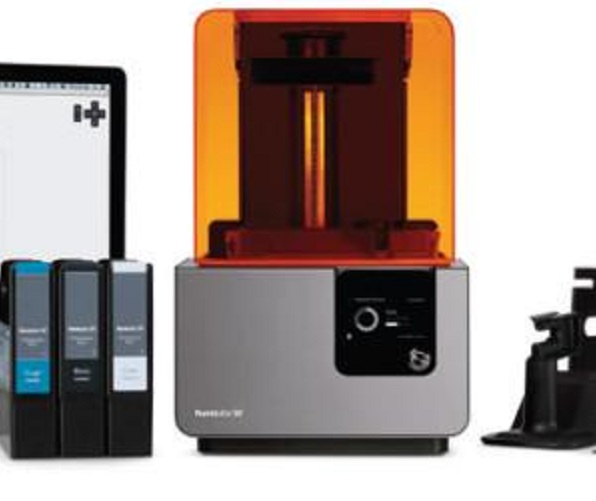
| SLA | Uses laser to cure liquid resin | High detail, smooth surfaces, jewelry, dental models |
| SLS | Fuses nylon powder with laser | Strong, durable parts without supports |
| Metal 3D Printing | Melts metal powder with laser or electron beam | Industrial parts, aerospace, medical implants |
FDM remains the most accessible. A desktop FDM printer can cost under $500. SLS and metal printing require industrial equipment and skilled operators.
Where Is 3D Printing Fabrication Used Today?
This technology has moved beyond hobbyist workshops. It now serves critical roles across industries.
Healthcare
Surgeons use 3D-printed anatomical models to plan complex procedures. A heart model printed from a patient’s CT scan allows a surgical team to rehearse before the actual operation.
Custom prosthetics fit better and cost less than traditional options. Dental labs print crowns, bridges, and aligners with precise fit. Bioprinting, still in research stages, aims to print living tissue for transplantation.
Aerospace
Weight matters in aviation. Every gram saved reduces fuel cost. 3D printing allows engineers to design lightweight brackets, ducting, and engine components with internal structures that machining cannot produce.
Airbus uses 3D-printed parts in the A350. NASA tests 3D printing on the International Space Station to manufacture tools on demand.
Automotive
Car makers use 3D printing for rapid prototyping. A new intake manifold design can go from CAD to physical test in days instead of weeks.
For low-volume production, 3D printing replaces expensive molds. Classic car restorers print parts that are no longer manufactured. High-end brands offer customized interior components printed to customer specifications.
Architecture
Architects create detailed scale models that show exactly how a building will look. Large-scale 3D printers now print building components and even entire structures. Some housing projects have used printed concrete walls to reduce construction time by over 50%.
What Are the Real-World Benefits?
The advantages go beyond just making things.
- Design freedom: Complex internal channels, lattice structures, and organic shapes become feasible.
- Speed: Prototypes in days instead of weeks.
- Cost efficiency for low volumes: No expensive molds or tooling.
- Inventory reduction: Print spare parts on demand instead of stocking them.
- Material savings: Use only the material that becomes the final part.
Case example: A robotics startup needed 10 custom motor mounts with integrated wire channels. Traditional CNC machining quoted $1,200 and a 3-week lead time. 3D printing delivered the same parts in 4 days for $180.
What Challenges Should You Consider?
3D printing is not a universal replacement for all manufacturing. It has limits.
- Print speed: Larger parts can take hours or days.
- Material cost: Engineering-grade filaments and resins cost more than raw plastic pellets used in injection molding.
- Surface finish: Most prints require post-processing for a smooth appearance.
- Size constraints: Printers have build volume limits. Large parts may need to be printed in sections and assembled.
For high-volume production, injection molding or CNC machining remains more cost-effective. For low to medium volumes and complex geometries, 3D printing offers distinct advantages.
Conclusion
3D printing fabrication transforms digital designs into physical objects by building them layer by layer. The process involves creating a 3D model, slicing it into layers, printing with materials like plastic or metal, and finishing the part to meet quality standards. This approach reduces waste, enables complex designs, and speeds up prototyping. Industries from healthcare to aerospace rely on it for custom parts and small-batch production. While it has limitations in speed and material cost, it fills a critical role where traditional methods fall short.
FAQ
What is the difference between 3D printing and additive manufacturing?
The terms are often used interchangeably. Additive manufacturing is the formal industry term. 3D printing is the common name. Both refer to building objects layer by layer from a digital file.
What materials can be used for 3D printing fabrication?
Common materials include thermoplastics like PLA and ABS, resins for high-detail parts, nylon powders for durable components, and metals like titanium and aluminum for industrial applications. Each material has different strength, flexibility, and cost characteristics.
How accurate is 3D printing?
Accuracy depends on the technology. FDM typically achieves ±0.1–0.5 mm. SLA and SLS reach ±0.05 mm or better. For precision-critical parts, verify tolerances with your service provider before printing.
Can 3D printing replace traditional manufacturing?
For high-volume production, traditional methods like injection molding remain more cost-effective. 3D printing excels in prototyping, custom parts, low-volume production, and geometries that are difficult or impossible to machine.
Is 3D printing fabrication expensive?
Costs vary widely. A small plastic part may cost under $20. A large, complex metal part can exceed $1,000. Factors include material, print time, post-processing, and quantity. For small batches, 3D printing often costs less than traditional manufacturing due to the absence of tooling fees.
Contact Yigu Technology for Custom Manufacturing
Yigu Technology specializes in non-standard plastic and metal custom manufacturing. We combine 3D printing with traditional processes to deliver parts that meet your exact requirements. Whether you need rapid prototypes, functional components, or low-volume production, our engineering team helps you select the right process and material. Contact us today to discuss your project.