3D printing is revolutionizing supply chains by enabling on-demand production, reducing inventory costs, and shortening lead times. This article explores how this technology can make your supply chain more efficient and responsive.
Introduction: The Supply Chain Revolution You Need to Know
In today's fast-changing business world, 3D printing is emerging as a revolutionary force within the supply chain. This technology isn't just a passing trend—it's a genuine game-changer that can reshape how goods are sourced, produced, distributed, and managed.
But what exactly is the full extent of its impact? How can you integrate it into your supply chain? And what does the future hold for additive manufacturing in this crucial business domain?
This article explores 3D printing in the supply chain from every angle. We'll look at how it transforms traditional models—from reducing lead times to enabling on-demand production. By examining real-world examples, industry data, and future projections, you'll gain clear understanding of how 3D printing can become a valuable asset in your supply chain strategy, whether you're a small business owner, supply chain manager, or corporate executive.
What Is 3D Printing and How Does It Relate to Supply Chains?
How does 3D printing actually work?
3D printing, also called additive manufacturing, builds three-dimensional objects by adding material layer by layer based on a digital model. This contrasts with traditional subtractive manufacturing, which removes material from a larger block to create the desired shape.
The process starts with a digital design, typically created using computer-aided design (CAD) software. Specialized software then slices this design into thin layers. The 3D printer reads these sliced files and deposits materials—plastics, metals, ceramics, or even biomaterials—layer upon layer, precisely following the digital blueprint.
For example, in a fused deposition modeling (FDM) printer (the most common type for hobbyists and small-scale production), a spool of thermoplastic filament melts and extrudes through a nozzle. The nozzle moves in precise patterns, depositing molten material onto a build platform. As each layer deposits, it bonds with the previous layer, gradually building the three-dimensional object.
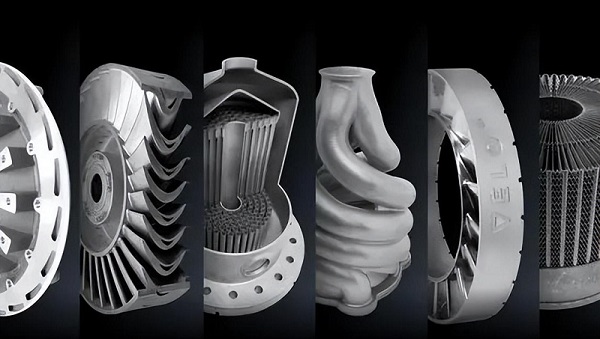
The versatility of 3D printing allows creation of complex geometries that would be extremely difficult or impossible with traditional techniques. It finds applications across industries—from prototyping in automotive and aerospace to creating customized prosthetics in medicine.
What are the key components of a traditional supply chain?
A supply chain encompasses the entire process of bringing a product from raw materials to end consumer. It's a complex network involving multiple stakeholders, activities, and flows of information, materials, and products.
The key components include:
- Planning: Companies forecast demand, set production goals, and develop strategies. A smartphone manufacturer estimates how many units of its new model will sell based on market trends and historical data.
- Sourcing (Procurement): Companies identify and select suppliers for raw materials, components, or services. Quality, price, and reliability drive supplier selection. A clothing brand might source cotton from regions known for high quality.
- Production: Raw materials transform into finished products. Factories carry out assembly, machining, painting, and other processes. A furniture manufacturer cuts, shapes, and assembles wooden parts to create tables and chairs.
- Logistics: This involves transportation, storage, and distribution. Trucks, ships, planes, and trains move products from manufacturing to warehouses to retailers or consumers. Warehouses store products and ensure availability when needed.
- Sales and Marketing: These activities promote products, find customers, and close deals. A software company might use online advertising and sales representatives to market new products.
- Customer Service: After-sales support includes returns, repairs, and answering inquiries. A consumer electronics company offers warranties and technical support to ensure satisfaction.
A well-optimized supply chain delivers cost savings, improved product availability, and enhanced customer satisfaction. A poorly managed one results in delays, high costs, and lost business opportunities.
How Is 3D Printing Transforming Supply Chain Operations?
Can 3D printing reduce inventory costs?
Inventory costs represent a significant burden for most companies. Warehousing space, insurance, handling, and obsolescence all add up. 3D printing offers a compelling alternative: digital inventory.
Instead of storing physical parts, you store digital files. When a customer orders a part, you print it on demand. This eliminates the need to forecast demand and stockpile finished goods.
Consider the automotive industry. A car manufacturer must stock spare parts for vehicles sold decades ago. These parts sit in warehouses for years, tying up capital and space. With 3D printing, the manufacturer stores digital files instead. When a dealer needs a rare bracket for a 1987 model, they print it locally in hours rather than waiting weeks for delivery from a central warehouse.
Mercedes-Benz uses this approach for classic truck parts. Instead of maintaining inventory for decades, they print on demand. This reduced their warehouse costs by 60% while still serving customers with vintage vehicles.
How does 3D printing shorten lead times?
Lead time—the time between order placement and delivery—can make or break customer satisfaction. Traditional supply chains involve multiple steps: order processing, production scheduling, manufacturing, quality control, packaging, shipping, and final delivery. Each step adds days or weeks.
3D printing collapses this timeline. Once you have a digital file and a printer, production starts immediately. A part that might take eight weeks to manufacture traditionally can print in 24 hours.
General Electric experienced this firsthand with fuel nozzle production. Traditional manufacturing required 18 separate components, multiple suppliers, and complex assembly. Each nozzle took weeks to produce. With 3D printing, GE now produces the nozzle as a single piece in just five days—a 75% reduction in lead time.
Can 3D printing enable on-demand production?
On-demand production means manufacturing only what customers have already ordered. This eliminates the guesswork of demand forecasting and the waste of unsold inventory.
Traditional manufacturing pushes products through the supply chain based on forecasts. When forecasts miss the mark, companies end up with excess inventory (costly to store) or stockouts (costly in lost sales). On-demand production pulls products through based on actual orders.
3D printing makes this practical even for complex parts. With no tooling requirements and minimal setup time, you can economically produce single units or small batches.
Philips, the electronics company, uses on-demand 3D printing for professional medical equipment parts. Instead of stocking spare parts globally, they print them at regional service centers when needed. This reduced their inventory holding costs by 50% while improving part availability for customers.
How does 3D printing enable customization?
Customization—tailoring products to individual customer preferences—drives value in many markets. But traditional manufacturing struggles with customization because each variation requires setup changes, tooling modifications, or manual rework.
3D printing handles customization effortlessly. Since the machine follows a digital file, changing designs costs nothing. You can produce 100 identical parts or 100 unique parts with the same setup.
Invisalign, the orthodontic treatment provider, exemplifies this. Each patient receives custom aligners designed from 3D scans of their teeth. The company produces millions of unique aligners annually using 3D printing. This would be impossible with traditional manufacturing at any reasonable cost.
Can 3D printing simplify complex assemblies?
Many products consist of multiple parts that must be manufactured separately then assembled. Each part requires its own tooling, production line, and quality control. Assembly adds labor, time, and potential failure points.
3D printing can consolidate assemblies into single components. By designing for additive manufacturing, engineers combine multiple parts into one printed piece.
GE's LEAP engine fuel nozzle again provides an example. The original design required 20 separate parts brazed together—a complex, costly process. The redesigned 3D-printed nozzle is a single piece. This simplified the supply chain from multiple suppliers to one printer, eliminated assembly steps, and improved reliability.
What Are the Challenges of Implementing 3D Printing in Supply Chains?
What about the high initial investment?
Equipment costs for industrial 3D printers remain significant. A production-grade metal printer can cost $500,000 to $1.5 million. Even high-end plastic printers run $50,000 to $200,000.
However, this investment must be weighed against the costs it eliminates. Tooling, molds, inventory, warehousing, and transportation all carry costs that 3D printing reduces or removes. For many companies, the return on investment justifies the upfront expense.
Additionally, the cost curve is trending downward. Printer prices have dropped steadily as technology matures and competition increases. Desktop metal printers now cost under $10,000, making the technology accessible to smaller businesses.
Are material options still limited?
Material availability has expanded dramatically but still lags traditional manufacturing. Not every engineering material is available in 3D-printable form. Properties like heat resistance, strength, and conductivity may not match traditionally manufactured equivalents.
However, material science advances rapidly. New photopolymers, metal alloys, and composites enter the market regularly. Companies like HP, Stratasys, and 3D Systems invest heavily in developing materials that match or exceed traditional options.
For many applications, existing materials suffice. Titanium alloys for aerospace, cobalt-chrome for medical implants, and engineering plastics for automotive parts all perform well. The key is matching material properties to application requirements.
Is printing speed a barrier for large-scale production?
Print speed remains a limitation compared to mass production methods. Injection molding cycles measured in seconds; 3D printing cycles measured in hours. For high-volume production of simple parts, traditional methods will likely remain faster and cheaper.
However, speed varies by technology. Binder jetting can print multiple parts simultaneously, achieving throughput competitive with conventional methods for certain applications. HP's Multi Jet Fusion technology claims production speeds 10 times faster than previous 3D printing methods.
The right question isn't "Is 3D printing fast enough for mass production?" but rather "Which parts make sense to print given current speeds?" High-value, complex, low-volume parts are ideal candidates today. As speeds improve, the addressable applications expand.
How do you protect intellectual property?
Intellectual property protection raises concerns when manufacturing moves from controlled factories to distributed printers. Digital files can be copied, shared, and printed anywhere. How do you prevent unauthorized reproduction?
Solutions are emerging. Secure file formats, encryption, and digital rights management restrict who can print files and how many times. Some systems require printer authentication before accepting jobs. Watermarking and tracking technologies help identify unauthorized copies.
The challenge mirrors what the music and film industries faced with digital distribution. Those industries adapted with DRM and streaming models. Manufacturing will similarly develop new IP protection strategies suited to the digital age.
What Does Yigu Technology Think About 3D Printing in Supply Chains?
As a non-standard plastic and metal products custom supplier, Yigu Technology highly values 3D printing's role in the supply chain. In our view, additive manufacturing offers significant advantages, especially in small-batch custom production.
It allows us to quickly produce customized products according to clients' specific requirements, reducing lead times and minimizing inventory costs. For example, when clients need unique-shaped plastic or metal parts, 3D printing enables direct manufacturing without costly and time-consuming mold-making processes.
However, we also recognize the challenges. The limited material options and relatively high costs for large-scale production are issues needing attention. But overall, the future of 3D printing in the supply chain is promising. We actively explore ways to integrate this technology into our supply chain operations to enhance competitiveness and provide better customer service.
What Does the Future Hold for 3D Printing in Supply Chains?
Will 3D printing become mainstream in manufacturing?
The trajectory suggests yes. Industry analysts project the additive manufacturing market to reach $100 billion by 2030. Adoption accelerates as technology improves and costs decline.
Several trends drive this growth:
- Printer costs continue falling while capabilities increase
- Material options expand with better properties and lower prices
- Software improves making design and workflow easier
- Education spreads as more engineers learn additive design
- Success stories multiply providing proven business cases
How will supply chains restructure around 3D printing?
Traditional supply chains are linear and centralized: raw materials flow to factories, finished goods flow to warehouses, then to customers. 3D printing enables distributed manufacturing—production closer to the point of use.
Instead of one large factory serving global markets, companies might operate many small print farms serving local regions. Digital files replace physical inventory. Transportation shifts from moving finished goods to moving raw materials and printers.
This restructuring offers resilience against disruptions. When a pandemic, natural disaster, or trade conflict disrupts global shipping, local production continues. Companies with distributed 3D printing capacity maintain operations while competitors scramble.
What new business models might emerge?
Digital spare parts catalogs where customers download files and print locally. Subscription services providing access to certified print files. Print-on-demand networks connecting excess capacity with urgent needs. Customization platforms letting consumers modify designs before printing.
These models already emerge in various industries. As 3D printing matures, they will likely become standard practice.
Conclusion
3D printing is revolutionizing supply chains in numerous ways. It offers significant advantages such as cost reduction, especially in small-batch production and inventory management. It provides enhanced flexibility through on-demand production and customization capabilities. The technology also promotes sustainability via reduced material waste and shorter transportation distances.
However, challenges remain. The high initial investment in equipment, limited material options, and slow printing speeds for large-scale production need improvement. Issues like intellectual property protection in a digital-file-based manufacturing process await full resolution.
For companies willing to navigate these challenges, the rewards are substantial. Shorter lead times, lower inventory costs, customization capabilities, and supply chain resilience all await. The question isn't whether 3D printing will transform supply chains—it's whether you'll be ahead of the curve or catching up.
FAQ
Q1: What industries benefit most from 3D printing in the supply chain?
A: Aerospace, healthcare, and automotive gain significant advantages. In aerospace, 3D printing enables complex, lightweight parts reducing fuel consumption. GE Aviation uses it for engine components, cutting lead times by over 50%. In healthcare, customized prosthetics and implants produce on-demand, improving patient care. Studies show 3D-printed prosthetics reduce production costs by up to 70% compared to traditional methods.
Q2: How does 3D printing change the traditional supply chain structure?
A: 3D printing transforms linear supply chains into more distributed networks. It reduces need for multiple intermediate steps—large manufacturing facilities, long-distance finished goods transportation, extensive warehousing. Suppliers shift from providing large raw material volumes to supplying specialized printing materials. Manufacturers produce parts closer to point of use, reducing reliance on global manufacturing hubs. The supply chain becomes more responsive to local market demands.
Q3: Are there environmental benefits to using 3D printing in supply chains?
A: Yes, significant benefits exist. 3D printing dramatically reduces material waste as an additive process. Traditional subtractive methods generate substantial waste. Reports indicate 3D printing reduces material waste by up to 90% in some applications. By enabling local production, it cuts long-distance transportation, reducing carbon emissions. Companies adopting local 3D printing for spare parts decrease their transportation-related carbon footprint substantially.
Q4: Can 3D printing handle mass production?
A: Currently, 3D printing suits low-volume, high-complexity production better than mass production. However, technologies like binder jetting and Multi Jet Fusion approach production speeds competitive with conventional methods for certain applications. As speed improves and costs decline, the addressable volume increases. For now, hybrid approaches combining 3D printing with traditional methods often make sense.
Q5: How do I start implementing 3D printing in my supply chain?
A: Start by identifying candidates—low-volume parts, complex geometries, long-lead items, products with high customization demand. Pilot with a few parts to learn the technology and validate benefits. Partner with service bureaus before investing in equipment. Build internal expertise through training. Scale gradually based on proven results.
Q6: What about quality control for 3D-printed parts?
A: Quality control requires adaptation from traditional methods. In-process monitoring, standardized test artifacts, and non-destructive testing all play roles. Industry standards like ASTM F42 and ISO/TC 261 provide frameworks. For critical applications, qualification processes similar to traditional manufacturing apply.
Contact Yigu technology for custom manufacturing
Ready to explore how 3D printing can transform your supply chain? At Yigu technology, we combine deep expertise with state-of-the-art additive manufacturing capabilities. Whether you need custom plastic parts, metal components, or help identifying candidates for 3D printing in your operations, our team delivers solutions tailored to your needs. Contact us today for a consultation—let's build a more responsive, efficient supply chain together.