Introduction
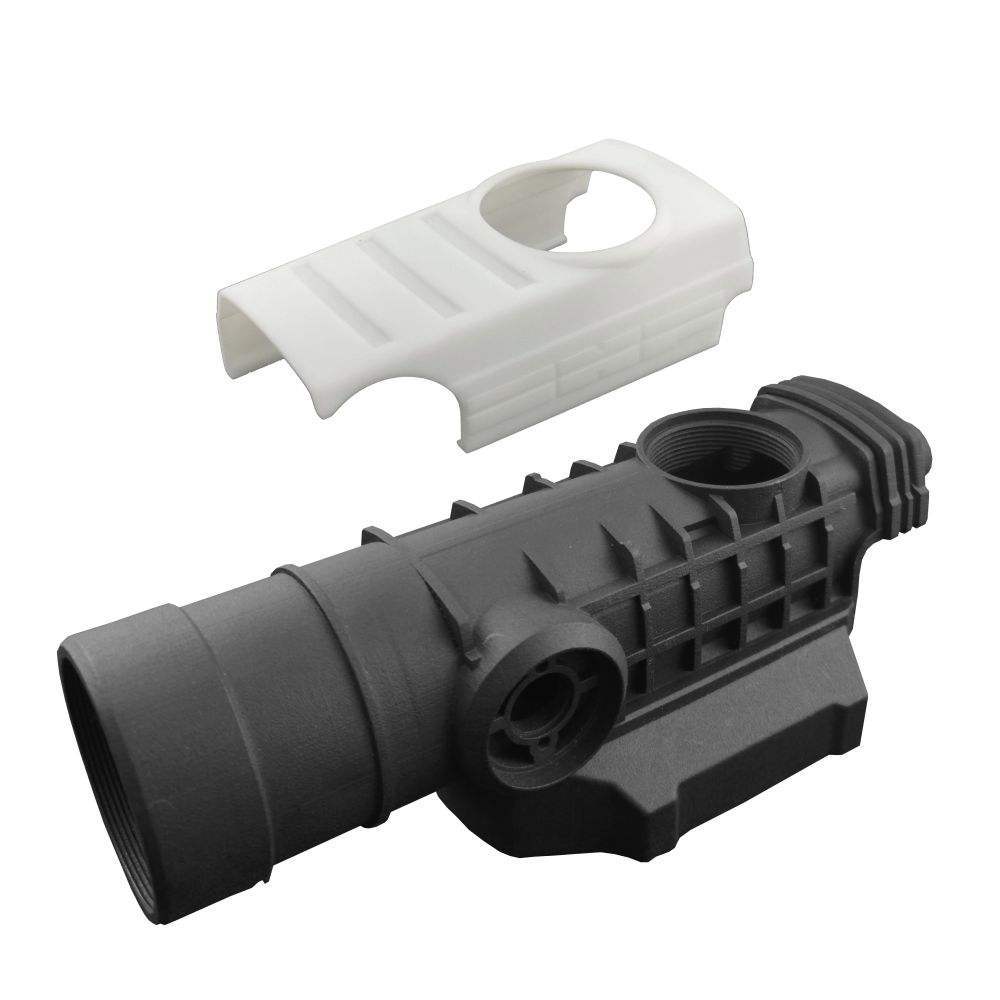
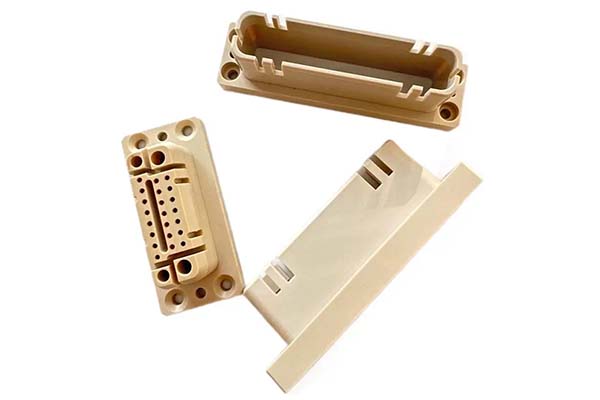
You've heard the term "SLS 3D printing" thrown around, but what does it actually mean for your projects? Selective Laser Sintering isn't just another buzzword—it's a manufacturing technology that's been quietly producing millions of end-use parts, from aerospace brackets to medical implants to custom consumer goods. As a product engineer at Yigu technology, I've worked with SLS for over a decade, and I can tell you: it's different from every other 3D printing method. No supports. Complex geometries. Engineering-grade materials. In this guide, we'll walk through exactly how SLS technology works, how it compares to other methods, and when it makes sense for your application.
What Is SLS 3D Printing and How Does It Work?
What Happens Inside an SLS Printer?
SLS (Selective Laser Sintering) is an additive manufacturing process that uses a high-power laser to fuse small particles of powder into solid structures. Unlike FDM which extrudes plastic, or SLA which cures resin, SLS starts with a bed of powder and selectively melts it together.
Here's the step-by-step reality of what happens:
| Step | What Happens | Why It Matters |
|---|---|---|
| 1. Model Preparation | CAD design is converted to STL file and sliced into layers (typically 0.05-0.15mm thick) | Layer thickness determines detail and surface finish |
| 2. Powder Spreading | A roller or blade spreads a thin layer of powder across the build platform | Consistent layer thickness is critical for accuracy |
| 3. Laser Sintering | A CO₂ laser scans the cross-section, heating powder just below melting point | Particles fuse together without fully melting |
| 4. Platform Lowers | Build platform drops by one layer thickness | Creates space for the next powder layer |
| 5. Repeat | Steps 2-4 repeat thousands of times | A 100mm tall part needs 1,000-2,000 layers |
| 6. Cooling | The entire powder bed cools slowly (can take hours) | Prevents warping and residual stress |
| 7. Powder Removal | The part is excavated from loose powder | Unfused powder can be recycled for future builds |
| 8. Post-Processing | Bead blasting, dyeing, or surface finishing as needed | Turns the raw print into a finished part |
The magic of SLS: Unfused powder acts as natural support material. No need to design and remove supports for overhangs or internal cavities. That means geometric freedom that other technologies can't match.
What's Happening at the Microscopic Level?
When the laser hits the powder, it doesn't fully melt the particles—it sinters them. Think of it like making a snowball: you apply pressure (or in this case, heat) just enough to make the particles stick together, but they don't turn to water.
The laser energy causes the outer surfaces of powder particles to soften and fuse, creating necking between adjacent particles. The result is a solid structure with controlled porosity (typically 3-5%) and excellent mechanical properties.
For metal SLS (often called DMLS—Direct Metal Laser Sintering), the process is similar but with higher temperatures and often followed by furnace sintering to achieve full density.
How Does SLS Compare to Other 3D Printing Technologies?
SLS vs. FDM vs. SLA: Which One Wins?
This is the question I get most often. Here's the honest comparison:
| Aspect | SLS | FDM | SLA |
|---|---|---|---|
| Materials | Nylon, TPU, composites, some metals | PLA, ABS, PETG, engineering plastics | Photopolymer resins |
| Precision | High (0.05-0.2mm layers) | Moderate (0.1-0.4mm) | Very High (0.025-0.1mm) |
| Surface Finish | Good, slightly granular | Rough, visible layer lines | Excellent, smooth |
| Supports Needed | None—powder supports parts | Yes—must be designed and removed | Yes—must be designed and removed |
| Part Strength | Strong, isotropic (nearly equal in all directions) | Anisotropic (weaker between layers) | Brittle, not for mechanical loads |
| Complexity | Unlimited—internal cavities, lattices | Limited by supports | Limited by supports and drainage |
| Equipment Cost | High ($50,000-500,000+) | Low ($500-10,000) | Medium ($2,000-100,000) |
| Material Cost | Medium-high ($50-200/kg) | Low ($20-60/kg) | High ($100-500/L) |
| Typical Use | Functional parts, end-use products | Prototypes, hobby projects | High-detail models, jewelry |
Real example: A client needed custom ergonomic handles for industrial tools. FDM would have left uncomfortable layer lines. SLA would be too brittle. SLS in nylon PA12 delivered: smooth-enough finish, tough as nails, complex internal structure for grip. Perfect match.
When Does SLS Make Sense?
Choose SLS when:
- You need functional, durable parts that can handle real use
- Your design has complex internal features or overhangs
- You want no support structures to design or remove
- You're producing small to medium batches (10-1,000 units)
- You need isotropic strength—equal in all directions
- Surface finish matters, but ultimate smoothness isn't critical
Skip SLS when:
- You need optical clarity or mirror-smooth surfaces (choose SLA)
- You're on a tight budget for a one-off prototype (FDM may suffice)
- You need very large parts beyond typical SLS build volumes
- You're producing high volumes where injection molding wins
What Materials Can You Use in SLS?
Which Polymers Work Best?
Nylon (Polyamide) dominates SLS for good reason:
| Material | Key Properties | Typical Applications |
|---|---|---|
| PA12 (Nylon 12) | Balanced strength, flexibility, chemical resistance | Housings, brackets, connectors, ducting |
| PA11 | Bio-based, higher flexibility than PA12 | Living hinges, sports equipment, medical |
| PA12-GF | Glass-filled, stiffer, higher heat resistance | Structural parts, automotive underhood |
| TPU | Rubber-like flexibility, durable | Seals, gaskets, footwear, soft-touch parts |
| Polypropylene | Chemical resistance, fatigue resistant | Living hinges, containers, automotive |
PA12 is the workhorse. It offers:
- Tensile strength: 45-50 MPa
- Elongation: 15-25%
- Heat deflection: ~90°C
- Chemical resistance: Excellent against oils, fuels, solvents
PA11 is gaining ground as a bio-based alternative. Slightly more flexible, slightly lower heat resistance, but from renewable sources.
Glass-filled nylons (PA12-GF) add stiffness and temperature resistance at the cost of some ductility. Perfect for automotive underhood applications or structural brackets.
TPU opens up flexible applications—gaskets, seals, shoe midsoles, protective covers. Same design freedom as rigid nylons, but with rubber-like properties.
What About Metal SLS?
Metal SLS (usually called DMLS or SLM) is a different category:
| Material | Properties | Applications |
|---|---|---|
| Stainless Steel (17-4PH, 316L) | Corrosion resistant, good strength | Tooling, medical devices, marine parts |
| Titanium (Ti-6Al-4V) | Highest strength-to-weight, biocompatible | Aerospace brackets, medical implants |
| Aluminum (AlSi10Mg) | Lightweight, good thermal conductivity | Heat exchangers, lightweight structures |
| Inconel (718, 625) | High-temperature strength | Turbine components, exhaust systems |
| Cobalt-Chrome | Wear resistant, biocompatible | Dental implants, knee replacements |
The process is similar but with higher laser power, inert atmosphere, and typically full melting rather than sintering. Parts are near-fully dense (99.5%+) with properties matching wrought materials.
Where Is SLS Actually Used?
Industrial and Manufacturing Applications
This is SLS's home turf:
Functional prototypes:
- Test parts under real conditions
- Same material as production (unlike FDM prototypes)
- Iterate in days instead of weeks
End-use parts:
- Low-volume production (100-1,000 units/year)
- Complex geometries impossible to mold
- Customized variants with no tooling cost
Tooling and fixtures:
- Custom assembly jigs printed overnight
- Ergonomically optimized hand tools
- Inspection gauges with complex contours
Case: A factory needed custom pick-and-place grippers for a new product line. Traditional: machined aluminum, 4 weeks, $2,000 each. SLS in glass-filled nylon: 3 days, $200 each, optimized geometry for better grip. 90% cost reduction, 90% time reduction.
Aerospace and Automotive
Aerospace loves SLS for:
- Weight reduction: Lattice structures cut mass 40-60%
- Part consolidation: Assemblies become single prints
- On-demand spares: No inventory, print when needed
Example: Satellite brackets printed in PA12-GF, 50% lighter than machined aluminum, passed vibration testing, flying today.
Automotive uses SLS for:
- Ducting: Complex air and fluid channels
- Prototypes: Production-intent materials for testing
- Custom parts: Low-volume performance components
Example: A racing team needed intake manifolds with optimized airflow. SLS in glass-filled nylon: printed overnight, tested next day, design refined, final part on the car in 3 days. Traditional fabrication: 3 weeks.
Medical Applications
Medical SLS is growing fast:
Surgical guides:
- Custom-fit to patient anatomy from CT/MRI
- Sterilizable materials
- Reduced surgery time, better outcomes
Prosthetics:
- Lightweight, strong, customizable
- Pediatric prosthetics that grow with the child
- Affordable enough to replace as needed
Orthotics:
- Custom insoles printed to foot scans
- Variable stiffness zones for support and comfort
- 90% lighter than traditional casts
Case: A children's hospital needed custom wrist splints for kids with rare conditions. Traditional: cast, uncomfortable, couldn't adjust. SLS: scan the arm, design the splint, print in flexible PA11, delivered in 2 days. Perfect fit, adjustable, kids actually wear them.
Consumer Products
Consumer goods leverage SLS for:
Eyewear:
- Custom frames from facial scans
- Complex geometric designs
- Lightweight, durable
Footwear:
- Midsole lattice structures for cushioning
- Customized to individual gait
- On-demand production, no inventory
Jewelry:
- Complex patterns impossible to cast
- Printed in wax then cast, or direct metal
- Mass customization at scale
Sports equipment:
- Custom helmet liners
- Optimized protective gear
- Lightweight, breathable structures
What Are the Key Advantages of SLS?
Design Freedom: No Supports Needed
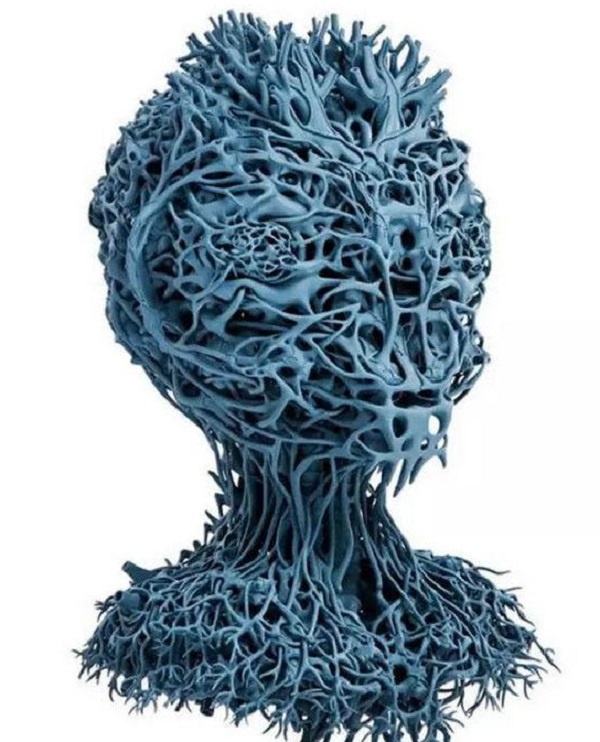
This is SLS's superpower. Because unsintered powder supports the part, you can design:
- Internal cavities that would trap supports in other processes
- Lattice structures for lightweight strength
- Interlocking assemblies printed as one piece
- Organic shapes with no concern for overhangs
Real example: A heat exchanger with internal channels that curve and branch like blood vessels. Impossible to machine. Impossible to mold. SLS? One print, one piece, works perfectly.
Mechanical Properties: Strong and Consistent
SLS parts are nearly isotropic—strength is similar in all directions. Compare to FDM, where layer adhesion is the weak link, or SLA, where parts are brittle.
- Tensile strength: 45-50 MPa for PA12 (comparable to injection-molded)
- Elongation: 15-25% (tough, not brittle)
- Impact resistance: Excellent, survives drops and impacts
Material Efficiency: Reuse Your Powder
Unused powder in an SLS build can be recycled. Typical refresh rates are 30-50% new powder mixed with 50-70% used powder. That means:
- Less waste
- Lower material cost per part
- Environmentally friendlier than subtractive methods
Complexity Comes Free
In traditional manufacturing, complexity costs money. In SLS, complexity is free. A simple cube and an intricate lattice structure cost the same to print (same volume, same material). That changes the economics of design.
What Are the Limitations You Should Know?
Surface Finish
SLS parts have a slightly granular surface from the powder particles. It's not rough—but it's not injection-molded smooth either.
- As-printed: Ra 5-15 µm
- Bead blasted: Ra 3-8 µm
- Vapor smoothed: Ra 1-3 µm (glossy finish)
For many applications, the as-printed finish is fine. For consumer products, post-processing may be needed.
Porosity
Standard SLS parts are not fully dense—typically 92-97% density. That's fine for most applications, but:
- Parts will absorb some moisture over time
- Not pressure-tight without coating or infiltration
- Mechanical properties slightly lower than fully dense
Solutions: infiltration with epoxy, hot isostatic pressing (HIP) for metals, or design around it.
Build Size Limitations
Most SLS printers have build volumes in the range of 300-400mm in each dimension. For larger parts, you need:
- Industrial systems with larger beds (expensive)
- Print in sections and bond together
- Choose a different technology
Cost
SLS is not cheap:
- Equipment: $50,000-500,000+
- Materials: $50-200/kg for polymers, much more for metals
- Operating costs: Nitrogen, maintenance, labor
For low volumes and complex parts, it's economical. For simple parts in high volume, injection molding wins.
So, Should You Use SLS for Your Project?
After hundreds of SLS projects, here's my practical advice:
Use SLS when you need:
- Functional, durable parts that perform like injection-molded
- Complex geometries with internal features
- No design time wasted on supports
- Small to medium batches without tooling
- Design flexibility to iterate and customize
Consider alternatives when:
- Surface finish must be mirror-smooth (use SLA)
- Cost is the only factor for simple prototypes (use FDM)
- Volume is high enough for tooling (use injection molding)
- You need optical clarity (not possible in SLS)
The beauty of SLS is that it removes constraints. Design what you need, not what's easy to make. That's why it's become the go-to for functional prototyping and low-volume production across industries.
Frequently Asked Questions
What materials can be used in SLS 3D printing?
The most common are nylon-based polymers—PA12, PA11, glass-filled nylons, and TPU. For metal SLS (DMLS), materials include stainless steel, titanium, aluminum, Inconel, and cobalt-chrome. Each material family serves different applications, from flexible prototypes to high-temperature aerospace components.
Is the surface finish of SLS parts good enough for end-use?
For many applications, yes. The slightly granular finish is acceptable for functional parts, and bead blasting improves it further. For consumer products, vapor smoothing or painting can achieve a glossy, injection-molded appearance. The trade-off is always cost vs. finish.
How much does an SLS 3D printer cost?
Industrial SLS printers range from $50,000 to over $500,000. Desktop SLS systems are emerging in the $10,000-30,000 range but with smaller build volumes and fewer material options. For most businesses, using a service bureau like Yigu technology makes more sense than buying equipment.
Can SLS print moving parts or assemblies?
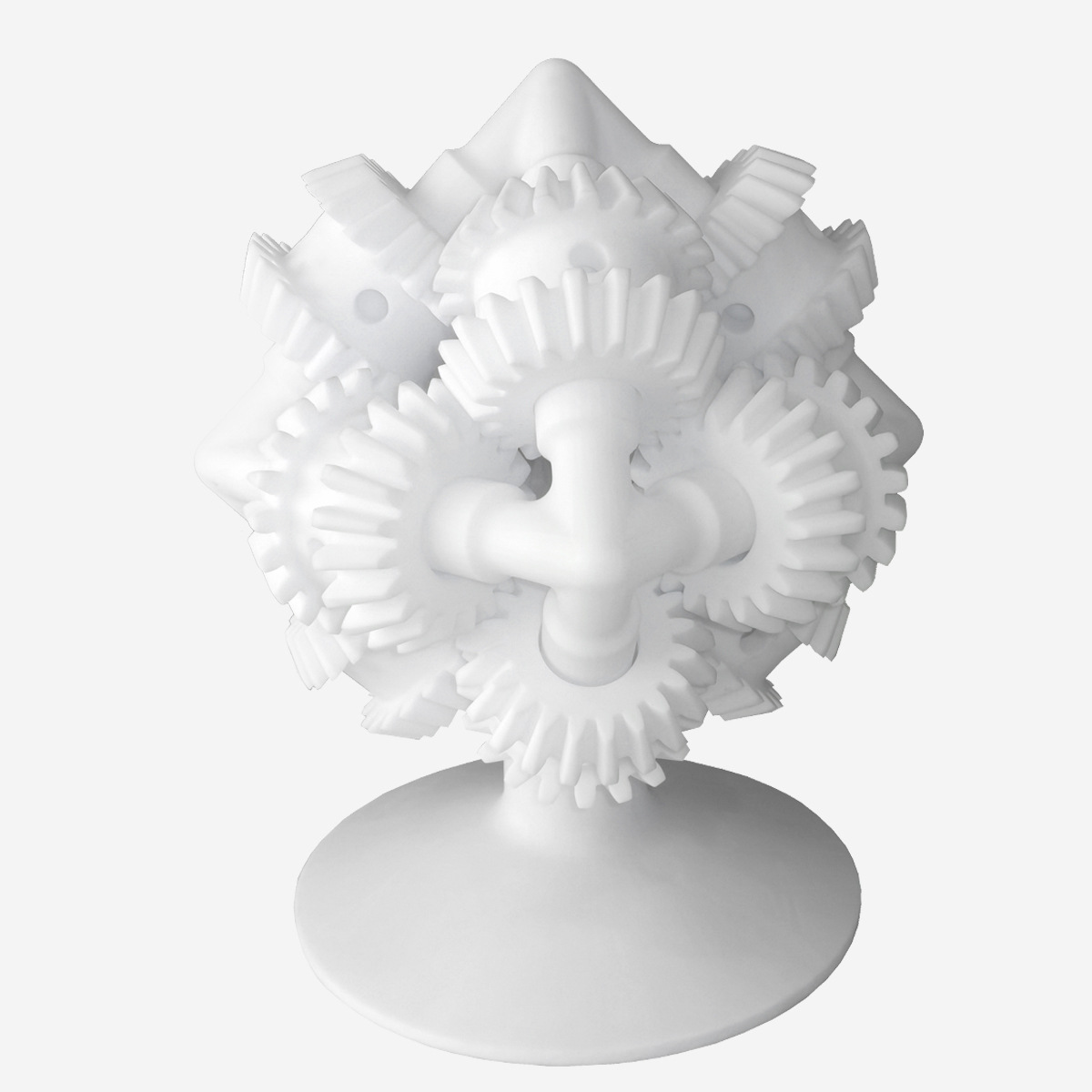
Yes! With proper clearance (typically 0.3-0.5mm), you can print hinges, gears, and multi-part assemblies in a single build. The unsintered powder inside clearances is removed during post-processing. We've printed working pliers, ball joints, and even small engines—all in one piece.
How strong are SLS parts compared to injection molding?
SLS parts in PA12 typically achieve 90-100% of injection-molded strength. The slightly lower density and different microstructure mean properties are comparable for most applications. For some metrics (like elongation), SLS can actually outperform molding due to more uniform cooling.
What post-processing is required for SLS parts?
At minimum: powder removal (bead blasting or compressed air). For improved surface: vapor smoothing, dyeing, or painting. For enhanced properties: infiltration (epoxy or wax) or heat treatment. The amount depends entirely on the application.
Contact Yigu Technology for Custom SLS Manufacturing
Still figuring out if SLS 3D printing fits your project? At Yigu technology, we've been printing SLS parts for over a decade—from nylon prototypes to metal production runs. We know the materials, the machines, and the design rules that make projects successful.
Let's talk about your application. [Contact us today] for a free consultation. Send us your design, describe your requirements, and we'll provide options, timelines, and honest advice. No jargon, no pressure—just engineering sense from people who've been building things with SLS since before it was cool.