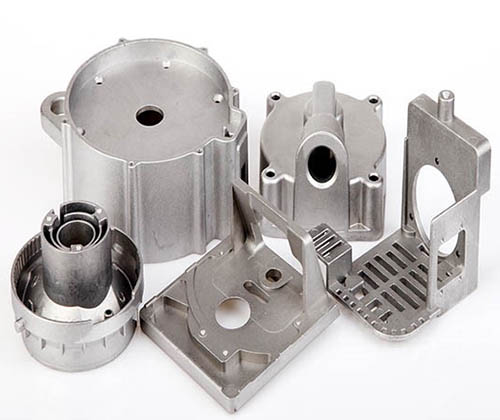
Introduction
Metal prototypes are different. They must withstand real loads, resist heat, and maintain precision under stress. A plastic prototype can show you form. A metal prototype shows you function. But making high-quality metal prototypes requires careful choices—materials, manufacturing methods, and finishing processes all matter. Get it wrong, and your prototype fails testing. Get it right, and you validate your design with confidence. At Yigu Technology, we produce metal prototypes daily for aerospace, automotive, medical, and industrial clients. This article covers the key methods, materials, and best practices for creating high-quality prototype metal parts.
Why Are Prototype Metal Parts Important?
Prototype metal parts are early-stage models of final metal products. They allow engineers, designers, and clients to evaluate form, fit, and function before mass production.
Key Benefits
| Benefit | Description |
|---|---|
| Design validation | Verify dimensions, assembly fit, and mechanical performance |
| Function testing | Test under real-world conditions—load, heat, corrosion |
| Cost reduction | Identify issues early; avoid production line stoppages, retooling, and recalls |
| Risk mitigation | Validate safety-critical components before production |
Data: A study by the Product Development and Management Association found that over 70% of successful product launches had comprehensive prototype testing. A McKinsey report shows that companies investing in proper prototyping can reduce production costs by up to 30% over the product lifecycle.
What Manufacturing Methods Produce Metal Prototypes?
CNC Machining
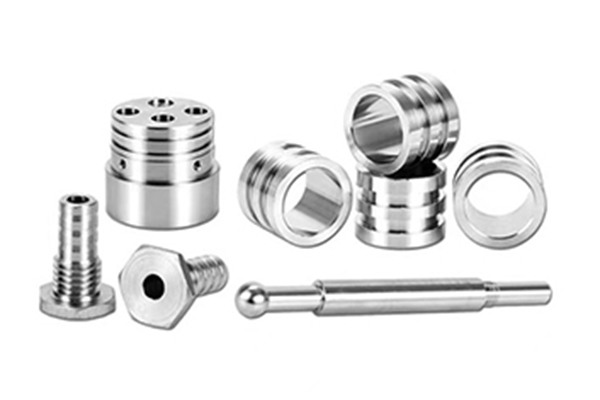
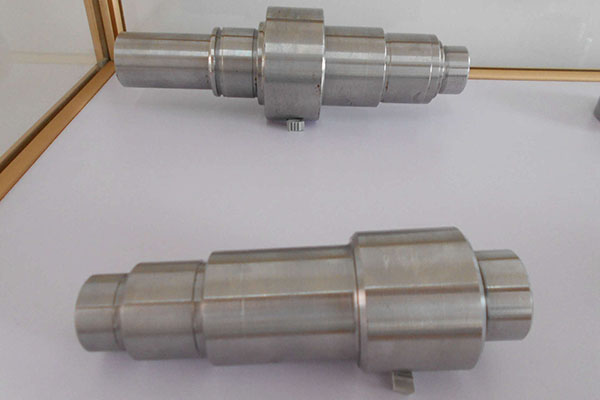
CNC machining uses pre-programmed computer software to control machine tools—mills, lathes, routers—removing material from a solid block to create the final shape.
Advantages:
- High precision: Tolerances within ±0.01 mm or better
- Complex shapes: Multi-axis machining (3, 4, or 5-axis) enables intricate geometries
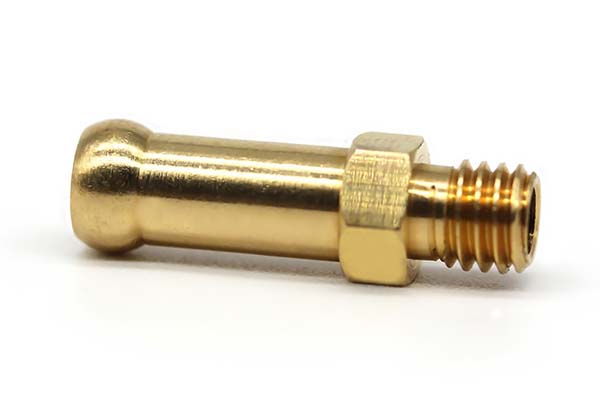
- Wide material range: Aluminum, steel, titanium, brass, and more
- Excellent surface finish: As-machined finish often suitable for testing
Limitations:
- Material waste (30–70%)
- Slower for complex parts
- Higher cost for small batches
Applications:
- Aerospace turbine blades, engine blocks, structural components
- Automotive engine components, transmission parts
- Medical instrument prototypes
Example: In the aerospace industry, CNC-machined turbine blades must meet extreme precision standards—deviations can lead to catastrophic failure. CNC machining delivers the required ±0.01 mm accuracy.
3D Printing (Additive Manufacturing)
3D printing builds parts layer by layer from a digital model. For metal prototypes, technologies like Direct Metal Laser Sintering (DMLS) or Selective Laser Melting (SLM) are used.
Advantages:
- Complex geometries: Internal channels, lattice structures, organic shapes
- No tooling: Cost-effective for small batches (1–50 units)
- Material efficiency: Minimal waste (5–10%)
- Design freedom: Features impossible with subtractive methods
Limitations:
- Higher material cost (metal powders)
- Post-processing often required
- Slower for simple parts
Applications:
- Medical implants with porous structures for bone integration
- Aerospace components with internal cooling channels
- Custom jewelry and art pieces
Example: A medical implant prototype printed in titanium with lattice structures mimics natural bone, promoting better integration with the patient's body.
Investment Casting
Investment casting (lost-wax casting) is a traditional method adapted for prototyping. A wax pattern is coated with ceramic, the wax is melted out, and molten metal is poured into the cavity.
Advantages:
- High precision: Tolerances typically ±0.05–0.2 mm
- Complex shapes: Fine details, intricate geometries
- Smooth surface finish: Requires minimal post-processing
- Material range: Aluminum, steel, titanium, bronze, etc.
Limitations:
- Pattern creation required (adds time and cost)
- Not ideal for single prototypes (better for small batches)
- Longer lead time than 3D printing for simple parts
Applications:
- Jewelry prototypes with fine details
- Art sculptures and decorative pieces
- Complex mechanical parts
Example: A jewelry designer uses investment casting to create a delicate filigree ring prototype—every curve and engraving is faithfully captured.
How Do You Choose the Right Method?
| Factor | CNC Machining | 3D Printing (DMLS/SLM) | Investment Casting |
|---|---|---|---|
| Precision | ±0.01–0.05 mm | ±0.05–0.2 mm | ±0.05–0.2 mm |
| Complexity | Moderate (tool access limits) | Very high | High |
| Material waste | 30–70% | 5–10% | Moderate |
| Cost (1–10 units) | Moderate–High | Moderate | Moderate–High (pattern cost) |
| Lead time | 5–10 days | 3–7 days | 7–14 days |
| Best for | High precision, production-grade materials | Complex geometries, low volumes | Fine details, smooth finish, small batches |
When to choose:
- CNC machining: High precision, production-grade materials, simple to moderate geometries
- 3D printing: Complex internal structures, low volume, design freedom
- Investment casting: Fine details, smooth surface finish, small batches
What Materials Should You Use?
Aluminum Alloys
Properties:
- Density: 2.7 g/cm³ (lightweight)
- Tensile strength: 200–600 MPa
- Corrosion resistance: Good
Applications:
- Aerospace components (wing structures, engine casings)
- Automotive parts (prototypes where weight matters)
- Consumer electronics enclosures
Why choose aluminum: Lightweight, good strength-to-weight ratio, excellent machinability.
Steel Alloys
Properties:
- Density: 7.8 g/cm³
- Tensile strength: 400–1,500+ MPa
- Corrosion resistance: Varies (stainless steel is high; carbon steel requires protection)
Types:
- Carbon steel: Cost-effective, good strength, prone to rust
- Alloy steel: Enhanced mechanical properties, heat-treatable
- Stainless steel: High corrosion resistance, used in food and medical industries
Applications:
- Heavy machinery prototypes
- Industrial equipment components
- Structural parts requiring high strength
Titanium Alloys
Properties:
- Density: 4.5 g/cm³ (lighter than steel, stronger than many aluminum alloys)
- Tensile strength: 500–1,000 MPa
- Corrosion resistance: Excellent (even in seawater)
- Biocompatibility: High (used in medical implants)
Applications:
- Aerospace (jet engine components, airframes)
- Medical (implants, prosthetics)
- Marine (propellers, underwater components)
Why choose titanium: Exceptional strength-to-weight ratio, biocompatibility, corrosion resistance. But higher cost and difficult machinability.
Material Comparison
| Material | Density (g/cm³) | Strength (MPa) | Corrosion Resistance | Cost | Machinability |
|---|---|---|---|---|---|
| Aluminum alloys | 2.7 | 200–600 | Good | Low–Moderate | Excellent |
| Steel alloys | 7.8 | 400–1,500+ | Varies | Moderate | Good |
| Stainless steel | 7.8–8.0 | 500–1,000+ | Excellent | Moderate–High | Moderate |
| Titanium alloys | 4.5 | 500–1,000 | Excellent | High | Difficult |
How Do You Ensure Accuracy?
Choose the Right Method
- CNC machining for tightest tolerances (±0.01 mm)
- 3D printing and investment casting for moderate tolerances (±0.05–0.2 mm)
Implement Quality Control
- Coordinate measuring machines (CMMs): Measure dimensions against specifications
- In-process inspections: Catch defects during manufacturing
- Final inspection: Comprehensive check before delivery
- Equipment calibration: Regular maintenance ensures consistent accuracy
Example: A CNC-machined aerospace component is measured with a CMM to verify critical dimensions. Any deviation beyond ±0.01 mm triggers adjustment.
Yigu Technology's Perspective
As a custom manufacturer of non-standard plastic and metal parts, Yigu Technology has extensive experience in prototype metal part production.
What we have learned:
- Match method to material and geometry: CNC for precision and simple geometries. 3D printing for complexity. Investment casting for fine details and smooth finish.
- Material selection is critical: Aluminum for weight savings. Steel for strength. Titanium for strength-to-weight and biocompatibility.
- Quality control is non-negotiable: In-process inspections, CMM verification, and regular calibration ensure accuracy.
- Collaboration improves outcomes: Working closely with clients from design to delivery ensures the final prototype meets expectations.
We offer tailored solutions—whether you need a single complex prototype or a small batch of functional test parts.
Conclusion
High-quality prototype metal parts require careful decisions at every stage:
Manufacturing methods:
- CNC machining: High precision, production-grade materials
- 3D printing: Complex geometries, low volumes, design freedom
- Investment casting: Fine details, smooth finish, small batches
Materials:
- Aluminum: Lightweight, good machinability
- Steel: High strength, durability
- Titanium: Strength-to-weight ratio, biocompatibility
Quality assurance:
- Choose the right method for your precision requirements
- Implement in-process and final inspections
- Use CMMs for dimensional verification
By selecting the appropriate method and material and maintaining rigorous quality control, you can create metal prototypes that accurately represent your final product—validating design, function, and manufacturability before production.
Frequently Asked Questions
What is the most suitable manufacturing method for complex-shaped prototype metal parts?
3D printing (DMLS/SLM) and investment casting are highly suitable. 3D printing builds complex internal structures layer by layer—ideal for lattice designs, internal channels, and organic shapes. Investment casting accurately replicates fine details and intricate geometries through the lost-wax process. Both excel where CNC machining faces tool access limitations.
How to ensure the accuracy of prototype metal parts?
Choose the right manufacturing method: CNC machining for tightest tolerances (±0.01 mm). Implement strict quality control: use coordinate measuring machines (CMMs) to verify dimensions, conduct in-process inspections, and regularly calibrate equipment. Compare measured values against design specifications and adjust as needed.
Can I choose different materials for prototype metal parts according to my needs?
Yes. Aluminum alloys for lightweight, good corrosion resistance. Steel alloys for high strength and durability. Titanium alloys for excellent strength-to-weight ratio, biocompatibility, and corrosion resistance. Consider function, operating environment, and cost when selecting.
What is the difference between prototype metal parts and production metal parts?
Prototype metal parts are made using methods optimized for speed and flexibility (CNC, 3D printing, investment casting). They validate design, fit, and function. Production metal parts are made using methods optimized for cost and volume (die casting, forging, high-volume machining). Prototypes often use the same materials as production parts but may use different processes.
How long does it take to make a prototype metal part?
Lead time varies by method and complexity. 3D printing: 3–7 days. CNC machining: 5–10 days. Investment casting: 7–14 days. Factors include design complexity, material availability, and finishing requirements.
Contact Yigu Technology for Custom Manufacturing
At Yigu Technology, we specialize in high-quality prototype metal parts. Our capabilities include CNC machining, 3D printing (DMLS/SLM), and investment casting. We work with aluminum, steel, stainless steel, titanium, and specialty alloys. We serve aerospace, automotive, medical, and industrial clients.
If you need metal prototypes for testing, validation, or low-volume production, contact our engineering team. Let us help you choose the right method and material for your project.