Introduction
In today’s competitive manufacturing landscape, speed and innovation are decisive advantages. Rapid prototyping (RP) has emerged as a revolutionary set of techniques enabling fast production of physical models from digital designs. It serves as a bridge between design and mass production, allowing designers, engineers, and product developers to quickly test and validate ideas. This guide explores how rapid prototyping is transforming industries—reducing time-to-market, cutting costs, enabling iterative design, and improving collaboration—with real-world examples from automotive, medical, and consumer electronics.
What Is Rapid Prototyping?
Rapid prototyping uses additive manufacturing (3D printing), CNC machining, or automated processes to build prototypes layer by layer or through precise material removal. In 3D printing, a digital 3D model is sliced into thin cross-sectional layers. The printer deposits or fuses materials—plastics, metals, ceramics—in precise patterns, gradually building the 3D object.
In the manufacturing ecosystem, rapid prototyping bridges design and mass production, making it indispensable in product development cycles.
Why Is Rapid Prototyping Significant in Modern Manufacturing?
Time-to-Market Reduction
Traditional prototyping methods took weeks or months to produce a single prototype. Rapid prototyping produces prototypes in hours or days. A McKinsey study found that companies adopting rapid prototyping reduce time-to-market by up to 50% . This speed enables faster response to market trends, customer demands, and emerging opportunities.
Cost-Efficiency
While initial equipment investment can be high, rapid prototyping leads to significant long-term cost savings by catching design flaws early—avoiding costly re-engineering and tooling changes during mass production. A consumer electronics SME reduced development costs by 30% by identifying and correcting design issues before production.
Enhanced Design Iteration
Rapid prototyping enables multiple design iterations in short periods. Designers quickly modify digital models and produce new prototypes to test different concepts, features, and materials. A smartphone case design team tested 10 design variations in two weeks—compared to only 2–3 variations with traditional methods.
Improved Communication and Collaboration
Physical prototypes provide tangible references for all stakeholders—designers, engineers, marketing teams, clients. This shared understanding improves communication, reduces misunderstandings, and ensures alignment with product vision.
What Technologies Drive Rapid Prototyping?
3D Printing (Additive Manufacturing)
Fused Deposition Modeling (FDM) : Heats thermoplastic filament (ABS, PLA) and extrudes it through a nozzle layer by layer. Popular due to low cost, ease of use, and wide material range. A simple plastic toy prototype is built by melting PLA filament, depositing it layer by layer.
Stereolithography (SLA) : Uses a laser to cure liquid photopolymer resin. The laser traces each layer, solidifying resin to form the final object. Known for high-resolution prints—ideal for detailed prototypes like jewelry or intricate mechanical parts. A jewelry designer creates a detailed wax-like necklace pendant with fine details and smooth surfaces.
Selective Laser Sintering (SLS) : Uses a high-power laser to sinter powdered materials—plastic, metal, ceramic. Powder is spread evenly; laser sinters particles layer by layer. Enables functional prototypes with good mechanical properties. In automotive, SLS creates metal engine components that withstand high temperatures and mechanical stress during testing.
CNC Machining
CAD/CAM: Starts with a CAD model. CAM software generates toolpaths and machining instructions. A mechanical engineer designing a gearbox housing creates a 3D CAD model in SolidWorks; CAM software determines operations (milling, turning, drilling) and generates G-code.
Milling: Rotating cutting tool removes material from a solid block. Moves in multiple axes for complex 3D shapes. A custom-designed aluminum bracket is precisely cut according to CAD-generated toolpaths.
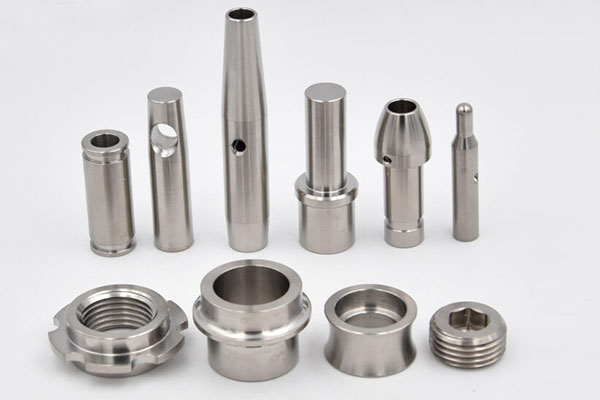
Turning: Creates rotational parts—shafts, cylinders. Workpiece rotates; cutting tool moves in X and Z axes to shape. A prototype metal motor shaft is precisely turned to required diameter, length, and threads.
How Does the Rapid Prototyping Process Work?
Design Creation
Designers create 3D models in CAD software—from scratch or by modifying existing designs. A new smartphone case uses CAD tools to define shape, dimensions, cut-outs, decorative elements. Design verification checks for flaws—incorrect dimensions, interfering components, non-manufacturable features. Simulation tools test performance (impact forces for phone case protection).
File Preparation
CAD files are saved in formats compatible with prototyping equipment. For 3D printing, common formats are .STL (Stereolithography). For CNC machining, files convert to CAM-readable format. For 3D printing, slicing software slices .STL files into thin layers, determining toolpaths—nozzle or laser movement. Layer thickness specified (0.1–0.3 mm) based on detail and speed.
Material Selection
For 3D printing: FDM uses ABS, PLA, PETG, specialized filaments (conductive, flexible). SLA uses photopolymer resins. SLS uses powdered materials. For a smartphone case using FDM, PLA chosen for ease of printing, low cost, good mechanical properties.
For CNC machining: Materials selected based on prototype requirements—metals (aluminum, steel, titanium), plastics (acrylic, polycarbonate). For high-strength, heat-resistant smartphone case, polycarbonate might be chosen for CNC machining.
Prototype Production
3D printing: Printer follows toolpaths, depositing or curing material layer by layer until prototype complete. FDM printer extrudes melted PLA filament layer by layer to build smartphone case.
CNC machining: Machine reads G-code, uses cutting tools (end-mills for milling, turning tools for lathe) to remove material from workpiece, gradually shaping the prototype.
Post-Processing
Cleaning: Remove excess material, support structures (3D printing), chips (CNC machining). Support structures for 3D-printed smartphone case carefully removed.
Finishing: Sanding, polishing, painting, coating to improve appearance and surface quality. CNC-machined aluminum smartphone case prototype polished for smooth, shiny finish.
Assembly: If prototype consists of multiple parts, they are assembled after production and post-processing. Smartphone case with detachable back cover assembled from individual parts.
How Does Rapid Prototyping Compare to Traditional Methods?
Cost-Efficiency Analysis
| Cost Aspect | Rapid Prototyping | Traditional Prototyping |
|---|---|---|
| Equipment | High initial investment ($1,000–$100,000+) but used for multiple projects; cost per prototype relatively low | High-cost specialized machinery (millions); not cost-effective for small-scale prototyping |
| Materials | Wide range; PLA filament $20–50/kg; advanced materials more expensive but reduced waste | Larger quantities required; injection molding raw plastic pellets high; significant waste for complex shapes |
| Labor | Skilled operators needed, but overall time shorter; mostly automated; simple prints left overnight | More labor-intensive; hand-crafted prototypes require days/weeks; injection molding requires multiple steps, expertise |
| Total Cost (1–10 prototypes) | Relatively low—$100–500 for simple plastic prototype | Prohibitively high—mold making alone $1,000–5,000; plus material and labor |
Time-Saving Aspects
A Deloitte study found traditional prototyping takes 6–8 weeks per prototype due to complex processes—mold design, tooling, multiple manufacturing steps. Rapid prototyping significantly reduces this time. Simple prototypes produced within 24 hours; complex rarely exceed one week. A consumer electronics company reduced prototyping time from 8 weeks to 3 days—over 90% time savings.
Design Flexibility and Iteration
Traditional prototyping design changes are time-consuming and costly. Injection molding changes require mold redesign and remake—weeks and thousands of dollars. Rapid prototyping enables quick design modifications. Changes made to CAD file; new prototype produced quickly. A furniture design team tested 5 design variations in one week—nearly impossible with traditional methods.
What Real-World Examples Show Innovation Driven by Rapid Prototyping?
Automotive Industry: Tesla
Tesla relies heavily on rapid prototyping for electric vehicle development. In Model Y development, 3D printing and CNC machining enabled quick creation and testing of various component prototypes—battery pack designs, motor mounts, interior components. 3D-printed plastic prototypes for interior dashboard components enabled rapid iteration based on user feedback and ergonomic studies. Development time for new interior design concepts reduced from months to weeks. The unique center console design resulted from multiple rapid prototyping iterations.
Aerodynamics: Car manufacturers quickly produce scale-model prototypes for wind tunnel testing. University of Michigan study found rapid-prototyped scale models reduced development time for aerodynamic performance improvements by 40% .
Medical Field: Personalized Implants
Lima, an orthopedic implant manufacturer, uses 3D printing for customized hip and knee replacements. Patient CT/MRI scans create digital models of bone structure; implants designed to perfectly fit patient anatomy. For complex hip-joint deformities, traditional off-the-shelf implants would not fit. Lima uses 3D-printed titanium implants with trabecular structure promoting bone integration. Since 2007, they have produced over 100,000 implants. A 2015 study showed patients receiving these implants had average Harris Hip Score increase from 44.2 to 95.9 (out of 100) at least five years after surgery.
Surgical planning: Laser Modeling Israel (LMI) used HP’s Multi-Jet Fusion (MJF) technology to create 3D-printed models of conjoined twins’ bodies—skulls, skin, internal organs. Sterilizable, fully movable models allowed surgeons to simulate complex separation surgery multiple times, significantly reducing risks and improving outcomes.
How Does Yigu Technology Leverage Rapid Prototyping?
As a non-standard plastic and metal products custom supplier, Yigu Technology uses rapid prototyping to accelerate client innovation.
We Offer Multiple Technologies
- FDM: Affordable, quick iterations for concept validation
- SLA: High-precision, smooth surface prototypes for detailed models
- SLS: Functional prototypes with wide material range, good mechanical properties
- CNC machining: Precision metal and plastic parts
We Provide Comprehensive Support
Our engineers guide material selection based on application requirements—strength, heat resistance, flexibility. We optimize designs for manufacturability, ensuring seamless transition from prototype to production.
We Accelerate Development
From concept to functional prototype, we help clients test, refine, and validate designs—reducing time-to-market and development costs.
Conclusion
Rapid prototyping is unleashing innovation across industries. It reduces time-to-market by up to 50% , cuts development costs significantly, enables multiple design iterations in short periods, and improves stakeholder communication. Key technologies—FDM for affordable concept validation, SLA for high-precision detailed models, SLS for functional prototypes, CNC machining for precision metal parts—each serve specific applications.
Real-world examples demonstrate impact: Tesla reduced interior design development from months to weeks; Lima produced over 100,000 3D-printed titanium implants with excellent clinical outcomes; automotive manufacturers reduced aerodynamic development time by 40%. For engineers, designers, and product developers, rapid prototyping is an indispensable tool—transforming how products are conceived, developed, and brought to market.
Frequently Asked Questions
What is the difference between FDM, SLA, and SLS?
FDM extrudes melted thermoplastic filament—affordable, easy to use, lower precision. SLA uses laser to cure liquid resin—high precision, smooth surfaces, detailed models. SLS uses laser to sinter powdered materials—wide material range, good mechanical properties, functional prototypes. Choose based on accuracy requirements, material needs, and budget.
How much time can rapid prototyping save?
Traditional prototyping takes 6–8 weeks per prototype. Rapid prototyping reduces this to 24 hours to one week—over 90% time savings in many cases. A consumer electronics company reduced prototyping time from 8 weeks to 3 days.
Is rapid prototyping cost-effective for small-scale production?
Yes. Total cost for 1–10 simple plastic prototypes: $100–500. Traditional mold making alone costs $1,000–5,000, not including material and labor. Catching design flaws early avoids costly re-engineering and tooling changes during mass production.
What industries benefit most from rapid prototyping?
Automotive: Component testing, aerodynamic development (40% time reduction). Medical: Customized implants (100,000+ produced), surgical planning. Consumer electronics: Quick iteration, reduced development time. Aerospace, industrial equipment, and consumer goods also benefit significantly.
Can rapid prototyping be used for functional testing?
Yes. SLS with metal powders produces functional prototypes for high-strength, heat-resistant applications—engine components, aerospace parts. SLA with engineering-grade resins and CNC machining also produce parts suitable for functional testing under real-world conditions.
Contact Yigu Technology for Custom Manufacturing
Ready to unleash innovation with rapid prototyping? Yigu Technology offers FDM, SLA, SLS, and CNC machining services for plastic and metal components. Our engineers guide you through technology selection, material choice, and design optimization. Contact us today to discuss your project.