Introduction
Aviation demands perfection. Every component must withstand extreme temperatures, pressure changes, and years of fatigue. For decades, manufacturing these parts meant casting, forging, or machining—processes that limit design and create waste.
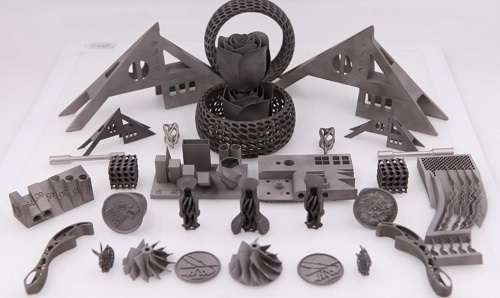
3D printed aircraft parts are changing this. Additive manufacturing builds components layer by layer from digital files. This approach allows engineers to create shapes that were once impossible. It reduces weight, cuts waste, and speeds up production.
Today, major aerospace companies use 3D printing for everything from engine components to cabin brackets. The technology is not just experimental. It is certified, flying on commercial aircraft, and proving its value every day.
In this article, we will explore how 3D printing is transforming aviation. You will learn about the benefits, the challenges, and what the future holds.
What Makes 3D Printing Different for Aviation?
Additive vs. Traditional Manufacturing
Traditional manufacturing is often subtractive. You start with a block of metal and cut away what you do not need. This works, but it has limits.
| Method | Process | Material Use | Design Freedom |
|---|---|---|---|
| Subtractive (machining) | Cut away material | Up to 90% waste | Limited by tool access |
| Formative (casting) | Pour into mold | Moderate waste | Limited by mold complexity |
| Additive (3D printing) | Build layer by layer | Minimal waste | Almost unlimited |
Key fact: In machining a titanium bracket, up to 90 percent of the raw material can end up as chips. With 3D printing, you use only the material that becomes the final part.
The Digital Thread
3D printing starts with a digital model. That model can be shared, modified, and optimized without creating new tooling. This digital workflow enables:
- Rapid iteration – Test a design, modify it, and print a new version in days
- Distributed production – Print parts at maintenance facilities anywhere in the world
- Legacy part support – Reproduce obsolete components without original tooling
What Are the Key Benefits of 3D Printed Aircraft Parts?
Weight Reduction
Every kilogram saved on an aircraft reduces fuel consumption. For a commercial airliner, a 1 kg reduction can save 1,000 to 2,000 liters of fuel per year.
3D printing enables weight savings through:
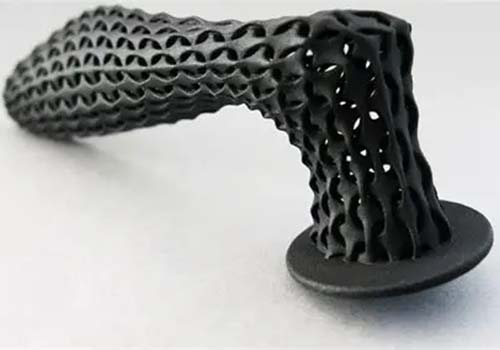
- Lattice structures – Internal honeycomb patterns that maintain strength while reducing mass
- Topology optimization – Software that removes material where it is not needed
- Part consolidation – Replacing assemblies of multiple parts with one printed component
Real-world example: A GE Aviation fuel nozzle was traditionally assembled from 20 separate parts. The 3D printed version is a single piece that is 25 percent lighter and five times more durable.
Design Freedom
Traditional manufacturing forces design compromises. A machined part must have tool access. A cast part must be removable from the mold.
3D printing removes these constraints. You can create:
- Internal cooling channels that follow curved paths
- Organic shapes that optimize airflow
- Complex lattices that combine strength and lightness
Key fact: A study by Airbus found that 3D printed brackets can achieve 30 to 50 percent weight reduction compared to machined versions while maintaining the same strength.
Material Efficiency
Aerospace materials are expensive. Titanium can cost $30 to $50 per kilogram. Inconel and other superalloys are even pricier.
With subtractive manufacturing, much of that expensive material ends up as scrap. 3D printing uses powder or wire and deposits it exactly where needed. Unused powder can often be recycled and reused.
Supply Chain Simplification
Airlines face a constant challenge: keeping spare parts in stock for aircraft that may be in service for decades. 3D printing allows on-demand production.
- No need to predict demand years in advance
- Parts can be printed at maintenance hubs worldwide
- Obsolete parts can be recreated from digital files
Real-world example: The U.S. Air Force uses 3D printing to produce parts for aging aircraft like the B-1 bomber. Parts that were no longer available from suppliers can now be printed in days.
What Materials Are Used for Aircraft Parts?
Metals
| Material | Properties | Common Applications |
|---|---|---|
| Titanium (Ti-6Al-4V) | High strength-to-weight, corrosion resistant | Structural brackets, engine components |
| Aluminum (AlSi10Mg) | Lightweight, good thermal conductivity | Heat exchangers, housings |
| Inconel (718, 625) | High-temperature strength, oxidation resistant | Turbine blades, exhaust components |
| Stainless Steel (17-4 PH) | Corrosion resistant, high strength | Fasteners, structural parts |
High-Performance Polymers
| Material | Properties | Common Applications |
|---|---|---|
| PEEK | High temperature resistance, chemical resistant | Electrical connectors, brackets |
| ULTEM (PEI) | Flame retardant, high strength-to-weight | Cabin interior parts, ducting |
| Nylon (PA12) | Tough, lightweight | Ducts, clips, non-structural parts |
Key fact: ULTEM 9085 is certified for aircraft interiors because it meets FAR 25.853 flame retardancy standards.
How Is 3D Printing Used in Aviation Today?
Commercial Aircraft
Major manufacturers like Boeing and Airbus are already flying aircraft with 3D printed parts.
| Aircraft | 3D Printed Components | Benefit |
|---|---|---|
| Boeing 787 | Over 1,000 parts including ducting and brackets | Weight reduction, simplified supply chain |
| Airbus A350 | Cabin brackets, fuel system components | Part consolidation, faster production |
| GE9X Engine | Fuel nozzles, heat exchangers | 25% lighter, 5x more durable |
Real-world example: The GE9X engine, which powers the Boeing 777X, contains 300 3D printed components. The fuel nozzles alone reduced the assembly from 20 parts to one.
Military Aviation
The military has embraced 3D printing for both new production and sustainment.
Case Study: U.S. Air Force
The Air Force uses 3D printing to produce parts for the F-22, F-35, and B-1B. In one instance, a critical component for the B-1B was no longer available from the original supplier. The Air Force reverse-engineered the part and printed replacements in three days. The traditional supply chain would have taken six months.
Space Applications
Rocket engines are some of the most demanding applications for 3D printing.
Real-world example: SpaceX uses 3D printing for the SuperDraco engine chamber. The part operates at extreme temperatures and pressures. Printing it as a single piece eliminated hundreds of welds and reduced production time from months to days.
What Challenges Must Be Overcome?
Certification and Quality Assurance
Aviation has the strictest safety standards of any industry. 3D printed parts must meet the same requirements as traditionally manufactured components.
Key regulatory bodies:
- FAA (Federal Aviation Administration) – U.S. civil aviation
- EASA (European Union Aviation Safety Agency) – European civil aviation
- DOD (Department of Defense) – U.S. military applications
Certification requires:
- Material validation – Powder properties must be consistent and traceable
- Process qualification – Every print parameter must be documented and controlled
- Part testing – Tensile, fatigue, and environmental testing to prove performance
Key fact: The FAA has published Advisory Circular 33.15-4, providing guidance on certifying 3D printed engine components. This was a major step toward mainstream adoption.
Repeatability
A 3D printer must produce the same part, with the same properties, every time. This requires:
- Controlled environments – Temperature, humidity, and powder quality must be consistent
- In-process monitoring – Sensors track melt pool behavior, layer quality, and thermal history
- Post-process verification – CT scanning and other inspection methods ensure internal quality
Scalability
3D printing is ideal for low-volume, high-complexity parts. But for high-volume production, traditional methods remain faster and cheaper.
| Volume | Best Method |
|---|---|
| 1–100 parts | 3D printing |
| 100–10,000 parts | Depends on complexity |
| 10,000+ parts | Traditional (casting, forging) |
How Is the Industry Addressing These Challenges?
Standards Development
Organizations like SAE International and ASTM are developing standards for additive manufacturing in aerospace.
Key standards:
- ASTM F3572 – Standard for additive manufacturing of aerospace components
- SAE AMS7000 – Specification for laser powder bed fusion of titanium
Process Control
Modern 3D printing systems include advanced monitoring. Cameras, thermal sensors, and optical systems track each layer. If a defect is detected, the print can be stopped or flagged for inspection.
Material Qualification
The industry is moving toward pre-qualified materials. Powder suppliers now provide certified materials with documented properties. This reduces the testing burden for manufacturers.
Yigu Technology’s View
At Yigu Technology, we work with aerospace clients on custom 3D printed components. Our experience has taught us what works and what does not.
Case Study: Custom Test Fixture
An aerospace client needed a complex test fixture for a new engine component. Traditional machining would have taken six weeks and required multiple setups.
We printed the fixture in aluminum using LPBF. The part included integrated cooling channels that would have been impossible to machine. The client received the fixture in 10 days at half the cost of machining.
Case Study: Legacy Part Replacement
A military maintenance facility needed a bracket for an older aircraft. The original supplier had stopped production. The digital drawings were lost.
We reverse-engineered the bracket from a surviving part. We printed a batch of 20 units in Inconel. The parts passed all fit and function tests. The facility now has a digital file that can be used to print more brackets whenever needed.
Our Perspective
3D printing is not replacing all traditional manufacturing. It is adding a new capability. The smart approach is to use each method for what it does best:
- 3D printing – Complex geometries, low volume, rapid iteration
- Machining – Simple shapes, high precision, medium volume
- Casting/forging – High volume, established designs
Conclusion
3D printed aircraft parts are revolutionizing aviation. They enable lighter structures, more complex designs, and faster production. They simplify supply chains and allow on-demand manufacturing.
The technology has matured. Certification pathways exist. Major aircraft fly with 3D printed components every day.
Challenges remain. Quality assurance, repeatability, and scalability require ongoing attention. But the trajectory is clear. Additive manufacturing is becoming a standard tool in aerospace production.
For engineers, designers, and maintenance teams, the message is simple: 3D printing is ready for flight.
FAQ
Are 3D printed aircraft parts as strong as traditionally manufactured parts?
Yes. With proper material selection and process control, 3D printed parts meet or exceed the strength of traditionally manufactured components. Titanium parts printed with laser powder bed fusion can achieve 99.5 percent density and mechanical properties comparable to wrought material. Optimized designs like lattice structures can even improve the strength-to-weight ratio.
How long does it take to produce a 3D printed aircraft part compared to a traditionally manufactured part?
A simple component can be printed in hours. Complex parts may take several days. Traditional manufacturing often takes weeks due to tooling, setup, and multiple processing steps. For spare parts, the difference is even larger—waiting for a cast or machined part can take months, while a 3D printed part can be ready in days.
What are some common materials used in 3D printing for aircraft parts?
Metals include titanium (Ti-6Al-4V) for high-strength structural parts, Inconel for high-temperature engine components, and aluminum (AlSi10Mg) for lightweight parts. High-performance polymers include PEEK and ULTEM (PEI) , which offer flame retardancy and chemical resistance suitable for cabin interiors.
Contact Yigu Technology for Custom Manufacturing
Need 3D printed aircraft parts for prototyping, testing, or production? Yigu Technology offers certified additive manufacturing services for aerospace applications. We work with titanium, aluminum, Inconel, and high-performance polymers.
Contact us today to discuss your project. Our engineers will help you navigate material selection, design optimization, and quality requirements.