Introduction
Beam deposition might sound like complex technical jargon, but it is actually one of the most exciting manufacturing technologies available today. If you work in industries like aerospace, medical devices, or custom engineering, you have likely encountered parts that traditional methods simply cannot produce. Beam deposition solves that problem. Also known as Directed Energy Deposition (DED) , this process uses high-energy beams to melt and deposit materials layer by layer. The result? Complex geometries, reduced waste, and faster production times. This article walks you through how beam deposition works, its different types, materials it handles, and why it matters for your next project.
What Exactly Is Beam Deposition in Additive Manufacturing?
Beam deposition is a revolutionary manufacturing technology that builds three-dimensional objects by melting materials with focused energy beams. These beams can be lasers, electron beams, or plasma arcs. As the beam moves along a path guided by a CAD model, it creates a molten pool. Metal powders or wire feed into this pool, melt, and solidify almost instantly. Layer upon layer, a complete part emerges.
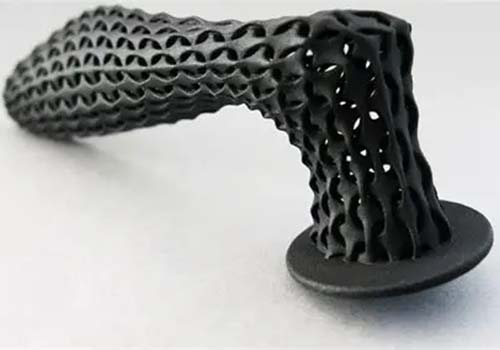
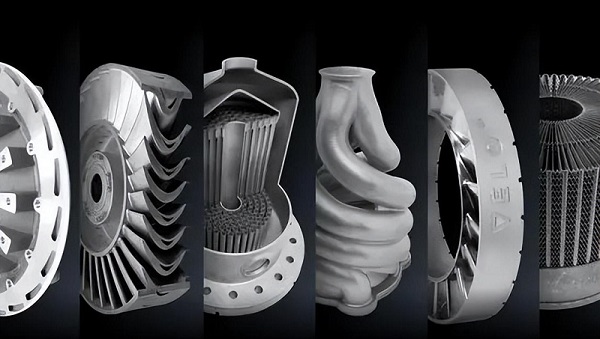
This method allows for internal channels, lattice structures, and intricate shapes that traditional machining cannot achieve. For example, aerospace engineers use it to create turbine blades with internal cooling passages. Medical implant manufacturers produce custom hip replacements with porous surfaces that promote bone growth. The possibilities are vast.
How Does Beam Deposition Actually Work?
Basic Mechanism Explained Simply
Imagine a high-power laser focused onto a metal surface. The intense energy raises the temperature so quickly that the metal melts. A stream of metal powder then feeds directly into that molten pool. As the laser moves along its programmed path, the melted material solidifies almost immediately. This creates a thin layer, typically 0.1 to 1 mm thick. The process repeats, building the object from the bottom up.
In electron beam systems, an electron gun shoots high-velocity electrons at the material. When these electrons strike, their kinetic energy converts to heat, melting the material just like a laser. The difference? Electron beams often require a vacuum environment to prevent electron scattering and oxidation.
Key Components You Should Know
Laser or Electron Gun
- In laser systems, fiber lasers or CO₂ lasers provide the energy. Power outputs range from 100 watts to several kilowatts. Higher power means faster melting and larger volumes processed.
- In electron beam systems, the gun contains a heated cathode that emits electrons. An anode accelerates these electrons to high speeds. Operators can precisely control beam position, intensity, and focus.
Powder Delivery System
This component feeds material into the molten pool. Two main types exist:
- Co-axial delivery: Powder flows through a nozzle concentric with the beam. This ensures even distribution around the beam, ideal for complex geometries.
- Off-axis delivery: A side-mounted nozzle delivers powder. This works better for certain part geometries where co-axial delivery proves impractical.
Flow rates adjust based on beam speed and layer thickness. A small, detailed part needs lower flow rates. Larger parts benefit from higher rates to build faster.
Substrate and Build Platform
The substrate gives the first layer something to stick to. It must be compatible with the deposited material—often a metal plate matching the part's composition. The build platform moves precisely in X, Y, and Z axes. After each layer, it drops by exactly one layer thickness, positioning perfectly for the next pass.
What Types of Beam Deposition Exist?
Laser-Based Beam Deposition
Also called Laser Metal Deposition (LMD) or Laser Engineered Net Shaping (LENS) , this is the most common beam deposition method.
Characteristics:
A high-power laser creates an intensely focused beam. Spot sizes can be as small as 0.1 to 1 mm, enabling fine detail work. The energy density allows precise control over melting.
Advantages:
- High precision: Creates features measured in micrometers. Micro-mechanical components benefit greatly.
- Wide material compatibility: Processes over 90% of common engineering materials—metals, ceramics, and some polymers.
- Fast deposition rates: Ranges from several grams to tens of grams per minute, depending on laser power and material.
Applicable Materials:
- Titanium alloys: Used in aerospace for their strength-to-weight ratio. Parts show excellent fatigue resistance.
- Stainless steel: Common in medical and food industries where corrosion resistance matters.
- Ceramics: Produce cutting tools and thermal barrier coatings with high hardness and temperature resistance.
Electron Beam Deposition
Specifically Electron Beam Melting (EBM) , this process operates differently but achieves similar goals.
Characteristics:
An electron gun generates high-energy electrons in a vacuum. When these electrons hit the material, their kinetic energy converts to heat, melting the material instantly. The vacuum prevents oxidation and electron scattering.
Advantages in Specific Fields:
- Aerospace applications: EBM manufactures large, complex components quickly. The vacuum ensures material purity. Studies show 20% higher tensile strength in some aerospace-grade alloys compared to traditional methods.
- Medical implant manufacturing: Creates custom implants with complex porous structures. Titanium hip implants made by EBM show better long-term stability, reducing revision surgeries. The porous surfaces encourage tissue ingrowth.
What Materials Work With Beam Deposition?
Metal Materials
Titanium Alloys
Ti-6Al-4V is the most common titanium alloy in additive manufacturing. Density sits at about 4.43 g/cm³—much lighter than steel. Tensile strength reaches 900 to 1100 MPa with proper processing and heat treatment. Aerospace uses it for weight-critical components. Medical implants leverage its biocompatibility.
Aluminum Alloys
Alloys like 6061 and 7075 offer low density (around 2.7 g/cm³) and high thermal conductivity. Yield strength ranges from 240 to 310 MPa. Automotive and aerospace industries use them for lightweight components requiring heat dissipation.
Stainless Steels
316L stainless steel provides excellent corrosion resistance for marine, chemical, and medical applications. Tensile strength reaches 485 to 620 MPa. 17-4PH is precipitation-hardened, achieving higher strength for aerospace fasteners and oil and gas components.
Non-Metal Materials
Ceramics
Alumina (Al₂O₃) ceramics have Mohs hardness around 9, making them ideal for cutting tools. They also serve as thermal barrier coatings, withstanding temperatures over 1500°C. Silicon carbide (SiC) offers high thermal conductivity for semiconductor manufacturing equipment.
Polymers
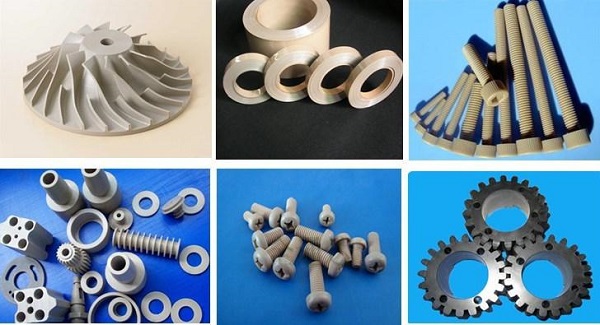
PEEK (polyetheretherketone) is a high-performance polymer with excellent chemical resistance and biocompatibility. Tensile strength is about 90 to 100 MPa. Aerospace uses it to replace metal in non-load-bearing applications. Medical fields use it for custom prosthetics that withstand sterilization.
Why Choose Beam Deposition Over Traditional Methods?
Traditional manufacturing often requires multiple steps: casting, machining, welding, and assembly. Beam deposition combines these into one process. Here is a comparison:
| Factor | Beam Deposition | Traditional Manufacturing |
|---|---|---|
| Design Freedom | Complex internal geometries possible | Limited by tool access |
| Material Waste | Minimal, near-net shape | Significant scrap from machining |
| Lead Time | Days to weeks | Weeks to months |
| Tooling Cost | None | High for molds and dies |
| Batch Size Economy | Excellent for small batches | Best for large volumes |
| Material Properties | Fine-grained, dense structures | Varies by process |
Real-World Example: Repairing High-Value Components
A gas turbine blade worth $50,000 develops a tip crack. Traditionally, you scrap it and buy a new one. With beam deposition, you can repair it. The process adds material precisely where missing, then machines it back to spec. Airlines and power generators save millions annually through such repairs.
What Challenges Does Beam Deposition Face?
Surface Finish
Parts often come out rougher than machined surfaces. Post-processing like grinding or polishing may be needed.
Residual Stresses
Rapid heating and cooling create internal stresses. Heat treatment after building relieves these stresses and prevents distortion.
Equipment Cost
Industrial beam deposition systems cost $500,000 to over $1 million. This limits access to well-funded facilities and service bureaus.
Process Control
Maintaining consistent melt pool size, temperature, and powder flow requires sophisticated monitoring. Open-loop systems risk defects.
How Does Yigu Technology Leverage Beam Deposition?
As a non-standard plastic and metal products custom supplier, Yigu Technology embraces beam deposition for its unmatched flexibility. We serve clients needing custom parts with complex geometries that traditional machining cannot produce economically.
Our Approach
- Material expertise: We guide clients to the right material—titanium for aerospace, stainless steel for medical, aluminum for automotive.
- Design optimization: Our engineers review CAD files for manufacturability, suggesting improvements that leverage beam deposition's strengths.
- Quality control: We monitor melt pools in real-time, ensuring dense, defect-free structures.
Client Success Story
A robotics company needed lightweight aluminum brackets with internal cooling channels. Traditional machining would require drilling holes and welding covers—time-consuming and prone to leaks. We used laser-based beam deposition to build the brackets complete with internal channels in one operation. Lead time dropped from six weeks to ten days. The client reported perfect performance in field testing.
Conclusion
Beam deposition represents a fundamental shift in how we make things. It frees designers from traditional constraints, enables repairs that extend part life, and reduces waste throughout the manufacturing process. While equipment costs remain high, the value for complex, high-value parts is undeniable. Whether you need titanium aerospace components, custom medical implants, or aluminum prototypes with internal features, beam deposition delivers results impossible by other means. Understanding this technology positions you to make smarter manufacturing decisions.
Frequently Asked Questions
Q1: What is the difference between laser and electron beam deposition?
Laser deposition works in open air or with shielding gas. Electron beam requires a vacuum. Lasers offer finer detail for small parts. Electron beams provide higher energy for faster melting of larger volumes.
Q2: How strong are parts made by beam deposition?
Properly processed parts meet or exceed wrought material properties. Titanium alloys reach 900–1100 MPa tensile strength. Heat treatment often improves ductility and relieves residual stresses.
Q3: Can beam deposition use wire instead of powder?
Yes. Wire-fed systems exist and offer advantages like higher deposition rates and no powder handling hazards. However, powder systems generally achieve better surface finish and detail.
Q4: Is beam deposition expensive for small runs?
For one-off parts or small batches, beam deposition is often cheaper than traditional methods because it requires no tooling. Cost per part decreases as complexity increases, making it ideal for intricate designs.
Q5: What industries benefit most from beam deposition?
Aerospace, medical devices, energy, and automotive lead the way. Any industry needing complex metal parts, repairs, or custom components gains value from this technology.
Contact Yigu Technology for Custom Manufacturing
Ready to explore beam deposition for your next project? At Yigu Technology, we specialize in turning complex designs into reality. Our engineers bring years of hands-on experience with laser and electron beam systems. We handle materials from standard stainless steel to exotic titanium alloys.
Visit our website to see our capabilities. Contact us today for a free consultation and quote. Let's build something extraordinary together.