Introduction
Modern manufacturing demands precision. A turbine blade off by a fraction of a millimeter can cause engine failure. An implant that does not fit perfectly can lead to patient complications. A connector with poor surface finish can create electrical issues.
CNC machining services address these challenges. They combine automation, precision, and versatility to transform digital designs into physical parts with micrometer-level accuracy. From aerospace to medical devices, from automotive to electronics, CNC machining enables production that manual methods cannot match.
This guide explores how CNC machining services deliver consistent quality, cost efficiency, and rapid prototyping capabilities. You will learn about the processes, advantages, materials, and applications that make CNC machining essential to modern manufacturing.
What Is CNC Machining and How Does It Work?
The Basic Principles
CNC machining uses pre-programmed computer software to control machine tools. This automation replaces manual control, enabling precision that traditional methods cannot achieve.
The process follows a clear workflow:
- CAD design – A 3D model is created in Computer-Aided Design software
- CAM programming – The model is converted into machine instructions
- G-code generation – The CAM program produces G-code, the language CNC machines understand
- Machining – The CNC machine executes the instructions to shape the workpiece
Axis Configurations
CNC machines operate on multiple axes:
| Configuration | Axes | Capability |
|---|---|---|
| 3-axis | X, Y, Z | Basic 3D shaping, flat surfaces, simple contours |
| 4-axis | X, Y, Z + rotation around one axis | Complex geometries, parts requiring indexing |
| 5-axis | X, Y, Z + two rotational axes | Highly intricate parts in a single setup |
More axes enable more complex parts with fewer setups. A 5-axis machine can machine undercuts and compound angles that would require multiple operations on a 3-axis machine.
What Are the Key CNC Machining Processes?
CNC Milling
CNC milling uses rotating cutters to remove material from a stationary workpiece. The cutters move along multiple axes to create complex 3D shapes.
Typical applications:
- Custom brackets
- Engine components
- Complex housings
- Prototypes
Material versatility: From soft plastics to hard metals like steel and titanium.
Parameter control: Feed rate, spindle speed, and depth of cut are adjusted based on material properties. Softer materials allow higher speeds. Harder materials require slower speeds and shallower cuts.
CNC Turning
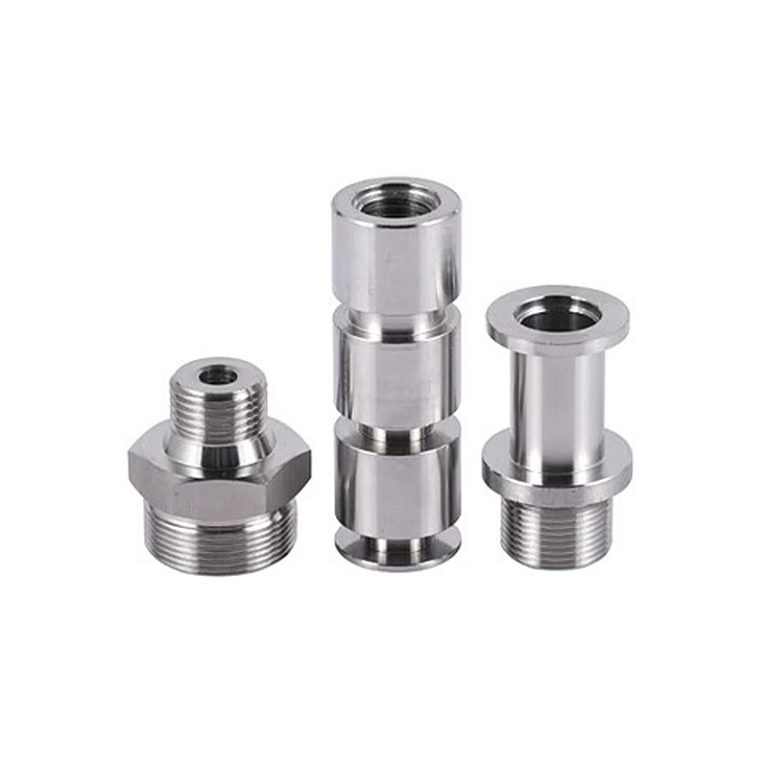
CNC turning creates cylindrical components. The workpiece rotates on a lathe while a stationary cutting tool removes material.
Typical applications:
- Shafts
- Bushings
- Threaded components
- Pins and connectors
Machine types:
- Conventional CNC lathes – General-purpose turning
- Swiss lathes – High-precision small parts with guide bushing support
- Turning centers – Multi-turret, live tooling for milling and drilling on rotating parts
Electrical Discharge Machining (EDM)
EDM uses electrical discharges to erode material from a conductive workpiece. It is ideal for hard materials and intricate shapes that mechanical cutting cannot achieve.
Process: A tool electrode (copper or graphite) and the workpiece are submerged in dielectric fluid. High-voltage pulses create sparks that vaporize small amounts of material.
Applications:
- Injection mold cavities
- Complex internal geometries
- Hardened steel components
- Fine details in tough materials
Limitation: Slower than milling or turning. Used where precision and complexity matter more than speed.
What Advantages Do CNC Machining Services Offer?
Precision and Consistency
CNC machining achieves tolerances as tight as ±0.001 mm in advanced setups. This level of precision is essential for industries where failure is not an option.
Aerospace example: A turbine blade with a shape deviation of even 0.01 mm can reduce engine efficiency and increase fuel consumption. CNC machining ensures blades meet exact specifications.
Medical example: A hip implant must fit precisely to function correctly and minimize complications. CNC machining enables patient-specific implants with exact dimensions.
Consistency is equally important. Once a program is proven, the machine produces identical parts indefinitely. In automotive manufacturing, switching to CNC machining reduced defect rates from 5% to less than 1% in engine block production.
Cost-Efficiency in the Long Run
Initial investment in CNC equipment is substantial. But long-term cost savings are significant.
| Cost Factor | CNC Machining | Traditional Machining |
|---|---|---|
| Labor | Continuous operation with minimal intervention | Manual operation, higher labor costs |
| Material waste | 5–10% | 20–30% |
| Rejection rate | <1% | 5% or higher |
| Rework | Minimal | Frequent |
For a production run of 10,000 parts with raw material cost of $10 per part:
- Traditional machining: 5% rejection = $5,000 waste
- CNC machining: 1% rejection = $1,000 waste
Over time, these savings offset the initial equipment investment.
Rapid Prototyping and Iteration
CNC machining transforms digital concepts into physical prototypes in 1–3 days. This speed accelerates product development.
Example: A consumer electronics startup developing a new smartphone case can produce a prototype in days, test fit and functionality, refine the design, and produce another prototype—all without expensive tooling changes.
This iterative process reduces time-to-market and development costs. Traditional prototyping methods like manual machining or casting can take weeks or months for a single iteration.
Material Versatility
CNC machining services work with a wide range of materials:
| Category | Materials | Applications |
|---|---|---|
| Metals | Aluminum, stainless steel, titanium, brass, copper | Aerospace, automotive, medical, electronics |
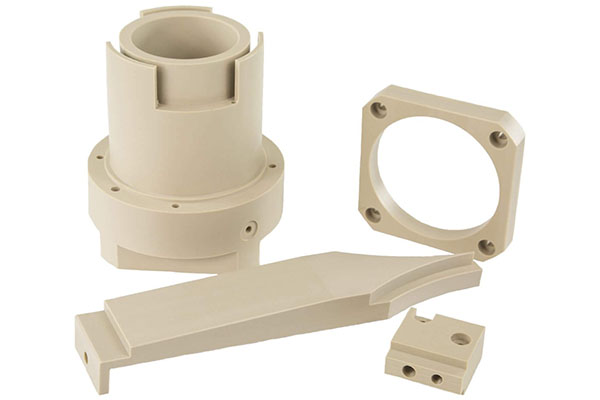
| Plastics | ABS, POM (acetal), PEEK, nylon, polycarbonate | Consumer products, medical devices, industrial components |
| Composites | Carbon fiber, fiberglass | Aerospace, high-performance automotive |
Scalable Production
CNC machining supports production volumes from prototypes to mass production:
| Volume | Batch Size | Best Use |
|---|---|---|
| Prototyping | 1–10 parts | Design validation, fit testing |
| Low-volume | 10–500 parts | Market testing, specialty products |
| Medium-volume | 500–5,000 parts | Initial production runs |
| High-volume | 5,000–100,000+ parts | Mass production |
This scalability means the same manufacturing partner can support a project from concept through full production.
What Surface Finishes Are Available?
Anodizing
Anodizing creates an oxide layer on aluminum parts through an electrochemical process.
Benefits:
- Enhanced corrosion resistance
- Color customization (dyes absorb into the oxide layer)
- Hard, durable surface
Applications: Outdoor components, consumer electronics, architectural hardware.
Powder Coating
Powder coating applies dry powder (resins, pigments, additives) to the part surface, then cures under heat.
Benefits:
- Excellent durability
- Scratch, chemical, and UV resistance
- Wide range of colors and textures
Applications: Automotive wheels, outdoor equipment, industrial components.
Electroplating
Electroplating deposits a thin metal layer onto the workpiece surface.
| Plating Type | Benefits | Applications |
|---|---|---|
| Nickel | Prevents tarnishing, shiny finish | Brass parts, decorative hardware |
| Chrome | Decorative, corrosion-resistant | Automotive trim, bumpers |
| Gold | Electrical conductivity, oxidation resistance | Electronics connectors |
Polishing
Polishing uses abrasives to remove surface imperfections and create a smooth, shiny finish.
Benefits:
- Aesthetic appearance
- Reduced friction
- Easier cleaning and sterilization
Applications: Jewelry, medical instruments, decorative hardware.
How Does CNC Machining Compare to Traditional Methods?
| Factor | CNC Machining | Traditional Machining |
|---|---|---|
| Precision | ±0.001 mm | ±0.1 mm |
| Consistency | Identical parts every run | Variations due to operator skill |
| Material waste | 5–10% | 20–30% |
| Complex shapes | Intricate 3D geometries | Basic forms, simple shapes |
| Prototyping speed | Hours to days | Days to weeks |
| Setup time | Program once, run many | Manual setup for each part |
| Operator skill | Programming expertise | Manual machining skill |
For complex parts and small-to-medium production runs, CNC machining is clearly superior. Traditional methods may still be cost-effective for very simple parts produced in extremely high volumes with low precision requirements.
Where Are CNC Machining Services Applied?
Automotive Manufacturing
Engine components: Cylinder heads, engine blocks, gears. CNC machining ensures ports and passages are accurately shaped. A study found CNC-machined cylinder heads delivered 5–8% more power and 3–5% better fuel efficiency compared to traditionally machined versions.
Custom tooling: Jigs and fixtures for assembly lines. CNC-machined fixtures reduce assembly downtime by 30–40% by ensuring precise part positioning.
Aerospace
Titanium alloy parts: Fuselage components, structural brackets. CNC machining creates complex shapes with exact specifications. Titanium accounts for 15–20% of modern commercial aircraft weight.
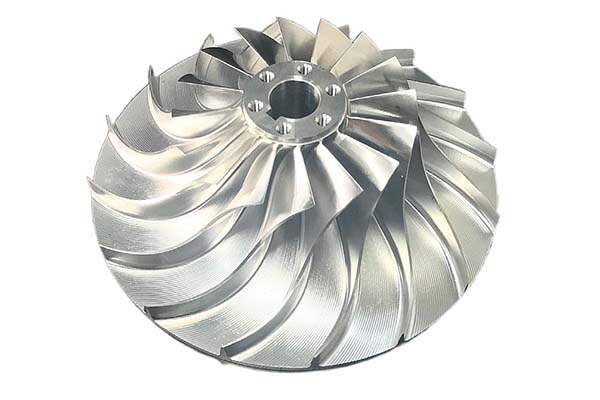
Jet engine turbines: Turbine blades with tolerances of ±0.0005 inches. A 3–5% improvement in thrust-to-fuel-consumption ratio from precisely machined blades translates to significant fuel savings over an aircraft’s lifespan.
Medical Devices
Surgical instruments: Laparoscopic tools with complex geometries. CNC machining enables micro-serrations and ergonomic designs that improve functionality.
Orthopedic implants: Custom hip and knee replacements. Combined with 3D scanning, CNC machining creates patient-specific implants. Patients with CNC-machined orthopedic implants showed 20–30% faster recovery compared to conventional implants.
Dental implants: Precision fit for osseointegration. Success rates exceed 95% with CNC-machined implants.
Conclusion
CNC machining services have transformed modern manufacturing. They deliver precision that manual methods cannot match—tolerances as tight as ±0.001 mm. They provide consistency across millions of parts. They support materials from aluminum to titanium to PEEK.
The advantages are clear. Rapid prototyping accelerates development. Scalable production supports projects from prototypes to mass production. Surface finishes from anodizing to polishing enhance durability and appearance.
Compared to traditional methods, CNC machining offers superior precision, lower material waste, faster production times, and the ability to create complex geometries. For industries where quality and reliability are non-negotiable, CNC machining is the standard.
As technology advances with AI integration and IoT connectivity, CNC machining will become even more efficient and capable. But the core value remains: turning digital designs into physical parts with accuracy, consistency, and efficiency that empower innovation across industries.
FAQ
What is the typical tolerance for CNC machined parts?
CNC machining typically achieves tolerances of ±0.001–0.01 mm depending on the process, material, and part complexity. Advanced setups with 5-axis machines and precision tooling can achieve ±0.001 mm for critical features.
How does CNC machining compare to 3D printing?
CNC machining offers tighter tolerances, better surface finish, and a wider range of materials. It produces parts with the same mechanical properties as the raw material. 3D printing excels at organic shapes and internal cavities but typically requires post-processing for precision. For functional prototypes and production parts, CNC machining is often preferred.
What materials can be CNC machined?
CNC machining works with metals (aluminum, steel, stainless steel, titanium, brass, copper), plastics (ABS, POM, PEEK, nylon, polycarbonate), and composites (carbon fiber, fiberglass). The range of materials is one of CNC machining’s key advantages.
Is CNC machining cost-effective for small batches?
Yes. CNC machining has relatively low setup costs compared to injection molding or casting. For batches of 10–500 parts, CNC machining is often the most cost-effective option. The ability to make design changes quickly without new tooling adds value for prototypes and market-testing quantities.
What industries benefit most from CNC machining services?
Aerospace, medical devices, automotive, electronics, and industrial machinery benefit most. These industries require high precision, tight tolerances, and materials that perform under demanding conditions. CNC machining delivers the accuracy and consistency they require.
Contact Yigu Technology for Custom Manufacturing
At Yigu Technology, we specialize in CNC machining services for demanding industries. Our facility includes 3-axis, 4-axis, and 5-axis CNC mills, CNC lathes (conventional and Swiss-type), and comprehensive quality control with CMM inspection.
We work with metals, plastics, and composites to meet your specific requirements. Our services span prototyping, low-volume production, and high-volume manufacturing. Surface finishes include anodizing, powder coating, electroplating, and polishing.
Contact us today to discuss your CNC machining project. Let our expertise help you achieve the precision, quality, and efficiency your application demands.