Introduction
In today’s advanced manufacturing landscape, CNC (Computer Numerical Control) machining has become a transformative technology. It enables the production of highly precise, efficient, and cost-effective components across industries—from aerospace and medical devices to automotive and consumer electronics. Unlike manual machining, where operators guide tools by hand, CNC systems automate tasks with remarkable precision and consistency. This article provides a comprehensive analysis of CNC machining solutions, exploring capabilities, processes, materials, precision, efficiency, and industry applications—helping manufacturers understand how CNC stacks up against alternatives and how to leverage its full potential.
What Are the Core CNC Machining Processes?
Milling
Milling uses rotating cutters to remove material from a workpiece, shaping it into the desired form. It is highly versatile, creating features like slots, contours, pockets, and complex 3D surfaces.
Key capabilities:
- 3-axis to 5-axis configurations
- Handles metals, plastics, composites
- Achieves tolerances down to ±0.005 mm
Turning
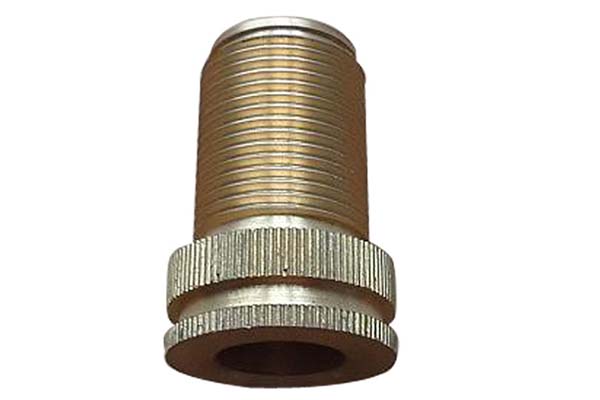
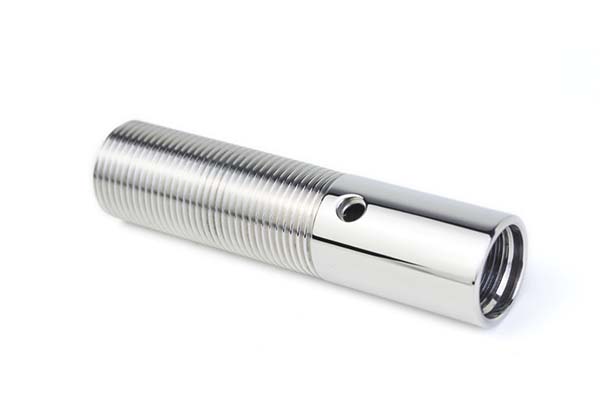
In turning, a rotating workpiece is shaped by a stationary cutting tool. It is highly effective for cylindrical parts—shafts, pins, bushings, and threaded components.
Key capabilities:
- Produces symmetrical parts with high precision
- Live tooling enables milling, drilling in same setup
- Achieves tolerances down to ±0.002 mm
Drilling
Drilling operations use rotating drills to create precise holes. This process can be combined with other operations for added functionality.
Key capabilities:
- Hole diameters from micro to large
- Peck drilling for deep holes
- Achieves positional tolerances of ±0.01 mm
Specialized Processes
| Process | Description | Best For |
|---|---|---|
| 5-axis milling | Simultaneous movement along five axes | Complex geometries, undercuts, single-setup machining |
| EDM (Electrical Discharge Machining) | Electrical discharges remove material | Hard metals, intricate parts, sharp internal corners |
| Laser cutting | Focused light beam cuts material | Thin materials, intricate patterns, fast processing |
| Water jet cutting | High-pressure water with abrasives | Heat-sensitive materials, thick sections, no HAZ |
What Advanced Technologies Are Enhancing CNC?
Multi-Axis Machining
Beyond traditional 3-axis, multi-axis CNC machines move the workpiece or tool in multiple directions simultaneously. Benefits include:
- Reduced setups: Complex parts machined in one setup
- Improved accuracy: No alignment errors between setups
- Complex geometries: Undercuts, angled features, curved surfaces
Artificial Intelligence and Machine Learning
AI and machine learning are increasingly integrated into CNC systems:
- Predictive maintenance: System predicts tool or machine failures before they occur, reducing downtime
- Parameter optimization: Algorithms adjust speeds, feeds in real time based on cutting conditions
- Quality prediction: Detects deviations before parts go out of tolerance
Real-Time Monitoring Systems
Integrated sensors provide real-time data on:
- Spindle load
- Tool wear
- Temperature
- Vibration
Operators receive alerts when parameters deviate, enabling immediate corrections and maintaining quality throughout production.
What Materials Can CNC Machines Process?
Metals
| Material | Properties | Applications |
|---|---|---|
| Aluminum | Lightweight, good machinability, corrosion resistant | Aerospace, automotive, consumer electronics |
| Stainless steel | High strength, corrosion resistance, biocompatible | Medical devices, food processing, industrial |
| Titanium | High strength-to-weight, corrosion resistant, biocompatible | Aerospace, medical implants, high-performance |
| Brass, copper | Good conductivity, machinability | Electrical connectors, terminals, decorative |
Plastics
| Material | Properties | Applications |
|---|---|---|
| ABS | Impact resistant, good machinability | Consumer electronics housings, prototypes |
| Polycarbonate | High impact resistance, transparency | Protective covers, optical components |
| Nylon (PA) | High strength, wear resistance, good machinability | Gears, bearings, automotive components |
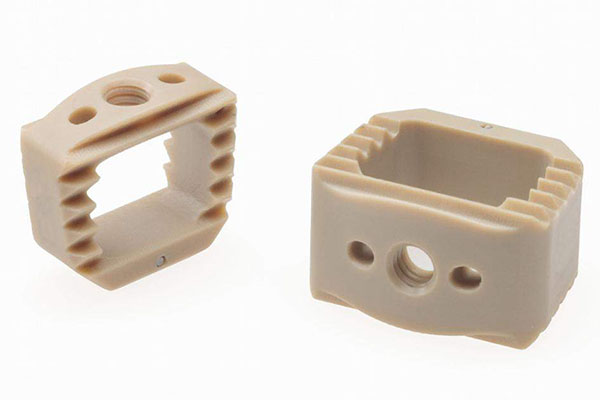
| PEEK | High temperature stability, chemical resistance, biocompatible | Aerospace, medical implants, high-performance |
Composites
- Carbon fiber: High strength-to-weight ratio—aerospace, automotive, sporting goods
- Fiberglass: Good strength, corrosion resistance—marine, industrial components
How Does Material Selection Vary by Industry?
| Industry | Material Priorities | Common Materials |
|---|---|---|
| Aerospace | Lightweight, high strength, high-temperature stability | Aluminum, titanium, PEEK, carbon fiber |
| Medical | Biocompatibility, corrosion resistance, sterilizability | Stainless steel, titanium, PEEK |
| Automotive | Strength, weight reduction, cost-effectiveness | Aluminum, steel, ABS, nylon |
| Electronics | Conductivity, insulation, dimensional stability | Copper, brass, ABS, polycarbonate |
| Industrial | Durability, wear resistance, chemical resistance | Steel, stainless, nylon, acetal |
What Precision and Tolerances Can CNC Achieve?
The Importance of Precision
Precision ensures components fit together seamlessly during assembly, reducing errors and minimizing waste. For critical applications—aerospace, medical devices, automotive—exact tolerances are required for safety, functionality, and performance.
Tolerance Levels by Industry
| Industry | Typical Tolerance Range | Critical Examples |
|---|---|---|
| Aerospace | 0.001–0.01 mm | Turbine blades, engine components, structural parts |
| Medical | ±0.005–0.01 mm | Implants, surgical instruments, diagnostic equipment |
| Automotive | ±0.01–0.05 mm | Engine blocks, transmission parts, bearing surfaces |
| General industrial | ±0.02–0.1 mm | Housings, brackets, non-critical assemblies |
CNC capability: Modern CNC machines achieve tolerances as tight as ±0.001 mm —far exceeding manual methods.
How Does CNC Improve Efficiency and Productivity?
Automation and Reduced Lead Times
CNC machines run continuously, even without operator intervention. Key efficiency drivers:
- Automated tool changers: Swap tools in seconds between operations
- Pallet changers: Load/unload parts while machine runs
- Lights-out manufacturing: Unattended operation through multiple shifts
Material Waste Reduction
Precision machining minimizes material waste:
- Near-net shapes reduce scrap
- Optimized nesting for sheet materials
- Reduced rework from consistent quality
Impact: CNC reduces material waste by 20–40% compared to manual methods for complex parts.
Labor Efficiency
One operator manages multiple CNC machines simultaneously. Skilled programmers create optimized toolpaths; operators monitor and maintain. Labor cost per part drops significantly with volume.
What Industries Benefit from CNC Machining?
Aerospace
Components: Turbine blades, landing gear, structural elements, engine mounts
Why CNC: Tight tolerances (0.001–0.01 mm), complex geometries, high-strength materials (titanium, Inconel)
Automotive
Components: Engine blocks, transmission parts, interior components, suspension parts
Why CNC: High-volume production, consistent quality, material versatility
Medical Devices
Components: Surgical instruments, implants, diagnostic equipment housings
Why CNC: Biocompatible materials, tight tolerances, surface finish requirements
Electronics
Components: Connectors, housings, heat sinks, circuit board components
Why CNC: Miniaturization, precision, conductivity requirements
Customization and Bespoke Solutions
CNC machining excels at producing customized parts in small or large batches:
- One-off prototypes: Test designs before production
- Low-volume production: 10–1,000 parts without tooling investment
- Mass production: 10,000+ parts with consistent quality
How Does CNC Compare to Traditional Manual Machining?
| Aspect | CNC Machining | Traditional Manual Machining |
|---|---|---|
| Precision | ±0.001–0.01 mm | ±0.05–0.1 mm |
| Consistency | Identical parts in every batch | Variations due to operator skill, fatigue |
| Speed | Fast; multiple operations automatically | Slow; manual setup for each operation |
| Complexity | Handles intricate shapes, multiple operations | Limited to simple shapes, single operations |
| Labor | One operator manages multiple machines | Skilled operator required per machine |
| Cost-effectiveness | Higher upfront; lower per-unit at volume | Lower upfront; higher per-unit due to labor |
| Material waste | 20–40% less waste | Higher waste from errors, less optimization |
| Skill requirements | Basic operation; specialized programming | Skilled operators for manual control |
| Production volume | Ideal for high-volume and complex parts | Better for low-volume, simple parts |
What Are the Benefits and Considerations for Adoption?
Benefits
- Improved precision and consistency: Tolerances to ±0.001 mm
- Increased productivity: Continuous operation, reduced lead times
- Material versatility: Metals, plastics, composites
- Customization: One-off to high-volume; complex geometries
- Reduced waste: Precision machining minimizes scrap
Considerations
- Initial investment: Equipment costs from $10,000 (small router) to $1,000,000+ (5-axis machining centers)
- Ongoing maintenance: Regular calibration, tool replacement, software updates
- Training requirements: Operators need programming and troubleshooting skills
- Production volume suitability: CNC excels at complex and high-volume; very simple, low-volume parts may be cost-effective manually
A Real-World CNC Adoption Success
A medical device manufacturer producing surgical instruments faced:
- Inconsistent quality: 8% scrap rate from operator errors
- Long lead times: 4 weeks for complex parts
- Limited capacity: Skilled machinists difficult to find
After adopting CNC machining:
- 5-axis machining centers with automated tool changers
- CAD/CAM programming with simulation
- In-process probing for real-time quality control
Results:
- Scrap rate dropped from 8% to 1.5%
- Lead time reduced from 4 weeks to 1 week
- Production capacity increased by 200% without adding operators
- ROI achieved in 18 months
Conclusion
CNC machining solutions stack up as a transformative force in modern manufacturing. Core processes—milling, turning, drilling—deliver precision to ±0.001 mm, far exceeding manual capabilities. Advanced technologies—multi-axis machining, AI-driven optimization, real-time monitoring—further enhance accuracy and efficiency. Material versatility spans metals, plastics, and composites, enabling applications across aerospace, medical, automotive, and electronics industries. While upfront investment and training requirements are considerations, long-term benefits—reduced labor costs, lower scrap, faster lead times, and consistent quality—make CNC machining the standard for complex and high-volume production. For manufacturers seeking precision, efficiency, and competitiveness, CNC machining solutions are not just an option—they are a necessity.
FAQs
What are the primary benefits of adopting CNC machining solutions?
CNC machining enhances precision (tolerances to ±0.001 mm), reduces lead times (automated operation, lights-out manufacturing), increases productivity (one operator manages multiple machines), and supports customization and versatility (complex geometries, wide material range). These benefits translate to lower per-unit costs, consistent quality, and faster time-to-market.
How does CNC machining compare to traditional manual machining in terms of cost-effectiveness?
While CNC machines require higher upfront costs, long-term cost-effectiveness comes from reduced material waste (20–40% less), lower labor costs (one operator manages multiple machines), consistent quality (reduced scrap), and faster production. For high-volume production and complex parts, CNC is significantly more cost-effective. For very simple, low-volume parts, manual machining may have lower upfront costs but higher per-unit labor.
Can CNC machining be used for prototyping?
Yes. CNC machining is an excellent choice for rapid prototyping. It produces accurate models from a wide range of materials—metals, plastics, composites—allowing designers to test and refine concepts before mass production. Unlike tooling-based processes (injection molding, casting), CNC has no tooling investment, making it economical for one-off prototypes and design iterations.
What is the typical lifespan of CNC equipment?
With proper maintenance, CNC equipment can last 10–20 years. Spindles and high-wear components may need replacement after 5–10 years. Preventive maintenance—regular lubrication, cleaning, calibration—extends lifespan significantly. Machines in climate-controlled environments last longer than those in harsh conditions.
What industries benefit most from CNC machining?
Aerospace (turbine blades, structural components), medical devices (implants, surgical instruments), automotive (engine components, transmission parts), and electronics (connectors, housings) benefit most. Any industry requiring tight tolerances, complex geometries, or consistent quality across production volumes can leverage CNC machining.
Contact Yigu Technology for Custom Manufacturing
At Yigu Technology, we provide comprehensive CNC machining solutions across milling, turning, 5-axis, and specialized processes. Our facility works with metals (aluminum, steel, titanium), plastics (ABS, PEEK, nylon), and composites. We achieve tolerances down to ±0.005 mm and surface finishes as low as Ra 0.4 μm. Our engineering team optimizes toolpaths, selects the right tooling, and implements real-time quality control. Whether you need prototypes, low-volume production, or high-volume runs, we deliver precision components that meet your specifications. Contact us to discuss your CNC machining needs.