Introduction
C17510 is a high-performance alloy. It combines strength, conductivity, and stability in ways few materials can match. Engineers choose it for electric vehicle connectors, aerospace terminals, and spot-welding electrodes.
But machining C17510 comes with challenges. Its age-hardening properties demand careful planning. Tight tolerances and precise surface finishes are not optional—they are essential. And if you do not manage heat correctly, the alloy work-hardens and becomes even more difficult to cut.
This guide covers everything you need to CNC machine C17510 successfully. You will learn about its material properties, heat treatment strategies, cutting parameters, and quality control methods. By the end, you will have a clear plan for producing precision parts from this demanding alloy.
What Makes C17510 Different from Other Beryllium Coppers?
Composition and Properties
C17510, also known as CuNi2Be, has a specific composition:
| Element | Percentage |
|---|---|
| Beryllium | 0.4–0.6% |
| Nickel | 1.4–2.2% |
| Copper | Remainder |
This combination delivers a unique set of properties.
| Property | Value |
|---|---|
| Electrical Conductivity | 45–60% IACS |
| Tensile Strength (aged) | ~760 MPa |
| Hardness (after heat treatment) | 98 HRB |
Compared to higher-beryllium alloys like C17200, C17510 offers better electrical conductivity (45–60% IACS vs. 22–28%) but slightly lower tensile strength. The trade-off makes it ideal for applications where both conductivity and strength matter.
Age-Hardenable Nature
C17510 is age-hardenable. This means you can machine it in a softer state, then heat treat it to achieve final mechanical properties.
The heat treatment process involves two steps:
- Solution annealing – Softens the material for machining
- Precipitation hardening (aging) – Develops strength and hardness
A key advantage is low distortion during heat treatment. Dimensional accuracy is easier to maintain than with some other age-hardening alloys.
How Should You Plan the Machining Sequence?
Solution-Treated vs. Age-Hardened States
The best approach is to do most machining in the solution-treated state. The material is softer and more ductile. Tool wear is lower. Cutting is more efficient.
After heat treatment, the material hardens. Final finishing—critical features requiring tight tolerances—is done in the age-hardened state. This requires specialized tooling and slower speeds.
Why Sequence Matters
Machining a part completely in the soft state, then heat treating, risks dimensional changes. Machining a fully hardened part is slow and wears tools quickly. The balanced approach—rough and semi-finish machining in the soft state, final finishing after aging—delivers the best results.
What Machining Strategies Work Best?
High-Speed Turning
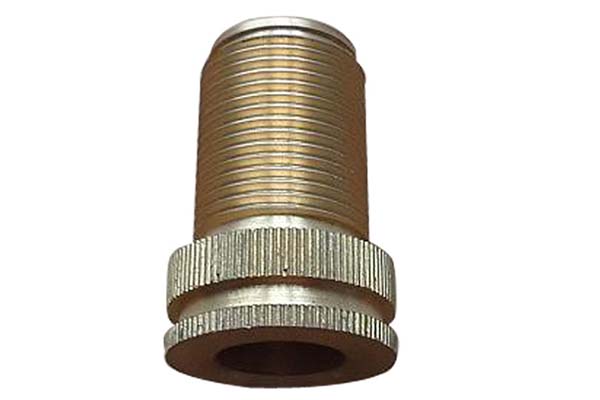
High-speed turning is effective for cylindrical parts like aerospace terminals. Key considerations:
- Rigid machine setup to avoid vibration
- Sharp carbide tools with appropriate coatings
- Cutting speeds in the recommended range
5-Axis Milling
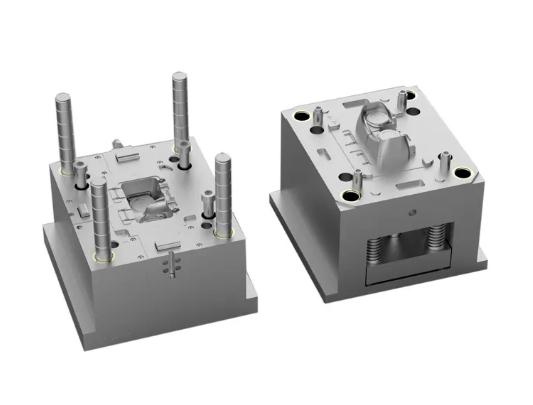
For complex geometries like mold cores, 5-axis milling is ideal. It enables machining from multiple angles in a single setup. All features are accurately formed without repositioning errors.
Trochoidal Toolpaths
Trochoidal toolpaths reduce tool engagement time. This controls heat buildup. Why does heat matter? C17510 can work-harden if exposed to excessive temperatures. Trochoidal paths keep the tool moving, minimizing localized heating.
Chip Control
C17510 tends to produce long, stringy chips. These can wrap around the tool or workpiece, causing damage and interrupting production.
Solutions:
- Use tools with chip-breaker designs
- Optimize feed rates to encourage chip breaking
- Apply coolant-through-tool to flush chips away
Coolant-Through-Tool
Coolant-through-tool systems deliver coolant directly to the cutting zone. Benefits include:
- Reduced heat at the cutting edge
- Lower friction
- Effective chip evacuation
- Extended tool life
Low-Stress Fixturing
Thin-walled or delicate parts like medical clips require low-stress fixturing. Soft jaws and vacuum chucks distribute clamping force evenly. This minimizes distortion and maintains dimensional accuracy.
Vibration Dampening
Chatter ruins surface finish and accuracy. Vibration-damping toolholders and machine accessories reduce vibration. The result is smoother surfaces and consistent dimensions.
What Tooling and Cutting Parameters Should You Use?
Carbide Inserts and Coatings
| Tool Type | Best Use | Coating Benefit |
|---|---|---|
| Carbide inserts | General machining | Hardness and wear resistance |
| AlTiN/TiB₂ coated | High-performance | Reduces friction, increases heat resistance |
| PCD micro-tools | Micro-machining, fine finishes | Extreme hardness, sharp cutting edges |
Coatings like AlTiN/TiB₂ significantly extend tool life by reducing friction and protecting against heat.
Cutting Parameters
| Parameter | Recommended Range |
|---|---|
| Cutting speed | 60–120 m/min |
| Feed rate | 0.05–0.12 mm/tooth |
| Depth of cut (roughing) | 0.5–1.0 mm |
| Depth of cut (finishing) | 0.1–0.3 mm |
These ranges balance material removal with tool life. Adjust based on material condition (solution-treated vs. age-hardened) and operation type.
Honed Edges
Honed edges remove sharp corners from cutting tools. This reduces the risk of chipping and improves tool life. For C17510, tools with honed edges are preferred over razor-sharp geometries.
Tool Wear Management
Minimal tool wear is essential for consistent quality. Regularly inspect tools for wear. Replace them when cutting performance degrades.
Micro-lubrication—applying a thin layer of lubricant at the cutting interface—helps reduce wear. It is especially useful for finishing operations.
What Surface Finish and Precision Can You Achieve?
Surface Finish Targets
| Finish Level | Ra Value | Applications |
|---|---|---|
| Standard machined | 0.4–0.8 μm | General components |
| High-quality finish | 0.1–0.4 μm | Aerospace terminals, precision parts |
| Mirror finish | <0.05 μm | Optical or decorative applications |
Achieving Ra 0.1–0.4 μm requires:
- PCD tools or sharp carbide with polished flutes
- Optimized feed rates (toward the lower end)
- Appropriate cutting speeds
- Rigid setup and vibration control
Mirror finish passes use a sharp PCD tool with slow feed and light depth of cut. The result is a highly reflective surface suitable for the most demanding applications.
Dimensional Tolerances
| Feature | Achievable Tolerance |
|---|---|
| General dimensions | ±0.005 mm |
| Critical features | ±0.002 mm |
| Roundness | <0.8 μm |
These tolerances require tight control over the entire machining process: tooling, parameters, machine calibration, and environmental conditions.
Inspection Methods
CMM (Coordinate Measuring Machine) validation verifies that dimensions meet specifications. CMMs provide accurate measurements of complex geometries.
Non-contact profilometry measures surface roughness without touching the part. This is essential for verifying Ra values, especially on delicate or finished surfaces.
Burr-Free Edges
Burr-free edges are critical for medical devices and electrical connectors. Burrs can cause assembly issues, electrical shorts, or tissue damage.
Achieve burr-free edges through:
- Sharp tools
- Optimized cutting parameters
- Post-machining deburring (vibratory finishing, laser deburring)
Where Is C17510 Used?
Electric Vehicles (EV)
EV fast-charge connectors demand both good electrical conductivity and high strength. C17510 delivers both. The alloy ensures efficient, reliable charging under repeated use.
Aerospace
Aerospace terminals made from C17510 perform reliably in harsh environments. The alloy’s strength and corrosion resistance are essential for flight-critical applications.
Welding
Spot-welding electrodes rely on C17510’s ability to conduct heat and electricity while resisting wear. Electrodes maintain their shape and conductivity over thousands of welds.
Oil and Gas
MWD tools (Measurement While Drilling) operate in downhole conditions with extreme pressure, temperature, and vibration. C17510 provides the stability and durability required.
Telecommunications
Telecom springs need consistent force and conductivity. C17510 delivers both, ensuring reliable signal transmission over years of service.
Medical
Medical clips benefit from the alloy’s biocompatibility and strength. Precision machining ensures burr-free edges that are safe for use in the human body.
Other Applications
| Application | Why C17510 |
|---|---|
| Non-sparking fasteners | Safety in hazardous environments |
| Mold cores | Stability and polishability for precise replication |
| Electrical connectors | Balance of conductivity and strength |
Conclusion
CNC machining C17510 requires understanding its unique characteristics. The alloy is age-hardenable, so plan your sequence: machine most features in the solution-treated state, then finish critical surfaces after aging.
Use carbide inserts with AlTiN/TiB₂ coatings. Apply coolant-through-tool systems to manage heat and chips. Control vibration with damping toolholders. Maintain cutting speeds between 60–120 m/min and feed rates at 0.05–0.12 mm/tooth.
Surface finishes down to Ra 0.1–0.4 μm are achievable with PCD tools and optimized parameters. Tolerances of ±0.005 mm are routine with proper setup and inspection.
From EV connectors to aerospace terminals, medical clips to welding electrodes, C17510 delivers performance that justifies the machining effort. With the right strategies, you can produce precision parts that meet the most demanding requirements.
FAQ
What is the difference between C17510 and C17200?
C17510 has lower beryllium content and higher nickel content. This gives it better electrical conductivity (45–60% IACS vs. 22–28%) but slightly lower tensile strength. C17510 is preferred for applications requiring both conductivity and strength, while C17200 is chosen for maximum strength.
Can C17510 be machined after age hardening?
Yes, but it is more difficult due to increased hardness. Machining after aging requires slower cutting speeds, sharper tools, and more rigid setups. The preferred approach is to do most machining in the solution-treated state and only final finishing after aging.
What is the best way to prevent tool wear when machining C17510?
Use carbide inserts with AlTiN/TiB₂ coatings. Maintain cutting speeds within recommended ranges (60–120 m/min). Apply coolant-through-tool systems to reduce heat and friction. Regularly inspect tools and replace them when wear is detected.
How do you achieve a mirror finish on C17510?
Start with a sharp PCD tool. Use a slow feed rate and light depth of cut (0.05–0.1 mm). Ensure the machine setup is rigid and vibration-free. The result is a highly reflective surface suitable for optical or decorative applications.
What tolerance can C17510 hold?
With proper setup and process control, C17510 can hold ±0.005 mm for general dimensions and ±0.002 mm for critical features. Roundness of <0.8 μm is achievable for cylindrical parts. CMM validation is essential to verify these tolerances.
Contact Yigu Technology for Custom Manufacturing
At Yigu Technology, we specialize in CNC machining C17510 for demanding applications. We understand the alloy’s age-hardening behavior and use the right sequence—solution-treated roughing followed by age-hardened finishing.
Our tooling strategy uses carbide inserts with AlTiN/TiB₂ coatings and PCD micro-tools for precision work. We apply coolant-through-tool systems for heat management and chip control. Our quality control includes CMM validation and non-contact profilometry to verify tolerances and surface finishes.
From EV connectors to aerospace terminals, medical clips to welding electrodes, we deliver C17510 parts that meet the tightest specifications.
Contact us today to discuss your C17510 machining project. Let our expertise help you achieve the precision, surface finish, and performance your application demands.