
Introduction
Polypropylene—PP —is one of the most widely used plastics in the world. It is in your car’s bumpers, your food containers, and your medical devices. Its combination of properties—chemical resistance, light weight, and durability—makes it a go-to material for injection molding.
The global injection molding market for plastics is a multi-billion-dollar industry, and PP accounts for a substantial portion. This guide covers everything you need to know about PP plastic injection molding: the process, material properties, equipment, design best practices, and how to optimize parameters for consistent, high-quality parts.
What Is PP Plastic Injection Molding?
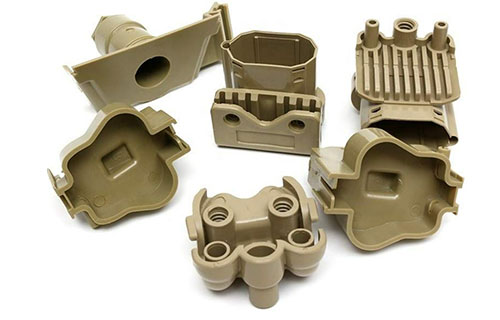
PP plastic injection molding is a manufacturing process that melts polypropylene pellets and injects the molten plastic into a mold cavity. The plastic cools and solidifies, taking the shape of the mold.
This process is highly versatile. It produces high-volume, complex-shaped parts with consistent quality. PP’s properties—excellent chemical resistance, high strength-to-weight ratio, and good heat resistance—make it ideal for injection molding.
How Does the PP Injection Molding Process Work?
Step 1: Raw Material Preparation
High-quality PP pellets are the starting point. Pellets should be free from impurities. Additives may be mixed with the base PP:
- Colorants: Masterbatch pellets blended in specific proportions
- Stabilizers: Protect against heat, light, or oxidation
- Fillers: Talc or glass fibers to improve strength or stiffness
Uniform mixing ensures additives distribute evenly throughout the plastic.
Step 2: Heating and Melting
Raw materials feed into the hopper, then into the heating barrel. Barrel temperature gradually increases to PP’s melting range of 160°C to 175°C . Heating elements transfer heat to the plastic. Solid pellets transform into a viscous, molten state.
Step 3: Injection
A reciprocating screw rotates, pushing molten plastic forward and building pressure. Once sufficient pressure is reached, the plastic is forcefully injected through the nozzle into the mold cavity.
Injection pressure typically ranges from 100 to 200 MPa , depending on mold complexity and desired part quality.
Step 4: Cooling and Solidification
Cooling channels circulate coolant—usually water—through the mold. Heat transfers from molten plastic to coolant. The plastic cools and solidifies, taking the cavity shape.
Cooling time varies. Thicker parts need longer cooling, from seconds to several minutes.
Step 5: Mold Opening and Part Ejection
Once solidified, the mold opens. Ejector pins push the part out. Removal may be manual or automated with robotic arms.
Step 6: Post-Processing
Some parts need additional operations:
- Trimming: Remove excess plastic (flash) from runners or gates
- Polishing: Improve surface finish
- Assembly: Combine with other components
What Properties Make PP Ideal for Injection Molding?
Chemical Resistance
PP resists a wide range of chemicals—acids, alkalis, and many organic solvents. This makes it suitable for chemical, pharmaceutical, and food industries.
Examples: Chemical storage containers, food packaging. PP does not corrode or degrade when contacting these substances.
High Melting Point
PP melts between 160°C and 175°C . It withstands relatively high temperatures without deforming.
Example: Microwave-safe food containers. You can heat food in a PP container without melting.
Good Mechanical Properties
PP has a high strength-to-weight ratio. Density is around 0.9 g/cm³ —lighter than many other plastics. It also has good fatigue resistance, handling repeated stress cycles without failure.
Example: Automotive bumpers and interior trims. Lightweight PP improves fuel efficiency while providing durability.
Low Moisture Absorption
PP absorbs very little moisture. This makes it ideal for applications where moisture causes problems.
Example: Electronic component housings. PP enclosures protect sensitive parts from humidity-related damage.
The table below summarizes key properties:
| Property | Value | Significance |
|---|---|---|
| Melting point | 160 – 175°C | Heat resistance for microwave and automotive applications |
| Density | ~0.9 g/cm³ | Lightweight, improves fuel efficiency |
| Chemical resistance | Excellent | Suitable for chemical and food contact |
| Moisture absorption | Very low | Protects electronic components |
What Equipment Is Used for PP Injection Molding?
Injection Molding Machine
The machine has two main units:
Injection unit: Melts plastic and injects it into the mold. Components include hopper, heating barrel, screw, and nozzle. Choose based on injection volume, pressure, and speed. High-speed machines with smaller injection volumes suit high-volume production of small PP parts.
Clamping unit: Holds the mold closed during injection and cooling. Clamping force must be sufficient to prevent mold opening under injection pressure. Force is calculated from projected part area and injection pressure. Large parts with large projected area need higher clamping force.
Mold
The mold determines the final part shape. Molds can be:
- Single-cavity: One part per cycle
- Multi-cavity: Multiple parts per cycle, increasing efficiency
Mold materials:
- Steel: More durable, suitable for high-volume production
- Aluminum: Lighter, cost-effective for low-volume or complex geometries
Mold design considerations for PP:
- Draft angles: 0.5° to 1° minimum for easy ejection
- Gate design: Point gates for small precision parts, side gates for larger parts
- Cooling channels: Efficient, evenly distributed for uniform cooling
How to Optimize Process Parameters?
Temperature
Barrel zones: Feed zone: 150°C to 160°C to prevent premature melting. Middle and front zones: 170°C to 180°C for full melting.
Mold temperature: 30°C to 60°C. Lower temperature speeds cooling but may cause flow marks and poor surface finish. Higher temperature improves surface finish and reduces internal stresses but increases cycle time.
Pressure
Injection pressure: 100 to 200 MPa. Higher pressure for complex parts with thin walls or long flow paths. Simple parts may need only 100 to 120 MPa.
Holding pressure: 60% to 80% of injection pressure. Applied after filling to compensate for shrinkage during cooling.
Speed
Medium-high injection speed is often recommended for PP. Too slow causes incomplete filling and short shots. Too fast causes jetting—non-uniform flow—leading to weld lines and other defects.
The table below summarizes parameter ranges:
| Parameter | Range | Notes |
|---|---|---|
| Barrel temperature | 150 – 180°C | Lower in feed zone, higher near nozzle |
| Mold temperature | 30 – 60°C | Lower for faster cycles, higher for better finish |
| Injection pressure | 100 – 200 MPa | Higher for complex geometries |
| Holding pressure | 60 – 80% of injection | Compensates for shrinkage |
| Injection speed | Medium-high | Balance between filling and flow defects |
How to Choose the Right PP Grade?
Impact Resistance
For parts subject to impacts—automotive bumpers, interior components—select high-impact-grade PP. These contain elastomeric additives or have copolymer structures that enhance toughness.
Stiffness
For parts requiring high stiffness—industrial machinery components—select high-stiffness PP. Higher crystallinity or fillers like talc or glass fibers increase stiffness. A PP grade with 20% to 30% glass fiber reinforcement significantly improves tensile strength.
UV Exposure
For outdoor applications—garden furniture, automotive exterior—select PP with UV stabilizers. These prevent degradation from sunlight exposure.
Food or Medical Contact
For food packaging or medical devices, select food-grade or medical-grade PP. These meet relevant safety and hygiene standards.
What Are Mold Design Best Practices?
Draft Angles
Minimum draft angle of 0.5° to 1° for PP plastic. Without proper draft, parts stick to the mold, causing deformation or breakage during ejection.
Gate Design
- Point gates: For small, high-precision parts. Provide better flow control and leave a small gate vestige easily removed.
- Side gates: For larger parts with simple geometries. Easier to manufacture and handle larger plastic flow volumes.
Cooling Channels
Efficient cooling reduces cycle time and ensures uniform cooling. General rule: distance between cooling channels and cavity walls should be 1.5 to 2 times the channel diameter. This prevents hot spots and reduces warping risk.
What Does a Real-World Example Look Like?
A manufacturer needed food storage containers that were microwave-safe, dishwasher-safe, and durable. PP was the obvious choice.
Material selection focused on food-grade PP with stabilizers for dishwasher heat cycles. Mold design included a multi-cavity layout for high-volume production—eight cavities per cycle. Cooling channels were placed to ensure uniform cooling across all cavities.
Process parameters were optimized: barrel temperature at 180°C, mold temperature at 50°C, injection pressure at 120 MPa. Cycle time was 35 seconds.
The containers passed all safety tests. They withstood repeated microwave and dishwasher cycles without warping or degradation. Production volume reached 500,000 units per month.
Conclusion
PP plastic injection molding is a versatile, high-volume manufacturing process. The material offers chemical resistance, light weight, good mechanical properties, and low moisture absorption.
The process involves raw material preparation, heating and melting, injection, cooling, ejection, and post-processing. Equipment includes injection molding machines with injection and clamping units, and molds designed for PP’s specific requirements.
Optimizing process parameters—temperature, pressure, speed—is essential for quality. Material selection must match the application: impact resistance, stiffness, UV exposure, or food contact.
Mold design best practices—draft angles, gate design, cooling channels—prevent defects and improve efficiency.
When all elements align, PP injection molding delivers consistent, high-quality parts across automotive, consumer goods, medical, and industrial applications.
FAQ
How to choose the right PP plastic grade for my product?
For high impact resistance—automotive interior components—select high-impact-grade PP with elastomeric additives or copolymer structure. For high stiffness—industrial machinery parts—select high-stiffness PP, possibly glass-fiber reinforced (20% to 30% glass). For outdoor exposure, choose PP with UV stabilizers. For food or medical applications, select food-grade or medical-grade PP meeting safety standards.
What is the typical cost structure of a PP plastic injection molding project?
Mold cost is a significant upfront expense. Simple single-cavity molds cost a few thousand dollars. Complex multi-cavity molds for high-volume production can cost tens of thousands or more.
Raw material cost: Commodity-grade PP pellets range from $1 to $2 per kilogram. High-performance or specialty grades cost more.
Processing cost: Machine operating cost, labor, and energy. Shorter cycle times reduce per-part processing costs. For a machine running at $50 per hour with a 30-second cycle, machine-related processing cost per part is approximately $0.42. Labor adds additional cost depending on region and automation level.
What causes warping in PP injection-molded parts?
Uneven cooling is the primary cause. When one section of the part cools faster than another, internal stresses develop and the part warps. Solutions include redesigning cooling channels for uniform heat distribution, optimizing mold temperature, and ensuring uniform wall thickness in the part design.
What is the recommended draft angle for PP molds?
Minimum draft angle of 0.5° to 1° for PP plastic. This allows the part to eject easily without sticking or deformation. Parts with textured surfaces may need larger draft angles.
Can PP be recycled after injection molding?
Yes, PP is recyclable. It carries resin code 5. Recycled PP can be used in many applications, though properties may be slightly reduced compared to virgin material. For high-performance parts, blending recycled with virgin PP maintains quality while improving sustainability.
Contact Yigu Technology for Custom Manufacturing
At Yigu Technology , we specialize in PP plastic injection molding. Our experience spans automotive, consumer goods, medical, and industrial applications.
We help clients select the right PP grade for their needs. Our mold designs incorporate best practices—proper draft angles, gate design, and cooling channels. We optimize process parameters to deliver consistent, high-quality parts.
From prototype to high-volume production, we provide custom solutions.
Contact Yigu Technology today to discuss your PP injection molding project.


