Introduction
Injection molding is the backbone of modern plastic manufacturing. It produces everything from medical devices to automotive components. But the cost of injection molding can vary dramatically.
A study by a leading manufacturing research firm found that nearly 30% of small to medium-sized enterprises that underestimated injection molding costs faced financial difficulties during product launches. These cost overruns disrupt schedules, force quality compromises, and sometimes kill projects entirely.
Understanding injection molding cost is not just about numbers. It is about making informed decisions that impact your business success. This guide breaks down the factors that drive costs, shows you how to calculate them, and provides practical strategies to reduce expenses without sacrificing quality.
Why Does Injection Molding Cost Matter?
Budget Control
Setting a realistic budget is the first step toward project success. Injection molding costs can swing widely based on design decisions. A miscalculation leads to budget overruns. Overruns disrupt production schedules. They can delay product launches and strain cash flow.
Pricing Strategy
Your product price must cover costs while remaining competitive. Price too high, and customers choose alternatives. Price too low, and you lose money. Accurate cost understanding lets you set prices that protect margins and attract customers.
Competitive Edge
In a global marketplace, cost advantages matter. Manufacturers who optimize injection molding costs can offer better prices without sacrificing quality. This attracts customers and builds market share.
Resource Allocation
Knowing where your money goes helps you invest wisely. If energy costs are high, you can invest in efficient equipment. If mold costs dominate, you can explore design optimization. Informed allocation improves long-term profitability.
What Factors Drive Injection Molding Cost?
Mold-Related Factors
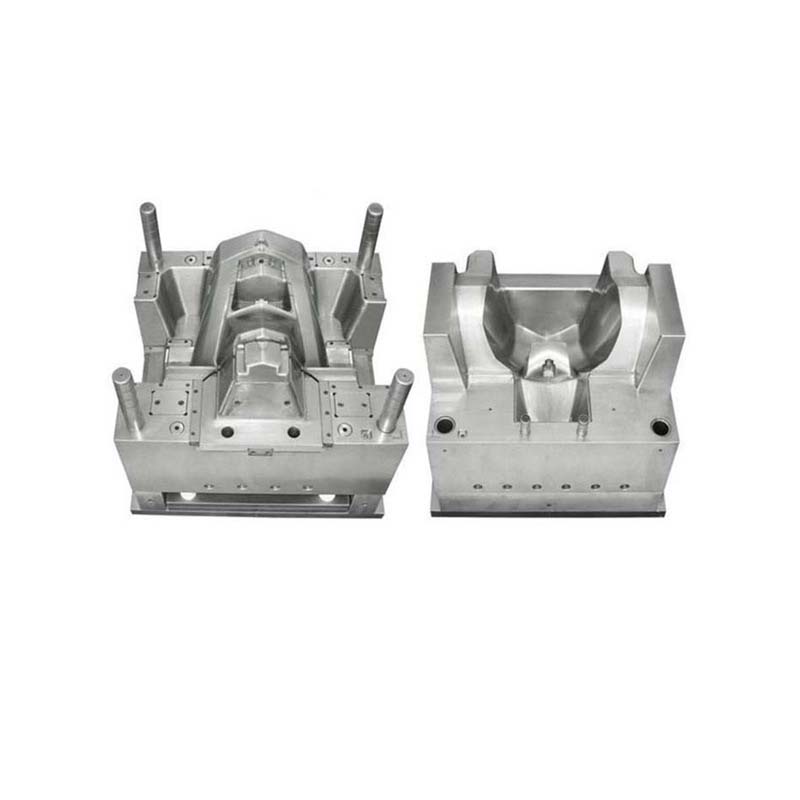
The mold is the largest upfront expense in injection molding. Several aspects determine its cost.
Mold Size
Larger molds require more raw material. A small mold for a simple toy part uses a modest block of metal. A large mold for a car bumper requires significantly more material.
Machining time increases with size. Research shows that for every 10% increase in mold size, machining time increases by 15% to 20% . This adds labor and equipment costs.
Mold Complexity
Simple molds with straight walls and smooth surfaces are easy to machine. Complex molds with intricate geometries, undercuts, and moving parts require advanced techniques.
Molds for medical device components often have internal channels and tight tolerances. They demand Electrical Discharge Machining (EDM) and multi-axis CNC milling. These processes take longer and require skilled operators. High-complexity molds can cost 3 to 5 times more than simple molds of the same size.
Mold Type
| Mold Type | Description | Typical Cost Range |
|---|---|---|
| Prototype molds | Made from aluminum or soft materials. For testing and validation. | $3,000 – $6,000 |
| Production molds | Steel construction. For medium-scale runs (10,000 – 50,000 parts). | $10,000 – $25,000 |
| High-volume molds | Premium steel. For runs of hundreds of thousands or millions. | $50,000+ |
Cavity Configuration
Single-cavity molds produce one part per cycle. They are suitable for large parts or low volumes. Cost is lower upfront.
Multi-cavity molds produce multiple parts per cycle. They cost more to design and build but reduce per-part cost in high-volume production. A four-cavity mold may cost $15,000 to $25,000 but delivers significant per-part savings at scale.
Material-Related Factors
Mold Material
Steel and aluminum are the primary mold materials.
| Material | Cost per Pound | Durability | Best For |
|---|---|---|---|
| Steel | $10 – $30 | High. Withstands millions of cycles. | High-volume production |
| Aluminum | $2 – $5 | Moderate. 10,000 – 50,000 cycles. | Prototypes, low-volume runs |
Steel costs more upfront but lasts longer. For runs above 100,000 parts, steel becomes more cost-effective.
Plastic Material
Resin prices vary widely based on properties.
| Material Type | Cost per Pound | Applications |
|---|---|---|
| General-purpose (PP, HDPE) | $2 – $4 | Disposable containers, bags, basic products |
| Engineering (PC, ABS, Nylon) | $6 – $12 | Automotive, electronics, structural parts |
| Special-performance (PTFE, PEEK) | $20+ | Aerospace, medical, high-temperature applications |
Material choice affects not just raw material cost but also processing parameters. High-temperature materials require more energy and may extend cycle times.
Production Quantity
Production quantity has a direct impact on per-part cost through economies of scale.
Fixed costs—mold manufacturing, setup, and tooling—are spread across the total parts. For a $10,000 mold:
- 1,000 parts: mold cost per part = $10
- 100,000 parts: mold cost per part = $0.10
Higher volumes also improve efficiency. Machine time, energy, and labor per part decrease as runs get longer.
The table below shows the effect:
| Production Quantity | Mold Cost per Part (for $10,000 mold) | Relative Cost |
|---|---|---|
| 1,000 | $10.00 | High |
| 10,000 | $1.00 | Moderate |
| 100,000 | $0.10 | Low |
| 1,000,000 | $0.01 | Very low |
Machining Process
How the mold is made affects both cost and quality.
Conventional machining uses manual or semi-automated equipment. It is slower and may require more labor. It works for simple molds but struggles with complex geometries.
CNC machining uses computer-controlled tools. It offers high precision, repeatability, and the ability to create complex shapes. While equipment costs are higher, CNC reduces machining time and labor for complex molds.
EDM uses electrical discharges to erode material. It is ideal for intricate shapes, sharp corners, and fine details. EDM is slow and requires specialized equipment, making it the most expensive option. But for some features, it is the only viable method.
How Do You Calculate Injection Molding Cost?
The General Formula
The cost per part can be calculated using this formula:
Cost per part = (Mold cost + (Material cost per part × Quantity) + Processing cost + Other costs) / QuantityBreaking Down Each Component
Mold cost: Determined by size, complexity, type, and cavity configuration. This is a fixed cost regardless of how many parts you run.
Material cost per part: Part weight (grams) × material price (per gram). For a 50-gram part with material at $5/kg ($0.005/g), material cost is $0.25.
Processing cost: Machine hourly rate × cycle time per part. If a machine runs at $80/hour and produces 90 parts per hour, processing cost per part is $0.89.
Other costs: Packaging, transportation, quality control, and secondary operations like painting or assembly.
Example Calculation
Let’s calculate the cost for 100,000 smartphone cases.
- Mold cost: $20,000 (steel, four cavities)
- Material: ABS at $8/kg. Part weight: 80g. Material cost per part: $0.64
- Processing: $80/hour machine rate. 40-second cycle (90 parts/hour). Processing cost per part: $0.89
- Other: Packaging at $0.15 per part
Cost per part = ($20,000 + (0.64 × 100,000) + (0.89 × 100,000) + (0.15 × 100,000)) / 100,000
Cost per part = ($20,000 + $64,000 + $89,000 + $15,000) / 100,000
Cost per part = $188,000 / 100,000 = $1.88
How Do You Compare Injection Molding Quotes?
Obtaining Quotes
Online platforms: Services like Xometry let you upload CAD files and receive multiple quotes quickly. They are useful for initial estimates.
Direct contact: Reach out to injection molding companies directly. Provide detailed specifications: part dimensions, complexity, quantity, and desired material. Direct contact often yields more customized solutions.
Request for Proposals (RFPs): For large projects, issue an RFP. Outline technical specifications, quality standards, delivery schedules, and budget. Invite selected suppliers to submit detailed proposals.
What to Compare
When reviewing quotes, look beyond the bottom line.
| Factor | What to Check |
|---|---|
| Mold material | Steel or aluminum? Does it match your production volume? |
| Machining process | CNC, EDM, or conventional? Is it appropriate for your complexity? |
| Plastic material | Is the quoted material equivalent to what you specified? |
| Services included | Does the quote cover mold design, prototyping, quality control, and secondary operations? |
| Molding type | Simple, multi-cavity, overmolding, insert molding? Does it suit your design? |
A lower quote may exclude essential services. A higher quote that includes design optimization, quality control, and finishing may save money overall.
How Can You Reduce Injection Molding Cost?
Design for Manufacturability (DFM)
DFM principles reduce complexity and waste.
- Simplify geometry: Avoid undercuts, sharp corners, and deep ribs unless necessary.
- Uniform wall thickness: Prevents warping and reduces cycle time.
- Optimize gate location: Improves flow and reduces stress.
- Use standard features: Custom features add machining time.
Optimize Mold Design
- Multi-cavity molds: Spread fixed costs across more parts per cycle.
- Conformal cooling: Reduces cycle time by 15% to 30% .
- Hot runner systems: Eliminate runner waste and reduce cycle time.
Choose the Right Material
- Use general-purpose plastics when performance allows.
- Avoid over-specifying. High-performance materials add cost.
- Consider recycled content where permitted.
Increase Production Volume
Higher volumes reduce per-part cost. Consolidate orders. Plan for longer production runs to maximize economies of scale.
Work with an Experienced Partner
Experienced molders identify cost-saving opportunities early. They can suggest design modifications that reduce tooling cost, material use, or cycle time.
What Does a Real-World Example Look Like?
A company needed 50,000 plastic housings for a consumer product. Initial quotes came in at $2.50 per part . The design had thin walls, deep ribs, and required a complex mold with slides.
A DFM review identified opportunities. Rib thickness was reduced to match wall thickness. Undercuts were redesigned to eliminate one slide. The gate location was moved to improve flow.
The revised mold cost 15% less . Cycle time dropped from 45 seconds to 32 seconds. Final per-part cost came in at $1.95 —a 22% reduction . The DFM investment paid for itself many times over.
Conclusion
Injection molding cost is determined by mold factors (size, complexity, type, cavity count), material factors (mold material, plastic resin), production quantity, and machining processes.
Understanding these factors allows you to calculate costs accurately using the formula:
Cost per part = (Mold cost + (Material cost per part × Quantity) + Processing cost + Other costs) / QuantityWhen comparing quotes, evaluate mold material, machining process, plastic material, included services, and molding type. A lower price may hide missing services or unsuitable materials.
Cost reduction comes from design for manufacturability, mold optimization, smart material selection, and higher production volumes. Working with an experienced injection molding partner early in the design process yields the greatest savings.
In a competitive manufacturing landscape, controlling injection molding costs is essential for profitability and growth.
FAQ
What is the biggest cost in injection molding?
The mold itself is typically the largest upfront expense. For high-volume production, material cost often becomes the dominant factor over time. For low-volume production, mold cost dominates per-part cost.
How can I reduce injection molding cost without sacrificing quality?
Optimize part design for manufacturability. Use multi-cavity molds to spread fixed costs. Consider aluminum molds for lower volumes. Choose materials that meet requirements without over-specifying. Increase production volume to achieve economies of scale.
When should I use a steel mold versus an aluminum mold?
Use steel molds for runs above 100,000 parts or when tight tolerances must be maintained over long production cycles. Use aluminum molds for prototypes, pilot runs, and production volumes below 50,000 parts.
How does part design affect injection molding cost?
Design complexity directly impacts mold cost. Undercuts require slides or lifters, increasing tooling expense. Thick sections require longer cooling times, increasing cycle time. Thin, uniform walls reduce cycle time and material use.
What is the difference between prototype molds and production molds?
Prototype molds are made from softer materials like aluminum. They cost less and are suitable for 1,000 to 10,000 parts. Production molds are made from steel, cost more, and are designed for 100,000 to millions of parts.
Contact Yigu Technology for Custom Manufacturing
At Yigu Technology , we help customers understand and optimize injection molding costs. Our engineers review designs for manufacturability early in the process. We recommend appropriate mold materials, cavity configurations, and processing parameters.
We provide transparent quotes that include all services—design, mold making, production, and secondary operations. Our goal is to deliver high-quality parts at the lowest total cost.
Contact Yigu Technology today to discuss your injection molding project and get a comprehensive cost estimate.