
Introduction
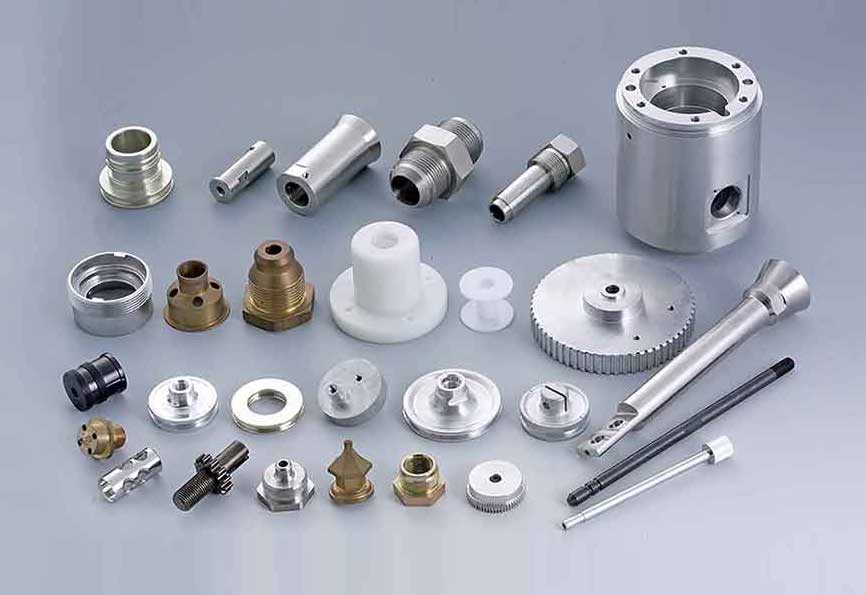
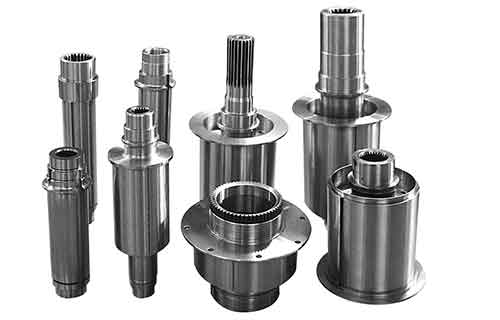
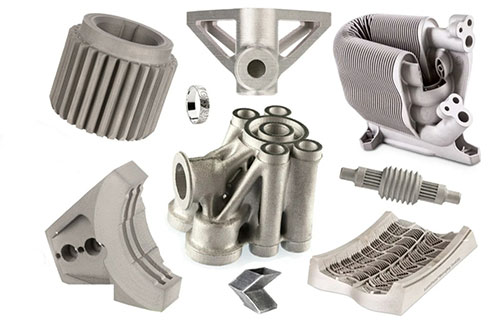
CNC machining has transformed how precision metal components are produced. In traditional machining, operators manually control tools like lathes and mills. In CNC machining, computer programs automate this control. This automation delivers precision that manual methods cannot match consistently. Tolerances as tight as ±0.001 inches (±0.0254 mm) are routine. Repeatability ensures identical parts across production runs. This guide walks you through the entire process of metal creation in CNC machining—from design and material selection to machining operations and quality control. You will learn how precision-crafted metal parts come to life and why this process drives modern manufacturing.
What Is CNC Machining and How Does It Work?
CNC machining uses computer programs to control machine tools. The machine reads instructions written in G-code, a specialized language. G-code commands specify spindle speed, tool movement, cutting depth, and tool paths.
Key advantages:
- High precision: Achieve tolerances of ±0.001 inches or better.
- Repeatability: Produce identical parts consistently.
- Automation: Reduce human error and labor requirements.
What Is the Step-by-Step Process for Creating Metal Parts?
Creating precision metal parts involves several stages. Each step builds on the previous one to ensure quality and accuracy.
Design and Programming
The process begins with design. Engineers use CAD (Computer-Aided Design) software like SolidWorks or AutoCAD to create a 3D model of the part. This model defines geometry, tolerances, and features like holes, threads, or internal channels.
Once the design is complete, CAM (Computer-Aided Manufacturing) software converts the CAD model into tool paths. The CAM software calculates:
- Spindle speed: Rotation rate of the cutting tool.
- Feed rate: Speed at which the tool moves through the material.
- Depth of cut: How much material is removed per pass.
Finally, the software generates G-code—the instruction set the CNC machine reads to execute the machining operations.
Material Selection
Material choice directly impacts performance, durability, and cost. Here are common metals used in CNC machining:
| Metal | Characteristics | Typical Applications |
|---|---|---|
| Aluminum | Lightweight, good thermal conductivity, corrosion-resistant, easy to machine | Aerospace components, automotive parts, electronic enclosures |
| Stainless Steel | Excellent corrosion resistance, high strength, heat resistance, harder to machine | Medical instruments, food processing equipment, industrial machinery |
| Copper | High electrical and thermal conductivity, malleable | Electrical connectors, heat sinks, decorative items |
| Titanium | High strength-to-weight ratio, excellent corrosion resistance, high-temperature tolerance, challenging to machine | Aerospace engine components, medical implants, high-performance sports equipment |
Machining Operations
Different operations shape the metal into the final part.
| Operation | Tool Movement | Workpiece Movement | Common Applications |
|---|---|---|---|
| Milling | Rotating multi-point tool moves in multiple axes | Fixed | Flat surfaces, slots, pockets, complex 3D geometries, molds, gears |
| Turning | Single-point tool moves linearly | Rotates | Cylindrical parts: shafts, bolts, bushings |
| Drilling | Rotating drill bit moves linearly | Fixed or rotates | Through-holes, blind holes for screws, bolts, or component insertion |
Milling: A rotating cutting tool removes material to create shapes. Vertical milling machines are common for general-purpose work. Horizontal mills suit large or complex parts.
Turning: The workpiece rotates while a cutting tool moves along its axis. Lathes shape outer diameters, create tapers, and cut threads.
Drilling: A rotating drill bit creates holes. Peck drilling cycles help evacuate chips in deep holes.
Quality Control and Inspection
Quality control ensures parts meet specifications. It happens during and after machining.
Real-time monitoring: Sensors detect issues during machining. Vibration sensors identify dull tools or improper clamping. Operators can intervene before defects occur.
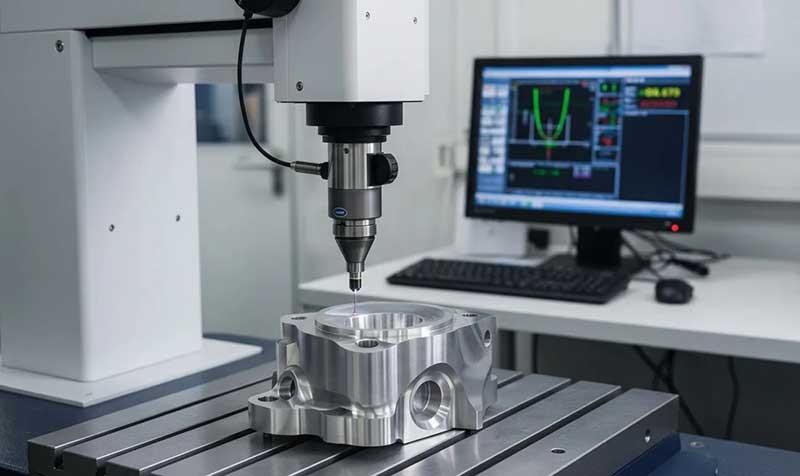
Size inspection: After machining, CMMs (Coordinate Measuring Machines) measure dimensions. A CMM checks length, width, height, and geometric features against the original design. For a part designed with a diameter of 10 ± 0.01 mm, the CMM verifies the actual measurement falls within tolerance.
Defect inspection: Visual inspection identifies surface scratches or burrs. Non-destructive testing—like ultrasonic or X-ray inspection—detects internal voids or cracks without damaging the part. These methods are critical in aerospace and medical industries where component integrity is paramount.
What Are the Benefits of Precision-Crafted CNC Machining?
CNC machining offers several advantages over traditional methods.
High Precision and Consistency
Precision is the hallmark of CNC machining. In aerospace, turbine blades require tolerances in the micron range. A minute deviation can reduce efficiency or create safety hazards. CNC machining meets these demands consistently.
In medical devices, implants like knee and hip replacements must fit perfectly. Poorly machined implants cause discomfort, infection, or failure. CNC machining produces implants that meet strict medical standards. Industry data shows that CNC-machined medical implants have reduced post-operative complications by up to 30% compared to traditional methods.
Automation and Efficiency
Once programmed, CNC machines operate with minimal human intervention. They can run 24/7 in lights-out manufacturing setups. This automation reduces human error and increases output.
A study found that companies switching to CNC machining saw production efficiency increase by 40–50%. Reduced setup times and continuous operation lower the cost per unit. Fewer operators also reduce labor costs.
Flexibility in Design
Design changes are easy with CNC machining. Modify the CAD/CAM software, and the new design is ready for production. This flexibility suits small-batch production and prototyping.
A jewelry manufacturer creating limited-edition pieces can change designs without re-tooling. In electronics, engineers iterate quickly on metal enclosure prototypes, adjusting shape, size, or internal features as needed. This speeds product development and enables customization.
Safety Enhancements
Automation reduces worker exposure to dangerous machinery. Operators monitor machines, load materials, and perform basic maintenance—they do not manually control cutting tools.
In metal-cutting operations, automated tool changers and workpiece handling reduce accident risks. Studies show that workplaces switching to CNC machining experienced a 60–70% reduction in machining-related injuries. This improves employee well-being and reduces costs from medical expenses and workers' compensation claims.
What Is Yigu Technology’s Perspective?
At Yigu Technology, we have deep experience in CNC machining for custom metal and plastic components. We serve clients from small enterprises to large industrial manufacturers. Our approach centers on providing customized solutions.
We work closely with clients from the initial design concept. Our engineers review and optimize designs for manufacturability, material cost, and performance. For example, if an electronics client needs a metal enclosure with specific heat dissipation and electromagnetic shielding properties, we recommend the most suitable materials and design modifications to achieve the best results. Whether you need a single prototype or large-scale production, we deliver precision-crafted metal parts that meet your specifications.
Conclusion
CNC machining is the foundation of precision metal manufacturing. The process begins with CAD design and CAM programming, followed by material selection and machining operations like milling, turning, and drilling. Rigorous quality control—using CMMs and non-destructive testing—ensures parts meet tight tolerances. The benefits are clear: high precision and consistency, automation and efficiency, design flexibility, and enhanced safety. From aerospace turbine blades to medical implants, CNC machining delivers the precision-crafted metal components that modern industries depend on.
FAQs
What types of metals are best suited for CNC machining?
Common metals include aluminum (lightweight, easy to machine), stainless steel (corrosion-resistant, high strength), copper (high electrical conductivity), and titanium (high strength-to-weight ratio). Selection depends on application requirements for strength, weight, corrosion resistance, and conductivity.
How accurate can CNC machining be?
CNC machining typically achieves tolerances of ±0.001 inches (±0.0254 mm) . High-end applications can reach sub-micron accuracy. This level of precision ensures parts meet exact specifications consistently.
Can Yigu Technology handle small-batch production runs for CNC-machined metal parts?
Yes. We specialize in customized solutions for both small-batch and large-scale production runs. We understand the unique requirements of small-batch production, including quick turnaround times and flexible design changes, and are well-equipped to meet these needs.
Contact Yigu Technology for Custom Manufacturing
At Yigu Technology, we combine advanced CNC machining capabilities with deep engineering expertise. Our 3-axis, 4-axis, and 5-axis CNC machines handle a wide range of metals—from aluminum and stainless steel to titanium and copper. We provide DFM feedback to optimize your designs for manufacturability. Whether you need a single prototype or a high-volume production run, we deliver precision-crafted metal parts with consistent quality.
Ready to bring your metal part design to life? Contact Yigu Technology today for a free consultation and quote. Let us show you what precision CNC machining can do for your project.


