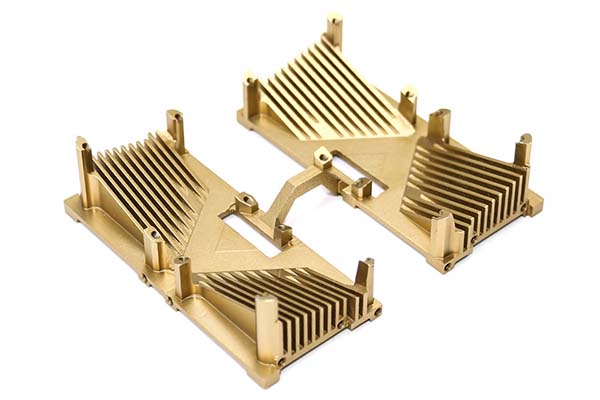
Introduction
CNC machining C28000, commonly known as Muntz Metal, comes with unique challenges. Its high zinc content and duplex α+β structure make it prone to stringy chips, built-up edges, and tool wear. Its limited cold-formability adds another layer of complexity. Whether for marine cladding or architectural trim, achieving precision and corrosion resistance is crucial. This guide addresses these pain points, offering in-depth insights into material properties, machining parameters, tooling, and post-processing to help you master CNC machining of C28000.
What Are the Key Properties of C28000 (Muntz Metal)?
C28000 is a 60/40 copper-zinc blend—often called 60/40 Cu-Zn brass. Its duplex α+β structure gives it a balance of strength and formability, with distinct machining behaviors compared to single-phase brasses.
Composition and Mechanical Properties
| Property | Value |
|---|---|
| Composition | 60% copper, 40% zinc |
| Tensile strength | 330 – 610 MPa |
| Yield strength | 150 – 370 MPa |
| Hardness | 60 – 100 HB |
| Density | 8.39 g/cm³ |
| Machinability rating | 45% (vs. C36000 at 100%) |
Key Characteristics
| Property | Description | Machining Implication |
|---|---|---|
| Corrosion resistance | Excellent in seawater; forms protective patina over time | Ideal for marine applications; requires proper surface treatment |
| Hot-formability | Excellent | Suitable for hot working processes |
| Cold-formability | Limited | Requires careful handling during cold machining to avoid cracking |
| Structure | Duplex α+β | Harder and more abrasive than single-phase brasses |
| Thermal expansion | 20 μm/(m·K) | Must be accounted for during machining to maintain dimensional accuracy |
What CNC Machining Parameters Work Best for C28000?
Optimizing parameters is key to overcoming C28000’s machining challenges.
Speed, Feed, and Machinability
| Operation | Cutting Speed (m/min) | Feed Rate (mm/rev) | Notes |
|---|---|---|---|
| Turning | 120 – 220 | 0.1 – 0.25 | Slower than C36000 due to harder nature |
| Milling | 100 – 180 | 0.08 – 0.15 mm/tooth | Low-speed, high-feed strategy effective for chip breaking |
| Drilling | 80 – 140 | 0.05 – 0.12 mm/rev | Use peck drilling to manage chips |
Machinability comparison: C28000 has a 45% machinability rating compared to C36000’s 100%. It requires slower speeds, higher feeds, and sharper tools to achieve good results.
Chip Control and Coolant
| Challenge | Solution |
|---|---|
| Stringy chips | Use proper chip breakers; adjust feed rates; employ low-speed, high-feed strategy |
| Built-up edge | Sharp tools; flood coolant for heat dissipation and chip flushing |
| Coolant type | Flood coolant preferred over mist—provides better heat dissipation and chip removal |
Tool Life and Micro-Milling
| Factor | Recommendation |
|---|---|
| Tool life optimization | Maintain consistent parameters; use sharp tools; monitor wear closely |
| Micro-milling thin-wall components | Sharp micro-grain carbide tools; consistent parameters; avoid distortion |
| Surface finish | Ra 0.2 μm achievable with sharp tools and optimized parameters |
What Tooling and Edge Geometry Are Required?
Selecting the right tools and features is vital for efficient C28000 machining.
Inserts and End Mills
| Tool Type | Recommendation | Why |
|---|---|---|
| Inserts | Sharp carbide inserts | Clean cuts; reduces friction and heat buildup |
| End mills | High-positive rake; polished flutes | Reduces cutting forces; improves chip flow |
| Variable-helix end mills | Disrupts chip formation | Prevents long stringy chips; improves chip evacuation |
| Micro-tools | Micro-grain carbide | Maintains sharpness longer; ensures accurate micro-machining |
Coatings and Toolholders
| Factor | Recommendation | Benefit |
|---|---|---|
| Coating | TiCN (titanium carbonitride) | Anti-gumming; resists material adhesion; extends tool life |
| Toolholder balance | Balanced for high RPM | Reduces vibration; ensures smooth surface finish |
| Runout | < 0.005 mm | Critical for high-speed machining; prevents chatter |
How Do You Achieve Surface Finish and Post-Processing?
Achieving a high-quality surface finish and proper post-processing enhances C28000’s performance and appearance.
Surface Finish
| Finish | Achievable | Method |
|---|---|---|
| Turning finish | Ra 0.2 μm | Sharp tools; optimized parameters |
| Mirror polish | High-gloss finish | Careful polishing with fine abrasives; progressively finer grits |
Deburring and Cleaning
| Operation | Method |
|---|---|
| Deburring stringy chips | Rotary brushes; ultrasonic deburring systems |
| Cleaning | Ultrasonic cleaning—removes machining residues effectively |
Post-Processing Treatments
| Treatment | Purpose |
|---|---|
| Passivation | Tarnish protection; maintains appearance over time |
| Oxide removal | Citric acid—gentle, effective removal of oxide layers |
| Bright-dip finish | Shiny, reflective surface; ideal for decorative applications |
| Patina formation | Natural protective layer in marine environments; enhances corrosion resistance |
How Do You Control Workholding and Prevent Distortion?
Preventing distortion is crucial, especially for thin or complex C28000 components.
Workholding Methods
| Method | Best For | Why |
|---|---|---|
| Soft-jaw chucking | General turning | Distributes clamping force evenly; avoids damage |
| Vacuum fixture | Thin plates | Uniform holding without excessive pressure |
| Low clamp pressure | All applications | C28000’s limited cold-formability means excessive pressure causes deformation |
Accuracy and Thermal Considerations
| Factor | Consideration |
|---|---|
| Thermal expansion | 20 μm/(m·K)—account for temperature changes during machining |
| 5-axis tombstone setup | Ensures precise positioning for complex parts |
| Zero-point pallet accuracy | Maintains repeatability across setups |
| Spring-back compensation | C28000 can exhibit spring-back; adjust machining parameters to achieve desired dimensions |
Where Is C28000 Used?
C28000’s unique properties make it suitable for a range of applications.
| Industry | Applications | Why C28000? |
|---|---|---|
| Marine | Cladding, ship hull sheathing, condenser tubesheets | Excellent seawater corrosion resistance; patina formation enhances durability |
| Architectural | Elevator trim, decorative signage panels | Attractive appearance; formability; high surface finish achievable |
| Industrial | Heat-exchanger baffles, structural components | Thermal properties; corrosion resistance; withstands continuous use |
| Decorative | Signage, trim, architectural features | Ability to achieve mirror polish; bright-dip finish available |
Case study: C28000 heat-exchanger baffles demonstrate its effectiveness in heat transfer applications, withstanding the demands of continuous use in marine environments.
What Is Yigu Technology’s Perspective?
At Yigu Technology, we have extensive experience in CNC machining C28000 (Muntz Metal). We understand its unique properties and machining challenges:
- Chip control: Low-speed, high-feed strategy with proper chip breakers to manage stringy chips.
- Tooling: Sharp carbide inserts; TiCN coatings for anti-gumming; variable-helix end mills to disrupt chip formation.
- Coolant: Flood coolant for heat dissipation and chip flushing.
- Workholding: Soft-jaw chucking or vacuum fixtures with low clamp pressure to prevent distortion.
- Surface finish: Achieve Ra 0.2 μm turning finish; mirror polish for architectural applications.
- Post-processing: Passivation, oxide removal, and bright-dip finishing to enhance corrosion resistance and appearance.
We deliver precision, high-quality C28000 components for marine and architectural applications—trusted by clients who demand both performance and aesthetics.
Conclusion
CNC machining C28000 (Muntz Metal) requires understanding its duplex α+β structure and applying tailored strategies. Its 45% machinability rating (vs. C36000) demands slower speeds (120–220 m/min turning) and higher feeds (0.1–0.25 mm/rev) with sharp tools. TiCN-coated carbide tools resist material adhesion; flood coolant manages heat and chip flushing. Chip control uses low-speed, high-feed strategy with chip breakers to prevent stringy chips. Achievable surface finishes: Ra 0.2 μm with sharp tools; mirror polish with fine abrasives. Workholding requires low clamp pressure and vacuum fixtures for thin parts to prevent distortion. Applications include marine cladding (excellent seawater corrosion resistance), architectural trim (mirror finish), and heat-exchanger baffles. With proper tooling, parameters, and post-processing, C28000 delivers durable, corrosion-resistant, aesthetically pleasing components.
FAQs
Why is C28000 suitable for marine applications?
C28000 offers excellent seawater corrosion resistance. Its duplex structure provides the necessary strength to withstand marine environments. Patina formation over time further enhances corrosion resistance, making it ideal for ship hull sheathing, cladding, and condenser tubesheets.
How does C28000’s machinability compare to C36000?
C28000 has a machinability rating of 45% compared to C36000’s 100%. It is harder to machine, requiring slower cutting speeds (120–220 m/min) , higher feed rates (0.1–0.25 mm/rev) , and sharper tools to achieve good results without excessive tool wear or built-up edge.
What is the best way to prevent distortion when machining thin-wall C28000 components?
Use low clamp pressure with soft-jaw chucking or vacuum fixtures to distribute force evenly. Account for thermal expansion (20 μm/(m·K)) during machining. Apply spring-back compensation in machining parameters to achieve desired dimensions without deformation.
Contact Yigu Technology for Custom Manufacturing
At Yigu Technology, we specialize in CNC machining C28000 (Muntz Metal) for marine and architectural applications. Our 3-axis, 4-axis, and 5-axis CNC machines are equipped with TiCN-coated carbide tools, flood coolant systems, and precision toolholders (runout <0.005 mm) to handle C28000’s unique challenges. We provide low-speed, high-feed strategies for chip control, vacuum fixtures for thin parts, and post-processing services including passivation, bright-dip finishing, and mirror polishing. From marine cladding to architectural trim, we deliver components that combine precision, durability, and aesthetics.
Ready to machine your next C28000 project? Contact Yigu Technology today for a free consultation and quote. Let us help you achieve precision and performance in marine and architectural applications.