Introduction
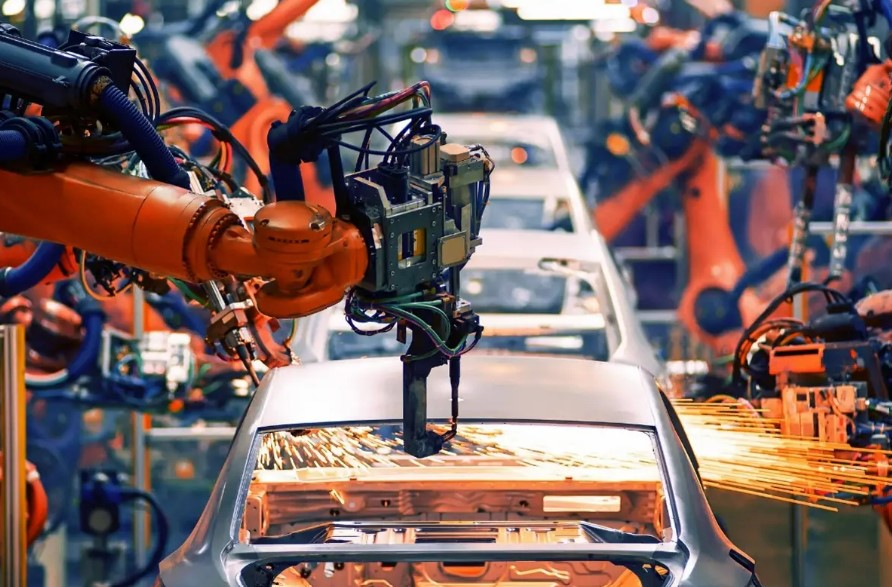
In the vast and intricate realm of automotive engineering, milling auto parts are the unsung heroes—silently yet powerfully driving the entire industry forward. The automotive industry is a behemoth, constantly evolving to meet demands for safety, performance, and efficiency. Milling auto parts are not just components; they are the building blocks enabling vehicles that are symbols of technology, comfort, and style.
Consider the millions of cars, trucks, and buses on roads every day. Each vehicle is a complex assembly of thousands of parts, and milling plays a crucial role in manufacturing many of them. From engine components generating power to chassis parts ensuring stability, milling shapes raw materials into precisely engineered components.
In high-performance sports cars, where every ounce of weight and degree of precision matter, milled parts distinguish a good car from a great one. A well-milled engine block optimizes fuel combustion—increasing power output and fuel efficiency. In luxury vehicles, precision of milled interior components contributes to the sense of quality and refinement customers expect.
This guide explores how milling auto parts revolutionize automotive engineering—the advanced techniques, materials used, and impact on vehicle performance, safety, and cost-effectiveness.
What Are the Basics of Milling Auto Parts?
Definition and Process
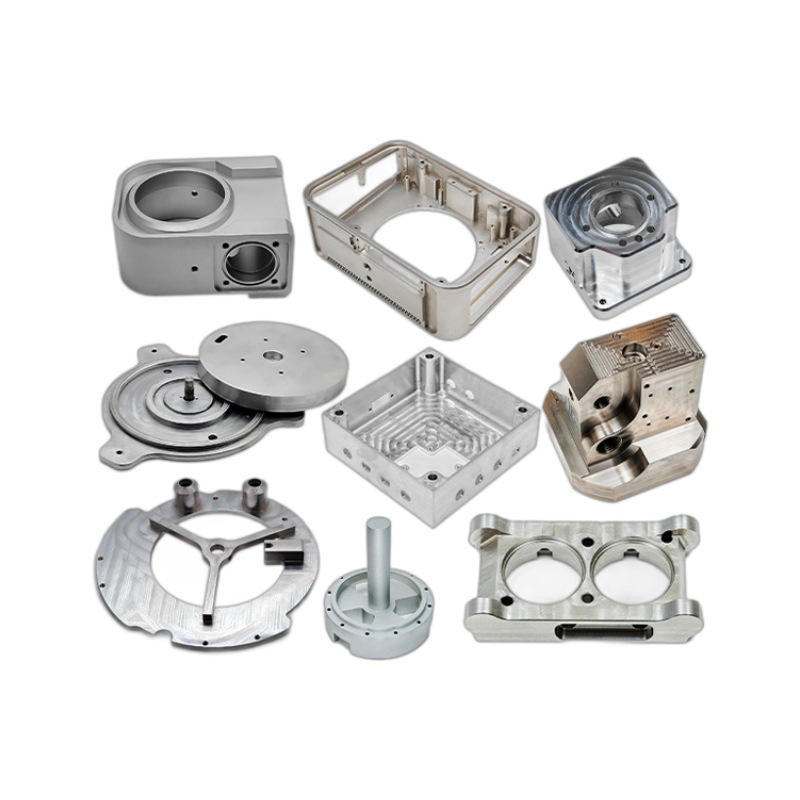
Milling auto parts uses milling machines to shape raw materials—typically metals like aluminum, steel, or titanium—into specific automotive components. This subtractive manufacturing process removes material from a workpiece to achieve desired shape, dimensions, and surface finish.
| Step | Description |
|---|---|
| Material selection | Aluminum, steel, titanium—block or bar form |
| Workpiece mounting | Securely mounted on milling machine worktable |
| Tool selection | Milling cutter—end mills, face mills, ball-nose mills—based on part geometry |
| Machining | Rotating cutter fed into workpiece along X, Y, Z axes; removes small chips; sculpts part |
| Precision | CNC (Computer Numerical Control) allows tolerances as low as a few micrometers |
Example: Milling a complex engine component—CNC machine precisely carves intricate channels and cavities, ensuring exact specifications for fuel flow and combustion efficiency.
What Types of Auto Parts Are Milled?
Engine Block
| Role | Precision Requirement |
|---|---|
| Houses cylinders, pistons, internal components | Cylinders perfectly aligned and sized—efficient combustion; power output |
Consequence of deviation: Engine knocking; reduced power; failure.
Transmission Gears
| Role | Precision Requirement |
|---|---|
| Transfer power from engine to wheels; allow different gear ratios | Precisely cut teeth mesh smoothly |
Impact: Manual transmission—easy, smooth shifting; Automatic—seamless gear changes; optimal fuel efficiency.
Brake Calipers
| Role | Precision Requirement |
|---|---|
| House brake pads and pistons; squeeze pads against rotors to stop wheels | Precise internal channels; piston bores—consistent, reliable braking |
Materials: Lightweight yet strong—aluminum.
Critical importance: High-performance sports cars—braking power accuracy difference between safe stop and dangerous situation.
How Does Milling Drive Automotive Engineering?
Precision and Quality Improvement
| Parameter | Traditional Machining | Modern Milling (CNC) |
|---|---|---|
| Dimensional tolerance (mm) | ±0.1–0.3 | ±0.001–0.01 |
| Surface roughness (μm) | 3.2–6.3 | 0.8–1.6 |
Impact on engine components (pistons):
- Perfect fit within cylinders
- Reduced gas leakage
- Optimal engine compression
- Better fuel combustion
- Increased power output (5–10% in high-performance engines)
- Improved fuel efficiency
Friction reduction: Smooth surface finish on transmission shafts minimizes wear; extends component lifespan; improves reliability.
Cost-Efficiency in Production
| Factor | Traditional | Modern Milling |
|---|---|---|
| Production time (10,000 transmission gears) | ~100 hours | ~30 hours |
| Labor cost | Higher | Lower—reduced time |
| Material waste | Higher | Optimized via CAD/CAM—up to 30% waste reduction |
Material optimization: CAD/CAM software designs part layout minimizing waste—substantial savings with expensive materials like titanium.
Innovation in Automotive Design
Multi-axis milling enables complex geometries previously impossible.
| Component | Traditional Design | Modern Milled Design | Benefit |
|---|---|---|---|
| Exhaust manifolds | Simple shape; inefficient gas flow | Intricate internal channels; precisely angled bends | Improved scavenging; better engine performance; emissions compliance |
| Chassis components | Solid structures | Internal truss-like structures | Maximum strength; minimum weight—crucial for EVs (battery range) |
| Interior components | Standard shapes | Unique, aesthetically pleasing designs | Enhanced vehicle appeal; luxury feel |
What Are the Key Takeaways?
| Area | Impact |
|---|---|
| Precision | ±0.001–0.01 mm tolerances; 0.8–1.6 μm surface finish—improves power output (5–10%), fuel efficiency, reliability |
| Cost-efficiency | 70% production time reduction (100 hrs → 30 hrs for 10,000 gears); up to 30% material waste reduction via CAD/CAM optimization |
| Innovation | Multi-axis milling enables complex geometries—efficient exhaust manifolds; lightweight chassis trusses; custom interior designs |
| Materials | Aluminum (lightweight), steel (strength), titanium (high-performance) |
Conclusion
Milling auto parts are the cornerstone of modern automotive engineering:
- Precision and quality: Tight tolerances (±0.001–0.01 mm) and excellent surface finishes (0.8–1.6 μm) enhance reliability, durability, power output (5–10%), and fuel efficiency
- Cost-efficiency: Reduced production time (70% for 10,000 gears); optimized material usage (up to 30% waste reduction)—competitive global market advantage
- Innovation: Multi-axis milling enables complex geometries—advanced engine components, lightweight chassis, aesthetically pleasing interiors—essential for EVs, autonomous driving, sustainability
As the automotive industry evolves—electrification, autonomous driving, higher performance, sustainability—the role of milling auto parts will only grow. Continuous improvement in CNC technology, cutting tools, and materials is essential. Milling auto parts are not just a manufacturing process; they are an integral part of the automotive engineering ecosystem—enabling vehicles at the forefront of technology and innovation.
FAQs
How does milling improve precision of auto parts compared to other manufacturing methods?
Milling, especially CNC-controlled milling, achieves much tighter dimensional tolerances (±0.001–0.01 mm vs. ±0.1–0.3 mm) and better surface finishes (0.8–1.6 μm vs. 3.2–6.3 μm). The rotating milling cutter, guided by precise computer-controlled movements, removes material with high accuracy—ensuring parts meet strict specifications.
What are the cost-saving aspects of milling in automotive production?
- Reduced production time: 100 hours → 30 hours for 10,000 transmission gears—cuts labor costs
- Optimized material usage: CAD/CAM software reduces waste up to 30%—substantial savings with expensive materials (titanium)
- Lower overall cost: High-quality parts at lower cost—improves competitiveness
Can you give more examples of how milling enables innovative automotive design?
- Engine cylinder heads: Optimized coolant channels—improved thermal management
- Suspension systems: Unique geometries—improved handling; ride comfort; weight reduction
- Electric vehicle components: Lightweight chassis structures—maximizes battery range
- Interior elements: Custom, aesthetically pleasing designs—enhances luxury appeal
What materials are commonly used in milling auto parts?
- Aluminum: Lightweight; good machinability—engine blocks, brake calipers, chassis components
- Steel: High strength—transmission gears, structural parts
- Titanium: High strength-to-weight ratio; corrosion resistance—high-performance components (racing, luxury)
How does CNC technology improve milling precision?
CNC (Computer Numerical Control) provides:
- Precise tool path control: Movement along X, Y, Z axes with micrometer accuracy
- Repeatability: Identical parts across production runs
- Complex geometries: Multi-axis machining enables intricate shapes
- Real-time monitoring: Adjustments during machining maintain tolerances
Contact Yigu Technology for Custom Manufacturing
At Yigu Technology, we specialize in milling auto parts for high-performance, luxury, and electric vehicles. With 15 years of experience, advanced 5-axis CNC milling, and ISO 9001 certification, we deliver precision components with tolerances to ±0.001 mm and surface finishes to Ra 0.8 μm.
Our capabilities include engine blocks, transmission gears, brake calipers, and custom chassis components—from aluminum, steel, and titanium. Contact us today to discuss your automotive milling project.