Introduction
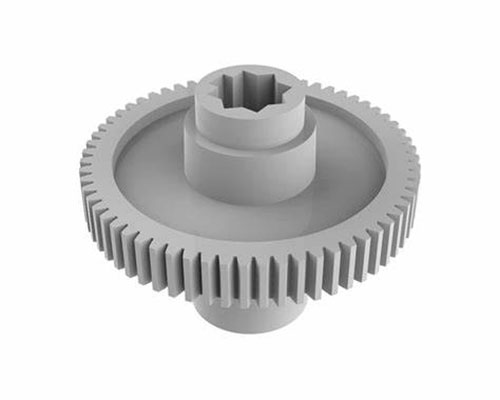
You open your car window. A printer feeds paper. A power tool spins. Behind these everyday actions, helical gears are at work. Unlike spur gears with straight teeth, helical gears have angled teeth that engage gradually. This design makes them smoother, quieter, and stronger.
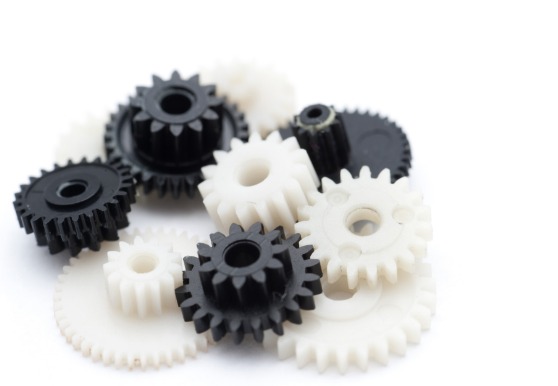
For decades, these gears were made from metal. But plastic has changed the equation. Plastic helical gears now offer advantages that metal simply cannot match. They are lighter. They cost less. They run quieter. They resist corrosion. And many operate without lubrication.
But not all plastics perform the same. Choosing the right material is critical for your application. This article covers the advantages of plastic helical gears, compares common materials, and helps you select the right option for your project.
What Makes Plastic Helical Gears Unique?
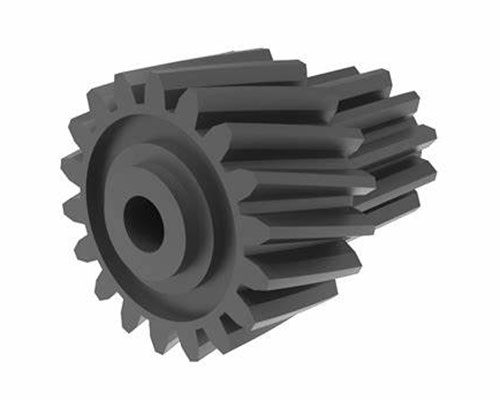
Helical gears have teeth cut at an angle to the gear axis. This angled design creates gradual tooth engagement. Unlike spur gears where teeth engage all at once, helical gear teeth slide into contact progressively.
This gradual engagement provides:
- Smoother operation with less impact
- Lower noise during operation
- Higher load capacity for the same size
When combined with plastic materials, these advantages multiply.
What Are the Key Advantages?
How Lightweight Are They?
Plastic is significantly lighter than metal. Common gear plastics like POM (acetal) have a density of about 1.42 g/cm³. Steel, in contrast, is 7.85 g/cm³. A plastic helical gear weighs roughly one-fifth of a steel gear of the same size.
In the aerospace industry, this matters enormously. One aerospace company replaced metal helical gears with plastic in an actuator component. They achieved 60% weight reduction for the part. This contributed to a 10% decrease in fuel consumption for that system.
In portable power tools and small robotics, lighter gears mean:
- Faster movement
- Less stress on motors
- Longer battery life
- More agile operation
How Cost-Effective Are They?
Plastic helical gears offer significant cost savings.
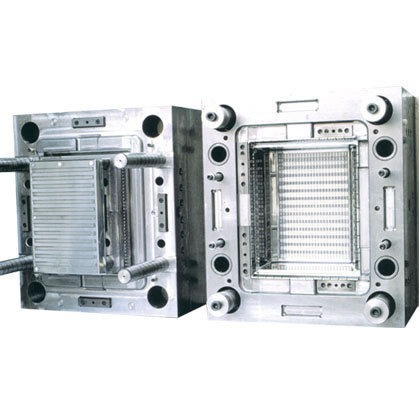
Raw material costs are lower. Plastics are mass-produced, keeping prices down. Manufacturing costs are also lower. Most plastic gears are injection molded. Once the mold is made, thousands or millions of units can be produced with minimal additional cost.
Metal gears, by contrast, require machining, cutting, milling, and grinding. These processes demand expensive equipment and skilled labor.
A consumer electronics company switched from metal to plastic helical gears for laptop cooling fans. Results:
- Raw material cost: 40% reduction
- Overall manufacturing cost: 60% reduction
These savings allowed the company to increase margins or lower product prices.
How Do They Reduce Noise and Vibration?
Plastic has inherent damping properties. When gear teeth engage, plastic absorbs and dissipates impact forces. Metal transmits these forces, creating noise and vibration.
A study comparing plastic and metal helical gears in a gearbox found that plastic gears reduced noise by 15–20 decibels. This difference is noticeable. In a quiet office, a printer with plastic gears operates without distraction. In medical devices, lower noise means less patient stress.
How Do They Resist Corrosion?
Plastic does not rust. This is a major advantage in many environments.
In the chemical industry, metal gears exposed to acids and solvents corrode quickly. Plastic helical gears made from polypropylene (PP) or polyphenylene sulfide (PPS) withstand these harsh conditions. They operate reliably where metal would fail.
In the food and beverage industry, plastic gears do not rust or contaminate products. They can be cleaned easily. In bottling plants, conveyor gears made from plastic operate smoothly in humid environments with occasional exposure to cleaning agents.
What Self-Lubricating Properties Exist?
Many gear plastics are self-lubricating. Their chemical structure creates low friction between teeth. Nylon, for example, has excellent self-lubricating properties.
A study compared maintenance requirements for plastic and metal helical gears in a small industrial conveyor:
- Plastic gears: No lubrication needed for first 5,000 hours
- Metal gears: Required lubrication every 500 hours
Self-lubrication reduces maintenance costs. It also eliminates the risk of lubricant contamination—critical in food processing and medical applications.
What Materials Are Used for Plastic Helical Gears?
Nylon (Polyamide)
Nylon is a popular choice for its balance of strength, wear resistance, and self-lubrication.
| Property | Typical Value | Best For |
|---|---|---|
| Tensile Strength | 50–100 MPa | Moderate load applications |
| Wear Resistance | High | Long-term operation |
| Chemical Resistance | Good | Oils, greases, many solvents |
In automotive windshield wiper mechanisms, nylon helical gears operate smoothly for years. They handle continuous back-and-forth motion without excessive wear.
Polyacetal (POM)
POM is prized for dimensional stability and low friction.
| Property | Typical Value | Best For |
|---|---|---|
| Dimensional Stability | Excellent | Precision applications |
| Coefficient of Friction | 0.05–0.2 | High-speed operation |
| Rigidity | High | Efficient torque transmission |
In precision instruments like watches or measuring devices, POM gears maintain accurate dimensions over time. Any deviation could cause inaccurate readings. POM delivers consistent performance.
Polycarbonate (PC)
Polycarbonate stands out for impact strength and electrical insulation.
| Property | Typical Value | Best For |
|---|---|---|
| Impact Strength | 50–80 kJ/m² | Applications with shock risk |
| Dielectric Strength | 20–30 kV/mm | Electrical equipment |
| Transparency | High | Visual inspection needs |
In cameras, polycarbonate gears protect delicate focusing mechanisms. If the camera is dropped, PC gears are less likely to crack than other plastics. In electric motors, PC gears provide electrical isolation between mechanical and electrical components.
How Do Plastic Helical Gears Compare to Alternatives?
| Comparison Item | Plastic Helical Gears | Metal Helical Gears | Spur Gears |
|---|---|---|---|
| Weight | Very light (1.42 g/cm³ for POM) | Heavy (7.85 g/cm³ for steel) | Varies—metal heavy, plastic lighter |
| Cost | Low; injection molding efficient | High; machining required | Metal costly; plastic lower |
| Noise Level | Low (15–20 dB quieter than metal) | High, especially at speed | Metal noisy; plastic quieter but noisier than helical |
| Wear Resistance | Good; nylon lasts 5,000+ hours | High with lubrication | Metal wears; plastic wears faster under high load |
| Corrosion Resistance | High | Low; rusts in moisture | Metal vulnerable; plastic good |
| Self-Lubricating | Yes, many plastics | No; requires regular lubrication | Plastic may self-lubricate; metal always needs lubrication |
| Transmission Efficiency | 90–95% | 95–98% with lubrication | Varies |
| Dimensional Stability | Good; POM excellent | High; unaffected by environment | Metal stable; plastic sensitive to temperature |
How Do You Choose the Right Material?
What Load Requirements Matter?
For high-load applications, nylon offers good strength. For extreme loads, consider glass-filled nylon or metal.
For light to medium loads, POM or standard nylon works well.
What Environmental Factors Matter?
Temperature: Standard plastics operate up to 120°C. For higher temperatures, consider PPS or other high-temperature materials.
Chemical exposure: Nylon resists oils and greases. For acids or solvents, PP or PPS may be better. Verify compatibility with your specific chemicals.
Moisture: Nylon absorbs moisture, which can cause dimensional changes. POM has better moisture resistance for humid environments.
What Precision Needs Matter?
For precision applications—watches, measuring devices, printers—POM is the best choice. Its dimensional stability ensures consistent performance over time.
What Operating Speed Matters?
For high-speed applications, POM’s low friction and good dimensional stability perform well. Nylon also works but may generate more heat at very high speeds.
What Does Yigu Technology Offer?
Yigu Technology specializes in custom plastic helical gears. Our injection molding capabilities achieve tight dimensional tolerances. Our professional R&D team helps customers select the right material for their specific application.
We serve:
- Automotive (window systems, seat adjusters, wiper mechanisms)
- Consumer electronics (printers, cameras, power tools)
- Medical devices (blood pumps, surgical robots)
- Industrial equipment (conveyors, packaging machinery)
Our quality control ensures every gear meets industry standards.
Conclusion
Plastic helical gears offer a compelling set of advantages. They are lightweight—often one-fifth the weight of steel. They are cost-effective, with manufacturing costs 30–60% lower than metal alternatives. They operate quietly, reducing noise by 15–20 decibels. They resist corrosion where metal would rust. And many are self-lubricating, reducing maintenance.
Material selection matters. Nylon offers strength and wear resistance. POM provides dimensional stability for precision applications. Polycarbonate delivers impact strength and electrical insulation.
Match the material to your application. Consider load, temperature, chemical exposure, and precision needs. When selected correctly, plastic helical gears deliver reliable, long-lasting performance at lower cost than metal alternatives.
FAQ
What are the main applications of plastic helical gears?
Plastic helical gears are used in automotive (windshield wipers, seat adjusters), consumer electronics (printers, cameras), medical devices (blood pumps, surgical robots), and office equipment (scanners, copiers). Their low noise, light weight, and corrosion resistance make them ideal for these applications.
How to choose the right material for plastic helical gears?
Consider load requirements—nylon for moderate loads, reinforced grades for higher loads. Consider temperature—standard plastics to 120°C, high-temperature grades for more. Consider chemical exposure—nylon for oils, PPS for aggressive chemicals. Consider precision needs—POM for dimensional stability. Consider impact risk—polycarbonate for shock-prone applications.
Can plastic helical gears replace metal gears completely?
No. Plastic helical gears cannot replace metal in high-load applications like heavy industrial machinery or vehicle transmissions. Metal gears handle much higher forces without deformation. For high-temperature environments, metal maintains properties where plastic softens. However, in applications where weight reduction, low noise, corrosion resistance, and cost-effectiveness matter, plastic helical gears are often the superior choice.
Contact Yigu Technology for Custom Manufacturing
Need custom plastic helical gears for your application? Yigu Technology specializes in precision gear manufacturing. We work with nylon, POM, polycarbonate, and other engineering plastics. Our team helps you select the right material and achieve the precision you need. Contact us today to discuss your project requirements.