Introduction
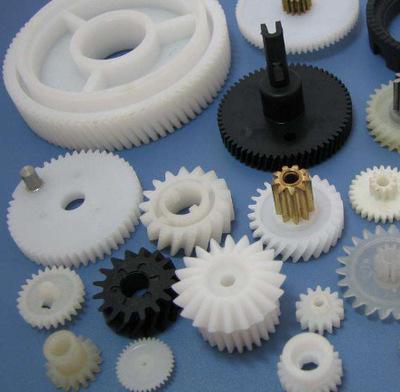
Motion is at the heart of every machine. And at the heart of most motion lies a simple component: the spur gear. These cylindrical gears with straight, parallel teeth transmit power between shafts with remarkable efficiency. For decades, metal dominated this role. But plastic spur gears have quietly revolutionized the field—offering lighter weight, lower cost, quieter operation, and corrosion resistance that metal cannot match. This guide explores the materials, advantages, applications, and selection criteria for plastic spur gears.
What Are Plastic Spur Gears?
Basic Structure and Function
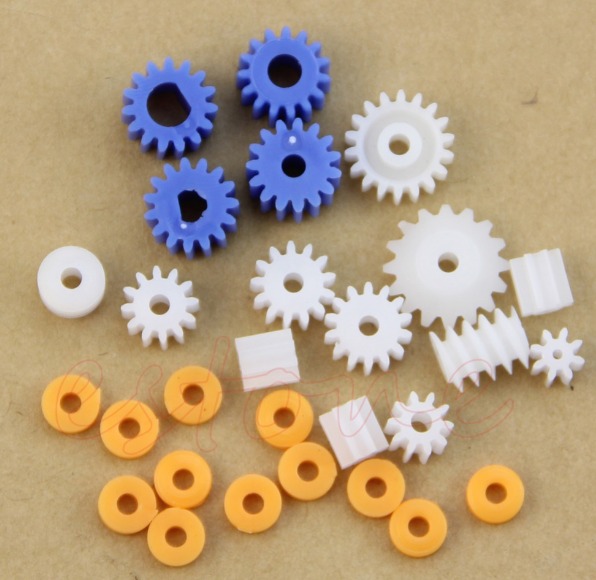
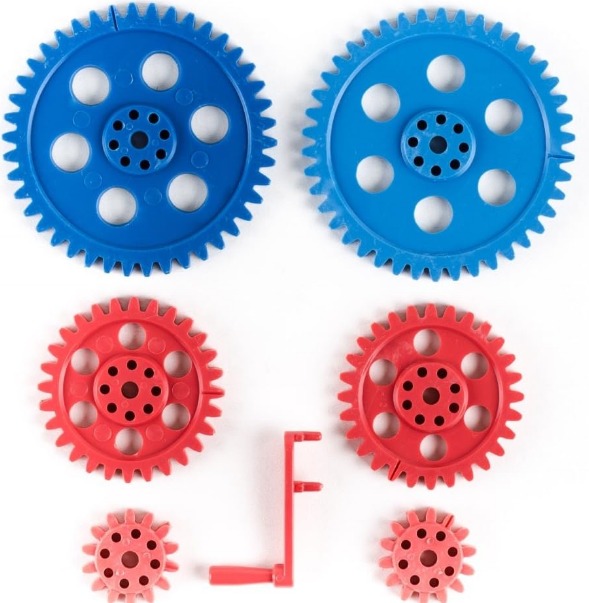
A spur gear is a cylindrical wheel with teeth evenly spaced around its circumference. The teeth are straight and cut parallel to the gear's axis. Two spur gears mesh to transmit motion between parallel shafts.
The working principle is simple:
- The driver gear rotates
- Its teeth push against the teeth of the driven gear
- Power and motion transfer from one shaft to the other
Spur gears are the most common gear type because of their simplicity, efficiency, and ease of manufacturing.
Common Plastic Materials
Plastic spur gears are made from engineering plastics selected for specific properties.
| Material | Key Properties | Best For |
|---|---|---|
| Nylon (PA) | High strength-to-weight, wear-resistant, self-lubricating | Industrial sewing machines, small motors, impact-prone applications |
| Acetal (POM) | Excellent dimensional stability, low friction, precise | Electronic clocks, small fans, precision instruments |
| Polyethylene (PE) | Lightweight, strong chemical resistance | Chemical pipeline valves, laboratory stirrers |
| Polycarbonate (PC) | High impact strength, good dimensional stability | Power tools, sports equipment, impact-prone environments |
What Materials Are Used for Plastic Spur Gears?
Nylon (Polyamide, PA)
Nylon offers a high strength-to-weight ratio and excellent wear resistance. It can withstand the constant friction of gear operation.
In industrial sewing machines, nylon spur gears handle high-speed rotation and frequent starts and stops. Their self-lubricating properties reduce friction and wear, extending gear life. In small motors, nylon gears remain lightweight while transmitting power smoothly.
Limitation: Nylon absorbs moisture, which can cause dimensional changes in humid environments.
Acetal (POM)
Acetal is prized for dimensional stability—it maintains its shape accurately across temperature changes and mechanical stress.
In electronic clocks, acetal spur gears rotate precisely to keep accurate time. In small cooling fans, acetal gears provide durability at low cost. Their low coefficient of friction ensures smooth operation and reduces energy consumption.
Limitation: Lower continuous use temperature than some alternatives (typically 80–100°C).
Polyethylene (PE)
Polyethylene combines light weight with strong chemical resistance.
In chemical pipeline valves, polyethylene gears resist corrosive liquids and gases. In laboratory stirrers mixing chemical solutions, polyethylene gears withstand exposure while keeping the device lightweight.
Limitation: Lower strength than nylon or acetal; best for low-load applications.
Polycarbonate (PC)
Polycarbonate offers high impact strength—it absorbs sudden shocks without cracking.
In power tools, internal gears face impacts during use. Polycarbonate gears withstand these without deformation. In exercise equipment, polycarbonate gears in transmission components handle the impacts of normal use.
Limitation: More expensive than acetal; lower wear resistance under continuous friction.
How Do Plastic Spur Gears Compare to Metal?
| Feature | Plastic Spur Gears | Metal Spur Gears |
|---|---|---|
| Weight | 10–20% of metal equivalent | Heavy |
| Cost | 50–70% lower at scale | Higher |
| Noise | Quiet; material dampens vibration | Noisy; metal-to-metal contact |
| Corrosion | Excellent; unaffected by moisture | Prone to rust; requires coatings |
| Strength | Moderate; suitable for low to medium loads | High; handles heavy loads |
| Lubrication | Often self-lubricating | Regular lubrication required |
| Design Flexibility | High; complex shapes molded | Limited; machining constraints |
Real-World Example
A manufacturer of small household fans switched from metal to acetal spur gears. The results:
- Weight reduced by 80%
- Cost per unit decreased by 65%
- Noise levels dropped by 10 decibels
- Lubrication eliminated entirely
The plastic gears performed flawlessly over the fan's expected lifespan.
What Are the Key Advantages?
Lightweight Construction
Plastic spur gears weigh 10–20% of their metal counterparts. This weight reduction matters in:
- Portable devices: Easier to carry and operate
- Battery-powered equipment: Extended battery life
- Aerospace and automotive: Improved fuel efficiency
Cost-Effectiveness
Raw materials cost less. Injection molding produces parts faster than machining. In high-volume production, cost savings can reach 50–70% compared to metal gears.
Quiet Operation
Plastic naturally dampens vibration. When plastic gear teeth mesh, the impact is softer than metal-to-metal contact. This results in quieter machinery—critical in household appliances, office equipment, and medical devices.
Corrosion Resistance
Plastic does not rust. In food processing, chemical plants, and marine environments, plastic spur gears maintain their integrity where metal gears would degrade. No coatings, no special treatments, no corrosion-related failures.
Self-Lubricating Properties
Materials like nylon and acetal have low coefficients of friction. They often eliminate the need for external lubrication. This simplifies maintenance and prevents lubricant contamination in sensitive environments.
Design Flexibility
Injection molding allows complex geometries that would be expensive to machine. Engineers can integrate:
- Multiple gear stages into one part
- Mounting features
- Complex tooth profiles
What Are the Limitations?
Lower Strength
Plastic spur gears have lower tensile strength than metal. For heavy-duty industrial applications—high torque, shock loads—metal remains necessary.
Temperature Sensitivity
Most engineering plastics have continuous use limits between 80–140°C. Beyond these temperatures, materials soften, lose strength, and may fail.
Moisture Effects
Nylon absorbs moisture, causing dimensional changes. In precision applications or humid environments, acetal or other moisture-stable materials are better choices.
Where Are Plastic Spur Gears Used?
Automotive Industry
Plastic spur gears appear in:
- Power windows and seat adjusters: Lightweight, quiet operation
- Wiper mechanisms: Corrosion resistance
- Small actuators: Cost-effective, reliable
Consumer Electronics
From printers to cameras, plastic spur gears enable precision movement:
- Paper feed mechanisms: Smooth, quiet operation
- Lens focusing systems: Precise positioning
- Small fans: Lightweight, low noise
Medical Equipment
Medical devices demand reliability, cleanliness, and quiet operation:
- Infusion pumps: Precise fluid delivery
- Diagnostic equipment: Smooth positioning
- Portable devices: Lightweight for patient comfort
Industrial Equipment
Plastic spur gears serve in:
- Conveyor systems: Low-noise operation
- Packaging machinery: Corrosion resistance for washdown environments
- Small pumps: Chemical resistance
Consumer Goods
Everyday products rely on plastic spur gears:
- Kitchen appliances: Quiet blenders, mixers
- Toys: Safe, lightweight, low cost
- Power tools: Impact-resistant polycarbonate gears
How Do You Choose the Right Plastic Spur Gear?
Step 1: Define Your Requirements
| Factor | Questions to Answer |
|---|---|
| Load | What torque will the gear transmit? (Nm or lb-ft) |
| Speed | What rotational speed? (RPM) |
| Environment | Temperature range? Moisture? Chemicals? |
| Precision | What dimensional tolerances are needed? |
| Volume | How many units? Prototype or production? |
Step 2: Select Material
Match material properties to requirements:
| If you need… | Choose… |
|---|---|
| High strength, moderate loads | Nylon |
| Precision, dimensional stability | Acetal (POM) |
| Chemical resistance | Polyethylene |
| Impact resistance | Polycarbonate |
| High-temperature operation | PEEK or glass-filled nylon |
Step 3: Optimize Design
Key design parameters affect performance:
- Tooth shape: Proper involute profile reduces noise and wear
- Module: Determines tooth size and strength
- Number of teeth: Sets gear ratio
- Tooth width: Affects load capacity
Step 4: Choose a Reliable Supplier
Look for:
- Experience with your material and application
- Quality certifications (ISO 9001)
- In-house testing capabilities
- Responsive technical support
Yigu Technology's Perspective
At Yigu Technology, we see plastic spur gears as a versatile solution for countless applications. Their ability to be customized—material, geometry, precision level—makes them ideal for clients across industries.
We recently worked with a medical device company needing a lightweight, corrosion-resistant gear for a portable diagnostic system. The gear faced:
- Moderate torque (15 Nm)
- Exposure to cleaning agents
- Tight dimensional tolerances (±0.03 mm)
We recommended acetal (POM) for its dimensional stability and chemical resistance. Our injection molding process achieved the required precision. The result: a gear that met all performance requirements at 40% lower cost than the machined metal alternative.
Our approach combines:
- Material expertise to match plastic properties to application demands
- Precision manufacturing with tight process control
- Collaborative design to optimize for manufacturability
We are committed to helping customers leverage plastic spur gears' advantages while managing their limitations.
Conclusion
Plastic spur gears are revolutionizing motion in machinery through their unique combination of properties. They are lightweight—often 80–90% lighter than metal equivalents—reducing energy consumption and improving portability. They are cost-effective, with high-volume production costs 50–70% lower than metal gears. They operate quietly, resist corrosion, and often eliminate the need for lubrication. While limitations in strength and temperature range remain, advances in materials and manufacturing continue to expand their capabilities. When matched to appropriate applications—automotive, consumer electronics, medical equipment, industrial machinery—plastic spur gears deliver reliable, efficient, cost-effective performance that metal cannot match.
FAQ About Plastic Spur Gears
Are plastic spur gears suitable for high-load applications?
Plastic spur gears generally handle low to medium loads. Nylon can manage loads up to 50–100 Nm in well-designed applications. For extremely high loads (above 500 Nm), metal gears remain necessary. In high-load situations, larger tooth widths or reinforcement structures can improve plastic gear capacity.
How do I determine the right size plastic spur gear for my application?
Calculate the required gear ratio based on speed and torque requirements. Measure available space for installation. Consider load and rotational speed—higher loads or speeds may require larger gears. Consult gear design standards and experienced manufacturers for specific guidance.
Can plastic spur gears be used in high-temperature environments?
It depends on the material. Nylon: up to 80°C. Acetal: up to 100°C. Polyethylene: up to 100–140°C depending on density. Polycarbonate: up to 130–140°C. Above these temperatures, materials soften and may fail. For high-temperature applications, consider heat-resistant plastics like PEEK or add heat-dissipating mechanisms.
What is the lifespan of plastic spur gears?
Lifespan varies by application. In low-load, intermittent use (toys, small appliances), plastic gears often last the product's lifetime. In continuous industrial applications, with proper material selection and design, plastic gears can operate for 10,000+ hours before significant wear.
Contact Yigu Technology for Custom Manufacturing
Need plastic spur gears tailored to your application? Yigu Technology provides custom manufacturing of precision plastic gears. From material selection to design optimization and production, we deliver gears that meet your performance requirements. Contact us today to discuss your project.