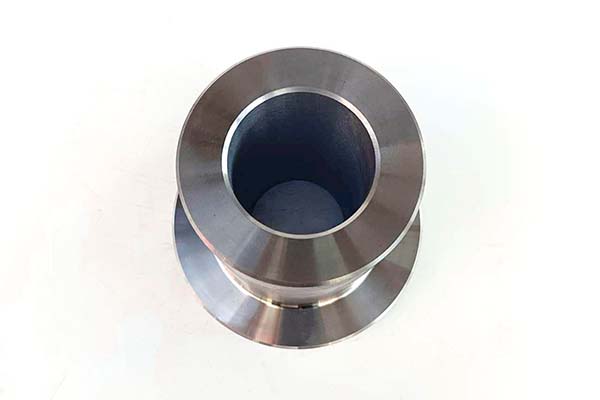
When selecting a material for high-performance components, the balance between strength, machinability, and cost often creates a difficult decision. Manufacturers and engineers frequently face project delays, tool wear issues, or part failures when choosing the wrong aluminum alloy. This guide walks you through everything about CNC machining AL6082 T6—from its material properties to practical machining strategies—so you can determine if this high-strength aluminum suits your next project.
What Makes AL6082 T6 Different?
A Medium-to-High Strength Alloy
AL6082 belongs to the 6000 series of aluminum alloys, a family known for combining good mechanical properties with excellent corrosion resistance. What sets it apart is the T6 temper, a heat treatment process that significantly boosts its strength. The alloy undergoes solution heat treatment, quenching, and artificial aging to achieve its final form.
Key Chemical Composition
The alloy’s performance comes from a carefully balanced mix of elements:
| Element | Percentage Range | Role |
|---|---|---|
| Aluminum | 95.5–97.5% | Base metal |
| Magnesium | 0.6–1.2% | Increases strength |
| Silicon | 0.7–1.3% | Improves fluidity and strength |
| Manganese | 0.4–1.0% | Enhances corrosion resistance |
| Iron | Max 0.5% | Controls grain structure |
| Copper | Max 0.1% | Maintains corrosion resistance |
This combination delivers reliable performance without sacrificing the alloy’s workability.
How Strong Is AL6082 T6?
Mechanical Properties in T6 Temper
The T6 treatment creates impressive numbers that matter for structural applications:
- Tensile Strength: 310–380 MPa (45,000–55,000 psi)
- Yield Strength: 250–310 MPa (36,000–45,000 psi)
- Hardness: 85–95 HB (Brinell)
- Elongation: 10–14% (in 50 mm)
AL6082 T6 vs. AL6061 T6
Many engineers ask how this alloy compares to the more common AL6061. Here is a side-by-side look:
| Property | AL6082 T6 | AL6061 T6 |
|---|---|---|
| Tensile Strength | 310–380 MPa | 290–345 MPa |
| Yield Strength | 250–310 MPa | 240–310 MPa |
| Fatigue Resistance | Higher | Moderate |
| Corrosion Resistance | Very good | Excellent |
| Weldability | Good | Very good |
For load-bearing applications like chassis components or structural frames, AL6082 T6 offers higher strength and better resistance to repeated stress.
What Are the Best Machining Practices?
Optimizing Milling Operations
Milling AL6082 T6 requires attention to tool selection and cutting parameters. The alloy machines well, but its higher strength means you cannot use the same settings as for softer aluminum grades.
Tool selection:
- Use carbide end mills for durability
- Choose 2-flute or 4-flute tools
- Look for a high helix angle between 30° and 45° to reduce chip buildup
Cutting parameters:
- Roughing: 3,000–6,000 RPM spindle speed, 100–300 mm/min feed rate
- Finishing: slower feed rate of 50–150 mm/min for better surface quality
- Flood cooling is essential to prevent heat warping and extend tool life
Turning Techniques
For cylindrical parts, turning operations need stable setups to manage cutting forces.
- Use carbide inserts with a positive rake angle to minimize cutting resistance
- Maintain spindle speed between 2,000 and 4,000 RPM
- Feed rate should range from 0.1 to 0.3 mm per revolution
- Limit depth of cut to 2–3 mm for roughing to avoid excessive tool wear
Drilling Without Issues
Drilling AL6082 T6 can produce long, stringy chips if not managed properly.
- High-speed steel (HSS) or carbide drills both work effectively
- Twist drills with a 118° point angle suit most applications
- Spindle speed: 1,500–3,000 RPM
- Feed rate: 0.1–0.2 mm per revolution
- Use peck drilling—intermittent feeding—to clear chips and reduce heat buildup
Critical Considerations
Three factors directly affect machining success:
- Workholding: Thin-walled parts can deflect under cutting forces. Use firm, even clamping to maintain accuracy.
- Tool material: Carbide tools handle higher speeds than HSS. Adjust parameters accordingly.
- Heat management: Even though aluminum conducts heat well, sustained cutting without coolant can soften the material locally.
How to Enhance Surface Protection?
Why Surface Treatment Matters
AL6082 T6 naturally resists corrosion, but surface treatments extend its life in harsh environments and improve appearance. The right finish can also add wear resistance and prepare the part for bonding or painting.
Anodizing: The Go-To Choice
Anodizing creates a protective oxide layer through an electrochemical process. The layer thickness typically ranges from 5 to 25 microns.
Benefits:
- Improves corrosion resistance
- Increases surface hardness
- Allows dyeing for decorative finishes
- Does not compromise the alloy’s strength
This makes anodized AL6082 T6 ideal for outdoor applications, marine environments, and consumer products where aesthetics matter.
Coating Options
Powder coating applies a dry powder that cures into a durable finish. It offers excellent protection against scratches, UV damage, and chemicals. Architectural components and industrial equipment often use this method.
Electroplating adds a metallic layer such as chrome or nickel. This increases surface hardness and can improve conductivity for electrical applications.
Surface Finish Standards
The required surface roughness depends on the application:
| Application Type | Surface Roughness (Ra) |
|---|---|
| Structural parts | 1.6–3.2 μm |
| Cosmetic or precision parts | 0.8–1.6 μm |
Achieving smoother finishes often requires slower feed rates during finishing passes and proper tool selection.
Where Is AL6082 T6 Commonly Used?
Aerospace Components
Aircraft manufacturers value AL6082 T6 for its high strength-to-weight ratio. Typical applications include wing ribs, fuselage frames, and landing gear parts. Its fatigue resistance ensures reliability under repeated stress cycles common in aviation.
Automotive Structures
The automotive industry uses this alloy for structural components that must withstand heavy loads while keeping weight down. Chassis components, suspension arms, and engine mounts benefit from its combination of strength and corrosion resistance. Both passenger vehicles and commercial trucks use machined AL6082 T6 parts.
Industrial Equipment
Machine frames, conveyor systems, and hydraulic cylinders often rely on AL6082 T6. The alloy’s weldability allows fabricators to assemble complex structures, while its machinability enables precise fitting of critical interfaces.
Consumer Electronics
High-end electronics manufacturers choose this alloy for laptop frames, camera mounts, and smartphone housings. The material provides the strength needed for thin-wall designs, and anodizing gives it a premium appearance.
What Technical Specifications Matter?
Dimensional Accuracy Requirements
Precision requirements vary by application. Here are common tolerance standards:
| Part Type | Tolerance |
|---|---|
| Critical components | ±0.01 mm |
| Non-critical parts | ±0.05 mm |
| General structural | ±0.1 mm |
Achieving tight tolerances requires high-precision CNC machines and regular calibration. Coordinate measuring machines (CMMs) verify dimensions and ensure consistency across production runs.
Mechanical Testing for Quality Assurance
To confirm the material meets AL6082 T6 specifications, manufacturers perform:
- Hardness testing: Brinell or Rockwell tests should show 85–95 HB
- Tensile testing: Confirms strength values within the 310–380 MPa range
- Chemical analysis: Verifies composition matches the required percentages
These tests provide objective evidence that the material and process remain consistent.
How to Maintain Quality Control?
Inspection Methods
A multi-layered approach to inspection catches issues early:
- Visual inspection: Checks for surface defects, burrs, cracks, or uneven finishes
- Dimensional checks: Uses CMMs, calipers, and micrometers to verify accuracy
- Material testing: Analyzes samples to confirm chemical composition and mechanical properties
Quality Standards to Follow
Reputable manufacturers adhere to established standards:
- ISO 9001: Quality management systems
- ASTM B210: Standard for aluminum alloy extrusions
- AS9100: Required for aerospace applications, with additional aviation safety requirements
Process Monitoring
Tracking cutting parameters during machining helps identify variations that could affect quality. Statistical process control (SPC) analyzes data trends and prevents defects before they occur. This proactive approach reduces scrap rates and ensures consistent output.
A Real-World Example
A manufacturer of hydraulic cylinder components needed a material that could withstand operating pressures up to 250 bar while maintaining tight tolerances on piston surfaces. Initial attempts with AL6061 T6 resulted in surface galling and premature wear. After switching to AL6082 T6, the company adjusted machining parameters—slowing feed rates slightly and using carbide tools with high helix angles—and implemented anodizing for wear resistance.
The result: tool life increased by 35%, surface finish improved to Ra 0.9 μm, and the cylinders passed 200,000 cycle tests without failure. The material’s higher strength allowed thinner wall designs, reducing overall component weight by 12%.
Conclusion
AL6082 T6 offers a compelling combination of high strength, good machinability, and excellent corrosion resistance. It outperforms AL6061 T6 in load-bearing applications while remaining workable with standard CNC equipment. Proper tool selection, cooling strategies, and surface treatments maximize its potential. Whether you are designing aerospace components, automotive structures, or industrial equipment, this alloy provides a reliable foundation for precision machined parts.
The key to success lies in matching your machining parameters to the material’s properties and implementing thorough quality control. When done correctly, AL6082 T6 delivers consistent, high-performance components that meet demanding specifications.
FAQs
How does AL6082 T6 compare to AL6061 T6?
AL6082 T6 offers higher tensile strength (310–380 MPa vs. 290–345 MPa) and better fatigue resistance, making it more suitable for load-bearing applications. AL6061 T6 provides slightly better corrosion resistance in certain environments and is more widely available.
Can AL6082 T6 be welded?
Yes, AL6082 T6 is weldable using TIG or MIG methods. However, welding can reduce mechanical properties in the heat-affected zone. Post-weld heat treatment may be necessary to restore strength for critical applications.
What is the maximum operating temperature for AL6082 T6?
The alloy maintains its mechanical properties up to approximately 150°C (302°F). Above this temperature, strength gradually decreases, and it is not recommended for continuous use above 200°C (392°F).
Is AL6082 T6 difficult to machine?
No, it machines well when using proper parameters. Its higher strength compared to softer aluminum grades requires carbide tools and appropriate speeds, but it produces good surface finishes and manageable chips.
What surface finishes work best with AL6082 T6?
Anodizing is the most common choice, offering corrosion protection and decorative options. Powder coating works well for industrial applications requiring extra durability, while electroplating suits electrical or high-wear components.
Contact Yigu Technology for Custom Manufacturing
At Yigu Technology, we specialize in CNC machining AL6082 T6 and other high-performance alloys. Our engineering team brings years of hands-on experience optimizing machining parameters for aerospace, automotive, and industrial clients. We combine advanced CNC equipment with strict quality control processes to deliver precision components that meet your exact specifications. Whether you need complex structural parts or high-volume production runs, we are ready to help. Contact us to discuss your project requirements.