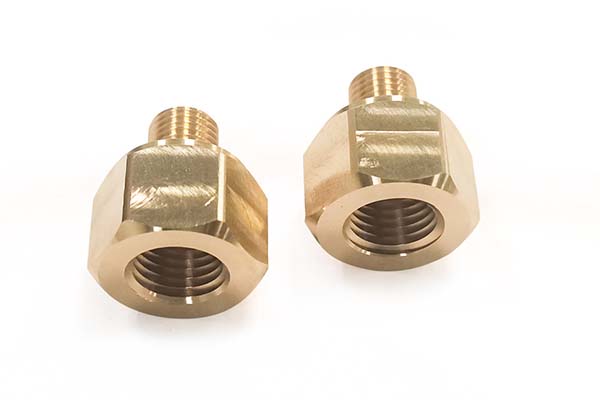
Introduction
CNC machining C26000 (Cartridge Brass) comes with its own set of unique challenges that can frustrate even experienced manufacturers. Unlike the more easily machined C36000, C26000’s high ductility and stringy chip formation often lead to issues like built-up edges, poor surface finish, and tool gumming. Additionally, its tendency to distort under improper workholding makes achieving tight tolerances a struggle. This guide dives deep into solving these pain points, offering expert insights into material properties, machining parameters, tooling, and more to help you master CNC machining of C26000 .
What Are the Key Material Properties of C26000?
C26000 cartridge brass composition is a precise blend of 70% copper, 30% zinc —commonly referred to as 70-30 brass. This composition gives it a distinct yellow hue, earning it the nickname yellow brass.
| Property | Value | Machining Implication |
|---|---|---|
| Tensile strength | 300 – 360 MPa | Balance of strength and formability |
| Elongation | 66% | High ductility → stringy chips; challenging machining |
| Machinability rating | 30 (vs. C36000: 100) | Significantly harder to machine; requires careful parameter setup |
| Density | 8.53 g/cm³ | Slightly higher than C36000—affects workholding, handling |
| Corrosion resistance | Good | Not as high as some other brass alloys |
| Annealing temperature | 425 – 650°C | Annealing improves machinability by reducing hardness |
What CNC Machining Parameters and Techniques Work for C26000?
Cutting Speed and Feed Rate
| Parameter | Recommendation | Why |
|---|---|---|
| Cutting speed | 100 – 200 m/min (turning) | Lower than C36000 due to lower machinability |
| Feed rate | 0.15 – 0.4 mm/rev | Low-speed, high-feed strategy helps break chips, reduce built-up edges |
Chip Control and Coolant Use
| Challenge | Solution |
|---|---|
| Chip control (stringy chips) | Proper chip breakers; adjust feed rates—stringy chips from high ductility can entangle tools, damage workpiece |
| Coolant | Flood coolant more effective than mist—helps chip evacuation, reduces heat, aids in built-up edge prevention |
Tool Life and Micro-Turning
| Factor | Consideration |
|---|---|
| Tool wear | Faster wear due to material; monitor tool life regularly |
| Micro-turning (thin-wall components) | Consistent parameters; sharp tools—avoid distortion, achieve precision |
What Tooling and Edge Geometry Are Best?
| Tool Factor | Recommendation | Benefit |
|---|---|---|
| Inserts | Sharp carbide inserts | Clean cutting; reduces built-up edges |
| Rake angle | High-positive | Reduces cutting forces; easier machining; minimizes tool wear |
| End mills | Polished flutes | Aids chip evacuation—prevents buildup, gumming |
| Coatings | TiCN (titanium carbonitride) | Reduces friction; prevents material sticking (gumming) |
| Insert nose radius | Smaller radius for finishing | Improves surface finish; balance with increased cutting forces |
| Toolholders | Vibration damped; micro-grain carbide tools | Reduces vibration; essential for good surface finish, precision |
How Do You Achieve Surface Finish and Post-Processing?
Surface Finish
| Target | Method |
|---|---|
| Ra 0.2 μm turning | Achievable with right parameters and tooling |
| Mirror polish | Careful machining followed by polishing operations |
Deburring and Cleaning
| Operation | Method |
|---|---|
| Deburring stringy chips | Specialized deburring tools, processes—chips more challenging due to ductility |
| Cleaning | Ultrasonic cleaning—effective for removing contaminants |
Finishes and Protection
| Treatment | Benefit |
|---|---|
| Bright-dip finish | Bright, shiny appearance—enhances aesthetic appeal |
| Tarnish protection coating | Prevents tarnishing—important for decorative, exposed parts |
| Oxide removal | Citric acid—safe, effective method for removing oxide layers |
How Do You Control Workholding and Distortion?
Proper workholding is critical to prevent distortion in C26000, especially given its high ductility (66% elongation).
Workholding Methods
| Method | Application | Benefit |
|---|---|---|
| Soft-jaw chucking | General turning | Distributes clamping pressure evenly—reduces distortion risk |
| Vacuum fixture | Thin sheets | Uniform holding without excessive pressure |
| Minimum clamp pressure | All applications | Prevents distortion while ensuring workpiece security |
Accuracy and Setup
| Factor | Strategy |
|---|---|
| Distortion prevention | Consistent machining parameters; avoid excessive heat; proper workholding |
| Zero-point pallet accuracy | Precise workpiece positioning—critical for tight tolerances in complex parts |
| 5-axis tombstone setup | Enables multi-side machining with single setup; reduces repositioning errors |
Where Is C26000 Applied?
| Industry | Applications | Why C26000? |
|---|---|---|
| Ammunition | Bullet casings | Ductility and strength—withstands firing pressure |
| Musical instruments | Tubing | Acoustic properties; formability |
| Automotive | Radiator cores | Thermal conductivity; corrosion resistance |
| Architectural | Decorative trim | Bright yellow color; polishability |
| Electrical | Terminal connectors | Good conductivity; formability |
| Plumbing | Valve bodies | Corrosion resistance; machinability (with proper techniques) |
What Is Yigu Technology’s Perspective?
At Yigu Technology , we have extensive experience in CNC machining C26000 cartridge brass. We understand its challenges—high ductility (66% elongation), stringy chips, built-up edges—and have optimized our processes to handle them effectively.
- Tooling: Sharp carbide inserts with high-positive rake angles; polished flutes for chip evacuation; TiCN coatings to prevent gumming.
- Parameters: Cutting speeds 100–200 m/min; feed rates 0.15–0.4 mm/rev; flood coolant for chip evacuation, heat reduction.
- Workholding: Soft-jaw chucking; vacuum fixtures for thin sheets; minimum clamp pressure—preventing distortion.
- Surface finish: Achieve Ra 0.2 μm turning; mirror polish; bright-dip finish; tarnish protection coatings.
Whether for bullet casings, musical instruments, or other applications, we are committed to providing reliable and high-quality custom manufacturing solutions for all your C26000 machining needs.
Conclusion
CNC machining C26000 (Cartridge Brass) requires understanding its 70/30 copper-zinc composition and applying tailored strategies. C26000 offers tensile strength 300–360 MPa , 66% elongation , and machinability rating 30 (vs. C36000’s 100)—significantly harder to machine due to high ductility. Optimal machining parameters: cutting speeds 100–200 m/min , feed rates 0.15–0.4 mm/rev , flood coolant for chip evacuation and built-up edge prevention. Tooling : sharp carbide inserts; high-positive rake angles; polished flutes; TiCN coatings; vibration-damped toolholders. Achievable surface finish: Ra 0.2 μm turning ; mirror polish with post-machining polishing; bright-dip finish; tarnish protection coatings. Workholding : soft-jaw chucking; vacuum fixtures for thin sheets; minimum clamp pressure—preventing distortion in high-ductility material. Applications : bullet casings, musical instrument tubing, radiator cores, decorative architectural trim, electrical terminal connectors, plumbing valve bodies. With proper tooling, parameters, and workholding, C26000 delivers reliable, aesthetically pleasing components across industries.
FAQs
Why is C26000 harder to machine than C36000?
C26000 has a lower machinability rating (30 vs. 100 for C36000) due to its composition (70% Cu, 30% Zn), which makes it more ductile (66% elongation). This ductility leads to stringy chips , built-up edges , and increased tool wear —making machining more challenging.
What is the best coolant strategy for machining C26000?
Flood coolant is generally the best strategy for C26000. It helps in chip evacuation , reduces heat, and prevents built-up edges —common issues when machining this ductile brass.
How can you prevent distortion when machining thin-wall C26000 parts?
Prevent distortion by using proper workholding methods—soft-jaw chucking or vacuum fixtures , applying minimum clamp pressure , maintaining consistent machining parameters, avoiding excessive heat, and using vibration-damped toolholders to reduce vibration-induced distortion.
Contact Yigu Technology for Custom Manufacturing
At Yigu Technology , we combine deep material knowledge with advanced CNC machining to deliver precision C26000 components. Our CNC lathes and mills achieve Ra 0.2 μm surface finishes and tight tolerances with sharp carbide inserts , high-positive rake angles , TiCN coatings , and vibration-damped toolholders . We work with 70/30 brass for bullet casings, musical instrument tubing, decorative trim, and electrical connectors. We provide DFM feedback to optimize your designs for manufacturability.
Ready to machine your next C26000 project? Contact Yigu Technology today for a free consultation and quote. Let us help you achieve precision, surface finish, and reliability in every brass component.