Introduction
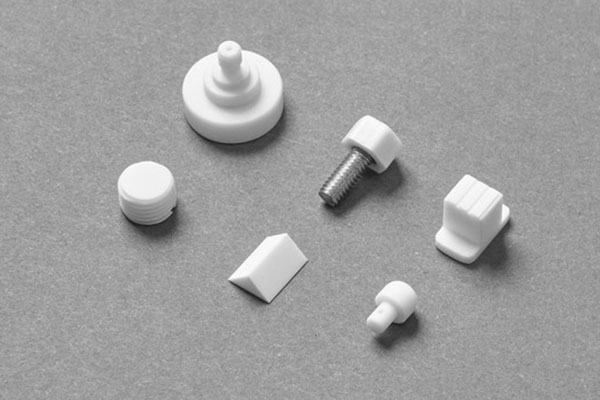
Zirconia ceramics (ZrO₂) have earned a reputation for exceptional strength and toughness. They resist impact, withstand high temperatures, and perform in demanding environments where metals and other ceramics fail. Yet machining this advanced material presents real challenges. Its hardness causes rapid tool wear. Its brittleness—though less than alumina—still risks cracking. And achieving the required surface finish demands specialized techniques.
This guide explores the properties of zirconia ceramics, effective CNC machining methods, common applications, and solutions to typical problems. Whether you are producing dental implants, aerospace components, or industrial wear parts, you will find practical insights to machine zirconia successfully.
What Makes Zirconia Ceramics Unique?
Key Properties That Define Performance
Zirconia’s exceptional performance comes from its composition and crystal structure. Most machining grades are yttria-stabilized zirconia, containing 3–8% yttria (Y₂O₃). This stabilization prevents phase transformations that could cause cracking during processing or in service.
| Property | Typical Value | Why It Matters |
|---|---|---|
| Fracture toughness | 6–10 MPa·m¹/² | Higher than alumina (3–5 MPa·m¹/²); resists impact and crack propagation |
| Tensile strength | 800–1200 MPa | Withstands heavy loads in bearings, wear parts, and structural components |
| Flexural strength | 900–1500 MPa | Enables thin-walled designs without fracture |
| Maximum service temperature | 1200°C | Suitable for high-heat environments like furnaces and engine components |
| Volume resistivity | >10¹⁴ Ω·cm | Provides excellent electrical insulation |
| Hardness | 12–14 GPa | Resists wear but requires diamond tooling for machining |
Key advantage: Zirconia’s toughness is its standout feature. It is significantly less brittle than alumina, allowing slightly more aggressive machining parameters. However, it still requires careful process control.
Why Choose Zirconia Over Other Materials?
| Material | Strength | Toughness | Wear Resistance | Thermal Stability | Machinability |
|---|---|---|---|---|---|
| Zirconia (ZrO₂) | Excellent | Excellent | Excellent | Excellent | Moderate (diamond tools) |
| Alumina (Al₂O₃) | Very Good | Moderate | Very Good | Excellent | Moderate (diamond tools) |
| Tungsten carbide | Excellent | Good | Excellent | Good | Good (carbide tools) |
| Stainless steel | Good | Excellent | Moderate | Moderate | Good |
Zirconia excels where both strength and toughness are required simultaneously—applications where alumina might crack and metals might wear or corrode.
How Do You Machine Zirconia Ceramics?
Milling and Turning Techniques
CNC milling and turning are the primary methods for shaping zirconia. Diamond tooling is essential. Standard carbide tools will wear rapidly and produce poor surface finishes.
Milling parameters (using diamond end mills):
| Operation | Spindle Speed | Feed Rate | Depth of Cut |
|---|---|---|---|
| Roughing | 6000–12000 rpm | 0.02–0.05 mm/rev | 0.3–0.8 mm |
| Finishing | 12000–18000 rpm | 0.01–0.03 mm/rev | 0.05–0.2 mm |
Zirconia’s higher toughness allows faster feeds than alumina, reducing cycle times. However, machine rigidity remains critical. Vibration can cause edge chipping or micro-cracking.
Turning parameters (using diamond-tipped inserts):
- Cutting speed: 15–40 m/min
- Depth of cut: 0.2–0.6 mm
- Feed: 0.02–0.06 mm/rev
- Coolant: Water-soluble, applied continuously
Case study: A medical device manufacturer switched from alumina to zirconia for surgical instrument components. Using optimized milling parameters—spindle speed 12,000 rpm, feed 0.04 mm/rev—they reduced cycle time by 25% while achieving tighter tolerances. Tool life remained comparable to alumina machining.
Grinding for Precision Finishes
Grinding is essential for achieving tight tolerances and smooth surfaces. It is typically used as a finishing operation after milling or turning.
Grinding parameters:
- Wheel type: Diamond, resin-bonded
- Grit size: 100–600 mesh (coarse to fine)
- Wheel speed: 20–30 m/s
- Depth of cut: 0.005–0.02 mm for finishing
Surface finish achievable: Ra 0.02 μm or better with fine-grit wheels and proper coolant application.
Application: Dental implant abutments require surface finishes below Ra 0.05 μm to ensure tissue compatibility and reduce bacterial adhesion. Grinding achieves this consistently.
Advanced Techniques: Laser and EDM
Laser machining offers contact-free processing for intricate features. Fiber lasers (1064 nm wavelength) cut zirconia with minimal heat-affected zones. Tolerances of ±0.005 mm are achievable.
Applications: Thin-walled structures, complex contours, and holes smaller than 0.5 mm diameter.
EDM (Electrical Discharge Machining) is possible with zirconia when conductive additives are included. While less common than mechanical methods, EDM can create fine features in complex geometries that traditional tools cannot reach.
What Challenges Arise and How Do You Solve Them?
Brittleness and Cracking Risk
Though tougher than alumina, zirconia remains susceptible to cracking under certain conditions. Rapid temperature changes or excessive cutting forces are common triggers.
Solutions:
- Use coolants at 20–25°C to maintain thermal stability
- Avoid prolonged cutting in one area; use intermittent toolpaths
- Apply climb milling rather than conventional milling to reduce cutting forces
- Ensure rigid fixturing to prevent vibration
Tool Wear
Zirconia’s hardness (12–14 GPa) causes significant tool wear, even with diamond tooling. Worn tools produce poor surface finishes and risk part damage.
Solutions:
- Use ultra-fine-grain diamond tools with nanocrystalline coatings
- Optimize toolpaths to distribute wear evenly
- Monitor tool condition regularly; replace tools proactively
- NCD (nanocrystalline diamond) coatings extend tool life by 50% compared to standard PCD tools
Data point: A precision machining shop tracking tool life on zirconia components found that NCD-coated tools lasted 350 parts versus 230 parts for uncoated diamond tools—a 52% improvement.
Surface Finish Issues
Micro-chipping at edges is a common surface finish problem. It often occurs during finishing passes when tools are slightly worn or feed rates are too high.
Solutions:
- Use sharp tools for finishing; replace tools if edge quality degrades
- Reduce feed rates to 0.01–0.02 mm/rev for final passes
- Apply low depths of cut (0.05–0.1 mm) for finishing
- Consider plasma-assisted polishing for mirror finishes (Ra <0.01 μm)
Dimensional Accuracy
Precision requirements for zirconia parts often range from ±0.005 to ±0.02 mm. Achieving these consistently requires tight process control.
Solutions:
- Use CNC machines with closed-loop feedback and thermal compensation
- Allow machine and workpiece to stabilize at room temperature before final passes
- Perform in-process inspections using CMM (coordinate measuring machines)
- Compensate for tool wear in the CNC program
Vibration Control
Vibration during machining can cause edge chipping, poor surface finish, and reduced tool life.
Solutions:
- Use rigid fixturing with minimal overhang
- Balance tool holders dynamically
- Reduce spindle speed or feed rate if vibration occurs
- Consider machines with real-time vibration monitoring that adjusts parameters automatically
Where Are Zirconia Components Used?
Dental and Medical Applications
Zirconia’s biocompatibility, strength, and natural tooth-like appearance make it a material of choice in dentistry.
Dental implants and crowns:
- Flexural strength: 900–1200 MPa
- Surface finish: Ra <0.05 μm for tissue compatibility
- Tolerances: ±0.01 mm for precise fit
Surgical instruments: Zirconia instruments resist corrosion, are non-magnetic, and maintain sharp edges longer than stainless steel. They are ideal for minimally invasive surgery where precision and durability matter.
Orthopedic implants: Zirconia femoral heads for hip replacements offer excellent wear resistance and biocompatibility, with service life exceeding 25 years in many cases.
Industrial Wear Parts
Zirconia’s exceptional wear resistance extends component life in abrasive environments.
Bearings: Zirconia bearings operate in high-speed and corrosive conditions where steel bearings fail. They offer:
- Lower friction than steel
- No lubrication required in many applications
- Resistance to acids and alkalis
Nozzles: Spray nozzles made from zirconia resist erosion from high-velocity fluids and abrasive particles. Service life is 5–10 times longer than hardened steel nozzles.
Cutting tools: Zirconia cutting tools machine hardened steel, cast iron, and superalloys. They last 3–5 times longer than carbide tools in these applications.
Aerospace Components
Zirconia’s thermal stability and lightweight properties suit aerospace applications.
Sensor housings: Protect sensitive electronics from high temperatures (up to 1200°C) and corrosive environments.
Thermal barriers: Zirconia coatings and components insulate structural elements from extreme heat.
Precision components: Valve seats, insulators, and structural parts benefit from zirconia’s strength and dimensional stability.
Medical Devices Beyond Implants
Surgical drills: Zirconia drills generate less heat than metal drills, reducing tissue damage during bone surgery.
Diagnostic equipment: Components in MRI and CT scanners take advantage of zirconia’s non-magnetic properties and dimensional stability.
What Are the Latest Advancements?
High-Speed Machining
Modern CNC machines with high-speed spindles (up to 30,000 rpm) and rigid construction enable faster machining without sacrificing quality. High-speed machining reduces cycle times by 40–60% compared to conventional parameters.
Key enablers:
- Improved machine rigidity
- Advanced toolpath algorithms
- Real-time vibration monitoring
Nanocrystalline Diamond Coatings
NCD coatings represent a significant improvement over traditional PCD tools. The finer grain structure provides:
- 50% longer tool life
- Better surface finish
- Reduced edge chipping
Hybrid Manufacturing
Combining additive manufacturing with CNC machining offers new possibilities. Zirconia parts can be 3D printed near-net shape, then precision-machined to final tolerances. This approach:
- Reduces material waste (zirconia is expensive)
- Enables complex internal geometries
- Shortens lead times for complex parts
AI-Powered Process Optimization
Machine learning algorithms now predict tool wear and adjust cutting parameters in real time. These systems:
- Reduce scrap rates by 15–25%
- Extend tool life through optimal parameter selection
- Maintain consistent quality across production runs
Advanced Surface Finishing
Plasma-assisted polishing achieves mirror finishes (Ra <0.01 μm) for optical and dental applications. This process removes the last micron of material with minimal subsurface damage.
Yigu Technology’s Perspective
At Yigu Technology, we specialize in CNC machining zirconia ceramics for demanding applications. Our approach combines deep material understanding with advanced equipment and process control.
Our capabilities:
- High-speed CNC mills with real-time vibration monitoring
- Diamond tooling including NCD-coated end mills and PCD inserts
- Precision grinding with diamond wheels (100–600 grit)
- CMM inspection with ±0.002 mm accuracy
Recent project: A dental implant manufacturer needed zirconia abutments with ±0.005 mm tolerances and surface finish below Ra 0.04 μm. Using optimized milling parameters and fine-grit grinding, we delivered 5,000 units with 99.5% yield. The client reduced post-processing polishing time by 40% and accelerated time-to-market by three weeks.
We believe successful zirconia machining requires balancing speed and precision. Too aggressive, and you risk cracking or excessive tool wear. Too conservative, and cycle times become uncompetitive. Our engineering team works with clients to find that balance, delivering parts that meet specifications efficiently.
Conclusion
CNC machining zirconia ceramics is challenging but achievable with the right approach. The material’s toughness—higher than alumina—allows slightly faster feeds, but its hardness demands diamond tooling. Key success factors include rigid machine setups, proper coolant management, and careful parameter selection.
Common problems—cracking, tool wear, surface finish issues—have proven solutions. Drying material before machining, using sharp tools, controlling temperatures, and stabilizing the machine before finishing passes all contribute to success.
Applications across dental, medical, aerospace, and industrial sectors continue to grow. Recent advances in high-speed machining, nanocrystalline diamond coatings, and AI-driven optimization are making zirconia machining more efficient and accessible.
With proper techniques and careful process control, zirconia’s exceptional properties become a practical advantage—not a machining obstacle.
FAQ
How does zirconia ceramic differ from alumina in terms of machinability?
Zirconia’s higher fracture toughness (6–10 MPa·m¹/² vs. 3–5 MPa·m¹/² for alumina) allows faster feed rates and reduces the risk of cracking during machining. However, both materials require diamond tooling. Zirconia is more forgiving but still demands careful process control.
What tools are best for machining zirconia ceramics?
Diamond tools are essential. For milling and turning, use polycrystalline diamond (PCD) inserts or nanocrystalline diamond (NCD)-coated end mills. For finishing, resin-bonded diamond grinding wheels with grit sizes from 100 to 600 mesh produce the best surface quality.
What is the typical tolerance for CNC-machined zirconia parts?
With advanced CNC equipment and optimized processes, tolerances of ±0.005 mm to ±0.01 mm are achievable. For less critical features, ±0.02 mm is common. Tighter tolerances may require grinding as a finishing operation.
How do you prevent cracking when machining zirconia?
Control thermal conditions by using coolants at 20–25°C and avoiding prolonged cutting in one area. Use climb milling to reduce cutting forces. Ensure rigid fixturing to eliminate vibration. Allow the machine and workpiece to stabilize at room temperature before finishing passes.
What surface finishes can be achieved on machined zirconia?
Milling typically produces finishes of Ra 0.4–0.8 μm. Grinding achieves Ra 0.02–0.1 μm depending on grit size and parameters. For optical or dental applications requiring mirror finishes, plasma-assisted polishing can achieve Ra <0.01 μm.
Contact Yigu Technology for Custom Manufacturing
Ready to produce precision zirconia components? Yigu Technology combines advanced CNC machining capabilities with deep ceramic material expertise to deliver reliable, high-quality parts.
- Machining: CNC milling and turning with diamond tooling; precision grinding
- Materials: Yttria-stabilized zirconia (3–8% Y₂O₃), alumina, silicon carbide
- Capabilities: Tolerances to ±0.005 mm; surface finishes to Ra 0.02 μm
- Industries: Medical devices, dental, aerospace, industrial wear parts
- Quality: ISO 9001 certified; medical-grade processing available
Contact our engineering team to discuss your zirconia machining project. We will provide material recommendations, process optimization, and a detailed quote. Let us help you turn zirconia’s exceptional properties into reliable, high-performance components.