Introduction
You see the letters CNC everywhere in manufacturing. On shop floor signs. In supplier quotes. In engineering drawings. But if you had to stop right now and explain exactly what it means, could you?
You are not alone. Thousands of professionals use the term daily without fully understanding it. This creates real problems. Engineers send incomplete specs. Buyers pick the wrong supplier. New hires feel lost in meetings.
This article fixes that. We will break down what CNC truly stands for, how it actually works, and why it matters for your specific role — whether you design parts, buy them, or machine them. By the end, you will speak the language with confidence.
What Does CNC Stand For?
CNC stands for Computer Numerical Control. Those three words tell the whole story. Let us unpack each one.
| Word | Meaning | Why It Matters |
|---|---|---|
| Computer | A digital processor runs the show | Replaced old punch tapes with smart software |
| Numerical | Commands use numbers (coordinates) | Every move is defined by exact X, Y, Z values |
| Control | The machine follows orders without guesswork | Removes human error from cutting paths |
From NC to CNC: A Quick History
Before computers, machines used NC (Numerical Control). Operators fed instructions via punch tape. Change a design? Rewind the tape. Slow. Painful. Limited.
In the 1970s, computers entered the picture. Suddenly, you could edit a program on a screen. Store it. Reuse it. That shift from NC to CNC changed everything. It made modern precision manufacturing possible.
Key fact: The first CNC machine appeared around 1952 at MIT, but it did not go mainstream until the late 1970s when microprocessors dropped in price.
The word "Computer" is what separates old from new. It gave machines flexibility, speed, and the brain to handle complex shapes.
How CNC Works in Practice
Understanding the acronym is step one. Now let us see how CNC machining actually runs in a real shop.
The Basic Workflow
Every CNC job follows a clear chain:
- CAD (Computer-Aided Design) — An engineer creates a 3D model of the part.
- CAM (Computer-Aided Manufacturing) — Software turns that model into toolpaths (the exact route the cutter will follow).
- Machine Control — The CNC machine reads those paths and cuts the part.
Think of it like GPS for a cutting tool. The CAD is the map. The CAM is the route. The CNC machine is the car.
G-Code and M-Code: The Machine Language
The machine does not understand English. It understands G-code and M-code.
- G-code tells the machine where to move (coordinates, speed, feed rate).
- M-code tells the machine what to do (turn coolant on, stop the spindle, change tools).
A simple G-code line looks like this:
G01 X50.0 Y25.0 F150.0
This means: Move in a straight line to X=50, Y=25 at a feed rate of 150 mm/min.
Human vs. Automated Control
Here is a common myth: CNC means no humans involved. That is wrong.
A skilled operator still:
- Sets up the raw material (workholding).
- Loads the right tools.
- Monitors the first few parts for quality.
- Catches errors the software misses.
CNC automates the cutting. Humans control the process. That partnership is what makes it work.
Types of CNC Machining Processes
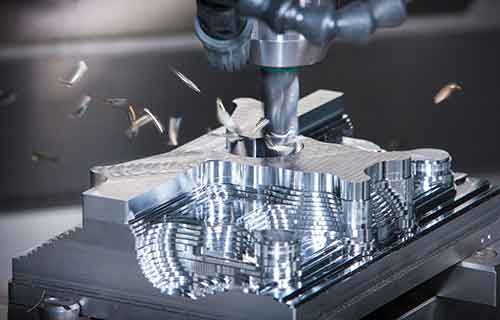
CNC is not one machine. It is a family of processes. Here are the main ones you will encounter.
| Process | What It Does | Typical Use Case |
|---|---|---|
| CNC Milling | Rotating cutter removes material | Brackets, housings, complex 3D shapes |
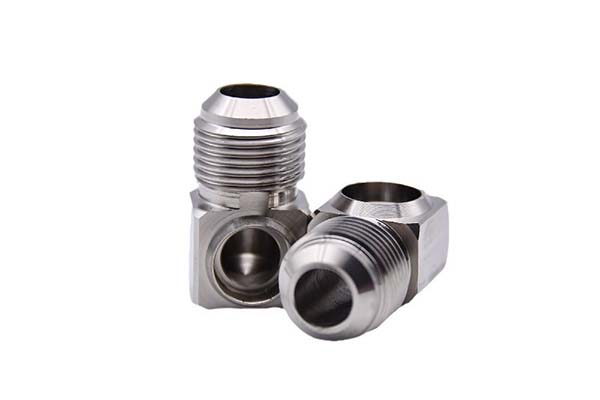
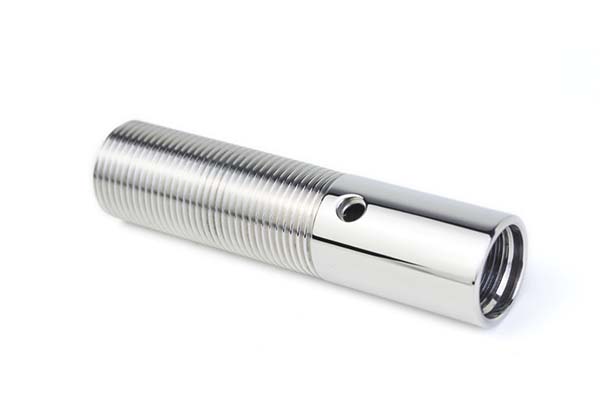
| CNC Turning (Lathe) | Workpiece spins, tool stays still | Shafts, bolts, cylindrical parts |
| CNC Grinding | Abrasive wheel finishes surfaces | Hardened steel, tight tolerance surfaces |
| CNC Routing | Large-area material removal | Plastics, wood, signage, foam |
| CNC EDM | Electrical sparks erode metal | Hard metals, tiny holes, no physical contact |
Multi-Axis Machining Explained
You will also hear terms like 3-axis, 4-axis, and 5-axis. This refers to how many directions the tool or part can move.
| Axis Type | Movements | Best For |
|---|---|---|
| 3-Axis | X, Y, Z (straight lines) | Simple parts, flat surfaces |
| 4-Axis | X, Y, Z + rotation (A or B) | Cylindrical features on one side |
| 5-Axis | X, Y, Z + two rotations | Complex aerospace parts, medical implants |
Real-world example: A turbine blade for a jet engine requires 5-axis CNC. A 3-axis machine simply cannot reach all the angles. That is why aerospace suppliers charge more — the machine capability dictates the cost.
Why CNC Matters for Your Role
The meaning of CNC changes depending on who you are. Let us break it down.
For Engineers: Freedom and Precision
CNC gives you design freedom. You can specify tolerances as tight as ±0.005 mm. You can add undercuts, complex pockets, and organic shapes that manual machining cannot touch.
Repeatability is the real superpower. Once the program is written, part #1 and part #10,000 are nearly identical. This is critical for production runs.
For Designers: Material and Finish Options
When you design for CNC, you unlock a wide range of material choices:
- Aluminum (6061, 7075)
- Steel (304, 4140, 17-4 PH)
- Titanium (Grade 5)
- Plastics (PEEK, Delrin, Nylon)
You also control surface finish. A CNC mill can leave a raw 3.2 µm Ra finish or go down to 0.4 µm Ra with polishing passes. This directly affects how your part looks and performs.
For Procurement: Cost and Supplier Evaluation
If you buy CNC parts, knowing what CNC means helps you evaluate quotes properly. Key cost drivers include:
| Cost Factor | What It Means |
|---|---|
| Machine time | How long the part sits in the machine (hourly rate × hours) |
| Setup time | Fixturing, tool loading, program loading |
| Material cost | Raw stock price (titanium costs 5–10× more than aluminum) |
| Tolerance tightness | Tighter tolerances = slower speeds = higher cost |
| Quantity | 1 part vs. 1,000 parts changes the math completely |
Pro tip: When sourcing, ask suppliers: "What CNC machines do you run, and what is your tolerance capability?" A shop with 5-axis machines can do things a 3-axis shop cannot. That matters.
Common Misconceptions to Avoid
Let us kill three big myths that cost people time and money.
Myth 1: "CNC Means Automatic Perfection"
No. CNC reduces human error, but it does not eliminate it. Bad CAM programming, worn tools, or poor fixturing will still produce bad parts. CNC is only as good as the setup behind it.
Myth 2: "All CNC Machines Are the Same"
A benchtop CNC router and a 5-axis vertical machining center are worlds apart. Machine rigidity, spindle speed, tool changer capacity, and axis count all change what you can make. Always match the machine to the job.
Myth 3: "CNC Is Only for Metal"
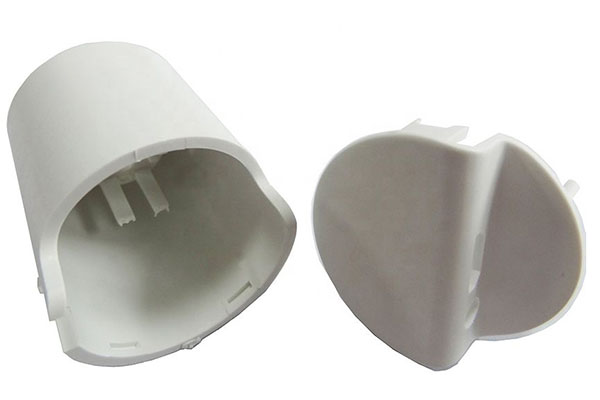
CNC machines cut plastics, wood, ceramics, composites, and even glass. The process is the same. The material just changes the tooling and speeds. A CNC router cutting PEEK is just as "CNC" as a mill cutting titanium.
Conclusion
So, what does CNC stand for? Computer Numerical Control. But that three-word answer barely scratches the surface.
CNC is the backbone of modern manufacturing. It connects digital design to physical parts through code, machines, and skilled people. Whether you are an engineer pushing tolerance limits, a designer picking materials, or a buyer evaluating suppliers — understanding CNC gives you a real edge.
The next time you see those three letters, you will know exactly what they mean. And more importantly, you will know what they do not mean. That clarity saves money, avoids mistakes, and makes you harder to fool.
Frequently Asked Questions
What does CNC stand for in simple terms?
CNC stands for Computer Numerical Control. It means a computer controls a machine using numbered commands to cut parts with high precision.
Is CNC the same as 3D printing?
No. CNC is a subtractive process (you cut material away). 3D printing is additive (you build material up). Both are digital, but they work in opposite ways.
What is the difference between CNC and manual machining?
Manual machining relies on a human operator to control the machine by hand. CNC machining uses a computer program to control every movement automatically. CNC is faster, more repeatable, and handles complex shapes better.
Can CNC machines cut plastics?
Yes. CNC routers and mills cut plastics, wood, foam, and composites all the time. The process is the same — only the tooling and speeds change.
What is G-code?
G-code is the programming language CNC machines read. It tells the machine exactly where to move, how fast, and when to turn on coolant or change tools.
How accurate is CNC machining?
Standard CNC machines hold tolerances around ±0.05 mm. High-end shops with 5-axis machines can reach ±0.005 mm or better, depending on the material and geometry.
Contact Yigu Technology for Custom Manufacturing
Need precision CNC machining for your next project? Yigu Technology delivers high-quality custom parts with tight tolerances, fast lead times, and full transparency. From prototypes to production runs, we have the CNC capabilities to match your specs.
📩 Get a free quote today. Contact us at Yigu Technology and let us turn your designs into reality.