Introduction
In today’s fast-paced product development environment, speed and precision are not optional—they are requirements. Companies across automotive, medical, aerospace, and consumer electronics face mounting pressure to bring innovative products to market faster, while maintaining quality and controlling costs. CNC prototyping services have emerged as the engine driving this innovation, turning digital designs into physical prototypes with unprecedented accuracy and speed.
Unlike traditional methods that rely on manual operation and lengthy tooling, CNC prototyping uses computer-controlled machines to produce functional prototypes directly from CAD models. The result? Prototypes in days instead of weeks, tolerances measured in microns, and the flexibility to iterate designs without expensive rework.
This guide explores how CNC prototyping services empower industrial innovation—covering core principles, application cases across industries, material and process considerations, and the future of prototyping technology.
What Is CNC Prototyping and Why Does It Matter?
CNC prototyping uses computer-controlled machining to create physical models from digital designs. The process transforms raw materials—metals, plastics, composites—into precise prototypes that replicate the form, fit, and function of final production parts.
The CNC Machining Principle
CNC machining operates on digital commands (G-code, M-code) generated from CAD/CAM software. The process follows four key stages:
| Stage | Description |
|---|---|
| 1. Design | 3D modeling in CAD software |
| 2. Programming | CAM software generates toolpaths; simulates machining |
| 3. Machining | CNC machine executes programmed instructions |
| 4. Inspection | Verify dimensions against specifications |
The CNC Prototyping Process: From Design to Finished Prototype
A complete CNC prototyping process consists of six critical steps:
| Step | Description |
|---|---|
| Design review | Check manufacturability; optimize internal corners, hole placement |
| Material selection | Choose metal (aluminum, stainless steel) or plastic (nylon, PEEK) based on application |
| Programming & simulation | Plan cutting paths; simulate to avoid collisions |
| Machine machining | Fix raw material; automated cutting |
| Post-processing | Deburring, grinding, heat treatment |
| Accuracy inspection | CMM, laser scanning verify tolerances (typically ±0.005 mm) |
What Are the Core Strengths of CNC Prototyping?
CNC prototyping delivers advantages that traditional methods cannot match.
High Precision
Digital control enables machining tolerances up to ±0.005 mm—essential for precision parts in aerospace, medical, and automotive applications.
| Process | Typical Tolerance |
|---|---|
| CNC machining | ±0.005–0.01 mm |
| Traditional machining | ±0.05–0.1 mm |
High Efficiency
CNC machining reduces processing time by 30–50% compared to traditional milling. Complex prototypes can be produced in hours, with machines running 24/7.
High Flexibility
Modify machining instructions to adapt to different designs without remaking molds. Supports small-batch, multi-variety production.
Low Cost
Reduced manual intervention lowers scrap rates. For low-volume prototyping, costs are more than 60% lower than mold-based methods.
Comparison: CNC vs. Traditional Machining
| Aspect | CNC Machining | Traditional Machining |
|---|---|---|
| Processing principle | Digital instruction automation | Manual operation |
| Accuracy | ±0.005–0.01 mm | ±0.05–0.1 mm |
| Production efficiency | High; batch automation | Low; skill-dependent |
| Complex machining | Complex surfaces, polyhedra | Weak; limited complexity |
| Labor costs | Low; 1 operator can manage multiple machines | High; skilled operators required throughout |
| Applicable scenarios | Precision prototypes, small-batch production | Simple parts, large-scale standardized production |
How CNC Prototyping Balances Accuracy and Speed
The key to achieving both accuracy and speed lies in two technical supports:
- High-precision machine configuration: Linear motor drives; grating ruler closed-loop control
- Optimized machining strategies: "Roughing → semi-finishing → finishing" approach
Example: Roughing removes excess material quickly (feed rates up to 5000 mm/min); finishing uses high speed (up to 24,000 RPM) with small cutting volume to ensure precision.
Case study: An aerospace component prototype completed in 8 hours via CNC machining vs. 3 days with traditional methods—with dimensional tolerance controlled within ±0.008 mm.
How Is CNC Prototyping Applied Across Industries?
CNC prototyping services serve diverse sectors, each with unique requirements.
Automotive: Accelerating New Vehicle Development
Challenge: Long R&D cycles; high testing requirements
Solution: CNC prototyping produces functional prototypes for engines, transmissions, and structural components
Case study: An electric vehicle company needed prototypes for 12 core components (gears, housings) for a new transmission. CNC machining delivered the full set in 2 weeks—saving 3 months compared to traditional mold-based methods. Prototypes passed bench and road testing, validating design for mass production.
Additional applications: Interior parts, lamp brackets, allowing designers to quickly adjust shapes and structures.
Medical Devices: Precision for Life-Saving Innovation
Challenge: High requirements for biocompatibility, precision, and stability
Solution: CNC machining produces stainless steel and titanium prototypes meeting strict medical standards
Case study: A medical device company developing a new minimally invasive surgical instrument required:
- No burrs
- Surface roughness Ra ≤0.8 μm
- Dimensional tolerance ±0.01 mm
Multi-axis CNC machining and precision polishing met all specifications. After clinical testing, the prototype was approved for mass production.
Additional applications: Prosthetics, implants, surgical guides.
Aerospace: Breaking Technical Barriers in Extreme Environments
Challenge: Parts must withstand high temperatures, high pressures, high loads
Solution: 5-axis CNC machining produces complex geometries in high-strength materials
Case study: A satellite antenna mount required:
- High-strength aluminum alloy
- Machining accuracy ±0.005 mm
- Weight ≤200 g
5-axis CNC machining with optimized cutting paths and high-speed cutting produced the prototype. After mechanical and space environment simulation testing, all indicators met design standards.
Benefit: Shorter R&D cycles; reduced waste of expensive materials.
Consumer Electronics: Leading Fashion and Functionality
Challenge: Rapid product cycles; high appearance and performance demands
Solution: CNC machining produces metal frames, brackets, and housings with integrated designs
Case study: A smartphone manufacturer needed prototypes for metal middle frame and camera module bracket. CNC machining achieved:
- Integrated molding
- Improved structural strength
- Flatness and gloss for appearance
After prototyping, designers conducted feel testing and assembly verification—adjusting dimensions quickly.
Additional applications: Headphones, smartwatches, internal structural parts; supporting low-volume customized production.
Industrial Equipment: Consolidating the Foundation of Smart Manufacturing
Challenge: Stability and durability directly impact production efficiency
Solution: CNC machining produces prototypes for robotic arms, joints, and connecting rods
Case study: An automation equipment company developing a new robotic arm used CNC-machined stainless steel and engineering plastic prototypes for joint and connecting rod components. After assembly testing and 100,000 cycles of load testing, the prototype showed no issues—validating design for mass production.
Additional applications: Machine tool accessories, conveying equipment; helping enterprises respond quickly to market demands.
What Materials and Processes Are Used in CNC Prototyping?
Selecting the right material and process is critical for prototype quality.
Metal Materials
| Material | Properties | Applications |
|---|---|---|
| Aluminum alloy (6061, 7075) | Lightweight, high strength, good machinability | Automotive, aerospace prototypes |
| Stainless steel (304, 316) | Corrosion resistance, high hardness | Medical devices, industrial equipment |
| Titanium alloy | High strength, biocompatibility; difficult to machine, high cost | High-end medical, aerospace |
Plastic Materials
| Material | Properties | Applications |
|---|---|---|
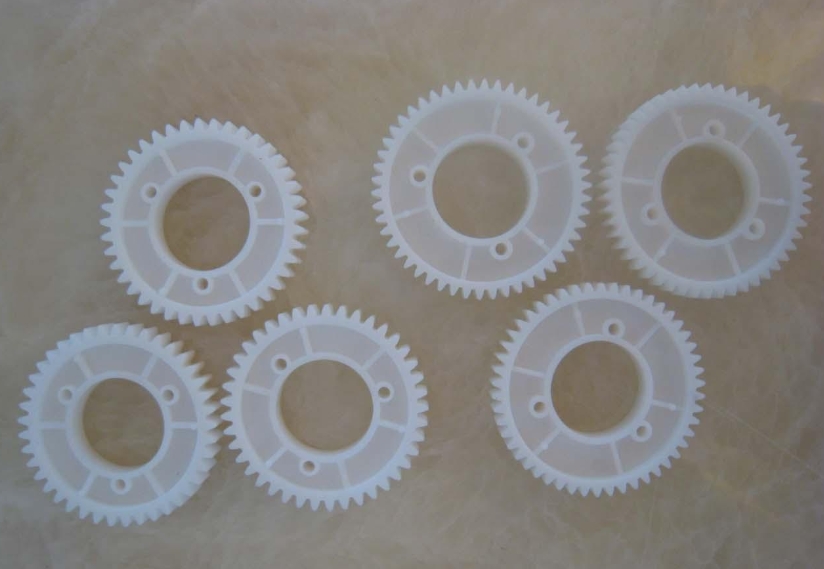
| Nylon (PA6, PA66) | Tough, wear-resistant | Gears, bearings, transmission components |
| PEEK | High-temperature resistance, chemical corrosion resistance | High-temperature environment parts |
| ABS | Low cost, easy to process | Appearance parts, simple structural prototypes |
Aluminum Alloy Prototyping: Process Key Points
Aluminum is the most commonly used material in CNC prototyping.
| Process Step | Recommendation |
|---|---|
| Blank selection | Extruded profiles, plates, or forgings to reduce machining allowance |
| Roughing parameters | High feed rate (3000–5000 mm/min); large cutting depth |
| Finishing parameters | High speed (15,000–24,000 RPM); small cutting depth |
| Cooling | Emulsion or cutting oil to avoid sticking and deformation |
Advantage: "Lightweight and high strength"—low processing cost, widely applicable.
Example: A drone frame prototype machined from aluminum alloy weighed only 150 g but withstood a 20 kg load.
Stainless Steel Machining: Technical Solutions for High Hardness
| Factor | Recommendation |
|---|---|
| Tool selection | Carbide tools or diamond-coated tools; improved wear resistance |
| Cutting parameters | Reduce speed (80–150 m/min); increase feed; avoid excessive tool wear |
| Chip evacuation | High-pressure cooling system; prevent chips from scratching workpiece |
Example: A stainless steel valve prototype for food machinery achieved surface roughness Ra ≤0.4 μm through optimized processing—meeting food hygiene standards.
Multi-Axis Machining: Breaking Through Complex Structure Limitations
Multi-axis machining (4-axis, 5-axis) is a core technology for complex prototypes.
| Axis Configuration | Capability |
|---|---|
| 3-axis | Basic machining; flat surfaces; simple pockets |
| 4-axis | Added rotary axis; cylindrical parts; indexed features |
| 5-axis | Full freedom; complex surfaces; polyhedra; no multiple clamping |
Example: A mold company's complex cavity prototype completed in one clamping using 5-axis CNC machining—reducing machining time by 40% and improving dimensional accuracy.
Surface Finishing Options
Surface finishing improves appearance, mechanical properties, and longevity.
| Finish | Description | Best For |
|---|---|---|
| Grinding/polishing | Remove machining marks; Ra ≤0.2 μm | High-precision surfaces |
| Sandblasting | Uniform matte effect; enhances adhesion | Metal prototypes |
| Electroplating | Chrome, nickel plating; improves corrosion/wear resistance | Metal parts |
| Anodizing | Oxide film; dyeable for colors | Aluminum prototypes |
| Spraying | Improves surface hardness and weather resistance | Plastic prototypes |
Selection guidance: Medical device prototypes often use passivation for corrosion resistance; consumer electronics prototypes use anodizing or spraying for appearance.
Conclusion
CNC prototyping services have become essential to modern industrial innovation. They deliver:
- High precision: Tolerances to ±0.005 mm; essential for aerospace, medical, automotive
- High efficiency: 30–50% faster than traditional methods; 24/7 operation
- High flexibility: Design iterations without expensive tooling; small-batch capability
- Cost-effectiveness: 60% lower costs for low-volume prototyping compared to mold-based methods
From automotive and medical devices to aerospace and consumer electronics, CNC prototyping accelerates product development, reduces R&D risk, and enables faster time-to-market. As AI and digital technologies continue to advance, CNC prototyping will move toward even greater precision, speed, and intelligence—further empowering industrial innovation.
FAQs
What is the typical lead time for CNC prototyping?
Simple prototypes: 1–3 days. Complex multi-part prototypes: 5–7 days. Expedited orders: 24 hours for rush projects.
What is the maximum machining size for CNC prototypes?
Conventional machines: workpieces up to 1000 mm × 600 mm × 500 mm. Large CNC machines support larger-size prototyping. Check with your service provider for specific capabilities.
Is there a significant cost difference between plastic and metal CNC machining?
Yes. Metal machining costs, especially for titanium alloys, are 2–5 times higher than plastics for the same size. This is due to higher hardness, longer machining time, and greater tool wear.
Can CNC prototypes be used directly for mass production?
Simple prototypes can be used for small-batch production (up to 100 pieces). For larger volumes, more economical methods like injection molding or casting are recommended. Precision parts prototypes are validated and ready for low-volume delivery.
How is machining accuracy ensured for CNC prototypes?
Accuracy is ensured through:
- High-precision CNC machines with grating rulers and linear motors
- CAM software for path optimization
- Tool calibration and workpiece alignment before machining
- Post-machining accuracy testing with CMM and other equipment
Contact Yigu Technology for Custom Manufacturing
At Yigu Technology, we specialize in CNC prototyping services for automotive, medical, aerospace, consumer electronics, and industrial applications. With 15 years of experience, advanced 5-axis machining, and ISO 9001 certification, we deliver precision prototypes with tolerances to ±0.005 mm.
Our capabilities include multi-axis machining, surface finishing (polishing, anodizing, plating), and material expertise across aluminum, stainless steel, titanium, and engineering plastics. Contact us today to discuss your prototyping project.