Discover how Selective Laser Melting (SLM) 3D printing works in manufacturing, its real-world applications across aerospace and medical sectors, and whether this technology makes business sense for your production needs.
Introduction
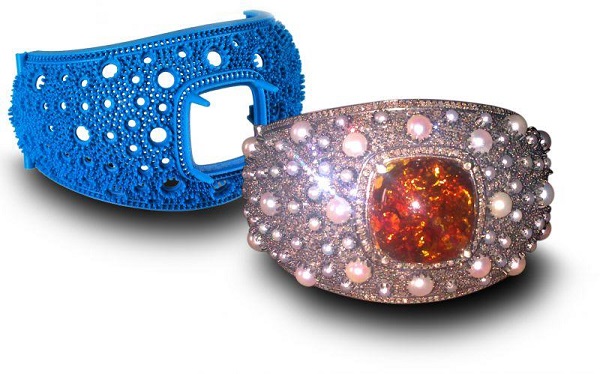
Selective Laser Melting (SLM) 3D printing has quickly become a game-changer in the manufacturing world. Unlike traditional methods that cut away material, SLM builds metal parts layer by layer using a high-powered laser to fuse fine metal powders. This approach gives engineers freedom to design complex shapes that were simply impossible before. From lighter aircraft components to custom medical implants, SLM technology is helping companies make better products while reducing waste. In this article, we'll walk through how SLM actually works, where it delivers the most value, and what you should consider before investing in this technology.
Understanding SLM Technology Basics
What Exactly Is Selective Laser Melting?
Selective Laser Melting (SLM) is an additive manufacturing process that creates metal parts directly from 3D CAD data. Think of it as welding on a microscopic scale. A laser beam melts metal powder particles completely together, forming solid, fully dense objects that match the properties of traditionally manufactured metals. The key word here is "melting"—the powder gets fully melted, not just sintered or glued, which gives SLM parts their strength and durability.
How Does an SLM Machine Operate Step by Step?
The process follows a consistent cycle that repeats hundreds or thousands of times:
- Powder spreading: A thin layer of metal powder, usually between 20 to 60 microns thick, spreads evenly across the build platform using a roller or blade.
- Laser melting: A fiber laser traces the first cross-section of your part, melting the powder exactly where solid material should exist. The laser reaches temperatures high enough to fully fuse the metal particles.
- Platform lowering: The build platform drops down by exactly one layer thickness.
- Repeat: Fresh powder spreads over the previous layer, and the laser melts the next cross-section, bonding it to the layer below.
- Part removal: After thousands of layers, the finished part sits buried in loose powder. You remove it, clean off excess powder, and move to post-processing.
What's the Difference Between SLM and DMLS?
Many people confuse these terms, but the distinction matters:
| Aspect | SLM (Selective Laser Melting) | DMLS (Direct Metal Laser Sintering) |
|---|---|---|
| Process | Fully melts powder | Partially melts (sinters) powder |
| Temperature | Above melting point | Below melting point |
| Part density | 99.9%+ fully dense | 95-98% dense, some porosity |
| Material options | Single-alloy parts | Sometimes blends alloys |
| Typical use | High-performance functional parts | Prototypes, less demanding applications |
For manufacturing industries requiring structural integrity, SLM generally wins because fully melted parts behave like wrought materials.
Why Manufacturers Are Switching to SLM
Can You Really Create Any Geometry?
Yes—and that's the whole point. Design freedom unlocks possibilities that machining can't touch:
- Internal cooling channels that follow complex curves for better heat transfer
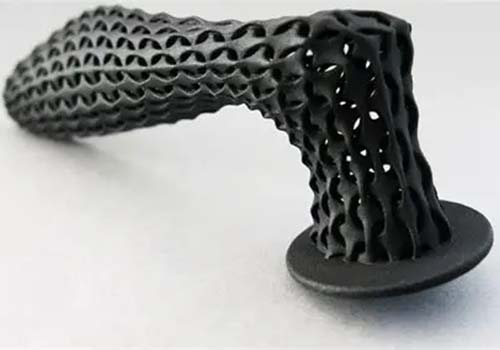
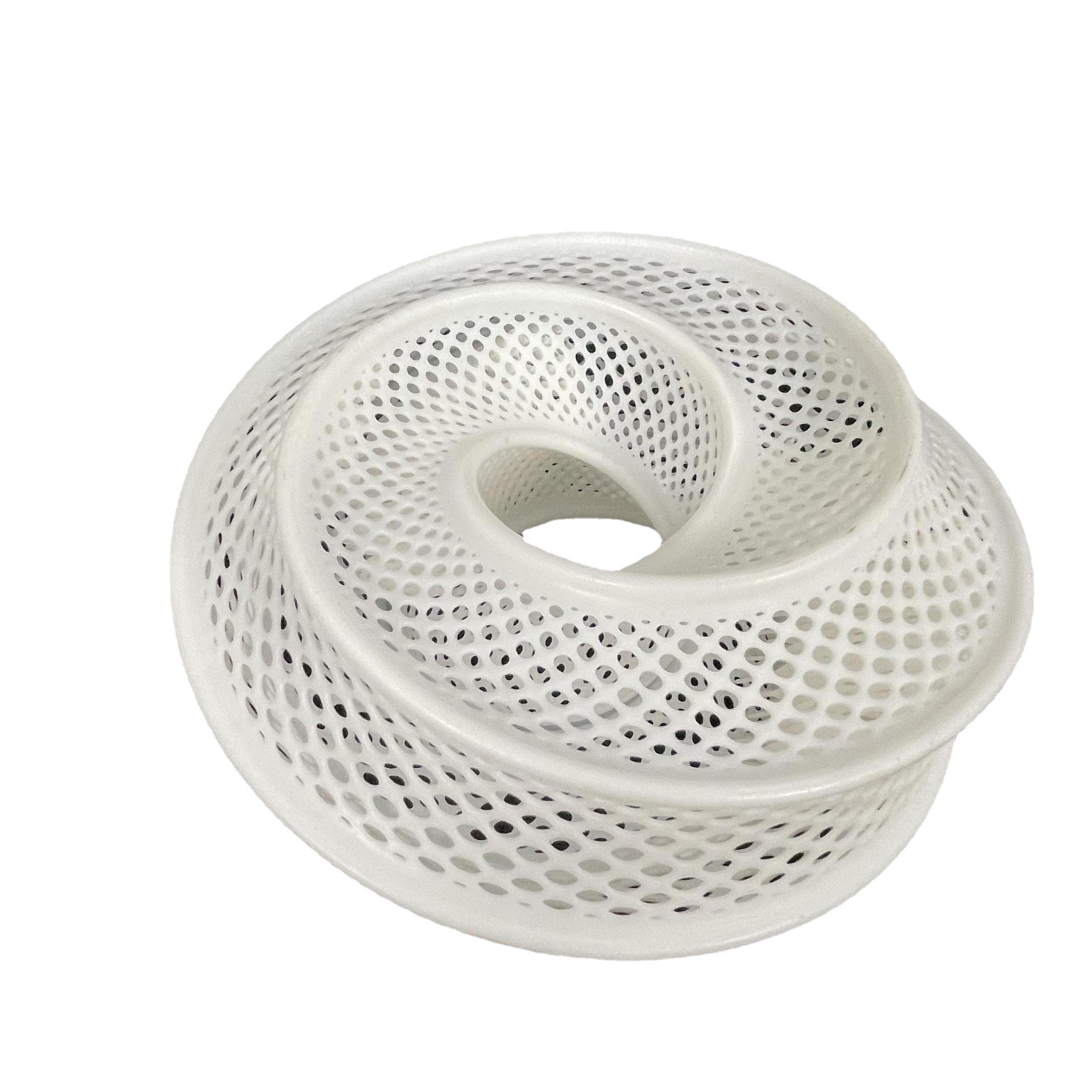
- Lattice structures that reduce weight without sacrificing strength
- Organic shapes optimized for fluid flow or stress distribution
- Consolidated assemblies replacing multi-part welded constructions
Here's a real example: A hydraulic manifold that traditionally required 12 separate parts machined and welded together now prints as a single piece with SLM. No weld lines, no leak paths, and 40% lighter.
How Much Material Waste Does SLM Actually Save?
Traditional subtractive manufacturing wastes shocking amounts of material. When you machine a part from a solid block, you might cut away 80-90% of the original metal. With SLM, waste drops to around 5%—mostly support structures and powder that didn't fully fuse.
Aerospace company Safran reported saving 3.5 tons of titanium annually after switching to SLM for certain components. At current titanium prices, that's roughly $175,000 in material savings alone, plus reduced machining time and tooling costs.
Is SLM Faster Than Traditional Methods?
For prototyping and small production runs, absolutely. Here's a comparison:
| Scenario | Traditional Manufacturing | SLM 3D Printing |
|---|---|---|
| Prototype lead time | 4-8 weeks (tooling required) | 2-5 days |
| Design changes | Expensive tooling modifications | Simple file update |
| First article cost | $10,000-$50,000 for molds | $500-$2,000 |
| Small batch (50 units) | High per-unit cost | Economical |
A medical device company we worked with needed custom surgical guides for a new procedure. Traditional machining would take 3 weeks and cost $8,000. SLM delivered 12 guides in 4 days for $1,200. The surgeons performed the first successful procedures using those guides.
Real-World Applications Across Industries
How Is Aerospace Using SLM Right Now?
Aerospace leads SLM adoption because weight savings translate directly to fuel savings. Every kilogram removed from an aircraft saves roughly $3,000 per year in fuel costs.
GE Aviation pioneered SLM for fuel nozzles in their LEAP engines. The original design required 20 separate parts brazed together. The SLM version prints as one piece, weighs 25% less, and lasts five times longer. GE now operates over 300 SLM machines producing these nozzles.
Other aerospace applications include:
- Turbine blades with complex internal cooling passages
- Brackets and hinges optimized for minimum weight
- Heat exchangers with microscopic features for better efficiency
- Satellite components where every gram matters for launch costs
What's Happening in Automotive Manufacturing?
Automotive companies use SLM for both prototyping and end-use parts. Porsche, for example, offers SLM-printed pistons for high-performance engines. The printed pistons include cooling ducts positioned exactly where needed, allowing higher compression ratios without overheating.
BMW uses SLM for convertible brackets and electric motor components. Their i8 Roadster's metal bracket for the convertible top mechanism weighs 44% less than the stamped version while maintaining strength.
Formula 1 teams rely heavily on SLM for:
- Gearbox components with optimized weight distribution
- Hydraulic manifolds consolidating multiple parts
- Exhaust systems with complex geometry for better flow
Why Is Medical Embracing This Technology?
The medical field loves customization, and SLM delivers exactly that. Patient-specific implants improve outcomes dramatically.
A recent case: A patient with a cranial defect needed a custom plate to protect brain tissue. Traditional methods would take weeks to form a titanium sheet by hand. Using SLM, surgeons scanned the defect, designed a precise-fitting plate in software, and printed it overnight. The implant matched the patient's anatomy perfectly, reducing surgery time by 2 hours.
Common medical applications include:
- Hip and knee implants optimized for bone integration
- Dental crowns and bridges with perfect fit
- Surgical instruments customized for specific procedures
- Spinal cages with porous structures promoting bone growth
Technical Benefits That Matter
What About Part Quality and Consistency?
SLM produces parts with mechanical properties matching or exceeding cast metals. Tensile strength, yield strength, and elongation typically fall within ±5% of wrought material specifications.
The key factors affecting quality:
- Laser parameters (power, speed, focus)
- Powder characteristics (size, shape, chemistry)
- Atmosphere control (oxygen levels below 1000 ppm)
- Build orientation (affects grain structure)
Properly calibrated SLM machines achieve density above 99.9% , meaning no hidden porosity to cause failure.
Which Metals Work With SLM?
The material library grows constantly. Current options include:
| Material Family | Common Grades | Typical Applications |
|---|---|---|
| Stainless steel | 316L, 17-4PH, 15-5PH | Medical tools, automotive, general engineering |
| Titanium | Ti6Al4V Grade 5/23 | Aerospace, medical implants, high-performance |
| Aluminum | AlSi10Mg, AlSi7Mg | Automotive, aerospace, heat exchangers |
| Nickel alloys | Inconel 625/718, Hastelloy X | Turbine components, high-temperature |
| Cobalt-chrome | CoCr F75 | Dental, orthopedic implants |
| Tool steel | H13, Maraging steel | Molds, dies, cutting tools |
Each material requires specific process parameters tuned for optimal melting and solidification.
Cost and Business Considerations
When Does SLM Make Financial Sense?
SLM isn't always the right answer. Here's when it typically wins:
Good candidates for SLM:
- Parts with complex internal features
- Low to medium volumes (1-1000 pieces)
- High material cost (titanium, nickel alloys)
- Multiple parts that can consolidate
- Custom or personalized designs
Poor candidates for SLM:
- Simple shapes easily machined
- Very high volumes (tens of thousands)
- Very large parts (beyond machine limits)
- Low-cost materials (aluminum extrusions)
A cost comparison example: Manufacturing a titanium bracket for a drone:
- CNC machining: $450 per part, 2-week lead time, 85% material waste
- SLM printing: $180 per part, 3-day lead time, 5% material waste
The SLM part also weighed 22% less, extending flight time by 4 minutes.
What About Post-Processing Requirements?
SLM parts rarely come out ready to use. Typical post-processing steps include:
- Stress relief (heat treatment to prevent distortion)
- Support removal (cutting away temporary structures)
- Surface finishing (polishing, machining critical surfaces)
- Hot isostatic pressing (for critical aerospace parts)
- Heat treatment (achieving desired material properties)
- Inspection (CT scanning, dimensional checks)
These steps add 30-50% to total production time and cost, so factor them into your planning.
Future Outlook
What New Developments Are Coming?
SLM technology advances rapidly. Watch for:
Faster lasers with multiple beams working simultaneously. Current machines add about 5-20 cubic centimeters per hour. New multi-laser systems target 100+ cc/hour, making production more economical.
Larger build volumes expanding from today's typical 250mm cubes to 500mm and beyond. This opens opportunities for bigger components.
In-process monitoring using cameras, sensors, and AI to detect defects as they happen. Real-time adjustment prevents failed builds.
New materials including high-strength aluminum alloys, copper for electronics cooling, and refractory metals for extreme temperatures.
Will SLM Replace Traditional Manufacturing?
No—but it will carve out a significant niche. Think of SLM as another tool in the toolbox, not a replacement for everything. The future factory will use:
- SLM for complex, low-volume, high-value parts
- CNC machining for simple, high-volume, or tight-tolerance features
- Casting for very large parts or certain alloys
- Forging for parts requiring specific grain structures
The winning strategy combines these methods based on each part's requirements.
Conclusion
SLM 3D printing has earned its place in modern manufacturing through demonstrated results: lighter aerospace components, better-fitting medical implants, faster automotive prototyping, and material savings across industries. The technology works best for complex geometries, expensive materials, and low-to-medium volumes where traditional methods struggle.
Success with SLM requires understanding its strengths and limitations. You need good design practices, proper material selection, realistic cost modeling, and efficient post-processing workflows. Companies that master these elements gain significant competitive advantages.
Is SLM right for your parts? Probably yes if you're dealing with complex metal components, custom requirements, or long supply chains. The technology has matured enough to deliver reliable, production-ready parts at predictable costs.
Frequently Asked Questions
What's the largest part possible with current SLM machines?
Most industrial SLM machines handle build volumes around 250 x 250 x 300 mm. Larger systems reaching 500 x 500 x 400 mm exist but cost significantly more. For bigger parts, consider joining multiple printed sections or using alternative technologies.
How strong are SLM printed parts compared to machined parts?
Properly printed and heat-treated SLM parts achieve 90-100% of wrought material strength. Fatigue performance depends heavily on surface finish and internal defects. With good process control, SLM parts pass rigorous aerospace and medical testing.
Can you print in multiple materials simultaneously?
Research machines demonstrate multi-material printing, but commercial systems generally handle one alloy per build. Some machines allow switching materials between builds easily, but mixing within one part remains experimental.
What tolerances can SLM achieve?
Typical as-printed tolerances range from ±0.1 mm to ±0.2 mm. Critical surfaces often require post-machining to reach ±0.02 mm or better. Design accordingly—don't specify tight tolerances where not needed.
How long do SLM machines last?
Well-maintained industrial SLM systems operate for 5-10 years or more. Key components like lasers and optics may need replacement after 10,000-20,000 hours of operation. Regular calibration and preventive maintenance extend machine life significantly.
Contact Yigu Technology for Custom Manufacturing
Ready to explore how SLM 3D printing can solve your manufacturing challenges? At Yigu Technology, we combine deep engineering expertise with production-grade SLM capabilities. Our team helps you navigate design optimization, material selection, and post-processing requirements to deliver parts that meet your specifications.
Whether you need prototypes for testing, small production runs, or help converting existing designs to additive manufacturing, we're here to help. Contact our engineers today for a consultation and quote. Let's discuss how SLM can work for your specific application.