Hybrid additive manufacturing combines the best of 3D printing and traditional machining in one process. This guide explains how this powerful approach works, why it matters, and how industries from aerospace to medical are using it to make better parts faster.
Introduction
What if you could build a part layer by layer with additive manufacturing, then machine critical surfaces to precision tolerances—all in a single setup? That's exactly what hybrid additive manufacturing delivers.
This approach integrates 3D printing with traditional subtractive methods like milling and turning. The result? Parts with complex internal geometries and precisely machined surfaces, produced in less time and with less waste than either method alone.
I've spent years at Yigu Technology watching hybrid systems transform how we make critical components. The technology solves problems that pure additive or pure subtractive methods can't handle on their own.
In this guide, I'll walk you through how hybrid manufacturing works, its advantages and challenges, and where it's making the biggest impact in industrial production.
What Exactly Is Hybrid Additive Manufacturing?
Let's start with the core concept.
The Basic Idea
Hybrid additive manufacturing combines two approaches in one machine or workflow:
- Additive processes build up material layer by layer, creating near-net shapes with complex internal features
- Subtractive processes remove material to achieve precise dimensions and smooth surfaces
Sometimes formative processes (like forging or casting) are also integrated, but the additive-subtractive combination is most common.
Think of it like this: the additive part creates the rough shape—including features you couldn't machine—while the subtractive part finishes critical surfaces to exact specifications. All without moving the part between machines.
Why Combine Them?
Pure additive manufacturing excels at complexity but struggles with:
- Surface finish (parts come out rough)
- Precision tolerances (especially for mating surfaces)
- Certain materials (some don't print well)
Pure subtractive manufacturing excels at precision but struggles with:
- Internal features (can't reach inside)
- Material waste (chips removed)
- Complex geometries (tool access limits)
Hybrid approaches capture the strengths of both while mitigating their weaknesses.
How Does the Process Work?
A typical hybrid workflow looks like this:
Step 1: Additive Build
The machine deposits material layer by layer, creating the rough part shape. This might use:
- Laser powder bed fusion for metals
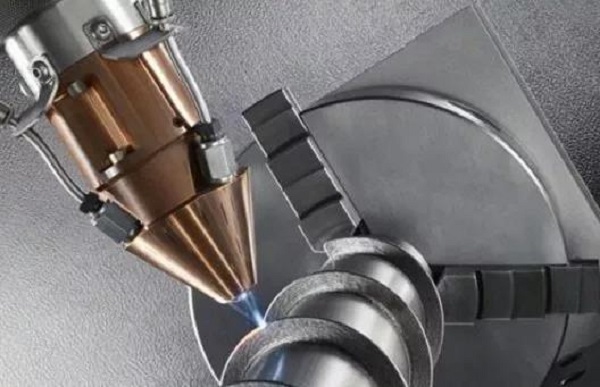
- Directed energy deposition for larger parts
- Material extrusion for polymers
Step 2: Intermittent Machining
After building certain layers, the machine switches to subtractive mode. A spindle or tool changer brings in cutting tools to:
- Machine critical surfaces
- Create precision holes
- Improve surface finish
Step 3: Continue Building
After machining, the additive process resumes, building more layers on top of the machined surfaces.
Step 4: Final Machining
When the build completes, the part gets final machining to achieve specified tolerances and finishes.
All of this happens in one setup, on one machine, without moving the part.
What Are the Key Benefits of Hybrid Manufacturing?
The advantages explain why industries are adopting hybrid approaches.
Efficiency and Speed
Hybrid manufacturing accelerates production cycles by eliminating steps:
- No moving parts between machines
- No realigning in new fixtures
- No waiting in queues
A part that might take weeks moving between a 3D printing service and a machine shop can complete in days on a hybrid system.
Real example: A aerospace component required complex internal cooling channels (additive strength) and precisely machined mounting surfaces (subtractive strength). Traditional approach: print, ship to machine shop, fixture, machine—2 weeks. Hybrid approach: print and machine in one setup—3 days.
Cost-Effectiveness
Cost savings come from multiple sources:
- Less material waste – Additive deposits only what's needed
- No tooling – No molds or special fixtures required
- Reduced handling – One setup instead of multiple
- Faster iterations – Design changes cost nothing but file updates
For complex, low-volume parts, hybrid manufacturing often beats traditional methods on total cost.
Sustainability
Hybrid approaches support environmental goals:
- Material efficiency – Additive processes waste minimal material
- Energy savings – Less material processing overall
- Local production – Reduce shipping compared to global supply chains
- Repair capability – Hybrid machines can restore worn parts instead of replacing them
Enhanced Part Performance
The combination creates parts neither method could produce alone:
- Complex internal features from additive
- Precision surfaces from machining
- Optimized strength-to-weight from design freedom
- Better material properties from controlled processing
What Technologies Make Hybrid Manufacturing Possible?
Several approaches exist, each suited to different applications.
Additive Technologies Used in Hybrid Systems
| Technology | Materials | Typical Applications | Integration Approach |
|---|---|---|---|
| Directed Energy Deposition (DED) | Metals (wire or powder) | Large parts, repairs, cladding | Often combined with 5-axis machining |
| Laser Powder Bed Fusion (LPBF) | Metals (powder) | Small, detailed parts | Integrated with milling in same chamber |
| Material Extrusion (FDM) | Polymers, composites | Prototypes, tooling | Add-on machining stations |
| Wire Arc Additive Manufacturing (WAAM) | Metals (wire) | Very large parts | Robotic systems with machining heads |
Subtractive Technologies in Hybrid Systems
The subtractive side typically uses standard machining operations:
- Milling – For flat surfaces, contours, pockets
- Drilling – For precise holes
- Turning – For cylindrical features
- Grinding – For fine surface finishes
Machine Configurations
Hybrid systems come in several forms:
Integrated Machines
These combine additive and subtractive capabilities in one unit. A laser deposition head and a milling spindle share the same workspace. The part stays fixtured while both operations occur.
Robotic Cells
Robotic arms handle both additive deposition and machining. They offer flexibility for large parts and complex geometries but may sacrifice some precision.
Retrofitted Equipment
Traditional CNC machines can sometimes be upgraded with additive heads. This lower-cost approach brings hybrid capability to existing shops.
Where Is Hybrid Manufacturing Used?
Real-world applications show the technology's value.
Aerospace: Lightweight and Complex
Aerospace leads in hybrid adoption. The combination of lightweight complexity and precision fits industry needs perfectly.
Applications:
- Engine components with internal cooling channels and machined mounting surfaces
- Structural brackets optimized for minimal weight with precision interfaces
- Repair of expensive components – Add material to worn areas, then machine to original specs
- Tooling with conformal cooling for composite layup
Real example: A turbine blade with internal cooling passages traditionally required casting and extensive machining. Hybrid manufacturing produces the blade in one setup, with cooling channels optimized for airflow and outer surfaces machined to aerodynamic tolerances.
Impact: One manufacturer reported 30% faster production and 25% less material waste on critical components.
Automotive: Performance and Customization
Automotive uses hybrid manufacturing for both prototyping and production.
Applications:
- Prototype engine parts with complex internal features
- Low-volume performance components for racing
- Custom tooling with optimized cooling
- Repair of high-value dies and molds
Real example: A racing team needed lightweight uprights with complex internal geometry. Hybrid manufacturing produced parts with optimized strength-to-weight ratios and precisely machined bearing surfaces—all in one setup.
Medical: Patient-Specific Precision
Medical applications demand both customization and precision. Hybrid delivers both.
Applications:
- Custom implants with porous bone-ingrowth surfaces and machined articulation surfaces
- Surgical instruments tailored to specific procedures
- Dental restorations with complex geometries and precise fit
Real example: A patient needed a custom hip implant with a porous surface for bone integration and a perfectly smooth articulation surface. Hybrid manufacturing created the porous structure additively, then machined the bearing surface to mirror finish—all in one part.
Tool and Die Making
Molds and dies benefit enormously from hybrid approaches.
Applications:
- Conformal cooling channels impossible to drill
- Repair of worn tools – Add material to worn areas, then machine to original specs
- Prototype tooling produced quickly without full machining
Impact: A mold with conformal cooling reduced cycle time by 40% compared to conventional cooling. The hybrid-made mold paid for itself in months.
What Are the Key Advantages Over Pure Methods?
The comparison makes the case for hybrid.
Hybrid vs Pure Additive
| Aspect | Pure Additive | Hybrid Additive |
|---|---|---|
| Surface Finish | Rough as-printed | Can be machined smooth |
| Precision | Limited by process | CNC-level tolerances |
| Support Removal | Manual post-process | Can be machined off |
| Critical Features | Hard to control | Precisely machined |
| Setup | Single machine | Single machine (integrated) |
| Post-Processing | Always required | Minimized or eliminated |
Hybrid wins when: Surface finish and precision matter as much as complexity.
Hybrid vs Pure Subtractive
| Aspect | Pure Subtractive | Hybrid Additive |
|---|---|---|
| Internal Features | Limited by tool access | Unlimited |
| Material Waste | High (chips) | Low (additive) |
| Starting Stock | Solid block required | Near-net shape |
| Complexity | Limited | Unlimited |
| Lead Time | Weeks for complex parts | Days |
Hybrid wins when: Parts have internal complexity or material savings matter.
What Challenges Does Hybrid Manufacturing Face?
No technology is without limitations.
Material Compatibility
Not all materials work well in hybrid processes. The additive and subtractive sides must be compatible:
- Additively deposited material must machine well
- Thermal effects from additive must not distort the part
- Interfaces between layers must hold up during machining
Current status: Common engineering materials (steels, titanium, aluminum) work well. Exotic materials need development.
Cost and Accessibility
Hybrid machines are expensive:
- Integrated systems: $500,000 to over $2 million
- Retrofits: $100,000-500,000 depending on capability
- Software and training add cost
For small shops, this investment is prohibitive. As technology matures, costs should decrease.
Quality Control
Ensuring consistent quality is harder with hybrid processes:
- More variables than pure additive or subtractive
- Thermal history affects final properties
- Machining of additively deposited material requires understanding of material state
Solutions: Process monitoring, standardized protocols, and certification programs are emerging.
Software Complexity
Hybrid manufacturing needs software that can:
- Plan both additive and subtractive operations
- Simulate the entire process
- Generate toolpaths for both modes
- Manage transitions between modes
This software exists but requires expertise to use effectively.
What Does the Future Hold?
Hybrid manufacturing continues to evolve.
More Accessible Systems
As technology matures, costs will drop. Mid-range hybrid systems for job shops and smaller manufacturers will emerge.
Better Materials
New materials designed specifically for hybrid processes will appear. These will optimize for both printability and machinability.
Advanced Simulation
Software that accurately predicts thermal behavior, residual stress, and final properties will reduce trial and error. "Print it right the first time" becomes more achievable.
Repair and Remanufacturing
Hybrid systems excel at repairing high-value components. As the technology spreads, more industries will use it to extend equipment life.
Integration with Digital Twins
Hybrid manufacturing fits naturally with Industry 4.0 concepts. Digital twins of parts and processes will enable real-time optimization.
How Do You Know If Hybrid Manufacturing Is Right for You?
Consider hybrid when:
- Parts need both complexity and precision – Internal features plus machined surfaces
- Material savings matter – Expensive materials where waste is costly
- Lead time is critical – One setup beats multiple steps
- Part count is low to medium – Not for high-volume mass production
- Repair is valuable – Restoring worn components
Consider other methods when:
- Simple geometry – Subtractive alone is fine
- Very high volume – Traditional methods win on cost
- Extreme precision only – Pure subtractive may be simpler
- Limited budget – Hybrid equipment requires investment
Conclusion
Hybrid additive manufacturing represents the next step in industrial production. By combining the design freedom of additive with the precision of subtractive methods, it creates parts that neither approach can achieve alone.
The key takeaways:
- Integration of additive and subtractive in one setup
- Complexity plus precision – Internal features with machined surfaces
- Efficiency – Less waste, fewer steps, faster production
- Applications across aerospace, automotive, medical, and tooling
- Challenges in cost, materials, and quality control remain
At Yigu Technology, we've seen hybrid manufacturing transform how critical components are made. Parts that required multiple setups and long lead times now complete in days. Designs that were impossible become routine.
The technology isn't for everyone—the investment is significant, and expertise matters. But for the right applications, hybrid manufacturing delivers results that pure methods can't match.
As costs decrease and capabilities expand, hybrid approaches will become increasingly central to industrial production. The future of manufacturing isn't additive or subtractive—it's both, working together.
Frequently Asked Questions
What are the main advantages of hybrid additive manufacturing over traditional methods?
Hybrid AM offers greater design freedom (complex internal geometries), reduced material waste, faster production cycles, and improved part performance through combined additive and subtractive capabilities. It's particularly valuable for complex, low-to-medium volume parts requiring precision surfaces.
How does hybrid additive manufacturing contribute to sustainability?
It minimizes material waste through additive deposition, reduces energy consumption compared to machining from solid, enables local production (reducing shipping), and allows repair of high-value components instead of replacement.
What are common challenges in implementing hybrid manufacturing?
Key challenges include material compatibility between additive and subtractive processes, high equipment costs ($500k-$2M+), quality control complexity, and software requirements. Overcoming these requires investment, expertise, and ongoing development.
What industries use hybrid manufacturing most?
Aerospace leads in adoption, followed by medical, automotive, and tool and die making. Each values different benefits—aerospace wants lightweight complexity, medical wants customization with precision, tooling wants conformal cooling and repair capability.
Can hybrid manufacturing repair existing parts?
Yes—this is a major application. Worn or damaged areas can have material added additively, then machined back to original specifications. This extends the life of expensive components like turbine blades, molds, and dies.
What's the difference between hybrid and simply using separate machines?
Hybrid systems keep the part in one setup throughout both additive and subtractive operations. This eliminates alignment errors, reduces handling time, and enables sequences where machining happens between additive layers—impossible with separate machines.
Is hybrid manufacturing expensive?
Yes, currently. Integrated hybrid machines cost $500,000 to over $2 million. Retrofits are cheaper but still significant. However, for complex parts where it replaces multiple operations, the per-part cost can be lower than traditional methods.
What materials work in hybrid manufacturing?
Common engineering metals work well: stainless steels, titanium alloys, aluminum, tool steels. Some polymers and composites also work. The material must both print well and machine well—not all materials meet both criteria.
Contact Yigu Technology for Custom Manufacturing
Ready to explore hybrid manufacturing for your next project? At Yigu Technology, we combine years of manufacturing experience with advanced hybrid capabilities. Whether you need complex components with precision surfaces, high-value part repair, or help optimizing designs for hybrid production, our team delivers professional results. [Contact us today] to discuss your project—we'll help you determine if hybrid manufacturing makes sense for your application.