Explore how 3D printing transforms auto parts manufacturing. Learn about rapid prototyping, lightweight components, cost reduction, and custom production in plain English.
Introduction
Think about the last time you needed a replacement part for your car. Chances are, it came from a traditional factory, stamped out of metal by massive machines. But that manufacturing method is facing serious competition. 3D printing, also called additive manufacturing, is quietly reshaping how we design, test, and produce auto parts.
I have spent over a decade working with manufacturing technologies at Yigu technology, and I have watched this shift firsthand. What started as a tool for making simple plastic models has evolved into a legitimate production method for real, roadworthy components. In this article, I will walk you through exactly how 3D printing is changing the game—from quick prototypes to final parts you can bolt onto a car.
What Exactly Is 3D Printing in Automotive Terms?
How Does Additive Manufacturing Work?
Imagine building something with LEGO bricks, but instead of bricks, you use melted plastic or metal powder. That is 3D printing in a nutshell. The machine reads a digital file and lays down thin layers of material, one on top of another, until the part is complete.
This differs completely from traditional manufacturing. Old-school methods are subtractive—you start with a solid block and cut away everything you do not need. Think of carving a sculpture from marble. You lose a lot of material along the way.
From Prototyping Tool to Production Powerhouse
Back in the 1980s, 3D printers were expensive gadgets that only large companies could afford. They made rough prototypes that helped designers check shapes and sizes. Fast forward to today, and the picture looks completely different.
Modern industrial 3D printers work with high-performance materials like carbon fiber composites, titanium alloys, and heat-resistant polymers. These are not just for show. They create parts that handle the stress, heat, and vibration of real driving conditions.
Why Are Carmakers Ditching Traditional Methods?
Can 3D Printing Create Parts That Traditional Methods Cannot?
Here is where things get interesting. Traditional manufacturing has limits. Molds need to open. Cutting tools need straight paths. These constraints force designers to simplify their ideas.
With additive manufacturing, complexity costs nothing extra. Want internal cooling channels that twist and turn through a brake caliper? No problem. Need a bracket shaped to fit exactly around existing components? Done.
I worked with a racing team last year that needed a custom air intake. Using traditional methods would have taken weeks and cost thousands in tooling. With 3D printing, we designed it on Monday and held the finished part in our hands on Wednesday.
Does 3D Printing Really Save Material?
Yes, and the numbers tell the story. Traditional machining of an aluminum part can waste 80 percent or more of the original block. That material turns into expensive chips on the floor.
Additive manufacturing flips this around. You use only what the part needs. For expensive materials like titanium, this saving matters enormously. One aerospace supplier I know cut their material costs by 65 percent after switching to 3D printing for certain brackets.
How Is 3D Changing the Way Parts Get Designed?
What Can Designers Do Now That They Could Not Before?
Design freedom is the biggest gift 3D printing gives to engineers. They no longer design around manufacturing limits. They design for performance.
Consider a simple mounting bracket. Traditionally, it might be a solid L-shaped piece of metal. With 3D printing, that same bracket can become a lattice structure—a web of struts that looks almost organic. It weighs half as much but handles the same loads.
This matters because lighter cars use less fuel. Every kilogram saved improves efficiency. For electric vehicles, weight reduction directly translates to longer range.
How Fast Can We Go from Idea to Test Part?
Speed might surprise you. Traditional prototyping requires creating molds or programming CNC machines. That process eats weeks.
Rapid prototyping with 3D printing compresses that timeline dramatically. I have seen teams go through five design iterations in the time it used to take to get the first prototype. This speed means problems get caught early, and good ideas reach production faster.
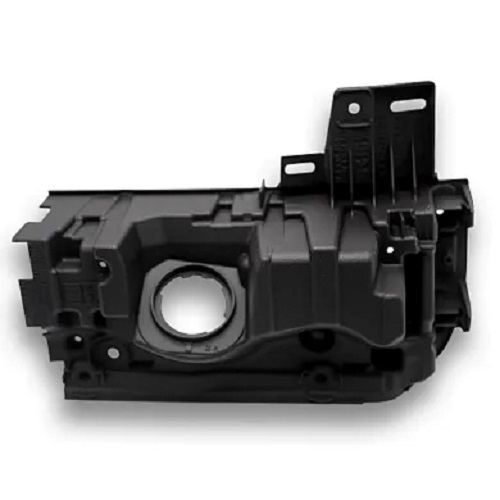
One automotive supplier we work with reduced their development cycle for new headlight housings from six months to three weeks. That is not incremental improvement. That is transformation.
What about Making Actual Production Parts?
Can 3D Printers Handle High-Volume Production?
This question comes up constantly. The short answer is: it depends on the part.
For high-volume, simple parts like clips or fasteners, traditional methods still win on cost. But for complex components, low-volume production, or specialty vehicles, 3D printing makes economic sense.
BMW now produces over a million 3D-printed parts annually for their vehicles. These are not prototypes—they are final, installed components. The i8 Roadster uses a 3D-printed convertible top bracket. The Rolls-Royce Ghost includes 3D-printed hazard warning lights.
What about Spare Parts for Older Cars?
Here is a problem every classic car owner understands. Your 1970s project car needs a specific bracket. Nobody makes it anymore. Your only options are searching junkyards or paying someone to fabricate one by hand.
On-demand manufacturing changes this completely. Instead of stocking millions of parts that might never sell, manufacturers can store digital files. When someone needs a part, they print it.
This model particularly helps owners of classic cars and rare models. Need a discontinued interior trim piece? If someone has scanned it, you can print it. No minimum order quantities. No waiting for a production run.
How Does Customization Work with 3D Printing?
Can I Get Personalized Parts for My Car?
Absolutely. Customization used to mean deep pockets. Custom parts required custom tooling, and that tooling cost thousands.
3D printing eliminates tooling entirely. Every part can be different without extra cost. This opens up personalization possibilities that were previously reserved for million-dollar hypercars.
Aftermarket parts suppliers are already using this. Want custom vent shapes for your dashboard? Done. Need a phone mount shaped exactly for your specific car model? Printed. Fancy personalized shift knobs with your name embedded? No problem.
Does This Help with Performance Modifications?
Yes, and this is where enthusiasts get excited. Performance tuning often requires parts that simply do not exist in catalogs. With 3D printing, you can create exactly what your engine needs.
I consulted with a team building a track-focused BMW. They needed lightweight coolant expansion tanks shaped to fit in tight spaces. We printed them in heat-resistant nylon. The parts weighed less than half of the stock components and fit perfectly the first time.
What Materials Actually Work for Car Parts?
Can Printed Parts Handle Engine Bay Heat?
Material science has advanced faster than most people realize. Modern 3D printing materials include:
- Nylon 12 – Tough, slightly flexible, good for brackets and covers
- Glass-filled nylon – Stiffer, handles higher temperatures
- Carbon fiber composites – Extremely stiff, lightweight, ideal for structural parts
- Stainless steel – Strong, corrosion-resistant, suitable for exhaust components
- Titanium alloys – Maximum strength-to-weight, used for racing and aerospace
- Aluminum – Good thermal properties, works for heat exchangers and brackets
Each material serves different purposes. The key is matching material properties to the part's requirements.
How Strong Are 3D-Printed Metal Parts?
This surprises people: properly printed metal parts can match or exceed the strength of cast or machined equivalents. The layer bonding in modern printers creates near-solid material.
Testing by Oak Ridge National Laboratory showed that 3D-printed titanium parts achieved 99 percent density with mechanical properties comparable to wrought material. These parts fly in rockets and race cars. They can certainly handle street driving.
Does 3D Printing Actually Save Money?
What Are the Real Cost Savings?
Let me break down where the money goes in traditional manufacturing:
| Cost Factor | Traditional Manufacturing | 3D Printing |
|---|---|---|
| Tooling | High (molds, dies) | None |
| Setup | Time-consuming | Minimal |
| Material waste | 30-80% | 5-10% |
| Inventory | Must stock parts | Print on demand |
| Design changes | Expensive | Free |
The numbers vary by part, but the pattern stays consistent. For low to medium volumes, additive manufacturing wins on cost. For complex parts, it wins even at higher volumes.
When Does 3D Printing Make Financial Sense?
Based on our experience at Yigu technology, 3D printing becomes cost-effective when:
- Production volume stays under 10,000 units per year
- Part geometry is complex
- Multiple design iterations are expected
- Quick turnaround matters
- Inventory costs are high
- Customization is required
For simple brackets produced in millions, stamping still wins. But the range of parts where 3D printing makes sense expands every year as technology improves and costs drop.
How Sustainable Is 3D Printing Compared to Traditional Methods?
Does Additive Manufacturing Reduce Waste?
Dramatically. Traditional machining of an aluminum part from bil stock generates piles of chips. Those chips get recycled, but the energy spent cutting them away is wasted.
With additive manufacturing, waste drops to near zero. Unused powder in metal printing gets recycled into the next job. Support structures get melted down and reused. The process inherently respects material.
What about Energy Consumption?
This gets complicated. 3D printers run for hours, consuming electricity. For simple parts, this energy use might exceed traditional methods. But for complex parts that would require multiple machines and setups, additive manufacturing often uses less total energy.
The bigger sustainability win comes from lightweighting. A car that weighs 100 kilograms less will burn less fuel over its entire life. Those savings dwarf the energy used in manufacturing.
What Does the Future Hold?
Will 3D Printing Replace Traditional Factories?
No, and that is not the goal. Smart manufacturers use each method where it excels. High-volume, simple parts will stay with traditional methods. Complex, low-volume, or customized parts will increasingly shift to additive manufacturing.
The future looks like hybrid factories. Stamped body panels from massive presses. 3D-printed brackets and brackets alongside them. Machined engine blocks next to printed intake manifolds.
How Fast Is the Technology Advancing?
Speed improvements continue steadily. Ten years ago, a typical metal printer might build a few cubic centimeters per hour. Today, systems from companies like SLM Solutions and EOS run four to five times faster.
Material options expand constantly. New alloys appear regularly. Multi-material printing, where different materials combine in one part, moves from research labs to production floors.
Conclusion
3D printing has moved far beyond its prototyping roots. Today, it produces real automotive parts that handle real driving conditions. The technology enables lightweight designs, rapid development, and customization that traditional methods cannot match.
For manufacturers, the benefits include reduced waste, lower inventory costs, and faster time to market. For car owners, it means better access to spare parts and more personalization options. For the industry as a whole, it represents a more sustainable path forward.
The question is no longer whether 3D printing belongs in automotive manufacturing. It is already there. The question now is how far it will go.
Frequently Asked Questions
Q: How long does it take to 3D print a car part?
A: Printing time varies by size and complexity. Small brackets may take 2-4 hours. Larger components like intake manifolds might need 24-48 hours. Metal parts generally print slower than plastic ones.
Q: Are 3D-printed car parts safe for street use?
A: Yes, when properly designed and printed. Many 3D-printed parts now meet or exceed OEM specifications. The key is using appropriate materials and following proper design guidelines for the application.
Q: What car parts work best for 3D printing?
A: Ideal candidates include brackets, ducts, housings, interior trim, and custom mounts. Parts requiring complex internal geometry also work well. High-stress components like suspension parts need careful validation but can succeed with proper design.
Q: Can I 3D print replacement parts at home?
A: For simple plastic parts like clips or trim pieces, consumer 3D printers can work. For functional mechanical parts, industrial-grade equipment and materials typically provide better results. Professional printing services offer a middle ground.
Q: How much does 3D printing a car part cost?
A: Costs range widely based on material, size, and complexity. Small plastic parts might cost $20-50. Complex metal components can run several hundred dollars. For low-volume production, this often beats traditional tooling costs.
Contact Yigu Technology for Custom Manufacturing
Need help bringing your automotive part ideas to life? At Yigu technology, we specialize in turning concepts into reality. Our team combines deep engineering knowledge with hands-on manufacturing experience.
We handle everything from design optimization to final production. Whether you need one prototype or a thousand production parts, we deliver quality results on time and on budget.
Contact us today to discuss your project. Let us show you how additive manufacturing can solve your toughest challenges.