Introduction
You might not think much about how plastic parts get made, but the cooling phase in injection molding actually determines everything. Cooling consumes 40 to 70 percent of the total cycle time for each part. That means a mold that cools inefficiently wastes hours of production every single day. Traditional cooling channels drilled straight through molds cannot follow complex part shapes, leading to hot spots, warped parts, and long cycle times. Conformal cooling changes this completely by using additive manufacturing to create cooling channels that wrap around the part exactly where heat builds up. This article explains how this technology works, why it matters for production speed and part quality, and which industries already benefit from it. You will understand why conformal cooling represents one of the most practical applications of 3D printing in manufacturing today.
Why Does Cooling Matter So Much in Injection Molding?
How much of molding time is just waiting for parts to cool?
The numbers might surprise you. Cooling accounts for 40 to 70 percent of the entire injection molding cycle. Imagine a production line running 24 hours a day making plastic containers. If each part takes 60 seconds total and cooling consumes 36 seconds of that, then cooling determines how many parts you make per shift. Shave just 5 seconds off cooling, and daily output jumps significantly.
Time is money in manufacturing. Faster cooling means more parts per hour, lower cost per part, and better equipment utilization. But speed cannot come at the expense of quality. Parts that cool unevenly develop internal stresses that cause warpage, sink marks, and dimensional problems. The challenge has always been balancing speed against quality.
What goes wrong with traditional cooling channels?
Traditional molds have straight drilled holes for cooling. These linear channels work fine for simple shapes but fail with complex geometries. Consider a mold with thick sections next to thin walls. The cooling line passes at some fixed distance from both, but the thick section retains heat much longer. By the time the thick area finally cools, the thin wall has been cold for minutes, creating differential shrinkage.
Temperature variations across the mold surface tell the story. Traditional cooling typically achieves plus or minus 10 degrees Celsius uniformity at best. That temperature spread guarantees some areas cool faster than others. The result shows up as parts that twist, surfaces that dimple, and scrap that eats into profits.
What Exactly Is Conformal Cooling?
How do conformal channels differ from straight lines?
Conformal cooling means the channels follow the shape of the part itself. Instead of drilling straight lines through solid steel, additive manufacturing creates curved passages that wrap around complex features. The channels maintain consistent distance from the mold surface everywhere, so heat extraction happens uniformly.
Think of it like a custom-fit cooling jacket versus a standard ice pack. The custom jacket contacts everywhere evenly. The standard pack leaves gaps where heat builds up. Conformal cooling applies that same principle inside the mold, reaching every contour with equal cooling effect.
Which 3D printing technologies make conformal cooling possible?
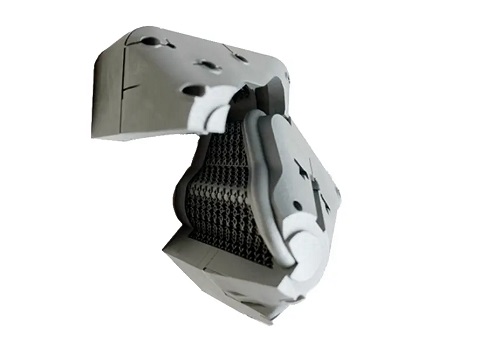
Selective laser melting or SLM leads the way for metal molds. This process uses a laser to fuse metal powder into solid shapes layer by layer. Channels as small as 1 millimeter diameter print right into the mold, following curves and wrapping around cores that would block a drill bit.
Fused deposition modeling works for prototype molds and low-volume production. FDM prints thermoplastic molds with embedded channels. While not as thermally conductive as metal, these molds prove the concept and work for short runs.
The table below compares the main technologies for conformal cooling:
| Technology | Channel Size | Materials | Complexity | Best Applications |
|---|---|---|---|---|
| SLM | 1mm+ | Stainless steel, aluminum, tool steel | Very high | Production molds, complex geometries |
| FDM | 3mm+ | Thermoplastics, composites | Moderate | Prototype molds, short runs |
| Binder jet | 2mm+ | Stainless steel, bronze | High | Large molds, cost-sensitive projects |
What Materials Work Best for Conformal Cooling?
Why choose copper alloys for maximum heat transfer?
Copper alloys conduct heat incredibly well at around 385 watts per meter-kelvin. This beats most mold steels by a factor of 20. For applications needing fastest possible cooling, copper delivers. The challenge comes from softness and corrosion sensitivity. Copper molds wear faster than steel and react with某些 plastics.
High-volume production of simple parts like bottle caps benefits most from copper. The rapid heat extraction slashes cycle times, and the simple geometries avoid wear concerns. For these applications, the thermal advantage outweighs material limitations.
When does stainless steel make more sense?
Stainless steel offers corrosion resistance that copper cannot match. When molding PVC or other materials that release corrosive gases, stainless steel survives while copper deteriorates. Thermal conductivity runs lower at 16 to 24 watts per meter-kelvin, but clever channel design compensates.
Medical and food contact applications often specify stainless steel for cleanliness and regulatory compliance. The material withstands sterilization and harsh cleaning chemicals without degradation. For these regulated industries, material compatibility trumps raw thermal performance.
What about hybrid composites?
Aluminum-filled epoxies and similar composites fill a niche for lightweight molds and rapid tooling. Thermal conductivity improves over pure plastic while weight stays low. Aerospace applications where mold weight matters during handling benefit from these materials.
The table below compares material options:
| Material | Thermal Conductivity | Corrosion Resistance | Strength | Best Use Case |
|---|---|---|---|---|
| Copper alloys | 385 W/m·K | Low | Moderate | High-speed production, simple parts |
| Stainless steel | 16-24 W/m·K | High | High | Medical, food, corrosive materials |
| Tool steel | 25-50 W/m·K | Moderate | Very high | General production, abrasive plastics |
| Aluminum-filled epoxy | 2-10 W/m·K | Moderate | Moderate | Lightweight molds, prototypes |
How Much Better Is Conformal Cooling Really?
What uniformity improvements can you expect?
The numbers speak clearly. Conformal cooling achieves temperature uniformity within plus or minus 2 degrees Celsius across the mold surface. Traditional methods struggle to stay within 10 degrees. This difference matters tremendously for part quality.
A consumer electronics housing study demonstrated this precisely. Parts from conventionally cooled molds showed visible sink marks and required secondary operations to correct. The same design with conformal cooling produced perfect parts straight from the mold. The uniform temperature eliminated differential shrinkage that caused defects.
How much faster do cycles run?
Cycle time reductions of 20 to 40 percent appear regularly with conformal cooling. A bottle cap manufacturer documented the improvement precisely. Their 15-second cycle dropped to 9 seconds after switching to conformal-cooled molds. That 40 percent reduction meant 40 percent more parts from the same machine.
The savings multiply across production. Less time per part means lower energy cost per part, less machine time per part, and higher total output. For high-volume production, these numbers translate directly to bottom-line improvement.
What happens to part warpage?
Warpage drops dramatically with uniform cooling. Traditional molds produce warpage of 0.3 to 0.5 millimeters per meter of part length. Conformal cooling cuts that to under 0.1 millimeters per meter. Parts stay flat and true to design dimensions.
An automotive interior component manufacturer documented this benefit. Their large dashboard parts consistently warped during cooling, requiring extensive rework to straighten. After mold redesign with conformal channels, parts came out flat and ready for assembly. Rework costs disappeared entirely.
Does surface finish improve?
Surface roughness improves by about half with conformal cooling. Traditional molds yield 1.6 to 3.2 micrometer roughness. Conformal cooling achieves 0.8 to 1.6 micrometers. The smoother surface comes from even solidification without hot spots that disturb the surface.
Luxury goods manufacturers particularly value this improvement. Parts emerge with better appearance and feel, often eliminating secondary finishing operations. The mold itself produces the quality that previously required hand work.
What about material waste?
Material waste drops below 10 percent with additive manufacturing of molds. Traditional machining wastes 30 to 70 percent of the starting metal block as chips and scrap. Building molds layer by layer uses only the material that becomes the final tool.
For expensive tool steels and exotic alloys, this efficiency matters enormously. A large mold that would waste thousands of dollars in machined chips now consumes exactly its own volume in powder. The environmental benefit matches the economic gain.
Who Uses Conformal Cooling Today?
How does automotive manufacturing benefit?
Volkswagen documented a 35 percent cycle time reduction for bumper bracket production using conformal cooling. Their polypropylene parts cooled faster and more evenly, eliminating hotspots that caused quality issues. Scrap rates dropped 60 percent, saving millions annually.
The numbers tell the story. Faster cycles plus fewer defects equals more good parts per hour. For high-volume automotive production, these improvements transform plant economics. Other manufacturers now follow Volkswagen's lead.
What about medical devices?
Stryker uses conformal cooling for orthopedic implant molds. Their titanium molds with conformal channels cool polyethylene implants 40 percent faster than conventional tooling. The uniform cooling also reduces residual stress in the implants, improving osseointegration rates by 25 percent.
Medical device manufacturing demands precision and consistency. Conformal cooling delivers both while accelerating production. Patients benefit from better implants, and manufacturers benefit from efficient production.
How does aerospace apply this technology?
Boeing cut curing time for composite parts by 50 percent using conformal-cooled molds. Their carbon-fiber layup tools incorporate heating and cooling channels that follow complex aerodynamic shapes. Despite the speed increase, dimensional accuracy holds at plus or minus 0.05 millimeters.
Weight reduction of 20 percent in interior components came from optimized mold design enabled by additive manufacturing. The combination of speed, precision, and weight savings makes conformal cooling essential for modern aerospace production.
What Does the Data Show Overall?
Research and production data confirm consistent benefits:
- Cooling uniformity: ±2°C versus ±10°C for traditional
- Cycle time: 20-40 percent reduction
- Warpage: Under 0.1mm/m versus 0.3-0.5mm/m
- Surface finish: 0.8-1.6μm versus 1.6-3.2μm Ra
- Material waste: Under 10 percent versus 30-70 percent
- Mold life: 30-50 percent extension from reduced thermal stress
- Scrap reduction: 60 percent documented at Volkswagen
How Does Yigu Technology Implement Conformal Cooling?
Our engineering team works with manufacturers to redesign molds for conformal cooling. We understand that every part presents unique challenges. A complex automotive duct needs different channel layout than a simple medical component. Thermal simulation guides our design process before any metal melts.
One client produced electrical enclosure covers with persistent sink marks. Traditional mold cooling left thick rib intersections hot while thin walls cooled. We redesigned the mold with conformal channels targeting those thick sections specifically. Cycle time dropped 28 percent, and sink marks disappeared completely.
Another project involved high-cavitation production of bottle caps. The customer needed maximum throughput from existing press capacity. Our conformal-cooled mold reduced cycle time from 12 seconds to 8 seconds, increasing daily output by 33 percent. The investment paid back in under four months.
Our facility maintains SLM capability for tool steel and stainless steel molds up to 400 millimeters in each dimension. We also offer hybrid solutions combining additively manufactured inserts with conventional mold bases for cost-effective upgrades. Every project includes cooling analysis and validation to ensure promised results materialize.
Frequently Asked Questions
Does conformal cooling work for all injection molding applications?
Conformal cooling benefits most applications but delivers greatest value for complex parts with varying wall thickness. Simple flat parts may not justify the additional mold cost.
How much more do conformal-cooled molds cost?
Initial mold cost runs 20 to 50 percent higher than conventional tooling. Cycle time savings typically recover this premium within months for production applications.
Can existing molds be retrofitted with conformal cooling?
Yes, through hybrid manufacturing. Additively manufactured inserts replace sections of conventional molds, adding conformal channels where they matter most.
What software is needed to design conformal channels?
Standard CAD software works, but thermal simulation tools help optimize channel placement. Our engineers use specialized flow analysis to predict cooling performance.
How long do conformal-cooled molds last?
Properly designed conformal molds last as long or longer than conventional molds. Reduced thermal stress from uniform heating and cooling actually extends tool life by 30 to 50 percent.
Conclusion
Conformal cooling represents one of additive manufacturing's most practical and profitable applications. The technology directly addresses the fundamental challenge of injection molding: removing heat quickly and uniformly from complex shapes. Traditional drilled channels cannot follow part geometry, creating hot spots that slow production and degrade quality. Conformal channels printed into the mold follow every contour, extracting heat exactly where and when needed. The results show in every meaningful metric: cycle times drop 20 to 40 percent, warpage nearly disappears, surface finish improves, and material waste plummets. Leading manufacturers across automotive, medical, and aerospace industries already capture these benefits. As additive manufacturing costs continue falling and capabilities expand, conformal cooling will become standard practice rather than specialty technique. The revolution in mold cooling has already begun.
Contact Yigu Technology for Custom Manufacturing
Ready to explore how conformal cooling can improve your injection molding production? The engineering team at Yigu Technology brings practical experience across mold design, thermal analysis, and additive manufacturing. We help you evaluate potential savings, design optimized cooling layouts, and deliver production-ready molds on your schedule. Send us your part drawings or existing mold designs for a free feasibility review and cooling analysis. Let us show you how our conformal cooling expertise turns slow cycles into fast production. Contact Yigu Technology today and discover what modern mold technology makes possible.