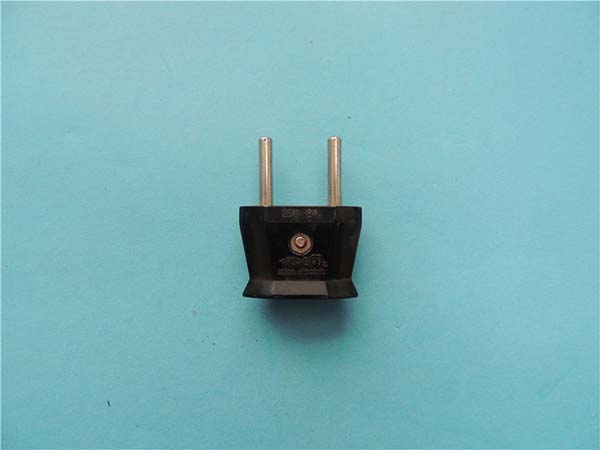
Bakelite has been a trusted material for over a century. Its electrical insulation, heat resistance, and dimensional stability make it valuable across industries. But the quality of finished products depends entirely on the raw materials you start with. A poor supplier delivers inconsistent material that fails in the field. A good supplier becomes a partner in your success.
This guide walks you through evaluating bakelite material suppliers. You will learn what to test, what certifications to verify, and how to separate reliable suppliers from those who only promise quality. Based on real manufacturing experience, these criteria help you make an informed choice.
Why Does Choosing the Right Supplier Matter?
Impact on Product Quality
The quality of bakelite components starts with raw materials. A supplier delivering inconsistent material creates downstream problems that are expensive to fix.
Consider this real example: A small electronics manufacturer sourced bakelite from an unreliable supplier for electrical switch components. In a sample test of 100 switches, 20 failed insulation testing. Some even caused electrical short-circuits during use. After switching to a reliable supplier, the failure rate dropped below 5%.
The difference lies in material consistency. High-quality bakelite has a uniform molecular structure. This gives predictable properties—consistent electrical insulation, reliable heat resistance, and stable dimensions. Poor-quality material has variations that show up as field failures.
Influence on Production Efficiency
Material shortages stop production lines. A study found that every day of production downtime due to material shortages costs an average of $50,000 in lost production value.
Reliable suppliers deliver on time. They maintain inventory. They communicate delays before they become problems. They also provide technical support—advice on molding temperatures, pressure settings, and processing conditions. In one facility, supplier technical support helped reduce defective products by 30% within a month.
Cost-Effectiveness Over Time
The lowest price rarely delivers the lowest total cost. A furniture manufacturer once chose a low-cost bakelite supplier. The initial price was lower. But poor material quality led to cracking and deformation in finished products. The cost of repairs and replacements exceeded the initial savings.
A reliable supplier offers:
- Bulk purchase discounts (10–15% for regular large orders)
- Price stability—fewer sudden hikes
- Higher product quality—better finished goods command higher prices
What Properties Define Quality Bakelite?
Electrical Insulation Performance
Bakelite’s electrical insulation is one of its defining properties. In tests applying 1,000 volts across 5 mm thick samples:
| Material | Performance |
|---|---|
| Bakelite | No conductivity |
| Polyethylene (PE) | Conducted at lower voltage |
| Polypropylene (PP) | Conducted at lower voltage |
For electrical applications—switches, sockets, high-voltage insulators—this property is non-negotiable. A supplier’s material must deliver consistent insulation batch to batch.
Heat Resistance
Bakelite withstands temperatures up to 150–180°C without significant degradation. In oven testing, bakelite maintained structural integrity at 160°C while ABS deformed at 90–100°C.
Applications requiring heat resistance:
- Kitchen utensil handles
- Appliance components near heating elements
- Automotive under-hood parts
Mechanical Strength and Dimensional Stability
Bakelite is hard and rigid. It holds precise shapes over time. In stress testing under 500 N continuous load for 1,000 cycles:
| Material | Dimensional Change |
|---|---|
| Bakelite | 1% |
| PVC | 5% |
This stability matters for precision components where tolerances are tight.
How Do You Evaluate Potential Suppliers?
Check Quality Certifications
ISO 9001 is the baseline. It indicates a supplier has documented quality management systems—raw material inspection, production controls, final testing.
Industry-specific certifications matter too. For electronics, look for RoHS compliance (Restriction of Hazardous Substances). A study found that manufacturers using RoHS-compliant bakelite had a 30% lower risk of environmental compliance failures.
What to verify:
- Request the actual certificate—not just a claim
- Check the scope—does it cover bakelite specifically?
- Verify with the certifying body if needed
Conduct Sample Testing
Samples reveal what certificates cannot. Request samples from potential suppliers and test them.
| Test | Method | Acceptable Result |
|---|---|---|
| Heat resistance | Heat in oven, observe deformation | No significant deformation up to 150–180°C |
| Electrical insulation | Apply high voltage, measure conductivity | Low or no conductivity |
| Dimensional stability | Measure before and after stress/conditioning | Minimal change |
| Surface finish | Visual inspection | Smooth, uniform, no bubbles or voids |
In one comparison, Supplier A’s sample showed the lowest conductivity under 500V test. Supplier B’s sample had conductivity twice as high—indicating inferior insulation properties. The test cost a few hours but prevented years of potential field failures.
Verify Material Consistency
Ask for certificates of analysis (COAs) for recent batches. Look at:
- Batch-to-batch variation in key properties
- Testing methods used
- Frequency of testing
A supplier who cannot provide COAs or whose data shows wide variation is a red flag.
What Production Capabilities Should You Assess?
Factory Visit
If possible, visit the supplier’s facility. Look for:
Equipment condition: Modern, well-maintained molding machines. Multiple machines indicate capacity for larger orders.
Process controls: Quality checkpoints throughout production. One supplier we visited had inspectors at every third production step—catching defects early.
Material storage: Clean, organized. Bakelite raw materials should be stored in controlled conditions. Damp or contaminated storage affects final properties.
Cleanliness: Dust, debris, and poor housekeeping correlate with quality issues.
Production Capacity
Match capacity to your needs:
| Your Volume | What to Look For |
|---|---|
| Small batches (under 500 kg/month) | Flexibility, willingness to handle smaller orders |
| Medium volume (500–5,000 kg/month) | Dedicated production lines, consistent scheduling |
| High volume (5,000+ kg/month) | Multiple machines, inventory capacity, redundancy |
Ask about:
- Current capacity utilization (are they running near 100%?)
- Lead times for new orders
- Ability to scale for demand spikes
Logistics and Delivery
Delivery reliability matters as much as product quality. Ask:
- Logistics partners: Suppliers using major freight carriers (DHL, FedEx) generally have better delivery reliability. A study found a 25% lower delay rate when suppliers used top-tier logistics partners.
- Lead times: What is the standard lead time? What factors could extend it?
- Contingency plans: How do they handle production disruptions? Suppliers with backup equipment or multiple facilities are more reliable.
- Location: Suppliers in regions prone to natural disasters or labor strikes should have documented contingency plans.
How Do You Assess Supplier Reputation?
Check References
Ask for references from customers with similar applications. A supplier serving automotive may not be ideal for medical—application experience matters.
Questions to ask references:
- How long have you worked with this supplier?
- Have they ever shipped non-conforming material?
- How do they handle quality issues when they arise?
- Do they deliver on time consistently?
- Would you use them again?
Look for Long-Term Relationships
Suppliers who retain customers for years demonstrate reliability. A supplier with 10+ year relationships likely delivers consistent quality and service. High customer turnover suggests problems.
Review Industry Forums and Business Databases
Online platforms can reveal patterns:
- Consistent positive reviews about product quality
- Complaints about delivery delays or quality inconsistency
- How the supplier responded to complaints
One manufacturer avoided a problematic supplier after finding multiple forum posts about inconsistent material properties. The supplier had good prices but poor quality control.
What Red Flags Should You Watch For?
Warning Signs During Initial Contact
- Unwilling to provide certification copies
- Vague answers about material sources or testing
- No sample testing offered or allowed
- Prices significantly below market average without explanation
- Reluctance to provide customer references
Red Flags During Factory Visit
- Poor housekeeping and disorganized storage
- No documented quality procedures
- Outdated equipment without maintenance records
- No traceability from raw material to finished product
- Reluctance to show production areas
A buyer once shared a story about visiting a potential supplier who claimed ISO 9001 certification. The facility had no quality records, raw materials stored outdoors in humidity, and no inspection equipment. The certification existed on paper but not in practice. The buyer chose elsewhere.
How Does Yigu Technology Approach Bakelite Supply?
At Yigu Technology, we supply bakelite materials and manufactured components across automotive, electrical, and industrial applications. Our approach focuses on consistency and traceability.
Material sourcing: We source from established chemical suppliers with documented quality histories. Each raw material batch is tested for key properties before acceptance.
Quality system: Our ISO 9001-certified processes include raw material inspection, in-process controls, and final testing. We maintain COAs for every batch.
Technical support: We help customers optimize processing conditions for their specific applications. For one client, our recommendations reduced scrap rates by 30% in their molding operation.
Delivery reliability: We maintain safety stock and work with major logistics partners. Our on-time delivery rate exceeds 98% across all customers.
Traceability: Every shipment includes batch numbers linking raw materials to finished products. If an issue arises, we identify affected material quickly.
Conclusion
Choosing the right bakelite material supplier requires evaluating multiple factors. Quality systems—certifications and testing—ensure consistent material properties. Production capacity must match your volume needs with room to scale. Delivery reliability prevents production disruptions. Reputation and references validate claims.
Take time to test samples. Visit facilities. Verify certifications. The effort pays back in consistent quality, reliable delivery, and lower total cost. A good supplier becomes a partner who helps you succeed—not just a source of raw materials.
Frequently Asked Questions
What certifications should a bakelite supplier have?
ISO 9001 is essential—it indicates a documented quality management system. For electronics applications, RoHS compliance is critical. Depending on your industry, ISO 14001 (environmental management) or industry-specific certifications may also be relevant.
How do I test bakelite samples for quality?
Perform heat resistance tests (heat in oven, observe deformation temperature), electrical insulation tests (apply voltage, measure conductivity), and dimensional stability tests (measure before and after conditioning). Compare results against specifications and across multiple samples.
What causes inconsistent bakelite quality?
Inconsistent raw materials, poor process control during polymerization, and lack of batch testing cause variation. Suppliers without documented quality systems often ship inconsistent material. Variations in filler content or curing conditions also affect final properties.
How can I verify a supplier’s delivery reliability?
Ask for on-time delivery records over the past 12 months. Check references about delivery performance. Inquire about logistics partners—top-tier carriers correlate with better reliability. Ask about contingency plans for production disruptions.
Is the cheapest bakelite supplier always a bad choice?
Not always, but low prices often indicate compromises in raw materials, testing, or process control. Evaluate total cost—including defect rates, rework, and field failures—not just purchase price. The lowest upfront price frequently becomes the most expensive over time.
Contact Yigu Technology for Custom Manufacturing
Need a reliable bakelite material supplier? At Yigu Technology, we combine consistent material quality with technical support and reliable delivery. From raw bakelite to finished components, we help you get the quality your products demand.
Contact us today to discuss your bakelite material requirements or request samples for testing.