Introduction
Micro plastic gears operate in a world measured in millimeters and micrometers. Inside your smartphone’s camera, your fitness tracker, and the surgical tools saving vision, these tiny components transmit motion with surprising accuracy. But engineering at this scale presents unique challenges. How do you manufacture gears smaller than a grain of rice? What materials maintain precision when tolerances drop below 0.01mm? Drawing on years of experience in precision plastic components, this guide explores the world of micro plastic gears—how they work, what materials make them possible, and how they’re transforming industries from electronics to medicine.
What Exactly Are Micro Plastic Gears?
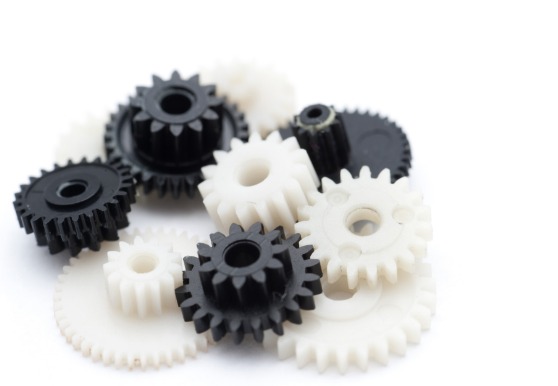
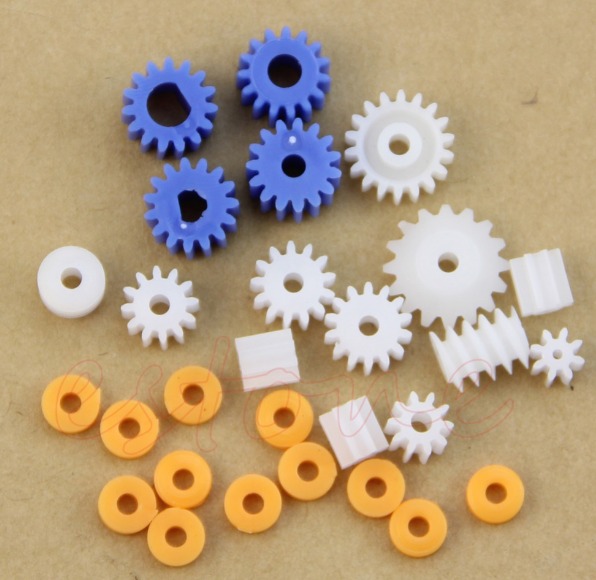
Micro plastic gears are small-scale gears made from plastic materials, with dimensions typically ranging from 0.1mm to 10mm in diameter. Some specialized applications push into the micrometer range—gears so small they require magnification to see.
What Makes Them Different?
Unlike their larger counterparts, micro gears operate in environments where traditional metal gears struggle. Their small size enables:
- Miniaturization: Products become smaller, lighter, and more portable
- Precision: Fine motion control in tight spaces
- Efficiency: Less mass means less energy to move
- Compatibility: Plastics work where metals would corrode or interfere
A micro gear with a 0.5mm diameter might have 20–30 teeth—a tooth count density that allows precise motion transmission in a fraction of the space metal gears would require.
What Materials Enable Micro Gear Performance?
The material choice determines whether a micro gear succeeds or fails. At this scale, material properties matter more than ever.
Nylon (Polyamide / PA)
Nylon is a workhorse material for micro gears, offering a balance of properties that suits many applications.
| Property | Typical Value | Why It Matters |
|---|---|---|
| Tensile strength | 70–90 MPa | Withstands operating forces without breaking |
| Coefficient of friction | 0.2–0.3 | Self-lubricating, reduces wear |
| Temperature range | Up to 80°C | Suitable for most consumer electronics |
Best applications: Medical devices, consumer electronics, mechanisms requiring self-lubrication
A medical device manufacturer uses nylon micro gears in insulin pump mechanisms. The self-lubricating property eliminates the need for external lubricants—critical where contamination risks are unacceptable.
Polyoxymethylene (POM / Acetal)
POM offers distinct advantages where stiffness and dimensional stability matter most.
| Property | Typical Value | Why It Matters |
|---|---|---|
| Modulus of elasticity | 2.8–3.5 GPa | High stiffness maintains shape under load |
| Moisture absorption | Low | Dimensional stability across humidity changes |
| Fatigue resistance | Excellent | Survives repeated loading cycles |
Best applications: Precision instruments, camera mechanisms, high-cycle applications
Smartphone camera autofocus systems rely on POM micro gears. The material’s stiffness ensures precise lens positioning, while low moisture absorption maintains accuracy regardless of environmental conditions.
Polytetrafluoroethylene (PTFE / Teflon)
PTFE serves specialized applications where friction reduction is the priority.
| Property | Typical Value | Why It Matters |
|---|---|---|
| Coefficient of friction | <0.1 | Extremely low resistance |
| Chemical resistance | Excellent | Survives harsh environments |
| Mechanical strength | Lower than nylon/POM | Limited to light-load applications |
Best applications: Chemical exposure, ultra-low friction requirements
PTFE micro gears appear in laboratory equipment where chemical resistance is essential. Their low strength limits them to light-duty applications, but their friction properties are unmatched.
Material Comparison Table
| Material | Strength | Friction | Stiffness | Cost | Best Use |
|---|---|---|---|---|---|
| Nylon | High | Low | Moderate | Low | General purpose, medical |
| POM | Moderate | Very low | High | Moderate | Precision, high-cycle |
| PTFE | Low | Extremely low | Low | High | Chemical, ultra-low friction |
Where Are Micro Plastic Gears Used?
Electronics and Consumer Devices
The electronics industry represents the largest market for micro plastic gears. Their ability to provide precise motion in compact spaces makes them essential.
Smartphone Cameras
Over 80% of modern smartphone camera autofocus systems rely on micro plastic gears. These gears, typically 1–2mm in diameter, move lens elements with precision measured in microns. A user tapping a screen to focus triggers a micro gear train that adjusts lens position in milliseconds—quietly, smoothly, and accurately.
Wearable Technology
Fitness trackers and smartwatches contain miniature gyroscopes and accelerometers that depend on micro gears. In one popular smartwatch model, gears in the gyroscope assembly maintain tolerances of ±0.02mm to ensure accurate step counting, sleep tracking, and activity recognition.
Small Motors
From electric toothbrushes to precision tools, small motors use micro gears to convert high-speed rotation into controlled motion. The gears must operate reliably through thousands of cycles while maintaining consistent performance.
Medical Devices
The medical field has embraced micro plastic gears for applications where precision and reliability directly affect patient outcomes.
Robotic-Assisted Microsurgery
Micro-surgical instruments use micro gears to translate surgeon movements into precise actions. In eye surgery, a micro-forceps might use a gear system with 0.3mm gears to control opening and closing with sub-millimeter accuracy. The low friction and smooth operation reduce tissue damage risk during delicate procedures.
Implantable Drug Delivery
Insulin pumps and other implantable drug delivery devices use micro gears to control medication flow. A study of implantable insulin pumps found that micro plastic gear mechanisms improved insulin delivery accuracy by 15% compared to previous designs. For patients, this means better blood sugar control and reduced complications.
Diagnostic Equipment
Laboratory analyzers and point-of-care testing devices use micro gears for sample handling and positioning. The gears must resist cleaning chemicals while maintaining precision through thousands of test cycles.
How Are Micro Plastic Gears Manufactured?
Injection Molding
Injection molding is the dominant manufacturing method for micro plastic gears, particularly for high-volume production.
The Process
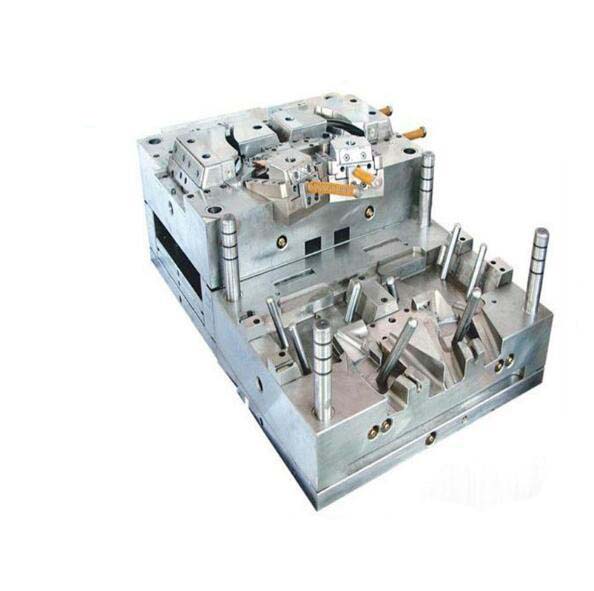
- A precision mold is created with cavities matching the gear geometry
- Plastic material is heated to a molten state
- Molten plastic is injected into the mold under high pressure
- The plastic cools and solidifies
- The finished gear is ejected
Advantages
- High efficiency: Thousands of gears per hour
- Precision: Tolerances as low as ±0.01mm
- Material flexibility: Works with nylon, POM, PTFE, and other materials
- Consistency: Minimal variation across production runs
Limitations
- High initial investment: Mold costs can run thousands of dollars
- Not economical for small volumes: Setup costs require volume to amortize
- Design constraints: Some complex geometries difficult to mold
A consumer electronics company producing millions of camera autofocus gears uses injection molding. The tooling investment is significant, but the per-unit cost drops to pennies at scale.
3D Printing / Additive Manufacturing
3D printing is emerging as a complementary technology, particularly for prototyping and low-volume production.
The Process
- A digital model is created in CAD software
- The model is sliced into thin layers
- The printer builds the gear layer by layer
- The finished gear is cleaned and optionally post-processed
Advantages
- Design flexibility: Complex geometries possible
- Rapid prototyping: Design to physical part in hours
- No tooling investment: Economical for small quantities
- Customization: Each gear can be unique without additional cost
Limitations
- Surface finish: Often rougher than molded gears
- Consistency: Mechanical properties may vary
- Speed: Slower than injection molding for volume
- Material limitations: Fewer material options available
A medical device startup used 3D printing to develop a micro gear system for a new surgical tool. They iterated through 12 design versions in three weeks—a process that would have taken months with traditional tooling.
Manufacturing Method Comparison
| Factor | Injection Molding | 3D Printing |
|---|---|---|
| Initial cost | High (tooling) | Low (no tooling) |
| Per-unit cost | Very low at volume | High per part |
| Volume suitability | High volume (10,000+) | Low to medium volume |
| Design complexity | Moderate constraints | Highly flexible |
| Surface finish | Excellent | Variable |
| Material options | Wide range | Limited |
How Do You Ensure Micro Gear Accuracy?
At micro scales, accuracy requirements become extreme. A deviation that would be negligible in a 50mm gear becomes critical in a 1mm gear.
Manufacturing Precision
Mold Quality
For injection-molded micro gears, mold accuracy determines final gear precision. High-quality molds maintain tolerances of ±0.005mm or better. Mold manufacturing itself requires specialized equipment—often micro-EDM or ultra-precision machining.
Process Control
Injection parameters must be tightly controlled:
- Temperature: Variation affects material flow and cooling
- Pressure: Insufficient pressure causes incomplete fill; excessive pressure creates stress
- Cooling rate: Uneven cooling causes warpage and distortion
Inspection and Measurement
Verifying micro gear accuracy requires specialized equipment.
Coordinate Measuring Machines (CMMs)
Modern CMMs measure micro gear dimensions with micron-level accuracy. They can verify:
- Overall diameter and thickness
- Tooth profile and pitch
- Concentricity and runout
Optical Inspection
High-magnification optical systems inspect surface finish and detect defects invisible to the naked eye. Automated vision systems can inspect thousands of gears per hour in production.
Typical Tolerance Ranges
| Feature | Typical Tolerance |
|---|---|
| Diameter | ±0.01–0.05 mm |
| Tooth profile | ±0.005–0.02 mm |
| Concentricity | ±0.01–0.03 mm |
| Surface finish | 0.2–0.8 μm Ra |
What Are the Limitations?
Micro plastic gears excel in many applications but have boundaries.
Temperature Sensitivity
Most common materials have limited temperature ranges:
- Nylon: Up to 80°C continuous
- POM: Up to 110°C continuous
- PTFE: Up to 200°C continuous (but strength declines)
Above these temperatures, materials soften, deform, or lose mechanical properties. For high-temperature environments, specialty materials or metal gears may be required.
Load Capacity
Plastic materials cannot match metal’s load capacity. For applications requiring high torque or shock loads, metal gears remain necessary. However, for the vast majority of micro applications—where loads are inherently small—plastic performs admirably.
Moisture Sensitivity
Nylon absorbs moisture, which can cause dimensional changes of 0.5–2% in humid environments. For precision applications, POM’s lower moisture absorption may be preferable.
What Does the Future Hold?
The micro plastic gear market continues to grow, driven by trends in electronics, medical devices, and wearable technology.
Material Innovation
New materials with improved properties are emerging:
- High-temperature nylons: Operating ranges extending to 150–180°C
- Carbon-fiber reinforced compounds: Higher strength-to-weight ratios
- Biocompatible grades: Expanding medical applications
Manufacturing Advances
- Micro injection molding: Tolerances pushing below ±0.005mm
- High-resolution 3D printing: Surface finishes approaching molded quality
- In-process inspection: Real-time quality control during production
New Applications
- Aerospace micro-systems: Sensors and actuators for drones and satellites
- Implantable devices: Even smaller drug delivery and monitoring systems
- Consumer robotics: Micro gear systems for miniature robots
Conclusion
Micro plastic gears represent a remarkable intersection of material science and precision engineering. They enable products that would be impossible with traditional metal gears—smaller, lighter, quieter, and often more reliable. Their success depends on thoughtful material selection, precise manufacturing, and careful application matching.
For engineers and designers, the key is understanding the trade-offs: nylon for self-lubrication and strength, POM for stiffness and dimensional stability, PTFE for extreme friction reduction. With the right choices, micro plastic gears deliver precision and reliability at scales that continue to push the boundaries of what’s possible.
FAQ
What is the smallest size micro plastic gear possible?
Micro gears can be manufactured down to 0.1mm diameter using specialized processes. For applications requiring even smaller sizes, microfabrication techniques from the semiconductor industry can produce gears measured in micrometers. However, practical limits depend on material properties, manufacturing capability, and application requirements.
How do I choose between nylon and POM for my micro gear?
Nylon offers higher strength and self-lubrication, making it suitable for load-bearing applications. POM provides better dimensional stability and stiffness, making it ideal for precision positioning. Consider your priorities: strength and wear resistance (nylon) or precision and stability (POM). For high-humidity environments, POM’s lower moisture absorption is an advantage.
Can 3D-printed micro gears match injection-molded quality?
For prototyping and low-volume production, 3D printing is viable. However, injection molding still offers superior surface finish, dimensional consistency, and mechanical properties for high-volume production. As 3D printing technology advances, the gap is narrowing, but for critical applications requiring tight tolerances and high reliability, injection molding remains the standard.
Are micro plastic gears suitable for medical implants?
Yes, with appropriate material selection. Biocompatible grades of nylon, POM, and PEEK are available for medical applications. These materials meet regulatory requirements for implantation and resist the body’s corrosive environment. Each application requires careful material verification and regulatory compliance testing.
How do I maintain micro plastic gear performance over time?
For self-lubricating materials like nylon and POM, no external lubrication is typically needed. Keep the gear train clean and free from debris. Avoid operating above the material’s temperature limits. For critical applications, periodic inspection can detect wear before it affects performance. With proper material selection and operating conditions, micro plastic gears can last the life of the device.
Contact Yigu Technology for Custom Manufacturing
At Yigu Technology, we specialize in precision micro plastic gears for demanding applications. Our manufacturing capabilities include high-precision injection molding with tolerances to ±0.01mm and advanced inspection systems to verify every critical dimension.
We offer:
- Custom gear design and prototyping
- Multiple material options (nylon, POM, PTFE, and specialty grades)
- High-volume production capabilities
- Quality verification with CMM and optical inspection
Ready to discuss your micro gear requirements? Contact us with your specifications—including size, material, tolerance, and volume—and we’ll provide design feedback, manufacturing recommendations, and competitive quotes within 24–48 hours.