Introduction
Imagine a plastic that resists almost every chemical known—acids, bases, solvents, even at high temperatures. One that operates continuously at 260°C . One so slippery that nothing sticks to it.
That’s fluoropolymers —PTFE, PFA, FEP. They’re the materials you turn to when nothing else works. But here’s the challenge: the very properties that make them valuable also make them difficult to mold. High processing temperatures push equipment to its limits. Non-stick surfaces resist mold release. And the materials are unforgiving—small deviations cause defects that scrap expensive parts.
This guide walks you through fluoropolymer injection molding. We’ll cover material properties, process parameters, mold design, defect troubleshooting, and quality control. Whether you’re molding chemical processing equipment or aerospace components, you’ll find practical guidance here.
What Are Fluoropolymers and Why Use Them?
Fluoropolymers are a family of plastics where hydrogen atoms are replaced with fluorine. This substitution creates materials with extraordinary properties.
Common Fluoropolymer Types
| Material | Continuous Use Temp | Key Properties | Typical Applications |
|---|---|---|---|
| PTFE | 260°C | Lowest friction; highest chemical resistance | Seals, bearings, non-stick coatings |
| PFA | 260°C | Melt-processable; excellent chemical resistance | Chemical equipment, tubing |
| FEP | 200°C | Melt-processable; good transparency | Wire insulation, linings |
| ETFE | 150°C | Higher strength; good flexibility | Film, industrial components |
Chemical Resistance
Fluoropolymers resist nearly all chemicals. PFA can withstand concentrated sulfuric acid at 200°C without degradation. This makes them indispensable in chemical processing, semiconductor manufacturing, and pharmaceutical applications where other materials fail.
Thermal Stability
PTFE and PFA remain stable up to 260°C continuously. FEP handles 200°C . This thermal stability enables applications in high-temperature environments—engine compartments, industrial ovens, and chemical reactors.
Electrical Properties
Volume resistivity exceeds 10¹⁸ Ω·cm . Fluoropolymers serve as outstanding electrical insulators in high-temperature and high-frequency applications.
Low Friction
The coefficient of friction for PTFE is as low as 0.04 —lower than ice on ice. This non-stick property is valuable but creates molding challenges: parts won’t stick to mold surfaces, requiring careful design for ejection.
Limitations
Mechanical strength is modest. Tensile strength ranges from 15–30 MPa —significantly lower than PEEK or nylon. Fluoropolymers also creep under sustained load, limiting use in structural applications.
What Equipment and Process Parameters Are Required?
Melt Temperature: Extreme Heat
Fluoropolymers demand processing temperatures far beyond standard plastics:
| Material | Melt Temperature Range |
|---|---|
| PFA | 350–400°C |
| FEP | 300–350°C |
| Modified PTFE | 380–420°C |
Temperature control must be precise—within ±2°C . Exceeding the upper limit degrades the material, releasing corrosive byproducts. Falling below the lower limit leaves the material too viscous to fill the mold.
Injection Speed and Pressure
Fluoropolymers have high viscosity . Injection speeds should be moderate: 10–30 mm/s . Too fast causes shear heating and degradation. Too slow risks incomplete filling.
Injection pressure ranges from 800–1,500 bar . PFA often requires the higher end of this range to fill complex molds.
Cooling and Cycle Time
Fluoropolymers have low thermal conductivity . They hold heat, requiring extended cooling:
- Cooling time: 20–40 seconds
- Total cycle time: 60–120 seconds
A manufacturer producing PFA chemical valves attempted to shorten cycles by reducing cooling time. Parts warped, and seals failed in testing. Returning to proper cooling times eliminated the issues.
Material Handling and Drying
Drying requirements vary:
- PFA and FEP: Dry at 120–150°C for 4–6 hours
- PTFE: Often pre-dried by suppliers; confirm before processing
Contamination is a serious concern. Oils, other plastics, or contaminants can compromise chemical resistance. Dedicated material handling systems are recommended.
Specialized Equipment
Standard injection molding machines cannot process fluoropolymers. Requirements include:
- Nickel-plated barrels and screws : Resist corrosion from degradation byproducts
- High-temperature capability : Heating systems reaching 420°C
- Corrosion-resistant components : Seals, valves, and contact surfaces
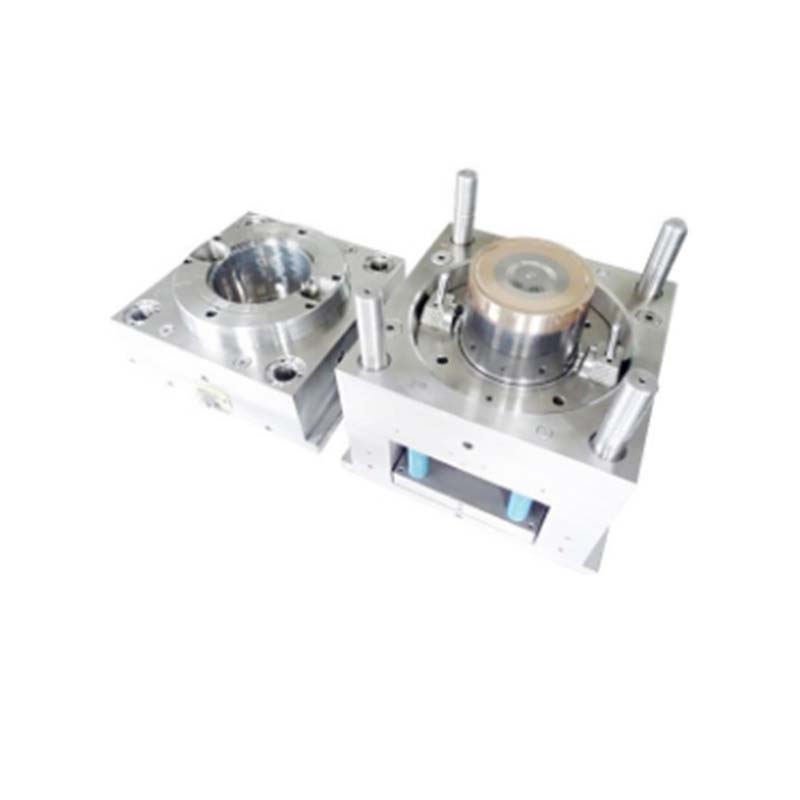
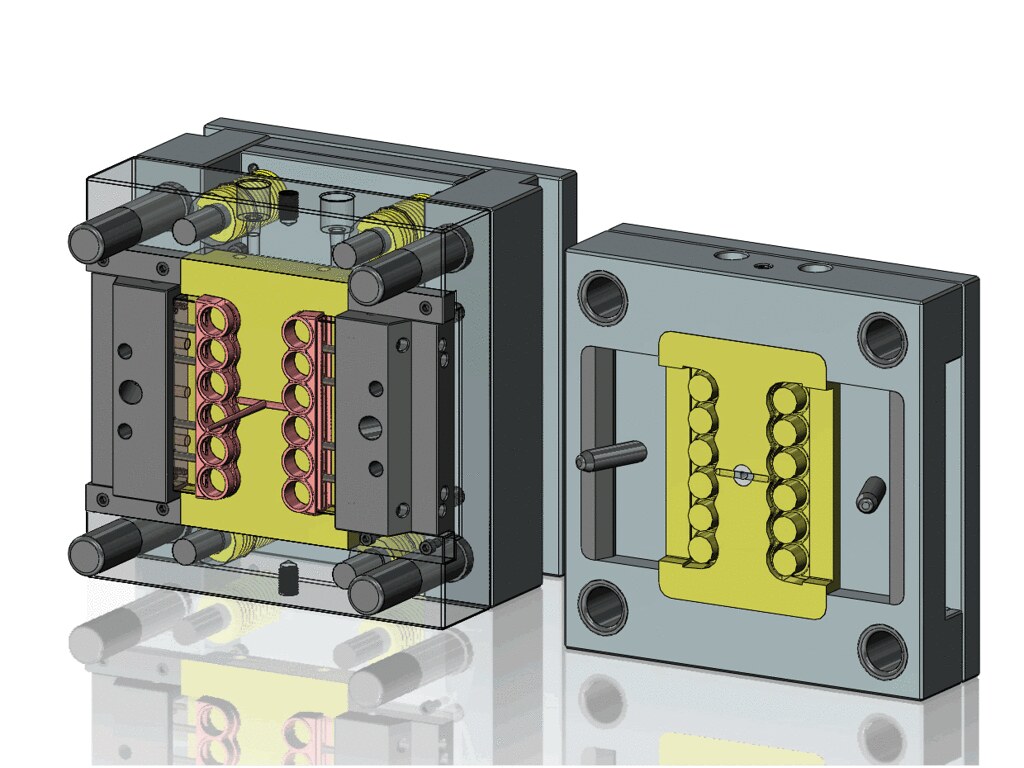
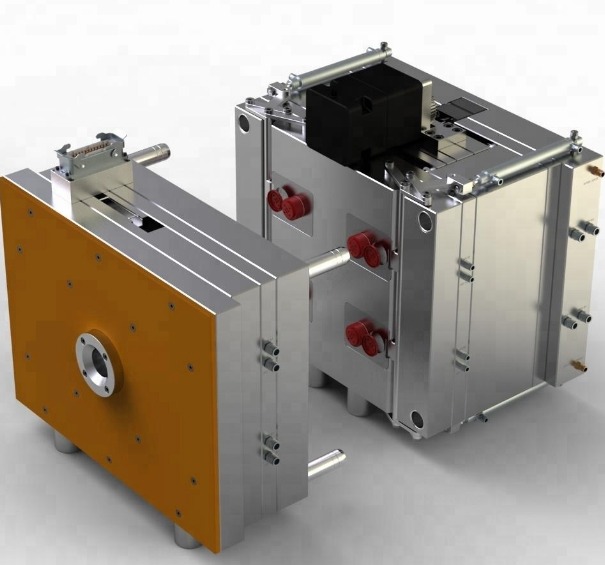
How Should You Design Molds for Fluoropolymers?
Venting: More Than Standard
Fluoropolymers release volatile byproducts during melting. Standard venting is inadequate.
| Vent Feature | Requirement | Standard Plastics |
|---|---|---|
| Depth | 0.03–0.05 mm | 0.01–0.02 mm |
| Width | 10–15 mm | 5–8 mm |
Position vents at flow path ends and around thick sections where air and volatiles accumulate.
Cooling Channel Design
High melt temperatures demand aggressive cooling:
- Channel placement: 6–10 mm from cavity surface
- Channel diameter: 8–12 mm
- Flow: Turbulent water flow at 3–5 m/s for efficient heat removal
- Coolant temperature: 80–100°C to prevent thermal shock
Draft Angles and Surface Finish
The non-stick property works against mold release. Parts don’t want to stick—they also don’t want to stay in the cavity. Larger draft angles are essential:
- Draft angle: 3–5° per side (standard plastics: 0.5–2°)
- Surface finish: Ra 0.4–0.8 μm . Some molds use special coatings to improve release.
Mold Materials
Standard tool steel softens at fluoropolymer processing temperatures.
| Material | Application |
|---|---|
| H13 tool steel | Standard for most fluoropolymer molding |
| Nickel-based superalloys | Extremely high-temperature grades (above 400°C) |
Hot Runner Systems
If using hot runners, they must be constructed from corrosion-resistant alloys like Hastelloy . Operating temperatures: 320–400°C for PFA. Expect higher maintenance requirements.
What Defects Occur and How Do You Fix Them?
| Defect | Common Causes | Solutions |
|---|---|---|
| Warpage | Uneven cooling; mold temperature gradients | Balance cooling channels; use mold temp controllers with ±1°C accuracy |
| Voids | Trapped air; moisture degradation | Increase venting; extend drying time |
| Short shots | Insufficient melt temperature or pressure | Raise temperature 5–10°C; increase injection pressure |
| Surface defects | Mold contamination; degradation | Clean mold with fluorinated solvents; reduce melt temperature |
| Poor release | Draft too shallow; surface too rough | Increase draft to 3–5°; polish to Ra < 0.8 μm |
Quality Control Measures
Statistical process control (SPC) : Monitor melt temperature, pressure, and cycle time. Allowable variation: ±1% .
Chemical resistance testing : Expose sample parts to aggressive fluids like nitric acid. Any degradation indicates processing issues.
Dimensional accuracy : Use CMMs to verify tolerances—typically ±0.05 mm for critical components.
Surface testing : For non-stick applications, contact angle measurements should exceed 100° . Values below indicate surface contamination or degradation that compromises performance.
Where Are Fluoropolymer Injection Molded Parts Used?
Chemical Processing Equipment
Valves, seals, pump components, and pipe fittings. PFA and FEP resist corrosive fluids that attack metals and other plastics. In chemical plants, fluoropolymer components last years where stainless steel fails in months.
Electrical Components
Insulators, connectors, and wire coatings. FEP and PFA maintain electrical properties in high-temperature environments like engine bays and industrial equipment.
Medical Devices
Surgical instruments, fluid handling systems, and drug delivery components. Fluoropolymers offer chemical inertness and biocompatibility. They resist sterilization chemicals and don’t leach contaminants.
Aerospace Components
Hydraulic system seals, fuel system components, and wire insulation. Fluoropolymers withstand extreme temperatures and aggressive aviation fuels where other materials degrade.
Semiconductor Manufacturing
PFA tubing, fittings, and components handle ultra-pure chemicals at elevated temperatures. Contamination control is critical—fluoropolymers don’t leach ions or particles.
What Post-Processing Options Are Available?
Machining
Fluoropolymers machine well with carbide tools . Key considerations:
- Cutting speed: 1,500–3,000 RPM —higher than standard plastics
- Coolant: Alcohol-based to prevent residue that could affect chemical resistance
- Heat control: Avoid localized heating that can degrade the material
Adhesive Bonding
Fluoropolymers resist bonding. Surface treatment is required:
- Plasma etching or sodium etching modifies the surface for adhesion
- Use fluoropolymer-specific adhesives
- Cure at 120–150°C for optimal bond strength
Heat Treatment
Annealing at 150–200°C for 1–2 hours relieves internal stress. This reduces warpage in critical parts and improves dimensional stability over time.
Welding
Ultrasonic welding is possible but challenging. High energy input is required, and joint design must accommodate the material’s properties.
Yigu Technology's Perspective
At Yigu Technology , fluoropolymer injection molding is a core competency. We’ve invested in the specialized equipment required—high-temperature machines, nickel-plated barrels, and corrosion-resistant hot runner systems.
Our team understands the nuances: drying protocols that remove moisture without degrading the material, venting designs that handle volatiles, and cooling systems that extract heat efficiently. We’ve produced PFA chemical valves, FEP electrical insulators, and PTFE-based components for clients who demand performance where other materials fail.
For us, fluoropolymers aren’t just another material. They’re the solution when nothing else works. And we have the experience to mold them right.
Conclusion
Fluoropolymer injection molding sits at the extreme end of plastics processing. Melt temperatures exceed 400°C . Equipment must be corrosion-resistant. Molds require larger vents, steeper draft angles, and aggressive cooling. Process control demands ±2°C accuracy.
But the results justify the effort. Parts resist nearly all chemicals. They operate continuously at 260°C . They insulate electrically in high-temperature environments. They don’t stick to anything—which is exactly what some applications require.
Understanding the material’s properties, respecting its processing demands, and designing molds specifically for fluoropolymers separates successful production from costly failures. When the application demands performance that only fluoropolymers can deliver, mastering their molding requirements is essential.
FAQ
What is the difference between PTFE, PFA, and FEP?
PTFE is not melt-processable; it requires sintering. It offers the lowest friction and highest chemical resistance. PFA and FEP are melt-processable—they can be injection molded. PFA handles 260°C; FEP handles 200°C. Both offer excellent chemical resistance, with PFA being slightly superior.
Can fluoropolymers be recycled?
Yes, but recycling is limited. Scrap can be ground and reused in lower-performance applications. However, the high processing temperatures make recycling energy-intensive. Contamination is a serious concern—mixed material streams compromise chemical resistance.
What causes reduced chemical resistance in molded fluoropolymer parts?
Overheating during processing (above 420°C for PFA) breaks chemical bonds, reducing resistance. Contamination with other plastics or oils during handling also compromises chemical resistance. Proper drying, clean material handling, and precise temperature control are essential.
How do you improve mold filling for complex fluoropolymer parts?
Increase melt temperature by 10–15°C . Use larger gates (1–2 mm diameter). Ensure adequate venting . For intricate sections, sequential valve gating helps fill without trapping air.
What molds work best for fluoropolymers?
H13 tool steel is standard. For extremely high-temperature grades (above 400°C), nickel-based superalloys are required. Cooling channels must be dense and placed 6–10 mm from the cavity. Surface finish should be Ra 0.4–0.8 μm with draft angles of 3–5° .
Contact Yigu Technology for Custom Manufacturing
At Yigu Technology , we specialize in high-performance fluoropolymer injection molding. Our equipment handles the extreme temperatures and corrosive byproducts these materials demand. Our team understands the unique mold design requirements—venting, cooling, draft angles, and surface finishes—that make fluoropolymer molding successful. From chemical processing components to aerospace parts, we deliver quality that performs in the most demanding environments. Contact us today to discuss your fluoropolymer injection molding project.