Introduction
Polycarbonate (PC) is one of the most versatile engineering plastics available. It combines exceptional impact strength—virtually unbreakable under normal conditions—with optical clarity that rivals glass. From bulletproof windows and safety glasses to medical devices and automotive headlights, PC delivers where other materials fail.
But molding PC to perfection is demanding. Small processing variations can turn durable parts brittle. Microscopic voids or flow lines that go unnoticed in opaque plastics become glaring flaws in clear components. PC’s sensitivity to moisture and high processing temperatures requires precise control to avoid haze, warpage, and reduced impact strength.
This guide addresses these challenges. You will learn PC’s material properties, the injection molding process, mold design principles, quality control methods, and post-processing techniques. By mastering these elements, you can produce high-quality PC parts that leverage the material’s full potential.
What Makes Polycarbonate a Unique Engineering Plastic?
Polycarbonate’s exceptional properties make it the material of choice for demanding applications.
Impact Strength
PC is legendary for its toughness. With a notched Izod impact strength of 60–80 kJ/m² , it is virtually unbreakable under normal conditions. Compare this to:
- ABS: 20–30 kJ/m²
- Acrylic (PMMA): 2–4 kJ/m²
- Polypropylene: 5–10 kJ/m²
This makes PC ideal for safety-critical applications: bulletproof glass, protective eyewear, face shields, and automotive components.
Optical Clarity
PC offers light transmission rates of 89–90% , rivaling glass. Combined with impact resistance, this makes it the premier material for:
- Lenses and optical components
- Display screens and windows
- Medical devices requiring visibility
- Light fixtures and covers
Thermal Properties
| Property | Value | Significance |
|---|---|---|
| Glass transition temperature (Tg) | 145–150°C | Maintains properties up to this temperature |
| Continuous use temperature | Up to 120°C | Suitable for underhood automotive and electronics |
| Heat deflection temperature (HDT) | 130–140°C | Withstands high-temperature environments |
Dimensional Stability
PC has a coefficient of thermal expansion of 60–70 × 10⁻⁶ /°C —low for a plastic. This means:
- Parts maintain shape across temperature changes
- Precision assemblies stay aligned
- Consistent dimensions in demanding applications
Chemical and Electrical Properties
| Property | Characteristics |
|---|---|
| Chemical resistance | Resists water, oils, dilute acids; damaged by solvents (acetone, alcohols) |
| Flame retardancy | UL94 V-2 standard; V-0 grades available |
| Electrical insulation | Excellent; used in connectors and switchgear |
| UV resistance | Limited; UV-stabilized grades available for outdoor use |
How Do You Process PC in Injection Molding?
PC requires precise control at every stage. The material is unforgiving of shortcuts.
Drying Requirements
PC is highly hygroscopic. It absorbs moisture rapidly from the air. During processing, moisture turns to steam, causing:
- Hydrolysis – Polymer chains break down; molecular weight drops
- Cloudiness and haze – Optical clarity compromised
- Reduced impact strength – Parts become brittle
- Surface defects – Splay marks, voids
| Parameter | Requirement |
|---|---|
| Drying temperature | 120–130°C |
| Drying time | 4–6 hours |
| Equipment | Dehumidifying dryer (not just hot air) |
| Target moisture | Below 0.02% |
Critical: Dried PC must be used within 1–2 hours or stored in a sealed container. Re-dry if exposed to ambient air.
Melt Temperature Control
Melt temperature is critical. PC has a narrow processing window.
| Condition | Temperature | Result |
|---|---|---|
| Too low | Below 280°C | Poor flow; short shots; high viscosity |
| Optimal | 280–300°C | Good flow; proper properties |
| Too high | Above 310°C | Degradation; yellowing; gas formation; reduced impact strength |
Injection Parameters
| Parameter | Typical Range | Notes |
|---|---|---|
| Injection pressure | 80–140 MPa | Higher for thin walls or complex geometries |
| Injection speed | 50–80 mm/s | Moderate to high; reduces flow marks |
| Holding pressure | 50–80% of injection pressure | Compensates for shrinkage; prevents sink marks |
| Back pressure | 5–15 bar | Improves melt homogeneity |
| Screw speed | 50–100 RPM | Avoid excessive shear heating |
Cooling and Cycle Time
| Parameter | Typical Range |
|---|---|
| Cooling time | 20–30 seconds |
| Mold temperature | 60–100°C |
| Total cycle time | 40–60 seconds |
Critical: Proper cooling prevents internal stress that causes optical defects like birefringence and reduces impact strength.
Runner and Gate Design
PC’s higher viscosity requires generous runner and gate systems:
| Feature | Recommendation |
|---|---|
| Runner size | Larger than for commodity plastics |
| Gate type | Edge gates; fan gates; hot runners with valve gates |
| Gate location | Direct flow to minimize weld lines |
How Do You Design Molds for PC?
Mold design directly affects part quality, especially for optical applications.
Mold Materials
| Material | Best For | Notes |
|---|---|---|
| P20 steel | General-purpose; medium volume | Good machinability; moderate cost |
| H13 steel | High-volume production | Excellent wear resistance; heat treated |
| Stainless steel | Medical; optical parts | Corrosion resistance; polishability |
Surface finish requirement: For clear parts, molds require a mirror finish (Ra < 0.02 μm) . High-gloss mold surface replication is critical for optical clarity.
Mold Flow Analysis
Mold flow analysis is essential for PC. It simulates filling to identify:
- Air traps that cause voids and haze
- Weld lines that weaken parts and reduce clarity
- Uneven filling that causes warpage
- Pressure drops that cause short shots
Cooling Channel Design
| Feature | Recommendation |
|---|---|
| Channel distance from cavity | 8–12 mm |
| Channel diameter | 6–10 mm |
| Coolant temperature | 60–70°C |
| Channel layout | Balanced; uniform cooling |
Uniform cooling prevents warpage and optical defects.
Venting Requirements
PC requires precise venting to prevent air traps:
| Feature | Specification |
|---|---|
| Vent depth | 0.01–0.02 mm |
| Vent width | 5–10 mm |
| Location | End of flow paths; parting lines |
Inadequate venting causes air bubbles that appear as voids and weaken the part.
Draft Angles and Ejection
| Feature | Recommendation |
|---|---|
| Draft angle | 1–2° per side |
| Ejector pins | Large, flat pins or stripper plates |
| Force distribution | Even to avoid marks and stress points |
Proper draft protects the part’s surface and prevents stress concentrations that could reduce impact strength.
Hot Runner Systems
Hot runners with valve gates are beneficial for PC:
- Reduce weld lines and gate marks
- Maintain consistent melt temperature
- Improve part quality for optical applications
What Defects Occur in PC Molding and How Do You Fix Them?
PC’s unique properties make certain defects particularly problematic.
Common Defects and Solutions
| Defect | Appearance | Likely Cause | Solution |
|---|---|---|---|
| Cloudiness/Haze | Milky appearance; reduced clarity | Moisture; degradation | Improve drying; lower melt temperature |
| Warpage | Twisted or bowed part | Uneven cooling; residual stress | Balance cooling channels; optimize hold pressure |
| Voids | Internal bubbles | Trapped air; insufficient packing | Add vents; increase hold pressure |
| Flow lines | Visible lines on surface | Slow or uneven injection speed | Increase speed; optimize gate location |
| Reduced impact strength | Parts crack easily | Degradation; excessive stress | Lower melt temperature; anneal parts |
| Splay marks | Silver streaks | Moisture; degradation | Re-dry material; lower melt temp |
| Birefringence | Rainbow patterns under polarized light | Internal stress | Anneal; optimize cooling; reduce injection speed |
Quality Control Methods
Optical Inspection
- Visual inspection under LED lights to detect haze
- Polariscopes to check for birefringence (internal stress)
Mechanical Testing
- Izod or Charpy impact testing to verify strength
- Tensile testing for structural applications
Dimensional Inspection
- CMM (coordinate measuring machine) for critical dimensions
- Target tolerances: ±0.03 mm for precision optical parts
Statistical Process Control (SPC)
Monitor key parameters:
- Melt temperature: ±5°C
- Injection pressure: ±10 MPa
- Cycle time: ±2 seconds
- Part weight: ±2%
What Are the Applications of PC in Injection Molding?
PC’s unique combination of properties makes it indispensable across industries.
Optical Components
| Application | Why PC? |
|---|---|
| Camera lenses | Optical clarity; impact resistance |
| Eyeglass lenses | Lightweight; shatterproof |
| Fiber optic connectors | Precision; clarity |
| Display screens | Transparency; scratch resistance (with coating) |
Automotive
| Application | Why PC? |
|---|---|
| Headlight lenses | Thermal resistance; clarity; durability |
| Dashboard displays | Clarity; impact resistance |
| Safety glass | Shatter resistance |
| Interior trim | Aesthetics; durability |
Electronics
| Application | Why PC? |
|---|---|
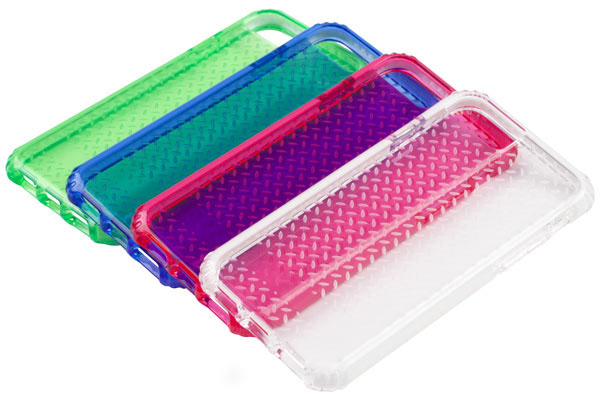
| Smartphone cases | Impact resistance; thin-wall capability |
| Laptop housings | Durability; aesthetics |
| Router covers | Electrical insulation; durability |
| LED components | Heat resistance; clarity |
Medical Devices
| Application | Why PC? |
|---|---|
| Oxygen concentrator housings | Clarity; impact resistance |
| IV fluid containers | Transparency; sterilization compatibility |
| Surgical instrument handles | Durability; cleanability |
| Diagnostic equipment | Precision; clarity |
Consumer Products
| Application | Why PC? |
|---|---|
| Water bottles | Impact resistance; clarity |
| Safety goggles | Impact protection; clarity |
| Power tool housings | Durability |
| Food storage | Transparency; durability |
Design for Manufacturing Tips
| Feature | Recommendation |
|---|---|
| Wall thickness | Uniform 2–4 mm to avoid sink marks and stress |
| Corners | Add radii to enhance impact resistance (sharp corners act as stress risers) |
| Outdoor applications | Specify UV-stabilized grades to prevent yellowing |
| Optical parts | Use mirror-finished molds; avoid sharp transitions |
How Do You Post-Process PC Parts?
Post-processing must preserve PC’s impact strength and clarity.
Surface Treatments
| Treatment | Purpose | Application |
|---|---|---|
| Hard coating | Scratch resistance (silicone dioxide or diamond-like carbon) | Eyewear; displays |
| UV-stabilized paint | UV resistance for outdoor parts | Automotive; outdoor enclosures |
| Anti-fog coating | Prevents condensation | Face shields; lenses |
Painting and Coating
- Use UV-stable paints for outdoor applications
- Apply in dust-free environments to avoid particles
- Surface preparation (abrasion or plasma treatment) improves adhesion
Adhesive Bonding
| Adhesive Type | Suitability | Notes |
|---|---|---|
| Cyanoacrylates | Good | Fast cure; requires surface prep |
| Epoxies | Excellent | Strong bonds; structural applications |
| Solvent bonding | Limited | Risk of stress cracking |
Ultrasonic Welding
PC works well for ultrasonic welding:
- Creates strong, hermetic seals
- Does not affect clarity
- Ideal for medical device enclosures
Machining and Trimming
- Use sharp carbide tools
- Low speeds to prevent chipping and heat buildup
- Critical for precision optical parts
Heat Treatment (Annealing)
Annealing relieves residual stress and improves impact strength:
| Parameter | Specification |
|---|---|
| Temperature | 120–130°C |
| Time | 1–2 hours |
| Cooling | Slow (no more than 5°C per minute) |
Assembly Tolerances
- Optical components: ±0.02 mm
- General parts: ±0.05–0.10 mm
Conclusion
Polycarbonate (PC) is a remarkable engineering plastic that delivers exceptional impact strength and optical clarity. Successfully molding PC requires:
- Strict drying – 120–130°C for 4–6 hours; moisture below 0.02%
- Precise temperature control – Melt 280–300°C; avoid exceeding 310°C
- Proper mold design – Mirror finish; uniform cooling; adequate venting
- Optimized process parameters – Moderate injection speed; sufficient packing pressure
- Quality control – Impact testing; optical inspection; SPC
When these elements align, PC produces parts that are virtually unbreakable, crystal clear, and dimensionally stable. From safety glasses to medical devices, automotive headlights to consumer electronics, PC delivers performance that justifies its reputation as a premier engineering plastic.
Frequently Asked Questions (FAQ)
How does PC compare to PMMA in terms of impact resistance and clarity?
PC has far higher impact strength (60–80 kJ/m² vs. PMMA’s 2–4 kJ/m²)—it is virtually unbreakable. PMMA (acrylic) has slightly higher optical clarity (92–93% light transmission vs. PC’s 89–90%). PC is the choice for applications requiring durability; PMMA is preferred when pure clarity is paramount and impact resistance is less critical.
Can PC be recycled?
Yes, PC is recyclable. Recycled PC (rPC) retains most mechanical properties but may have reduced clarity due to contamination or degradation. It is suitable for opaque parts like housings and structural components. Virgin PC is recommended for clear or high-impact applications where optical quality and strength are critical.
What causes PC parts to become brittle over time?
Brittleness in PC is typically caused by hydrolysis (moisture during processing) or UV degradation. Hydrolysis occurs when moisture remains in the material during molding, breaking polymer chains and reducing molecular weight. UV degradation affects standard PC grades exposed to sunlight, causing yellowing and embrittlement. Solutions: use proper drying protocols (120–130°C for 4–6 hours) and specify UV-stabilized grades for outdoor applications.
Why does PC require such thorough drying?
PC is highly hygroscopic—it absorbs moisture from the air. During injection molding, this moisture turns to steam at processing temperatures (280–300°C). The steam causes hydrolysis, which breaks the polymer chains, reducing molecular weight. Results: cloudiness/haze, reduced impact strength (brittleness), surface splay marks, and internal voids. Drying to below 0.02% moisture prevents hydrolysis and preserves PC’s properties.
What is the typical shrinkage rate for PC?
PC has a relatively low and predictable shrinkage rate of 0.5–0.7% . This dimensional stability allows for tight tolerances (±0.03 mm for small precision parts). Mold design must account for shrinkage, but unlike materials with higher shrinkage (PP, nylon), PC’s consistency makes it suitable for precision optical and mechanical components.
Contact Yigu Technology for Custom Manufacturing
At Yigu Technology, we specialize in polycarbonate injection molding for applications demanding high impact strength and optical clarity. Our expertise spans automotive, medical, electronics, and consumer goods industries where performance and appearance matter.
Our PC molding capabilities include:
- Precision drying – Dehumidifying dryers; moisture monitoring to <0.02%
- Advanced process control – Closed-loop temperature and pressure control
- Mirror-finish molds – Ra < 0.02 μm for optical clarity
- Mold flow analysis – Optimized gate placement; uniform cooling
- Quality assurance – Optical inspection; impact testing; CMM verification
- Post-processing – Annealing; hard coating; UV stabilization
We produce optical components, medical devices, automotive parts, and electronics enclosures that meet the highest quality standards. Whether you need crystal-clear lenses or durable safety components, our PC molding expertise delivers.
Contact us today to discuss your polycarbonate injection molding project. Let our expertise help you balance strength and clarity for superior results.