Introduction
Polypropylene—PP —is one of the most widely used plastics in injection molding. It is in your yogurt cups, your car’s interior trim, and your medical syringes. Its combination of low cost, light weight, and chemical resistance makes it a go-to material across industries.
But PP is not without challenges. Manufacturers struggle with warping during cooling. They fight to maintain consistent part quality. They work to optimize cycle times without introducing defects.
This guide covers everything you need to know about injection molding polypropylene: material properties, process parameters, mold design, applications, and quality control.
What Makes PP Unique?
Polypropylene is a thermoplastic polymer with a balanced set of properties that make it ideal for a wide range of applications.
Key Properties
| Property | Value | Significance |
|---|---|---|
| Density | 0.90 – 0.91 g/cm³ | One of the lightest commercial plastics; reduces part weight and material cost |
| Melting point | 160 – 170°C | Handles moderate heat but not high-temperature applications |
| Heat deflection temperature | 60 – 100°C | Limits use in hot environments without modification |
| Shrinkage rate | 1.5% – 2.5% | Higher than many plastics; requires careful mold compensation |
| Tensile strength | 30 – 40 MPa | Good strength for most applications |
| Impact resistance | Good (excellent in modified grades) | Suitable for parts subject to repeated stress |
Advantages
Cost-effectiveness: PP is one of the most affordable plastics. Material cost is low, making it ideal for large-scale production.
Lightweight: At 0.90–0.91 g/cm³, PP reduces shipping costs and is ideal for weight-sensitive applications like automotive parts.
Recyclability: PP carries resin code 5 and is widely recyclable, making it a more sustainable choice than some non-recyclable plastics.
Chemical resistance: Resists many acids, alkalis, and organic solvents. Used in chemical storage containers and lab equipment.
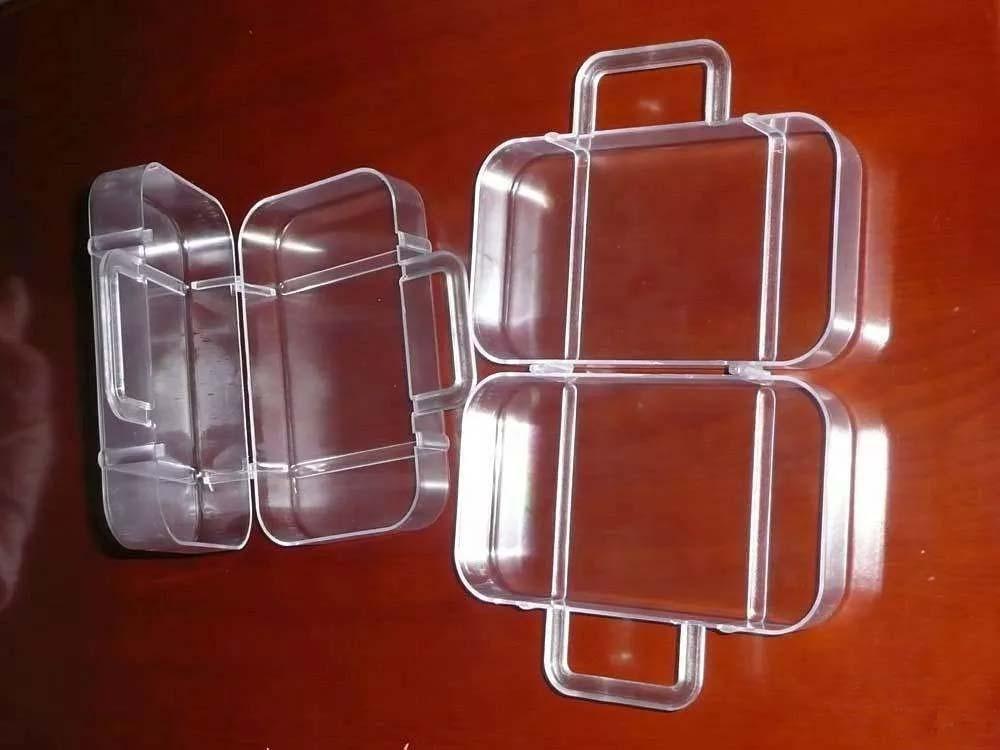
Fatigue resistance: Withstands repeated bending without breaking—perfect for living hinges and snap-fit lids.
Disadvantages
Limited UV resistance: Degrades with prolonged sunlight exposure. Requires UV stabilizers for outdoor applications.
Lower melting point: Not suitable for high-temperature environments—engine components, for example.
Warping tendency: Higher shrinkage rate can cause warping if the molding process is not optimized.
How Does PP Compare to Other Plastics?
| Property | PP | Polyethylene (PE) | Polycarbonate (PC) |
|---|---|---|---|
| Density (g/cm³) | 0.90 – 0.91 | 0.91 – 0.96 | 1.20 |
| Melting point (°C) | 160 – 170 | 110 – 130 | 220 – 230 |
| Impact resistance | Good | Excellent | Very good |
| Cost | Low | Low | High |
PP sits between PE and PC in performance. It is lighter than both, with good chemical resistance and moderate heat tolerance. It is more rigid than LDPE but less rigid than HDPE. It is much less expensive than PC.
How Do You Injection Mold PP?
Critical Process Parameters
Melt temperature: 180°C to 230°C. Too low causes poor flow and short shots. Above 260°C causes thermal degradation—discoloration and reduced mechanical properties.
Injection speed: Moderate to high—50 to 100 mm/s . Thin-walled parts need higher speeds for proper filling. Excessively high speeds cause shear heating and flash.
Cooling time: 10 to 30 seconds, depending on part thickness. PP has low thermal conductivity; thicker parts need longer cooling to prevent warping.
Cycle time: 20 to 60 seconds. PP’s relatively fast cooling allows shorter cycles than many other plastics, improving production efficiency.
The table below summarizes parameters:
| Parameter | Range | Notes |
|---|---|---|
| Melt temperature | 180 – 230°C | Above 260°C causes degradation |
| Injection speed | 50 – 100 mm/s | Higher for thin walls |
| Cooling time | 10 – 30 seconds | Longer for thick parts |
| Cycle time | 20 – 60 seconds | Efficient for high volume |
How Should Molds Be Designed for PP?
Gate and Runner System
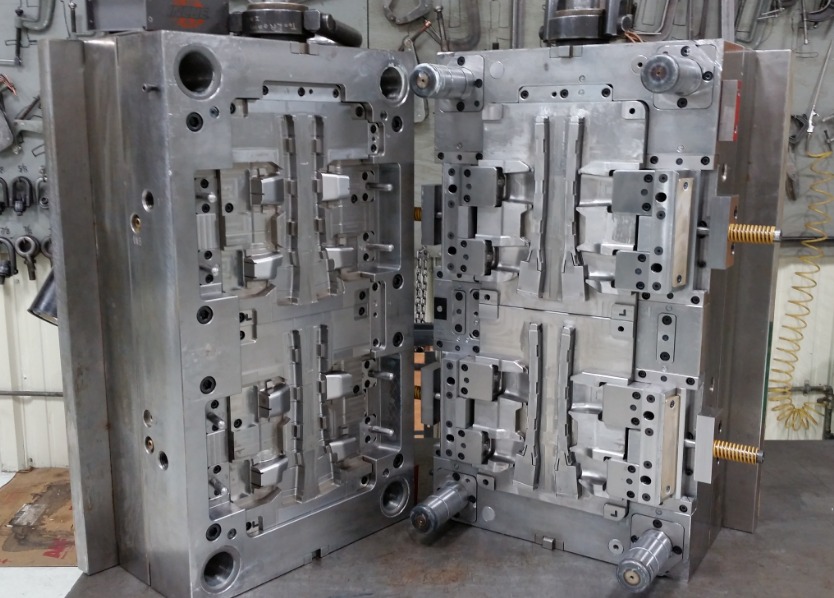
Hot runner systems are beneficial for PP. They reduce material waste and maintain consistent melt temperature.
Gate size: 0.5 to 1.5 mm diameter for small to medium parts. Proper sizing avoids excessive shear.
Cooling Channels
Uniform cooling is critical to prevent warping. Design cooling channels for even heat extraction across the part.
Draft angles: Minimum 1° to facilitate easy ejection.
Shrinkage Compensation
PP shrinks 1.5% to 2.5% —higher than many plastics. Mold cavities must be oversized to compensate. Compensation depends on:
- PP grade
- Part thickness
- Molding parameters
Where Is PP Used?
Packaging
PP’s low cost, light weight, and good barrier properties make it dominant in packaging.
- Food containers (yogurt cups, takeout boxes)
- Bottle caps and closures
- Plastic bags and stretch film
Automotive Parts
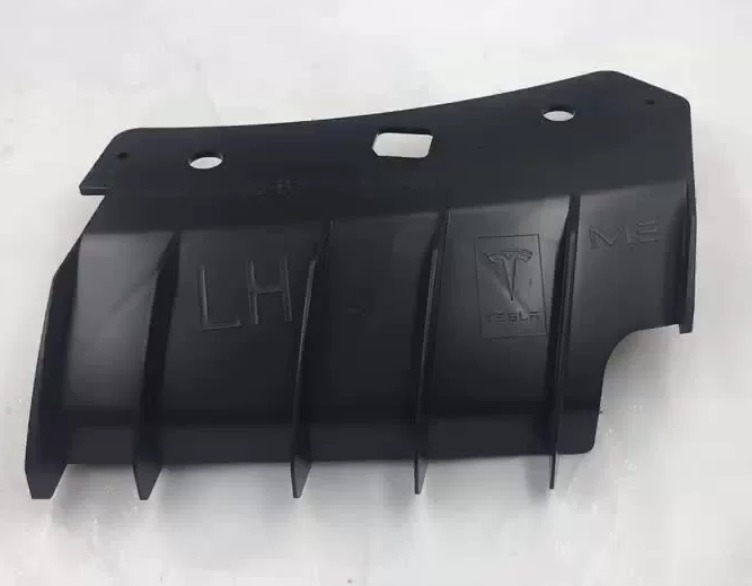
PP is used for both interior and exterior components.
| Interior | Exterior | Underhood |
|---|---|---|
| Dashboard components | Bumper covers | Air intake manifolds |
| Door panels | Fender liners | Fluid reservoirs |
Consumer Products
Everyday items made from injection-molded PP:
- Kitchen utensils (spatulas, food storage containers)
- Toys (action figures, building blocks)
- Furniture parts (chair legs, table edges)
Medical Devices
PP’s chemical resistance and sterilization compatibility suit medical applications:
- Syringes and vials
- Medical trays and containers
- Disposable products
Electrical Components
PP’s electrical insulation properties are useful for:
- Electrical outlets and switches
- Cable insulation
- Battery casings
What Defects Occur and How to Prevent Them?
Sink Marks
Cause: Insufficient packing pressure or uneven cooling.
Solution: Increase packing pressure. Extend cooling time. Design uniform wall thickness.
Voids
Cause: Trapped air in the mold or improper material drying. PP is less hygroscopic than nylon but still requires proper handling.
Solution: Ensure proper venting in the mold. Dry material if needed.
Warping
Cause: PP’s high shrinkage rate combined with uneven cooling.
Solution: Optimize cooling channels for uniform heat extraction. Use uniform wall thickness. Adjust hold pressure.
Flash
Cause: Excessive injection pressure or mold wear.
Solution: Reduce injection pressure. Inspect and repair mold seals.
Flow Marks
Cause: Improper gate design or injection speed.
Solution: Optimize gate size and location. Adjust injection speed.
How to Ensure Quality Control?
Inspection Techniques
Dimensional accuracy: Use calipers, micrometers, or CMMs. Tolerances:
- Small parts: ±0.1 mm
- Large parts: ±0.5 mm
Surface finish: Visual inspection for scratches, flash, discoloration. For critical applications, use surface roughness tester. Acceptable Ra values:
- Visible parts: 0.8 μm or lower
Testing Methods
Mechanical testing: Tensile strength and impact resistance on sample parts.
Chemical resistance testing: For parts in harsh environments.
Process Monitoring
Implement statistical process control (SPC) to monitor melt temperature, injection pressure, and cooling time. Keep variations within narrow ranges.
What Does a Real-World Example Look Like?
A manufacturer of food containers needed to produce 5 million yogurt cups annually. The material was PP. The challenge was preventing warping and achieving consistent wall thickness.
The mold was designed with:
- Hot runner system for consistent melt temperature
- Optimized cooling channels for uniform heat extraction
- Gate size of 1.0 mm to balance flow and shear
Process parameters:
- Melt temperature: 200°C
- Injection speed: 80 mm/s
- Cooling time: 12 seconds
- Cycle time: 25 seconds
The result: consistent wall thickness within ±0.1 mm, no warping, and production efficiency meeting volume targets. Scrap rate was under 2%.
Conclusion
PP injection molding combines affordability with versatility. The material offers low density (0.90–0.91 g/cm³), good chemical resistance, and fatigue resistance for living hinges and snap-fit designs.
Successful molding requires:
- Melt temperatures between 180°C and 230°C
- Injection speeds of 50–100 mm/s
- Proper mold design with cooling channels and draft angles
- Shrinkage compensation of 1.5–2.5%
- Quality control through dimensional inspection and mechanical testing
Applications span packaging, automotive, consumer products, medical devices, and electrical components. Each leverages PP’s unique combination of properties.
When processed correctly, PP delivers consistent, cost-effective parts that meet demanding requirements across industries.
FAQ
Can PP be used for outdoor applications?
Yes, but with UV stabilizers. Without stabilizers, PP degrades under prolonged sunlight exposure, becoming brittle and cracking. For outdoor applications, specify UV-stabilized PP grades.
What is the typical shrinkage rate of PP in injection molding?
PP shrinkage ranges from 1.5% to 2.5% . Variation depends on PP grade, part thickness, and process parameters. Mold cavities must be oversized to compensate. Test with the specific material and part geometry to determine exact compensation needed.
Is PP compatible with food contact applications?
Yes. Many PP grades are FDA-approved for food contact. PP is non-toxic and resists food acids and oils. It is widely used in food packaging, containers, and kitchen utensils.
What causes warping in PP injection molding?
Warping is primarily caused by uneven cooling. PP’s higher shrinkage rate (1.5–2.5%) amplifies the effect. Solutions include optimizing cooling channel layout for uniform heat extraction, designing uniform wall thickness, and adjusting hold pressure to minimize internal stresses.
How does PP compare to PE in injection molding?
PP has higher melting point (160–170°C vs. 110–130°C for PE) and higher rigidity. PP is lighter (0.90–0.91 g/cm³ vs. 0.91–0.96 g/cm³). PP offers better fatigue resistance for living hinges. PE offers better impact resistance at low temperatures. Choose PP for rigidity and heat resistance; choose PE for flexibility and low-temperature impact.
Contact Yigu Technology for Custom Manufacturing
At Yigu Technology , we specialize in PP injection molding. Our engineers optimize melt temperature, injection speed, and cooling time for each application. Our molds are designed with proper cooling channels and shrinkage compensation.
We serve packaging, automotive, medical, and consumer goods industries. From food containers to automotive interior components, we deliver consistent, high-quality PP parts.
Contact Yigu Technology today to discuss your PP injection molding project.