Introduction
Injection molding is everywhere. It is in the dashboard of your car. It is in the casing of your smartphone. It is in the syringe at your doctor’s office. This single manufacturing process produces an astonishing range of products that define modern life.
Industry reports show that about 80% of automotive interior plastic parts are made through injection molding. In the global smartphone market—billions of units annually—injection-molded plastic components are standard.
This guide explores how injection molding processing works, its key factors, applications across industries, and why it has become the backbone of modern manufacturing.
What Is Injection Molding Processing?
Injection molding is a manufacturing process where molten material—typically plastic—is injected under high pressure into a mold cavity. The material cools and solidifies, taking the shape of the mold.
Key Components
Injection unit: Melts raw material and injects it into the mold. Heating elements raise temperature to melting point. A screw rotates to push molten plastic forward. For polyethylene (PE), temperatures range from 180°C to 250°C . For polypropylene (PP), 200°C to 300°C .
Clamping unit: Holds the mold closed during injection. Must exert enough force to prevent opening under injection pressure. A medium-sized machine may have clamping force of 50 to 200 tons .
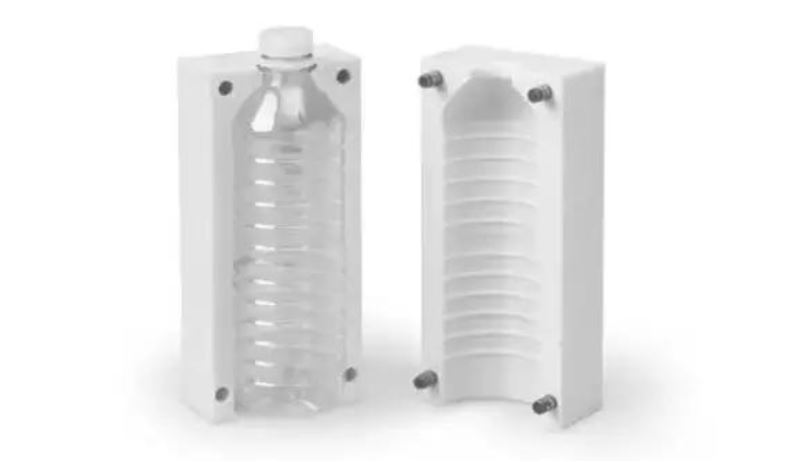
Mold: Custom-designed to create the final shape. Consists of cavity half and core half. When closed, the space between forms the part geometry.
How Does the Injection Molding Process Work?
Step 1: Raw Material Preparation
Plastic pellets—ABS, PE, PP, PC—are the starting materials. Each has unique properties. ABS offers strength and good surface finish for electronic housings.
Hygroscopic plastics like nylon must be dried before processing. Moisture causes voids and surface blisters. Water vapor turns to steam during heating, creating bubbles in the part.
Step 2: Plasticization
Pellets feed into the injection unit. Heating elements raise temperature to melting point. The rotating screw pushes pellets forward. Shear forces from the screw also generate heat, contributing to melting.
Screw speed—measured in revolutions per minute (RPM)—affects plasticization. Higher speed increases shear heat but risks degradation if not controlled.
Step 3: Injection
Molten plastic is forced through the nozzle into the mold’s gating system—runners and gates—directing flow into the cavity.
Injection pressure: Ranges from dozens to hundreds of megapascals (MPa). Low-viscosity PE may need 50 to 100 MPa . High-viscosity PC may require 200 to 300 MPa .
Injection speed: Measured in mm/s. Fast filling prevents premature cooling but risks air entrapment or flash (excess material around edges).
Step 4: Cooling
Cooling channels circulate coolant—typically water—through the mold. Heat transfers from the plastic, allowing solidification.
Cooling time varies with part thickness and material. Thin-walled PP parts may cool in seconds. Thick-walled PC parts may take minutes. Too fast cooling causes warping and internal stress. Too slow reduces productivity.
Step 5: Demolding
The clamping unit opens the mold. Ejector pins push the solidified part out. Mold design—draft angles, ejector pin placement—affects ease of demolding. Demolding agents may assist but can leave residues affecting surface quality.
What Key Factors Affect the Process?
Temperature
Barrel temperature: Too low causes incomplete melting, inconsistent flow, and short shots (incomplete filling). Too high causes degradation, discoloration, and charred particles. PVC requires precise control within 160°C to 190°C to avoid dehydrochlorination.
Mold temperature: Lower temperature speeds cooling but may cause warping from uneven cooling. Higher temperature improves surface finish and reduces internal stress but increases cycle time. For crystalline plastics like PE and PP, higher mold temperature promotes crystallization, enhancing stiffness and strength.
Pressure
Injection pressure: Insufficient pressure causes incomplete filling. Excessive pressure causes flash, over-packing, and increased internal stress. Small precision gears require carefully calibrated pressure to form fine teeth without defects.
Holding pressure: Applied after filling to compensate for shrinkage as plastic cools. Too low causes sink marks (surface depressions) or internal voids. Too high causes over-packing and deformation. Holding pressure is typically lower than injection pressure and decreases during cooling.
Time
Cycle time: Total time from material preparation to demolding. Shorter cycles increase productivity but must balance proper plasticization, injection, cooling, and demolding. Disposable cutlery cycles may be a few seconds.
Residence time: Time plastic spends in the heated barrel. Too long causes degradation, especially for heat-sensitive materials.
Where Is Injection Molding Used?
Automotive Industry
Interior components: Dashboards from ABS or PP with additives for strength, heat resistance, and aesthetics. Door panels with integrated features—speakers, storage, armrests—in a single part, reducing assembly time. Industry data shows injection-molded interiors have increased assembly efficiency by about 30% compared to traditional methods.
Exterior components: Bumpers and body panels from PC-ABS blends. High-impact plastics withstand minor collisions. Plastic bumpers are 20% to 30% lighter than metal counterparts while maintaining safety standards.
Engine components: Air intake manifolds with complex internal channels for optimal airflow. Injection molding enables geometries that improve engine performance—up to 5% power increase compared to simpler designs.
Consumer Electronics
Smartphones: Sleek, thin casings from PC for strength-to-weight ratio, impact resistance, and optical properties. PC molds easily into curved shapes popular in modern designs.
Computer accessories: Keyboards with precisely molded keycaps for consistent travel and tactile feedback. Mouse housings with ergonomic designs. Injection molding achieves tolerances as low as ±0.05 mm for perfect fit.
Mass production: Large-scale facilities produce tens of thousands of smartphone cases or keycaps daily, meeting market demand for new and updated devices.
Medical Field
Syringes: Medical-grade PP with precise dimensions for accurate dosing. Smooth inner walls ensure smooth plunger movement. Consistent quality meets strict standards.
Device housings: Biocompatible materials like PET protect sensitive internal components. Features—sensor ports, displays, connectors—integrate into a seamless unit.
Implants: Some orthopedic implants are injection-molded from biocompatible polymers to achieve desired shapes and structures for tissue integration.
What Are the Advantages of Injection Molding?
High-Efficiency Production
Injection molding excels at high-volume production. A machine may produce hundreds of parts per hour. Disposable cutlery cycles in 3 to 5 seconds . A facility with 10 machines running continuously produces tens of thousands of pieces daily.
Precision and Complexity
Injection molding achieves tolerances as low as ±0.05 mm for precision gears, ensuring smooth operation and reduced wear. Complex internal structures—fluid-flow channels in medical devices—are produced as single-piece components. Multi-cavity molds produce multiple complex parts simultaneously.
Material Versatility
A wide range of materials can be injection molded:
| Material Type | Examples | Applications |
|---|---|---|
| Thermoplastics | PE, PP, ABS, PC | Automotive, electronics, packaging |
| Thermosets | Epoxy, phenolic | High-temperature, electrical applications |
| Metals (MIM) | Stainless steel, titanium | Aerospace, defense, complex metal parts |
| Elastomers | Silicone, TPE | Flexible seals, medical devices |
Cost-Effectiveness in the Long Run
Initial investment in equipment and molds is significant. But costs spread over production volume. A $50,000 mold producing 1,000,000 parts adds only $0.05 per part .
Short cycle times and multi-cavity molds minimize labor cost per unit. Consistent quality reduces rework and quality control costs. For high-volume, long-term production, injection molding is the most cost-efficient option.
The table below summarizes advantages:
| Advantage | Description |
|---|---|
| High efficiency | Hundreds of parts/hour; cycles as short as 3–5 seconds |
| Precision | Tolerances as low as ±0.05 mm |
| Complexity | Intricate internal features in single parts |
| Material versatility | Thermoplastics, thermosets, metals (MIM), elastomers |
| Cost-effectiveness | Low per-part cost at high volumes; spreads tooling investment |
What Does a Real-World Example Look Like?
A manufacturer of medical diagnostic equipment needed a housing for a new portable device. The housing had to be lightweight, impact-resistant, and biocompatible. It also required integrated mounting points for internal components and a smooth exterior finish.
Material selection settled on PC-ABS blend for impact resistance and surface finish. The mold was designed with a multi-cavity layout—four housings per cycle. Cooling channels were optimized for uniform cooling to prevent warping.
Process parameters: melt temperature 260°C, injection pressure 180 MPa, cycle time 35 seconds. The result: housings with ±0.1 mm tolerances, smooth surfaces requiring no secondary finishing, and production capacity of 400,000 units annually.
Conclusion
Injection molding processing is the backbone of modern manufacturing. It produces high-quality parts across automotive, consumer electronics, and medical industries with unmatched efficiency.
The process involves raw material preparation, plasticization, injection, cooling, and demolding. Key factors—temperature, pressure, time—must be precisely controlled to ensure quality.
Advantages include high-volume production (cycles as short as seconds), precision (tolerances ±0.05 mm), material versatility (thermoplastics, thermosets, metals, elastomers), and long-term cost-effectiveness.
From automotive dashboards to medical syringes, injection molding enables products that define modern life. Its combination of speed, precision, and versatility ensures it will remain essential for decades to come.
FAQ
What are the common defects in injection molding and how can they be resolved?
Short shots (incomplete filling) are resolved by increasing injection pressure, checking material supply, or adjusting temperature. Flash (excess material) is addressed by reducing injection pressure, checking mold alignment, and ensuring proper clamping force. Warping is minimized by optimizing cooling systems, adjusting injection and holding pressures, and ensuring uniform wall thickness. Sink marks are reduced by adjusting holding pressure and time, modifying gate location, or using lower-shrinkage materials.
How do I choose the right material for injection molding?
Consider end-use application. Medical devices require biocompatible materials like medical-grade PP or PET. Automotive components need heat and impact resistance—PC-ABS blends. Evaluate required mechanical properties: strength, stiffness, flexibility. Balance performance with cost. Consider processing characteristics: melting point, viscosity, shrinkage rate.
What is the typical cost of setting up an injection molding production line?
Costs vary widely. Injection molding machines range from a few thousand dollars for small units to hundreds of thousands for large, advanced machines. Mold manufacturing: simple molds cost a few thousand dollars; complex multi-cavity molds cost tens or hundreds of thousands. Additional costs include raw material inventory, labor, auxiliary equipment (dryers, cooling towers, mold handling). Small-scale lines may cost $50,000–$100,000. High-volume lines can cost several million dollars.
What is the difference between injection pressure and holding pressure?
Injection pressure forces molten plastic into the mold cavity during filling. It must be high enough to fill the cavity completely before cooling. Holding pressure is applied after filling to compensate for shrinkage as the plastic cools. It is typically lower than injection pressure and decreases over time during cooling.
Why is material drying important in injection molding?
Hygroscopic plastics—nylon, PC, PET—absorb moisture from the air. When heated, moisture turns to steam, creating voids, bubbles, and surface defects. Proper drying prevents these defects. Nylon may require drying to below 0.02% moisture content before processing.
Contact Yigu Technology for Custom Manufacturing
At Yigu Technology , injection molding is at the core of what we do. We operate modern injection molding machines with precise temperature, pressure, and speed controls. We work with a wide range of materials—from commodity plastics to high-performance engineering resins.
Our experience spans automotive, consumer electronics, and medical industries. We handle complex geometries, tight tolerances, and high-volume production.
Contact Yigu Technology today to discuss your injection molding project. Let us show you why injection molding is the backbone of modern manufacturing.