Introduction
Thermoplastic Polyurethane—TPU —combines the elasticity of rubber with the processability of plastic. It stretches, bends, and recovers. It resists abrasion, oils, and chemicals. It is found in phone cases, automotive seals, medical catheters, and footwear.
But TPU is not like polypropylene or ABS. It behaves differently. It is hygroscopic—it absorbs moisture. It requires precise temperature control. Its low viscosity during processing demands careful mold design.
This guide covers everything you need to know about TPU injection molding: material properties, process parameters, mold design, quality control, and applications.
What Makes TPU Unique?
TPU is a thermoplastic elastomer with properties spanning rubber-like flexibility to rigid durability. Its performance comes from its segmented structure—soft segments provide elasticity; hard segments provide strength.
Key Properties
| Property | Typical Range | Significance |
|---|---|---|
| Elongation at break | 500% – 1000% | Stretches and recovers without breaking |
| Abrasion resistance | <20 mg loss (Taber, 1000 cycles) | Withstands wear in footwear, belts, industrial components |
| Tear strength | >250 p/i (Die C) | Resists tearing under stress |
| Shore hardness | 60A (soft) – 75D (rigid) | Versatile for different applications |
| Tensile strength | >2000 psi (solid grades) | Holds together under load |
| Compression set | Low | Maintains shape under repeated compression |
Chemical and Environmental Resistance
TPU resists oils, greases, and many solvents. Aliphatic TPU grades are color-fast and non-yellowing, providing UV resistance for outdoor applications. Some grades are biocompatible, suitable for medical devices.
How Do You Injection Mold TPU?
Critical Process Parameters
Melt Temperature: 180°C to 230°C. Higher hardness grades require higher temperatures. Shore D grades may need 230°C; softer Shore A grades process at 180°C.
Injection Speed: Controlled to prevent air entrapment. Fast injection fills cavities quickly but can trap air. Balance based on part geometry.
Injection Pressure: Varies with part complexity. Simple parts may need lower pressure; complex geometries may require up to 1500 bar .
Cooling Time: TPU solidifies relatively quickly. Cooling times are shorter than many other plastics—typically 10 to 60 seconds depending on part size and complexity.
Cycle Time: Range from 10 to 60 seconds. Efficient for high-volume production.
Material Handling
TPU is hygroscopic —it absorbs moisture from the air. Drying requirements:
- Target moisture content: below 0.05%
- Drying conditions: 80°C to 100°C for 2 to 4 hours
Improper drying causes defects: voids, poor surface finish, reduced mechanical properties. Maintain humidity control in storage to prevent re-absorption.
The table below summarizes key parameters:
| Parameter | Range | Notes |
|---|---|---|
| Melt temperature | 180 – 230°C | Higher for harder grades |
| Injection pressure | Up to 1500 bar | Higher for complex geometries |
| Cooling time | 10 – 60 seconds | Faster than many plastics |
| Moisture content | <0.05% | Drying required |
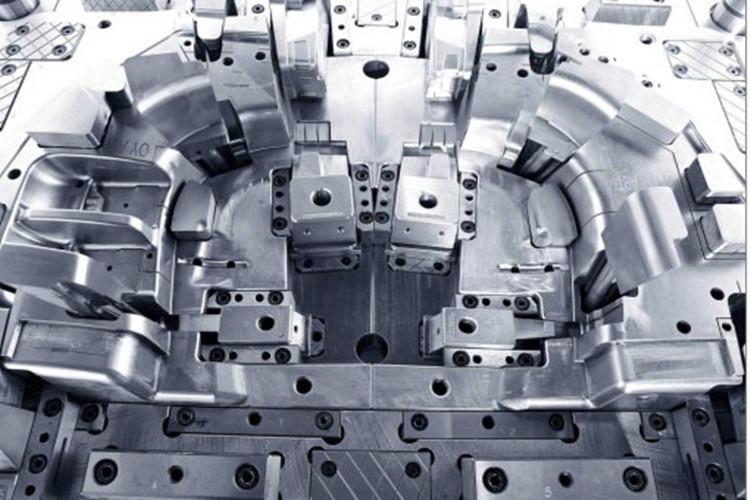
How Should Molds Be Designed for TPU?
Venting
TPU has low viscosity during processing. Efficient venting prevents air entrapment. Vent depth: 0.01 to 0.03 mm —deep enough for air escape, shallow enough to prevent TPU leakage.
Cooling Channels
Uniform cooling prevents warpage. Place cooling channels as close to the mold cavity surface as possible—typically within 10 to 15 mm .
Ejector Pin Design
TPU parts can stick to molds due to elasticity. Ejector pins should have proper surface finish and distribution. Pin diameter: 2 to 6 mm depending on part size and shape.
Mold Materials
P20 steel is common—good machinability, sufficient hardness. For highly abrasive TPU grades, use harder steels or chromium coatings to improve wear resistance.
What Defects Occur and How to Prevent Them?
Warpage
Cause: Uneven cooling.
Solution: Uniform cooling channel layout; accurate cooling time; consistent melt temperature and injection pressure.
Sink Marks
Cause: Shrinkage during cooling, especially in thick sections.
Solution: Optimize wall thickness; increase packing pressure; extend cooling time in thick areas.
Short Shots
Cause: Insufficient injection pressure, low melt temperature, or poor mold design.
Solution: Increase pressure or temperature; improve gate design; ensure adequate venting.
Flash
Cause: TPU leaking between mold halves—mold alignment issues or insufficient clamping force.
Solution: Check mold alignment; increase clamping force; reduce injection pressure.
The table below summarizes defects and solutions:
| Defect | Cause | Solution |
|---|---|---|
| Warpage | Uneven cooling | Uniform cooling channels, accurate cooling time |
| Sink marks | Shrinkage in thick sections | Optimize wall thickness, increase packing pressure |
| Short shots | Insufficient fill | Increase pressure/temperature, improve gate design |
| Flash | TPU leakage between mold halves | Check alignment, increase clamping force |
What Quality Control Methods Are Used?
Mechanical Property Testing
- Tensile strength: Verifies load-bearing capacity
- Elongation at break: Confirms flexibility
- Hardness: Ensures shore hardness matches specification
- Tear strength: Validates resistance to tearing
Statistical Process Control (SPC)
Monitor process parameters—melt temperature, injection pressure, cycle time—over time. Detect trends before defects occur. Adjust proactively.
Inspection Techniques
| Method | Purpose |
|---|---|
| Visual inspection | Surface defects, flash, sink marks |
| CMM (Coordinate Measuring Machine) | Dimensional accuracy |
| Ultrasonic testing | Internal voids, delamination |
Where Is TPU Used?
Automotive Components
TPU’s abrasion resistance and chemical resistance suit:
- Seals and gaskets
- Hoses (withstand high pressure and temperature)
- Interior components
Medical Devices
Biocompatible TPU grades are used for:
- Catheters
- Tubing
- Prosthetics
Consumer Products
TPU appears in everyday items:
- Mobile phone cases (flexible, durable)
- Footwear outsoles, midsoles, heel counters (abrasion resistance, cushioning)
- Sports equipment
Industrial Applications
- Conveyor belts
- Hoses and tubing
- Protective covers
What Post-Processing Options Exist?
Surface Treatments
Painting and coating: Improves appearance, adds protection. Proper surface preparation required for adhesion.
Ultrasonic welding: Common for joining TPU parts. Produces strong bonds without adhesives.
Adhesive bonding: Choose adhesives compatible with TPU. Test for bond strength before production.
Machining and Trimming
TPU parts may require trimming flash or achieving final dimensions. Use cutting, drilling, grinding. Avoid overheating—excessive heat affects material properties.
What Does a Real-World Example Look Like?
A manufacturer of automotive seals needed TPU components with high abrasion resistance and chemical resistance to oils and fuels. The parts had complex geometries with thin sections.
Material selection: High-performance TPU grade with Shore A 85 hardness.
Mold design: P20 steel with chromium coating for wear resistance. Vent depth: 0.02 mm. Cooling channels placed 12 mm from cavity surface.
Process parameters: Melt temperature 210°C, injection pressure 1200 bar, cooling time 25 seconds. TPU dried to 0.03% moisture before processing.
The result: parts with consistent dimensions (tolerance ±0.05 mm), no warpage, and passing all chemical resistance tests. Production cycle met volume targets with defect rate under 2%.
Conclusion
TPU injection molding combines rubber-like elasticity with plastic processability. The material offers elongation at break up to 1000%, abrasion resistance (<20 mg loss), and shore hardness from 60A to 75D.
Successful molding requires:
- Material handling: Dry TPU to below 0.05% moisture
- Process control: Melt temperature 180–230°C, injection pressure up to 1500 bar
- Mold design: Proper venting (0.01–0.03 mm), uniform cooling channels, appropriate ejector pins
- Quality control: Mechanical testing, SPC, dimensional inspection
Applications span automotive seals, medical catheters, consumer products, and industrial components.
When processed correctly, TPU delivers durable, flexible, high-performance parts for demanding applications.
FAQ
What is the best way to reduce warpage in TPU injection molding?
Ensure uniform cooling channel layout in the mold. Place cooling channels within 10–15 mm of the cavity surface. Control cooling time accurately. Maintain consistent melt temperature and injection pressure. Uniform wall thickness in part design also reduces warpage.
Can recycled TPU be used in injection molding?
Yes, but proportion must be controlled. Recycled TPU can reduce toughness and other mechanical properties. Limit recycled material to 20% to 30% depending on application requirements. Test mechanical properties before full production.
How can I improve the surface finish of TPU injection-molded parts?
Dry TPU thoroughly to below 0.05% moisture to prevent surface defects. Optimize injection speed and pressure to avoid air entrapment. Ensure smooth mold surface finish—polish to Ra 0.4 μm or better. Consider post-processing techniques—polishing, coating.
What are the drying requirements for TPU before molding?
TPU is hygroscopic and must be dried to below 0.05% moisture content . Dry at 80°C to 100°C for 2 to 4 hours . Use desiccant dryers for effective moisture removal. Store in sealed containers with desiccants to prevent re-absorption.
What shore hardness should I choose for my TPU application?
60A–80A: Soft, flexible—phone cases, flexible seals.
80A–95A: Medium hardness—automotive seals, industrial components.
55D–75D: Rigid, durable—structural parts, wear-resistant components.
Contact Yigu Technology for Custom Manufacturing
At Yigu Technology , we specialize in TPU injection molding. Our engineers understand TPU’s unique properties—hygroscopic nature, low viscosity, thermal sensitivity. We dry materials to below 0.05% moisture. Our molds feature proper venting, uniform cooling, and appropriate ejector systems.
We serve automotive, medical, consumer, and industrial sectors. From flexible seals to rigid structural components, we deliver high-quality TPU parts.
Contact Yigu Technology today to discuss your TPU injection molding project.