Introduction
Jewelry making is an ancient craft. For centuries, artisans have used the lost-wax method to create rings, pendants, and intricate pieces. Today, 3D printing is changing this process. It offers new ways to design and produce jewelry with amazing detail.
But is 3D printing truly the future? Or will traditional methods remain the standard? This article explores how 3D printing works for jewelry casting. You will learn about different technologies, materials, and real-world applications. We will also compare costs, accuracy, and practicality. By the end, you will understand whether this technology fits your jewelry production needs.
How Does 3D Printing Work for Jewelry?
The Basic Principle
3D printing is an additive manufacturing process. Unlike traditional carving or molding, it builds objects layer by layer. Each layer is a thin slice of a digital model. The printer follows these slices to create a physical object.
For jewelry, the process starts with a digital design. Designers use software like Rhinoceros 3D or MatrixGold. They create a detailed 3D model of the jewelry piece. This model can include complex patterns, tiny details, and organic shapes.
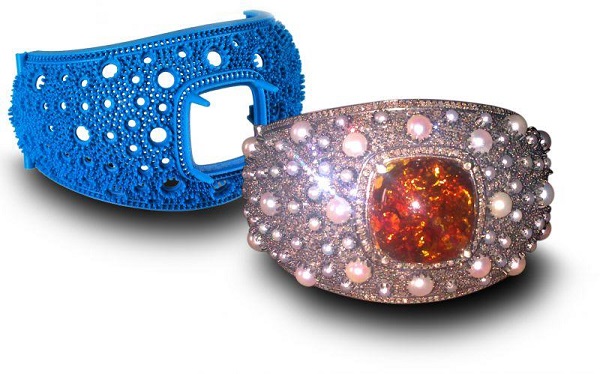
Once the design is ready, the printer builds it. The result is a pattern—usually in wax or resin—that replaces the hand-carved wax model used in traditional casting. This pattern then goes through the classic lost-wax casting process to become metal.
The Step-by-Step Process
| Step | Description |
|---|---|
| 1. CAD Design | Create a 3D model using jewelry design software. |
| 2. File Preparation | Slice the model into thin layers for printing. |
| 3. 3D Printing | Print the pattern using wax or resin. |
| 4. Post-Processing | Remove supports and clean the pattern. |
| 5. Investment | Embed the pattern in a plaster-like mold. |
| 6. Burnout | Heat the mold to melt out the wax/resin. |
| 7. Casting | Pour molten metal into the cavity. |
| 8. Finishing | Polish, set stones, and add final touches. |
This hybrid approach combines digital precision with traditional craftsmanship. It allows for designs that were once impossible or too time-consuming to make by hand.
What 3D Printing Technologies Work Best for Jewelry?
Stereolithography (SLA)
SLA uses a laser to cure liquid resin. It is one of the most popular choices for jewelry casting. The layer thickness can go as low as 25 microns. This level of detail is ideal for capturing fine filigree, micro-textures, and delicate settings.
Real-world example: A designer needed a ring with a lattice structure that looked like woven threads. Using SLA, they printed a resin pattern with walls as thin as 0.3 mm. The final cast ring retained every detail perfectly.
Digital Light Processing (DLP)
DLP is similar to SLA but uses a digital projector instead of a laser. It cures an entire layer at once. This makes it faster than SLA for many models. DLP also offers excellent detail, though sometimes with slightly lower resolution on very fine features.
Selective Laser Sintering (SLS)
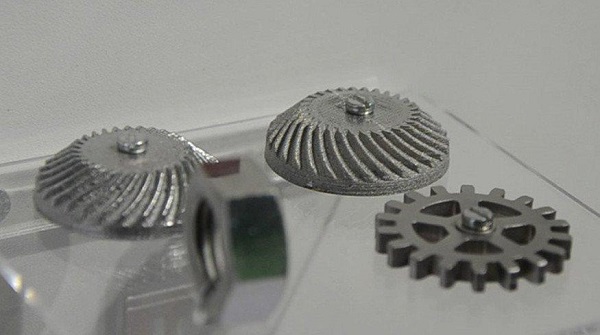
SLS uses a laser to fuse powder particles. For jewelry, nylon SLS patterns can serve as sacrificial models in casting. Metal SLS (also called SLM) can print directly in gold, silver, or platinum.
Key fact: Direct metal 3D printing can produce parts with 99.9% density, comparable to traditional casting. However, the equipment cost remains high, often exceeding $100,000 for industrial systems.
Material Jetting
This technology prints wax directly, similar to an inkjet printer. It produces high-quality wax patterns with a smooth surface. The wax behaves exactly like traditional carving wax during burnout.
What Materials Are Used in 3D Printed Jewelry?
Choosing the right material affects quality, cost, and workflow.
Wax-Based Materials
Wax is the traditional choice for lost-wax casting. 3D-printable waxes melt cleanly and leave minimal ash. They are ideal for fine jewelry with intricate details.
Advantages:
- Low ash content (below 0.01%)
- Smooth surface finish
- Compatible with standard casting equipment
Castable Resins
These are photopolymer resins designed to burn out cleanly. They offer higher detail than wax and are compatible with SLA and DLP printers.
Key data: High-quality castable resins can achieve 0.1 mm feature resolution. Some brands report burnout residues as low as 0.02%, ensuring clean castings without defects.
Metal Powders
Direct metal printing uses powders like gold, silver, platinum, and titanium alloys. This method skips the casting step entirely. The printed metal piece is ready for finishing.
Cost comparison:
| Material Type | Material Cost (per kg) | Post-Processing Required |
|---|---|---|
| Castable Resin | $80–$150 | Washing + curing |
| Wax | $100–$200 | Minimal |
| Gold Powder | $50,000+ | None (metal printed) |
How Accurate Is 3D Printed Jewelry?
Accuracy is critical in jewelry. A fraction of a millimeter can affect how a gemstone fits or how a ring feels on a finger.
Typical Accuracy Ranges
| Technology | Layer Thickness | Dimensional Accuracy |
|---|---|---|
| SLA | 25–100 microns | ±0.1 mm |
| DLP | 25–100 microns | ±0.1–0.2 mm |
| Material Jetting | 16–30 microns | ±0.05–0.1 mm |
| Metal SLS | 20–50 microns | ±0.1–0.2 mm |
Factors That Affect Accuracy
Printer Calibration – Even a small misalignment can distort a round ring into an oval. Regular calibration is essential.
Model Design – Thin walls or overhangs may warp slightly. Good design practices, like adding supports, help maintain shape.
Material Shrinkage – Some resins shrink slightly during curing. High-quality castable resins have shrinkage rates below 1%.
Real-world example: A client wanted a custom signet ring with a family crest. The crest had lines as thin as 0.2 mm. Using a well-calibrated SLA printer, the resin pattern matched the digital model within ±0.08 mm. The final cast ring preserved every line perfectly.
How Does Cost Compare Between Methods?
Cost is often the deciding factor for jewelers.
Cost Breakdown for a Single Complex Ring
| Cost Factor | Traditional Hand-Carved Wax | 3D Printed Resin Pattern |
|---|---|---|
| Design Time | 4–8 hours | 1–2 hours (CAD) |
| Pattern Cost | $100–$300 (labor) | $5–$15 (material) |
| Casting | $50–$100 | $50–$100 |
| Finishing | $50–$150 | $50–$150 |
| Total | $200–$550 | $105–$265 |
For one-of-a-kind pieces, 3D printing reduces labor significantly. For mass production, traditional methods still win. A single rubber mold for a simple wedding band can produce hundreds of wax copies quickly, lowering per-unit cost.
When Does 3D Printing Make Sense?
- Custom designs – Each piece is unique.
- Complex geometry – Impossible to carve by hand.
- Short runs – 1 to 50 pieces.
- Rapid prototyping – Test designs before committing to molds.
Yigu Technology’s View
As a custom manufacturer of non-standard plastic and metal products, we see 3D printing as a complement, not a replacement. Traditional casting remains strong for high-volume, simple designs. But for personalized jewelry, intricate details, and fast turnaround, 3D printing is unmatched.
Case Study: A Wedding Band Collection
A jewelry brand approached us to produce a limited collection of wedding bands. Each band featured a unique, wave-like texture that varied from ring to ring. Traditional wax carving would have required dozens of hours per ring.
We used SLA printing to produce 30 unique resin patterns in two days. Each pattern was cast in 14k gold. The client received finished rings within two weeks. The total cost was 40% lower than hand-carving would have been.
Case Study: Rapid Prototyping for a Major Retailer
A retailer wanted to test five new pendant designs before committing to production molds. We printed castable resin models for each design. The client reviewed the physical samples, requested two revisions, and approved the final designs. The entire prototyping phase took 10 days instead of the usual six weeks.
Can 3D Printing Fully Replace Traditional Casting?
The short answer is no, not completely. Here is why.
Strengths of Traditional Methods
- Cost efficiency – Molds can be reused hundreds of times.
- Speed at scale – Once a mold is made, producing 100 copies is faster than printing 100 patterns.
- Skill availability – Many workshops already have experienced casters and finishers.
Strengths of 3D Printing
- Design freedom – Create shapes that are impossible to carve or mold.
- No minimum order – One piece is as cost-effective as ten.
- Digital workflow – Easy to share, revise, and archive designs.
The Likely Future
Most experts predict a hybrid model. Jewelers will use 3D printing for design, prototyping, and low-volume custom work. They will rely on traditional casting for high-volume production. Both methods will coexist, each serving different needs.
Conclusion
3D printing is transforming jewelry casting, but it is not an outright replacement. It offers unmatched detail, design freedom, and speed for custom and complex pieces. Traditional casting remains the most cost-effective choice for large production runs.
For jewelers and designers, the smart approach is to combine both. Use 3D printing to create patterns and prototypes. Use traditional casting for scaling up. This hybrid workflow gives you the best of both worlds: creativity and efficiency.
FAQ
What are the best 3D printing materials for jewelry casting?
Castable resins are the most popular choice for SLA and DLP printers. They offer high detail and clean burnout. Wax-based materials work well for material jetting printers and behave like traditional carving wax. Metal powders are used for direct printing in gold, silver, and platinum, but require expensive industrial equipment.
How accurate is 3D printed jewelry?
SLA and DLP printers typically achieve ±0.1 mm accuracy on small jewelry pieces. High-end material jetting systems can reach ±0.05 mm. Accuracy depends on printer calibration, material choice, and design complexity.
Can 3D printing replace traditional jewelry casting methods completely?
No. Traditional casting remains more cost-effective for high-volume production of simple designs. 3D printing excels at custom, complex, and low-volume work. The two methods work best together, not as competitors.
How long does it take to print a jewelry pattern?
A single ring pattern typically prints in 1 to 4 hours, depending on size and layer thickness. Post-processing adds another 30 to 60 minutes for washing and curing.
Contact Yigu Technology for Custom Manufacturing
Need high-quality jewelry patterns or custom metal parts? Yigu Technology offers professional 3D printing and casting services. We handle complex designs, small batches, and rapid prototyping with precision and care.
Contact us today to discuss your project. Let our team help you bring your jewelry designs to life—faster and with more detail than traditional methods alone.