Introduction
You need parts that withstand intense heat, corrosive chemicals, or constant abrasion. Traditional manufacturing limits your design options, so you turn to 3D printing alumina ceramics. But results often disappoint—cracks appear during firing, porosity ruins chemical resistance, or shrinkage makes parts unusable.
Alumina (aluminum oxide or Al₂O₃) is a high-performance technical ceramic with exceptional hardness and heat tolerance. However, 3D printing it successfully requires understanding its unique behavior from digital model to final sintered part. This guide walks you through material properties, printing processes, and real applications, helping you avoid common pitfalls and create dense, reliable ceramic components.
What Makes Alumina Ceramics So Strong?
Alumina earns its reputation through three core material properties that set it apart from metals and plastics.
Hardness That Resists Wear
Alumina ranks 9 on the Mohs hardness scale—diamond is the only natural material harder. This translates to exceptional abrasion resistance in real-world use. A pump seal made from alumina outlasts stainless steel versions by 5 to 10 times in gritty slurry applications.
The mechanical strength impresses too. Sintered alumina delivers flexural strength of 300-400 MPa, with high-purity grades (99.9%) reaching 400-500 MPa. For context, that's stronger than many steels by weight. However, alumina remains brittle—it won't bend under load but can crack from sudden impacts. Design must account for this by avoiding sharp corners and sudden thickness changes.
Heat and Chemical Resistance That Never Quits
Pure alumina withstands continuous temperatures up to 1600°C without melting or deforming. This makes it irreplaceable for furnace components, rocket nozzles, and heat shields where metals would soften or oxidize.
Its chemical inertness proves equally valuable. Alumina resists attack from most acids, alkalis, and organic solvents—even at elevated temperatures. In chemical processing plants, alumina valve components last 10-20 times longer than metal ones when handling corrosive fluids.
The material's low thermal expansion (7-8 ppm/°C) minimizes stress during temperature cycling. Parts won't crack when moving from room temperature to 1000°C and back, critical for applications like heat exchangers or kiln furniture.
Density and Structure Matter Most
Fully dense alumina reaches 3.9-4.0 g/cm³ with porosity below 1%. Every percentage point of porosity above 5% weakens the material significantly and creates pathways for chemical attack.
Grain structure affects performance too. Fine grains (1-3 μm) improve toughness and wear resistance, while larger grains enhance high-temperature performance. Control during sintering determines which structure you get.
Electrical insulation completes the property set—alumina blocks high voltages even at elevated temperatures, making it ideal for spark plug insulators and power electronics substrates.
| Property | Typical Value | Benefit |
|---|---|---|
| Hardness | Mohs 9 | Abrasion resistance |
| Flexural Strength | 300-500 MPa | Structural integrity |
| Max Use Temperature | 1600°C | Heat resistance |
| Thermal Expansion | 7-8 ppm/°C | Thermal shock resistance |
| Density | 3.9-4.0 g/cm³ | Full densification |
How Does 3D Printing Alumina Actually Work?
The process combines additive manufacturing with traditional ceramic firing—a multi-step journey requiring precision at every stage.
Which Printing Method Should You Choose?
Binder Jetting spreads thin layers of alumina powder, then a print head deposits liquid binder to bond particles where solid material should form. This method suits larger parts and offers fast print speeds (10-50 mm/s). The unsintered "green" part has reasonable strength for handling but remains fragile. Binder Jetting works well for industrial components where absolute surface finish matters less than geometric complexity.
Stereolithography (SLA) and Digital Light Processing (DLP) mix fine alumina powder with photosensitive resin. A UV laser or projector cures the resin layer by layer, trapping ceramic particles in the desired shape. These methods deliver exceptional detail with layer thickness as fine as 25-50 μm. Surface finish after sintering reaches Ra 1-5 μm—smooth enough for many applications without polishing. SLA/DLP excels for small, intricate parts like dental crowns or microreactor components.
Material Jetting deposits ceramic ink through print heads, building parts drop by drop. It offers excellent material control but slower build speeds, typically used for research or very fine features.
Why Is Firing the Make-or-Break Step?
The green body contains only 50-60% ceramic by volume—the rest is binder or resin that must be removed. Debinding happens first at 400-600°C, burning off organic materials slowly enough to avoid bubbles or cracks. Ramp rates of 50°C/hour or slower prevent trapped gases from damaging the part.
Sintering follows at 1500-1600°C. Alumina particles fuse together, driven by surface energy, eliminating pores and shrinking the part by 15-20% linearly (40-50% by volume). This shrinkage must be compensated during design—slicing software scales the digital model up so final dimensions match requirements.
Hot Isostatic Pressing (HIP) can boost density further. Applying high pressure at elevated temperature closes remaining micropores, pushing density above 99.9% and improving mechanical properties.
What Parameters Demand Close Attention?
For Binder Jetting, binder saturation critically affects green strength. Too little binder produces fragile parts that crumble during handling. Too much causes binder migration, warping fine features, and leaves excess residue that complicates debinding.
SLA/DLP requires precise resin viscosity and UV exposure control. Over-curing traps uncured resin inside, causing bloating during debinding. Under-curing leaves weak layers that delaminate.
During sintering, cooling rate determines residual stress. Fast cooling (200°C/hour or more) creates temperature gradients that crack parts—especially high-purity alumina. Slow cooling at 50-100°C/hour allows stresses to relax, producing crack-free components.
Where Do 3D Printed Alumina Parts Excel?
Alumina's unique properties make it irreplaceable in specific applications across multiple industries.
Industrial and Chemical Processing
Pump seals and bearing surfaces benefit from alumina's hardness. In abrasive environments—mineral slurries, sand-laden water, or ceramic powder handling—alumina components outlast tungsten carbide by significant margins.
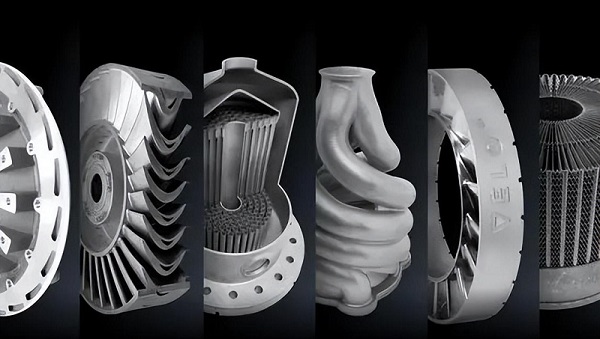
Chemical reaction vessels and valve seats exploit chemical inertness. Hydrofluoric acid, molten salts, and aggressive organic solvents leave alumina untouched. 3D printing enables internal channels that optimize flow patterns—impossible to machine conventionally.
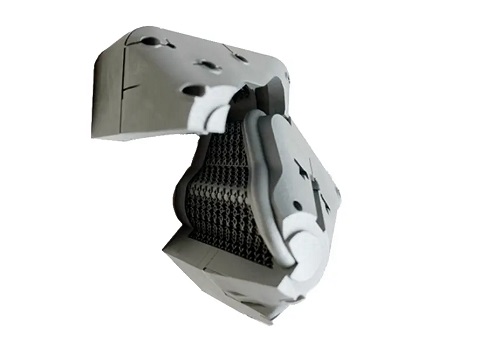
Heat exchangers gain from alumina's thermal stability. Printed designs incorporate lattice structures that maximize surface area while maintaining strength, improving heat transfer efficiency in corrosive environments.
Aerospace and Automotive
Furnace liners and rocket nozzle throats operate at temperatures where metals fail. Alumina maintains strength to 1600°C, allowing reusable components in extreme thermal environments.
Spark plug insulators remain standard alumina applications. 3D printing allows novel geometries that improve dielectric strength or integrate mounting features.
Exhaust gas sensors use alumina for its combination of thermal shock resistance and electrical insulation. Printed sensors achieve faster response through thinner walls and optimized electrode placement.
Medical and Electronics
Dental restorations—crowns, bridges, and implant abutments—leverage alumina's natural tooth-like color and wear resistance. 3D printing produces precise fits with minimal material waste compared to milling from blocks.
Orthopedic implants use alumina for joint replacements and bone screws. Its biocompatibility and corrosion resistance in bodily fluids eliminate concerns about metal ion release. Porous surface structures, printed directly, encourage bone ingrowth for better fixation.
Electronic substrates and insulators handle high voltages in power systems. 3D printing creates custom shapes that fit tightly into compact assemblies, improving thermal management.
| Industry | Application | Key Benefit |
|---|---|---|
| Chemical | Valve seats | Acid resistance |
| Aerospace | Rocket nozzles | 1600°C tolerance |
| Medical | Dental crowns | Biocompatibility |
| Electronics | Substrates | Electrical insulation |
| Industrial | Pump seals | Abrasion resistance |
What Performance Benefits Justify Switching to 3D Printed Alumina?
Heat and Corrosion Resistance Beat Metals
Stainless steel loses strength above 800°C and oxidizes rapidly. Alumina operates at twice that temperature without degradation. In chemical service, Hastelloy and other superalloys eventually succumb to pitting and stress corrosion cracking—alumina remains inert indefinitely.
This durability translates directly to lower maintenance costs. A chemical plant replacing metal valves annually with alumina versions rated for 10+ years saves labor, downtime, and replacement part expenses.
Design Freedom Unlocks New Possibilities
Traditional ceramic forming limits you to simple shapes—plates, tubes, or blocks. 3D printing removes those constraints. Internal cooling channels, lattice structures for weight reduction, and organic shapes that optimize flow become practical.
Dimensional accuracy after sintering reaches ±0.5% for SLA/DLP parts, suitable for most assemblies without post-machining. Surface finish in the 1-5 μm Ra range works for sealing applications and fluid contact.
Strength-to-Weight Ratio Saves Mass
Alumina's density (3.9 g/cm³) sits between aluminum (2.7) and steel (7.8). But its strength approaches steel's, giving a strength-to-weight ratio exceeding many metals. In aerospace, replacing steel heat shields with alumina cuts mass while maintaining performance.
For small production runs, 3D printing eliminates tooling costs. A custom part that would require a $10,000 mold becomes feasible at $500-1000 through additive methods—transformative for prototyping and low-volume manufacturing.
How Does Yigu Technology Master Alumina 3D Printing?
We combine deep material science with practical manufacturing experience. For high-precision needs, we use SLA/DLP with custom-formulated alumina resins that achieve 99% density after sintering. Our parameter sets optimize UV exposure and layer adhesion, minimizing defects.
For larger components, Binder Jetting allows economical production with geometric complexity. We've printed pump housings, heat exchanger cores, and chemical reactor components up to 300 mm in size.
Our firing process follows strict protocols. Slow debinding at controlled rates prevents blistering. Sintering at 1550°C with holds for full densification produces consistent results. Every part undergoes density verification, hardness testing, and application-specific validation—corrosion trials for chemical parts, thermal cycling for aerospace components.
We've helped clients across industries move from failed prototypes to production-ready parts. A chemical processor needed valve components resisting 98% sulfuric acid at 200°C—our printed alumina parts passed 6-month immersion tests after their previous supplier's parts failed in weeks. An aerospace client required complex heat shield geometry with zero porosity—our HIP-treated parts achieved 99.98% density.
Conclusion
3D printing alumina ceramics delivers components that survive where metals and plastics fail—provided you control the entire process chain. Material properties determine what's possible: extreme hardness, heat resistance to 1600°C, and chemical inertness that outlasts stainless steel 10x. Printing methods each suit different needs—SLA/DLP for precision, Binder Jetting for larger parts. Firing transforms fragile green bodies into dense ceramics, but shrinkage and thermal stress demand careful compensation.
Success means mastering these variables. When you do, the payoff includes design freedom impossible with traditional methods, weight savings through optimized geometry, and reliability in the harshest environments. Whether for chemical processing, aerospace, medical, or industrial applications, 3D printed alumina turns challenging requirements into working solutions.
Frequently Asked Questions (FAQ)
Why does my 3D printed alumina part crack after sintering?
Cracking usually results from uneven density in the green body or too-rapid temperature changes. Ensure your design avoids thick sections next to thin ones—they shrink differently. During sintering, limit heating and cooling rates to 100°C/hour maximum. Add fillets to internal corners to reduce stress concentration. For high-purity alumina, consider a hold at 1200°C during cooling to relieve thermal stresses.
Can 3D printed alumina achieve the same density as pressed ceramics?
Yes, with proper processing. Standard sintering reaches 97-99% density versus 99%+ for pressed parts. Hot Isostatic Pressing (HIP) after sintering closes remaining pores, achieving 99.9%+ density—equivalent to traditional methods. The trade-off is additional cost, justified when absolute density matters for corrosion resistance or mechanical properties.
Is 3D printed alumina safe for food contact?
Yes, when processed correctly. Use high-purity alumina (99.5% minimum) to avoid contaminants. Sinter to full density (below 1% porosity) so bacteria can't hide in surface pores. Surface finish matters too—polish to Ra <1 μm for easy cleaning. Test for leachables if the application involves acidic foods or prolonged contact. Many commercial food processing components already use 3D printed alumina successfully.
How much shrinkage should I expect when 3D printing alumina?
Linear shrinkage ranges from 15-25%, depending on your printing method and material formulation. SLA/DLP parts typically shrink 18-22% linearly. Binder Jetting parts shrink 15-20%. Your slicing software must scale the model up by the reciprocal—for 20% shrinkage, multiply dimensions by 1.25. Calibration prints with your specific material and process confirm exact values.
What's the minimum wall thickness possible in 3D printed alumina?
For SLA/DLP, walls down to 0.2-0.3 mm are achievable after sintering, though handling becomes tricky. Binder Jetting requires slightly thicker walls—0.5-0.8 mm minimum—because powder removal from narrow channels limits resolution. Features below these sizes risk breaking during debinding or sintering. Design supports for thin walls and remove them after sintering for best results.
Contact Yigu Technology for Custom Manufacturing
Need alumina ceramic parts that survive extreme heat, corrosive chemicals, or constant abrasion? Yigu Technology delivers precision 3D printed components tailored to your exact specifications. Our engineers guide you from material selection through design optimization to final validation.
We handle both prototyping and production runs, with SLA/DLP for fine detail and Binder Jetting for larger components. Every part undergoes rigorous quality checks—density verification, mechanical testing, and application-specific validation.
Ready to discuss your project? Contact our team at [email/phone] or visit [website] to share your requirements. Let's create ceramic solutions that outperform metals and plastics in your toughest applications.