Introduction
You've probably heard the hype: 3D printing will change everything. But is it truly the manufacturing revolution it's cracked up to be? As a product engineer at Yigu technology, I've spent years helping clients figure out exactly where additive manufacturing fits into their production strategy. The truth is, 3D printing offers incredible opportunities—but it's not a magic bullet for every situation. In this guide, we'll walk through the real-world advantages and disadvantages of 3D printing, backed by concrete examples and data. Whether you're a hobbyist, a startup founder, or an industry veteran, you'll leave with a clear understanding of when this technology makes sense—and when it doesn't.
What Makes 3D Printing So Powerful?
Can You Really Create Any Shape You Want?
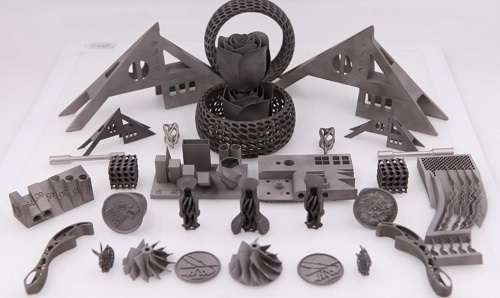
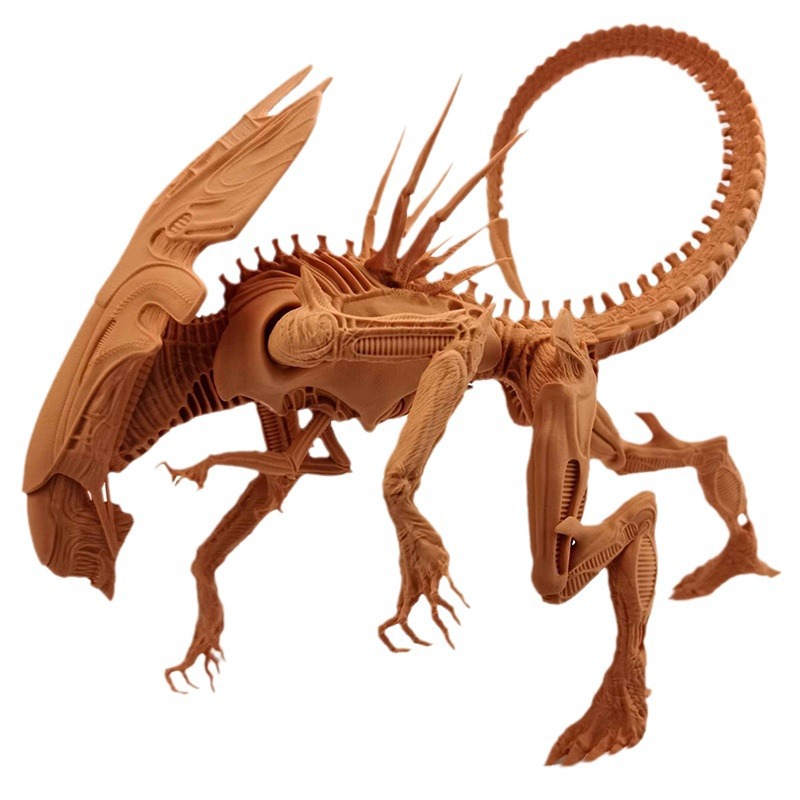
Design freedom is where 3D printing truly shines. Unlike traditional methods that force you to work within the limits of molds, cutters, or tooling, additive manufacturing builds objects layer by layer from a digital model. This means you're not constrained by whether a tool can reach inside a cavity or whether a mold can be opened.
Here's what this looks like in practice:
- Internal lattice structures: In aerospace, companies like GE Aviation now print fuel nozzles with complex internal cooling channels. These geometries were literally impossible to machine just a decade ago.
- Organic shapes: Medical implants can now match a patient's exact bone structure, promoting better healing.
- Consolidated assemblies: Instead of welding together 20 separate parts, you can print one integrated component that's stronger and lighter.
The bottom line? If you can dream it in CAD, you can probably print it—no tooling limitations, no geometric compromises.
Is 3D Printing Cheaper for Small Batches?
This is a question I get almost daily. The short answer: it depends on volume. Let's break down the numbers because they tell a compelling story.
| Production Method | Tooling Cost | Per-Part Cost | Total Cost for 100 Units | Total Cost for 10,000 Units |
|---|---|---|---|---|
| Injection Molding | $10,000 | $2.00 | $10,200 | $30,000 |
| 3D Printing | $0 | $10.00 | $1,000 | $100,000 |
Key insight: For runs under 1,000 pieces, 3D printing often wins on cost. Above that threshold, traditional methods become more economical. But cost isn't everything—speed to market and design flexibility matter too.
I worked with a medical device startup last year. They needed 50 custom surgical guides for a clinical trial. Traditional machining would have taken six weeks and cost $15,000. We printed them in three days for $2,800. That's the sweet spot for additive manufacturing.
How Fast Can You Go from Idea to Prototype?
Rapid prototyping isn't just a buzzword—it's a fundamental shift in how products get developed. Here's the old way versus the new way:
Traditional prototyping timeline:
- Design (1-2 weeks)
- Tooling fabrication (4-6 weeks)
- First samples (1 week)
- Design revisions (repeat the cycle)
With 3D printing:
- Design (1-2 days)
- Print overnight (12-24 hours)
- Test and iterate immediately
A consumer electronics client recently cut their product development cycle from 14 months to 7 months by printing prototypes in-house. They went through 22 design iterations in the time it would have taken to get their first mold made. That's not just faster—it's a competitive advantage that lets you respond to market feedback in real time.
What About Customization? Can One Size Fit One Person?
This is where 3D printing becomes genuinely magical. Mass customization—producing unique items at near-mass-production costs—is finally practical.
Real-world examples:
- Hearing aids: Today, virtually all hearing aids are 3D printed. Each device is custom-fitted to the user's ear canal, improving comfort and sound quality.
- Dental aligners: Companies like Invisalign print millions of unique aligners yearly, each tailored to a specific patient's treatment plan.
- Athletic footwear: Major brands now offer midsoles printed to match your foot shape and running style.
For one project, we helped a prosthetics clinic implement 3D scanning and printing. Previously, a single prosthetic socket took weeks to fabricate. Now, patients walk out the same day with a comfortable, personalized fit. The human impact here is impossible to overstate.
Where Does 3D Printing Fall Short?
Why Is the Equipment So Expensive?
Let's address the elephant in the room: 3D printer costs vary wildly, but quality equipment requires serious investment.
| Printer Type | Price Range | Typical Applications |
|---|---|---|
| Hobbyist FDM | $200 - $2,000 | Prototypes, hobby projects |
| Professional Desktop | $3,000 - $15,000 | Functional prototypes, small production |
| Industrial Polymer | $50,000 - $250,000 | End-use parts, production tooling |
| Metal Systems | $250,000 - $1,500,000 | Aerospace, medical implants |
Beyond the printer itself, you'll need:
- Design software (CAD licenses: $1,000 - $10,000/year)
- Slicing software (often included, but advanced versions cost extra)
- Post-processing equipment (cleaning stations, curing ovens, heat treatment)
For a small business, this initial investment can be daunting. I always advise clients to start with a service bureau before buying their own machines. Print your first 100 parts externally, learn what you actually need, then invest.
Can You Print with Any Material?
Not quite. While the material palette has expanded dramatically, you're still working with a subset of what's available in traditional manufacturing.
Common 3D printing materials:
- PLA: Great for beginners, biodegradable, but low heat resistance
- ABS: Stronger, heat-resistant, but requires ventilation and a heated bed
- PETG: Food-safe, durable, good chemical resistance
- Nylon: Tough, flexible, excellent for functional parts
- Resins: High detail, brittle, used for jewelry and dental models
- Metal powders: Titanium, stainless steel, aluminum—but expensive and complex
The catch: Material properties often differ from traditionally processed versions. A 3D-printed metal part, for instance, may have different fatigue resistance than a forged equivalent. In critical applications—like automotive suspension components—you need rigorous testing before trusting printed parts.
Why Does Printing Take So Long?
Print speed remains a fundamental limitation. Because objects are built layer by layer, complex parts can take days.
Consider a typical automotive dashboard component:
- Injection molding: 60 seconds per part
- 3D printing: 12 hours per part
For high-volume production, this gap is insurmountable. Even with newer technologies like Continuous Liquid Interface Production (CLIP) or multi-jet fusion, speeds haven't reached parity with traditional methods.
However, there's a nuance: while per-part time is slower, total project time can be faster for small batches because you skip tooling fabrication. It's about matching the process to the need.
Is Quality Consistent Enough for Production?
Quality control in 3D printing requires vigilance. Unlike machining, where you start with solid material and remove what you don't need, printing builds from nothing—and many things can go wrong.
Common quality challenges:
- Warping: Temperature changes during printing can cause corners to lift
- Layer adhesion: Weak bonds between layers create failure points
- Dimensional accuracy: Shrinkage and cooling effects alter final measurements
- Surface finish: Layer lines require post-processing for smooth surfaces
In aerospace, where tight tolerances are mandatory, printed parts often undergo:
- CT scanning to verify internal geometry
- Heat treatment to relieve stresses
- CNC machining for critical surfaces
The takeaway: 3D printing can produce consistent, high-quality parts—but it requires process control, calibration, and often post-processing that add time and cost.
So, What's the Verdict? Is 3D Printing the Future?
After walking through the evidence, here's my perspective: 3D printing isn't replacing traditional manufacturing—it's complementing it. The future isn't all additive or all subtractive; it's hybrid manufacturing that uses each method where it excels.
Use 3D printing when you need:
- Complex geometries impossible to machine
- Customization for individual users
- Rapid iteration during development
- Small batches without tooling investment
Stick with traditional methods for:
- High-volume production runs
- Materials requiring specific processing (like high-temperature alloys)
- Parts needing mirror finishes or ultra-tight tolerances
- Cost-sensitive commodity items
At Yigu technology, we've helped hundreds of clients navigate these trade-offs. The smartest approach? Let the application drive the technology choice, not the other way around.
Frequently Asked Questions
What's the difference between 3D printing and additive manufacturing?
They're essentially the same thing. Additive manufacturing is the industry-standard term for industrial applications, while 3D printing started as the consumer/hobbyist term. Today, they're used interchangeably.
How strong are 3D printed parts compared to machined parts?
It depends on the material and print orientation. Well-printed parts can achieve 80-90% of the strength of machined equivalents, but they're often anisotropic—weaker in the Z-axis (between layers). Metal printed parts can match or exceed cast properties but may need heat treatment.
Can I 3D print with multiple materials at once?
Yes, many professional printers now support multi-material printing. You can combine rigid and flexible materials, print dissolvable supports, or create gradient properties within a single part.
What industries benefit most from 3D printing today?
Aerospace (lightweight brackets, fuel nozzles), medical (implants, surgical guides), automotive (prototypes, custom tools), and consumer goods (eyewear, footwear) see the most adoption. Each uses the technology's strengths differently.
How do I choose the right 3D printing technology?
Start with your application requirements: part size, material needed, accuracy, surface finish, and volume. Then match to technologies—FDM for large, low-cost parts; SLA for high detail; SLS for functional nylon; DMLS for metal. Better yet, talk to an expert.
Contact Yigu Technology for Custom Manufacturing
Still unsure whether 3D printing fits your project? At Yigu technology, we specialize in helping companies find the right path—whether that's additive, traditional, or a hybrid approach. As experienced product engineers, we've guided everything from one-off prototypes to full production runs across industries.
Let's solve your manufacturing challenge together. [Contact us today] for a consultation, and we'll help you navigate the options with clear, honest advice tailored to your specific needs.