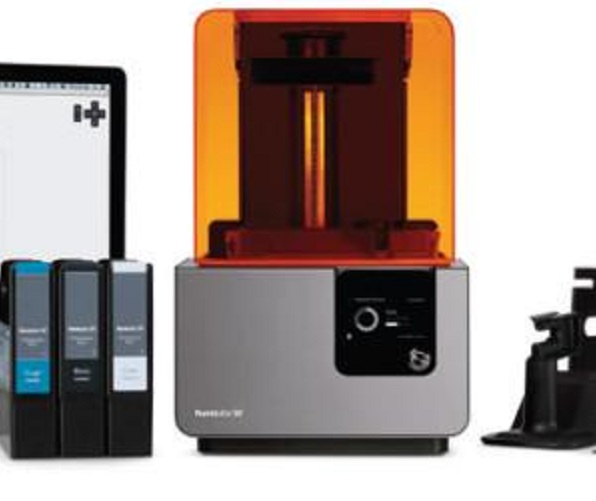
If you have seen a 3D printed miniature, a detailed dental model, or a piece of jewelry with intricate patterns, you have likely seen MSLA printing at work. MSLA stands for Mask Stereolithography Apparatus. It is a resin-based 3D printing technology known for producing highly detailed, smooth-surfaced parts. Unlike traditional filament printers, MSLA uses light to cure liquid resin into solid objects. This guide explains how it works, what makes it different, and where it delivers the most value—so you can decide if it fits your next project.
How Does MSLA Printing Actually Work?
The core principle behind MSLA is photopolymerization. Photosensitive resin starts as a liquid. When exposed to ultraviolet (UV) light of a specific wavelength, it hardens into solid plastic.
The Layer-by-Layer Process
- A 3D model is sliced into thin 2D layers by software.
- An LCD screen acts as a mask, displaying the shape of one layer.
- A UV light source shines through the LCD, curing the resin in that pattern.
- The build platform lifts, and a new layer of resin flows beneath.
- The process repeats until the object is complete.
Each layer measures between 0.01 mm and 0.1 mm thick. This thin layer height allows for exceptional detail.
What Are the Key Components?
Every MSLA printer relies on four main parts. Understanding them helps you evaluate printer quality.
| Component | Function | Why It Matters |
|---|---|---|
| UV Light Source | Emits UV light to cure resin | Intensity and stability affect print speed and consistency |
| LCD Screen | Acts as a mask to shape each layer | Resolution determines detail level; screens wear over time |
| Resin Tank | Holds liquid resin during printing | Must be UV-transparent; easy replacement matters for workflow |
| Build Platform | Supports the object as it prints | Surface adhesion affects first-layer success |
Data point: A typical MSLA printer uses a monochrome LCD screen with a lifespan of 1,500–2,000 printing hours, compared to older color screens that lasted only 400–500 hours.
What Makes MSLA Different from Other 3D Printers?
MSLA is often compared to FDM (filament printers) and SLA (laser-based resin printers) . Each has strengths.
| Feature | MSLA | FDM | SLA |
|---|---|---|---|
| Detail Level | Very high (0.01–0.05 mm layers) | Moderate (0.1–0.3 mm layers) | Very high (0.025–0.05 mm layers) |
| Surface Finish | Smooth, minimal layer lines | Visible layer lines | Very smooth |
| Print Speed | Fast for small parts (layers cure simultaneously) | Slower for complex parts | Moderate (laser traces each layer) |
| Material Cost | Moderate ($30–$150 per liter) | Low ($20–$50 per kg) | Moderate to high |
| Part Strength | Good for detail, can be brittle | Varies by filament, often durable | Good detail, can be brittle |
When to Choose MSLA
MSLA excels when you need fine detail, smooth surfaces, and small to medium-sized parts. Common applications include:
- Miniatures and figurines
- Dental models and aligners
- Jewelry patterns and prototypes
- Functional prototypes with tight tolerances
When FDM Makes Sense
FDM works better for larger parts, structural prototypes, and parts requiring specific mechanical properties like flexibility or heat resistance.
What Materials Work with MSLA Printing?
The resin you choose directly affects the final part's properties. MSLA resins come in several formulations.
Standard Resins
General-purpose resins balance detail, strength, and cost. They work for most visual prototypes and display pieces. However, they can be brittle under impact.
Engineering Resins
These are formulated for specific properties.
| Resin Type | Key Property | Typical Use |
|---|---|---|
| Tough Resin | Impact resistance | Snap-fits, functional prototypes |
| High-Temp Resin | Heat deflection up to 200–300°C | Molds, heat-exposed parts |
| Flexible/Elastic Resin | Bending without breaking | Grips, seals, wearables |
| Water-Washable Resin | Cleans with water, no alcohol needed | Beginner-friendly, indoor use |
Castable Resins
These burn out cleanly with no ash residue. Jewelers use them to create patterns for lost-wax casting. The printed resin pattern gets invested, burned out, and replaced with molten metal.
Real example: A dental lab switched from outsourcing wax patterns to printing castable crowns in-house. Lead time dropped from 10 days to 2 days. Cost per crown fell by 60%.
What Are the Real-World Applications?
MSLA printing serves industries where detail and precision matter more than part size.
Medical and Dental
Dentists use MSLA to print surgical guides, aligners, and crowns. Hospitals use it for anatomical models that help surgeons plan complex procedures. A 2022 study found that in over 30% of complex surgical cases, 3D printed anatomical models led to more successful outcomes.
Jewelry
Designers print master patterns for rings, pendants, and earrings. The detail captures textures and fine engravings that traditional carving cannot match. High-end brands now use MSLA-printed patterns for limited collections.
Product Design and Prototyping
Industrial designers use MSLA to produce high-fidelity prototypes that look and feel like final products. These prototypes help secure stakeholder approval before investing in production tooling.
Miniatures and Hobby
Tabletop gaming and model-making communities rely on MSLA for detailed figures, terrain pieces, and custom parts. The low cost per part and high detail make it the preferred choice for hobbyists.
What Are the Limitations?
MSLA is powerful, but it has constraints. Knowing them prevents frustration.
Build Volume
Most desktop MSLA printers have build volumes under 200 x 120 x 200 mm. Larger parts require splitting into sections.
Post-Processing Required
Printed parts need cleaning and curing.
- Washing removes uncured resin (using isopropyl alcohol or water).
- Curing under UV light finalizes material properties.
Skipping these steps leaves parts sticky and weak.
Material Handling
Liquid resin requires care. It can irritate skin and needs proper ventilation during use. Gloves and a well-ventilated workspace are essential.
Part Durability
Standard resins can be brittle. If your part needs impact resistance or flexibility, select an engineering resin designed for that property.
How Do You Get Quality Results?
Good results come from preparation, not just machine settings.
Calibrate Exposure Time
Each resin and printer combination needs correct exposure time. Too little: layers separate. Too much: details blur. Most printers offer test prints to dial in settings.
Control Environment
Resin performs best at 20–30°C (68–86°F) . Cold resin flows poorly and may not cure fully. High humidity can affect consistency.
Use Proper Supports
Supports hold overhanging features during printing. Poor support placement leads to warping or failed prints. Slicing software generates them automatically, but manual adjustment often improves results.
Start with Test Prints
Before printing a large part, run a small validation test to confirm settings. This saves resin and time.
Yigu Technology's Perspective
As a custom manufacturer of non-standard plastic and metal products, Yigu Technology uses MSLA printing primarily for detailed prototypes and casting patterns. The technology allows us to deliver high-precision parts to clients who need design verification before moving to production.
In our workflow, MSLA complements traditional manufacturing. We print complex geometries that would be costly to machine. For metal parts, we use MSLA-printed patterns for investment casting. This combination reduces lead times and lowers costs for low-volume, high-detail components.
For clients exploring new products, we recommend MSLA when:
- Parts require fine detail or smooth surfaces
- Quantities are low (1–100 pieces)
- Design iterations are expected
For high-volume production, we transition to traditional processes like injection molding or CNC machining. The goal is always to match the technology to the project requirements.
Conclusion
MSLA printing delivers high detail, smooth surfaces, and fast print speeds for small to medium-sized parts. It works best for applications where precision matters more than part size—jewelry, dental, miniatures, and detailed prototypes. The technology requires post-processing and careful material handling, but the results justify the extra steps.
As resin formulations improve and printers become more affordable, MSLA will continue expanding beyond hobbyist use into industrial production. Whether you are a designer, engineer, or manufacturer, understanding MSLA gives you another tool to turn digital designs into physical reality.
FAQ
What types of resins are best suited for MSLA printing?
Standard resins work for general prototyping. Engineering resins like tough, high-temp, and flexible formulations serve specific mechanical needs. Castable resins are designed for jewelry and dental investment casting. Each resin type has different properties, so match the resin to your application.
How can I ensure the quality of MSLA-printed models?
Calibrate exposure time for each resin. Maintain a stable environment (20–30°C). Use proper supports. Run test prints before large jobs. Post-process correctly—wash thoroughly and cure fully. These steps prevent common failures.
Can MSLA printing be used for large-scale production?
MSLA is best suited for small to medium volumes of high-detail parts. For large-scale production of simple parts, traditional methods like injection molding are faster and more cost-effective. MSLA excels where detail, customization, and low tooling costs matter.
How long do MSLA printer components last?
Monochrome LCD screens typically last 1,500–2,000 printing hours. Resin tanks need replacement when the transparent film wears. UV LED light sources often last thousands of hours. Regular maintenance extends component life.
Is MSLA printing safe for home use?
Yes, with proper precautions. Work in a well-ventilated area. Wear nitrile gloves to avoid skin contact. Keep resin away from children and pets. Cured parts are safe to handle. Many users run MSLA printers in garages or dedicated workshop spaces.
Contact Yigu Technology for Custom Manufacturing
Yigu Technology specializes in non-standard plastic and metal custom manufacturing. We combine MSLA printing, traditional machining, and casting to deliver the right solution for your project. Whether you need detailed prototypes, castable patterns, or low-volume production parts, our engineering team helps you choose the most effective approach. Contact us today to discuss your next manufacturing project.