Introduction
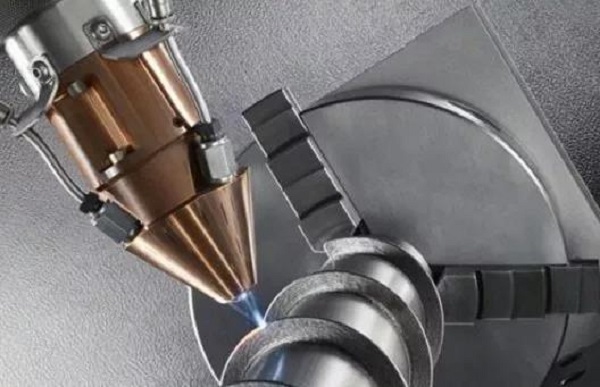
Laser Metal Deposition (LMD) sounds like something from a sci-fi movie. A laser creates a molten pool. Metal powder or wire feeds into it. Layer by layer, a solid part emerges.
But it's real. And it's changing how we make and repair high-value metal components.
Unlike other metal 3D printing methods that work inside powder beds, LMD deposits material exactly where needed. This makes it faster, more flexible, and ideal for large parts, repairs, and hybrid manufacturing.
At Yigu technology, we've watched LMD evolve from research lab curiosity to production-ready tool. This guide explains how it works, why it matters, and where it's making the biggest impact.
What Is Laser Metal Deposition and How Does It Work?
The Basic Idea: Building with Molten Metal
Laser Metal Deposition belongs to the directed energy deposition (DED) family of additive manufacturing. A high-power laser creates a melt pool on a surface. Metal powder or wire feeds into that pool, melting and fusing with the underlying material. The laser moves on, the metal solidifies, and a new layer begins.
Think of it like automated welding, but with precision measured in millimeters instead of guesswork.
The process is surprisingly simple in concept:
- Laser creates molten pool
- Material (powder or wire) feeds into pool
- Pool solidifies as laser moves
- Repeat layer by layer
Key Components
Laser source: Usually fiber laser or disk laser, delivering high energy density. Power ranges from hundreds to thousands of watts, depending on application.
Feeding mechanism: Delivers metal powder or wire into the melt pool. Powder feeding uses inert gas to carry particles. Wire feeding uses mechanical drive systems.
Motion control: CNC-style system moves the laser and nozzle according to CAD models. Five-axis systems enable complex geometries.
Process monitoring: Cameras and sensors watch the melt pool, adjusting parameters in real time for consistent quality.
Step-by-Step Process
- Design: Create 3D model in CAD software
- Program: Generate toolpaths for the deposition head
- Setup: Position substrate and load material
- Deposit: Laser melts pool, material feeds, layer builds
- Inspect: Monitor quality during and after process
- Finish: Machine critical surfaces as needed
How Does LMD Compare to Other Metal AM Processes?
LMD vs. Powder Bed Fusion (SLM/EBM)
| Parameter | LMD | SLM | EBM |
|---|---|---|---|
| Material form | Powder or wire | Powder | Powder |
| Deposition rate | 1-5 kg/h | 0.1-0.5 kg/h | 0.5-2 kg/h |
| Minimum feature size | 0.5 mm | 0.1 mm | 0.2 mm |
| Surface finish (Ra) | 5-15 μm | 1-5 μm | 10-20 μm |
| Build volume | Very large (robot arm) | Limited by powder bed | Limited by powder bed |
| Material efficiency | >90% | Lower (powder unused) | Lower (powder unused) |
| Post-processing | CNC machining often needed | Minimal typically | Heat treatment needed |
When Each Excels
LMD wins for:
- Large parts (meters in size)
- High deposition rates
- Repairing existing components
- Adding features to cast/forged parts
- Graded materials and compositions
SLM/EBM wins for:
- Fine details and small features
- Smooth surfaces
- Complex internal channels
- Batch production of small parts
The choice isn't about which is "better"—it's about matching process to application.
What Are the Technical Advantages of LMD?
High Deposition Rate
LMD deposits material at 1-5 kg per hour—10-50 times faster than typical laser powder bed fusion. For large parts, this matters enormously.
A turbine blade repair that might take 20 hours in SLM? LMD finishes in 2-4 hours.
Material Efficiency Exceeds 90%
Because material feeds only where needed, waste is minimal. Unused powder can be collected and reused. Compare to machining, where 80-90% of material might become chips.
For expensive materials like titanium or Inconel, this efficiency transforms economics.
Large Build Volume
No powder bed limits size. Robot-mounted deposition heads can work on parts meters across. Entire aircraft components, pressure vessels, and structural elements become printable.
Repair Capabilities
This might be LMD's killer application. Worn surfaces get built up with new material. Damaged features get reconstructed. High-value components return to service instead of becoming scrap.
A damaged turbine blade worth $50,000 can be repaired for $5,000. The savings compound quickly.
Graded Materials
Because material feeds during deposition, you can change composition mid-print. A part might transition from tough core to hard surface, or from one alloy to another.
This enables designs impossible with single-material processes.
Mechanical Properties Match Wrought
Studies show LMD-produced Ti-6Al-4V achieves 98% of forged tensile strength. Fatigue life improves 25% through optimized grain structure.
For critical applications, these properties matter. LMD parts perform like traditionally manufactured ones—sometimes better.
Where Is LMD Making the Biggest Impact?
Aerospace: Repair and Production
Aerospace leads LMD adoption for good reason. Parts are expensive. Downtime costs fortunes. Repairs save millions.
GE Aviation uses LMD for turbine blade repair. According to their 2022 Annual Report, this approach saves $1.2 million per engine. Blades that would be scrapped instead return to service with new material deposited exactly where worn.
Brackets with integrated cooling channels print in Ti-6Al-4V. Compared to conventional designs, weight drops 18%. Cooling channels follow ideal paths, improving thermal management.
Rocket engine nozzles benefit from LMD's ability to create complex internal cooling channels. The EU-funded ENLIGHTEN project demonstrates nozzles with fine-scaled channels that prevent melting during launch. Traditional manufacturing would require multiple parts and assembly. LMD does it in one.
Medical: Custom Implants
Medical applications leverage LMD for personalization and performance.
Custom orthopedic implants with porous surfaces promote bone ingrowth. Research shows 40% higher osseointegration rates compared to traditional implants. Bone attaches better to textured surfaces.
Titanium knee replacements printed with LMD achieve 95% patient satisfaction in recent clinical trials. Custom fit means better function, less pain, faster recovery.
Dental implants match patient anatomy exactly. Surgical guides position them precisely. Outcomes improve.
Energy and Power Generation
Turbine components for power plants. Valves and pumps for oil and gas. Pressure vessels for chemical processing.
LMD repairs worn parts and produces new ones with complex internal features. Downtime drops. Efficiency improves.
Tooling and Molds
Conformal cooling channels in injection molds reduce cycle times by 20-40%. LMD deposits tool steel with channels following part contours. Cooling is faster, more uniform, and parts eject with less warping.
Defense and Marine
Large structural components. Repair of damaged equipment. On-site manufacturing capabilities. LMD's portability (robot arms, not fixed chambers) enables field repairs.
What Materials Can LMD Process?
Titanium Alloys
Ti-6Al-4V dominates aerospace and medical applications. Excellent strength-to-weight ratio, corrosion resistance, biocompatibility.
TiAl (titanium aluminide) for high-temperature applications like turbine blades.
Nickel-Based Superalloys
Inconel 718 and 625 handle extreme heat and corrosion. Turbine engines, rocket components, chemical processing.
Stainless Steels
316L for corrosion resistance. 17-4PH for high strength. Tool steels for molds and dies.
Cobalt-Chrome
Wear-resistant, biocompatible. Medical implants, dental frameworks.
Refractory Metals
Tungsten, molybdenum, tantalum for extreme high-temperature applications. LMD's directed energy works where powder bed methods struggle.
Graded Combinations
Transition from one alloy to another within a single part. Stainless steel core to Inconel surface. Tough interior to hard exterior. Designers dream in gradients.
What Are the Limitations and Challenges?
Surface Finish
LMD parts come out rough—Ra 5-15 μm typically. Compare to SLM at 1-5 μm. For many applications, this means post-processing machining is required.
The trade-off: faster deposition, rougher surface. Choose based on needs.
Minimum Feature Size
0.5 mm typical minimum. Smaller features are possible but challenging. For fine details, other methods work better.
Thermal Management
High heat input means thermal distortion risk. Parts must be designed with this in mind. Fixturing and heat management matter.
Process Control
Melt pool dynamics are complex. Consistent quality requires monitoring and control systems. Not a set-and-forget process.
Equipment Cost
Industrial LMD systems run $500,000 to $1.5 million. Robot integration adds complexity. For many, using service bureaus makes more sense than buying.
How Does LMD Enable Hybrid Manufacturing?
The Best of Both Worlds
Hybrid manufacturing combines additive and subtractive in one machine. Start with a forged or cast base. Add features with LMD. Machine critical surfaces to final tolerance.
All in one setup. No moving between machines. No realignment errors.
Advantages
- Start with wrought material where properties matter most
- Add features too complex to machine
- Finish with machining for precision surfaces
- Reduce waste dramatically
- Shorten lead times by eliminating multiple setups
Applications
- Blade repair: Machine damaged area, deposit new material, machine to final shape
- Tooling: Machine base, add conformal cooling channels, machine mating surfaces
- Large components: Cast rough shape, add complex features, finish machine
Yigu Technology's Perspective
At Yigu technology, we see Laser Metal Deposition as a transformative tool—not for everything, but for the right applications, nothing else compares.
Where we use LMD:
- Large aerospace components where build volume exceeds powder bed limits
- High-value repairs saving clients 80% vs. replacement
- Hybrid manufacturing combining forged bases with printed features
- Graded materials impossible to create otherwise
- Rapid prototyping of large metal parts
What we've learned:
Start with the problem, not the technology. LMD excels at specific things. Match it to those.
Design for the process. Orientation, feature sizes, material transitions—all affect success. Early design input prevents later headaches.
Monitor everything. LMD benefits from real-time process control. Cameras, sensors, feedback loops—use them.
Post-processing is part of the process. Most LMD parts need machining. Plan for it from the start.
Custom manufacturing means having the right tool for each job. LMD is one of our most powerful.
Conclusion
Laser Metal Deposition advances additive manufacturing where it matters most—large parts, high-value repairs, and material efficiency.
Key advantages:
- High deposition rate: 1-5 kg/h, 10-50x faster than powder bed
- Material efficiency: >90%, minimal waste
- Large build volume: Meters possible
- Repair capabilities: Save high-value components
- Graded materials: Change composition mid-print
- Mechanical properties: Match wrought material
Applications across aerospace, medical, energy, and defense prove the value. Turbine blade repairs saving millions. Custom implants improving outcomes. Large components printed where powder bed can't reach.
Limitations exist—surface finish, feature size, cost. But for the right applications, LMD isn't just an option. It's the only option.
As technology advances, expect faster deposition, better surface quality, and lower costs. LMD will continue expanding what's possible in metal additive manufacturing.
FAQ
How does LMD compare to traditional welding in terms of repair capabilities?
LMD offers precise control over heat input, minimizing distortion and achieving 30% higher bond strength than traditional welding. It also enables repair of complex geometries impossible with welding—thin walls, fine features, internal structures. Automation ensures consistency that manual welding can't match.
Can LMD be used for rapid prototyping, and what are the lead-time advantages?
Yes. LMD produces functional metal prototypes in hours, with material properties matching final parts. Compared to casting—which requires patterns, molds, and weeks of lead time—LMD reduces development cycles by 70%. Iterate designs overnight instead of waiting months.
Which industries stand to gain the most from LMD technology?
Aerospace, defense, and energy sectors gain significant advantages due to LMD's capability to produce large-scale, high-value components while reducing material costs. Medical benefits from custom implants. Tooling gains from conformal cooling. Any industry with expensive parts, complex geometries, or repair needs should evaluate LMD.
What surface finish can I expect from LMD parts?
Typical surface roughness is Ra 5-15 μm—rougher than SLM (1-5 μm) but smoother than some other DED processes. For most applications, critical surfaces require post-processing machining. Plan for this in your workflow and budget.
How thick can LMD deposits be?
Deposits range from 0.5 mm to tens of millimeters thick. Multiple passes build up features. The process isn't limited to thin walls—you can create substantial structures by depositing layer upon layer.
Is LMD suitable for production or just prototyping?
Both. Production applications include:
- Repair of high-value components (turbine blades, molds)
- Large parts where powder bed can't reach
- Hybrid manufacturing combining cast/forged bases with printed features
- Cladding and coating for wear/corrosion resistance
- Low-volume production of complex components
For high-volume simple parts, traditional methods remain more economical. For complex, valuable, or customized components, LMD production makes sense.
Contact Yigu Technology for Custom Manufacturing
Ready to explore Laser Metal Deposition for your projects? Yigu technology specializes in advanced metal manufacturing. We help clients navigate the options and deliver parts that perform.
We can help with:
- Design for LMD—optimizing geometry for the process
- Material selection—matching alloys to requirements
- Printing—on industrial equipment with proven parameters
- Hybrid manufacturing—combining additive and subtractive
- Post-processing—heat treatment, machining, finishing
Contact us to discuss your project. Tell us what you're making and what it needs to do. We'll recommend the best approach—whether LMD or another method—and deliver quality results.