Overview
In today's fast-paced manufacturing world, companies constantly look for ways to speed up production and cut costs. Two technologies—3D printing and injection molding—now work together in exciting ways. But can 3D printed molds truly revolutionize the injection molding industry? This article explores how combining these methods creates new possibilities for product development, prototyping, and low-volume production. We'll walk you through the basics, benefits, real-world applications, and limitations to help you decide if this approach fits your manufacturing needs.
Introduction
3D printing molds for injection molding represents a bridge between rapid prototyping and high-volume production. Instead of waiting weeks or months for traditional steel molds, manufacturers can now 3D print mold inserts in days. This shift changes how companies approach product development, testing, and small-batch manufacturing.
The concept is simple: use additive manufacturing to create the mold, then use that mold in a standard injection molding machine to produce plastic parts. This hybrid approach combines the speed of 3D printing with the material properties and quality of injection molded parts. For businesses needing custom plastic components, this opens doors to faster iterations and lower upfront costs.
But is this technology ready for prime time? Let's explore how it works, where it shines, and when traditional methods still win.
What Makes 3D Printed Molds Different?
How Do 3D Printed Molds Work?
Traditional injection molds are machined from solid metal blocks—a process that requires skilled toolmakers, expensive equipment, and significant time. 3D printed molds flip this model by building the mold layer by layer from digital files.
The process follows four main steps:
- Design the part and mold in CAD software, including cooling channels and ejection systems
- Print the mold using industrial 3D printers with specialized materials
- Finish and assemble the mold through post-processing steps
- Run injection molding cycles to produce parts
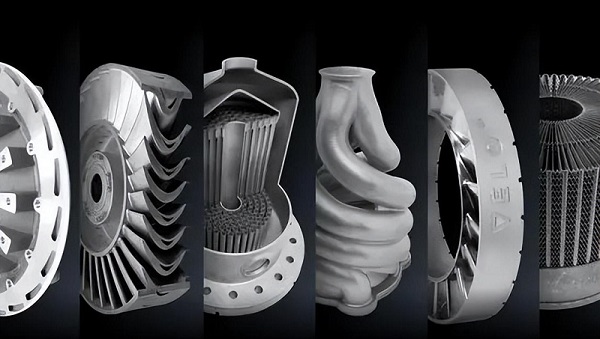
What makes this approach revolutionary is the ability to create conformal cooling channels—cooling lines that follow the exact shape of the part. Traditional machining drills straight lines, but 3D printing allows curved channels that cool parts faster and more evenly.
Which Printing Technologies Work Best?
| Technology | Materials | Best For | Accuracy |
|---|---|---|---|
| SLA / DLP | Resins | Fine details, smooth surfaces | ±0.05-0.1mm |
| SLS | Nylon, polymers | Functional prototypes | ±0.1-0.3mm |
| FDM | Engineering plastics | Large molds, low cost | ±0.2-0.5mm |
| Metal SLM | Stainless steel, aluminum | High-volume production | ±0.05-0.1mm |
Each technology serves different needs. For example, a medical device company might use SLA for precise, smooth mold surfaces, while an automotive supplier might choose metal SLM for molds that need to withstand thousands of cycles.
Key Benefits of 3D Printed Injection Molds
How Much Faster Is Mold Production?
Time reduction stands as the biggest advantage. Traditional steel molds typically require 4-12 weeks for machining and finishing. 3D printed molds can be ready in 2-5 days.
This speed transforms product development cycles. Consider a consumer electronics company testing a new smartphone case design. With traditional methods, each design iteration takes months. With 3D printed molds, they can test, modify, and retest in under two weeks.
What About Cost Savings?
Cost benefits follow a similar pattern. Traditional molds often cost $5,000 to $100,000+ depending on complexity. 3D printed molds typically range from $100 to $3,000 for prototype runs.
However, the cost equation changes based on volume:
| Production Volume | Traditional Mold Cost per Part | 3D Printed Mold Cost per Part |
|---|---|---|
| 10 parts | $500-1,000 | $30-100 |
| 100 parts | $50-100 | $10-30 |
| 1,000 parts | $5-15 | $5-15 |
| 10,000 parts | $0.50-2 | $2-8 |
For runs under 1,000 parts, 3D printed molds often win on total cost. Above that, traditional molds become more economical due to longer lifespan.
Can You Make Complex Parts?
Design freedom represents perhaps the most exciting benefit. 3D printing removes traditional manufacturing constraints, allowing:
- Undercuts and complex geometries that would require multiple mold actions
- Variable wall thicknesses optimized for part performance
- Integrated features like snap-fits and living hinges
- Textured surfaces without secondary operations
A real example: Yigu technology recently helped a robotics company create a complex gear housing with internal cooling channels. Traditional machining couldn't produce the curved internal passages, but 3D printing handled them easily.
Limitations and Challenges
How Long Do 3D Printed Molds Last?
Mold durability remains the primary limitation. While steel molds can run 100,000+ cycles, 3D printed molds have shorter lifespans:
- Polymer molds: 100-500 cycles
- Composite molds: 500-2,000 cycles
- Sintered metal molds: 5,000-20,000 cycles
This makes 3D printed molds ideal for prototyping, bridge production, and low-volume manufacturing, but not yet suitable for mass production.
What About Heat and Pressure?
Injection molding involves high temperatures (200-400°C) and high pressures (5,000-20,000 psi). Not all 3D printed materials handle these conditions well. Key challenges include:
- Heat deflection at high temperatures
- Wear and erosion from flowing plastic
- Thermal cycling fatigue during repeated cycles
- Chemical interactions between mold and plastic
Material science advances continue addressing these issues. New high-temperature resins and metal alloys specifically designed for mold applications show promising results.
Real-World Applications
When Should You Use 3D Printed Molds?
Based on our experience at Yigu technology, 3D printed molds work best for:
- Prototype validation - Test form, fit, and function with production materials
- Bridge tooling - Start selling products while waiting for production tools
- Low-volume production - 100-5,000 parts annually
- Custom medical devices - Patient-specific implants and surgical guides
- Replacement parts - Obsolete components with no existing molds
Industry Case Studies
Medical Device Manufacturer: Needed 200 identical parts for clinical trials. Traditional mold cost: $15,000 with 8-week lead time. 3D printed mold cost: $2,800 with 5-day lead time. Result: Product launch accelerated by 7 weeks.
Automotive Supplier: Testing five design variations for an air intake component. Traditional approach: $75,000 for five molds, 6 months. 3D printed approach: $9,000 for five iterations, 3 weeks. Result: Optimal design identified 5 months faster.
Consumer Goods Startup: Launching new kitchen gadget with $50,000 budget. Traditional molds would consume entire budget before sales. Used 3D printed molds for initial 1,000 units, generated revenue, then invested in production tools. Result: Successful launch with minimal upfront risk.
Yigu Technology's Approach
At Yigu technology, we've integrated 3D printed molds into our custom manufacturing services for specific applications. Our engineers evaluate each project based on:
- Required part quantity and timeline
- Material selection and mold compatibility
- Geometric complexity and tolerance needs
- Budget constraints and ROI expectations
For a recent aerospace client, we needed to produce 50 complex brackets with tight tolerances. Traditional machining would take 6 weeks and cost $12,000. Our solution combined 3D printed mold inserts with our standard injection molding machine—finished in 10 days at $3,800, meeting all quality requirements.
We've also developed best practices for extending mold life:
- Optimized cooling channel design reduces thermal stress
- Surface treatments improve wear resistance
- Material selection matrices match mold materials to production plastics
- Design guidelines specifically for 3D printed tooling
Future Trends
What's Next for 3D Printed Molds?
The technology continues advancing rapidly. Key trends to watch:
- Hybrid molds combining 3D printed cores with traditional mold bases
- Gradient materials with different properties throughout the mold
- In-situ monitoring using sensors embedded during printing
- Faster metal printing reducing costs for production-grade tools
Industry analysts project the 3D printed tooling market to grow at 22% annually through 2030, driven by automotive, medical, and consumer goods applications.
Conclusion
So, can 3D printed molds revolutionize injection molding? The answer is nuanced. For prototyping, low-volume production, and complex geometries, they already represent a game-changing alternative to traditional methods. The combination of speed, cost savings, and design freedom solves real problems for product developers and manufacturers.
However, for high-volume mass production, traditional steel molds remain superior due to durability and per-part economics. The sweet spot lies in understanding where each approach fits—using 3D printed molds for their strengths and traditional molds where they excel.
As materials improve and printing speeds increase, we expect 3D printed molds to capture an expanding share of the tooling market. Forward-thinking manufacturers are already integrating both technologies to create flexible, responsive production capabilities.
The revolution isn't about replacement—it's about expanding possibilities and giving engineers more tools to solve manufacturing challenges.
FAQ
Is 3D printed mold suitable for large-scale production?
For very high volumes (50,000+ parts), traditional steel molds remain the better choice. 3D printed molds work best for low to medium volumes (up to 5,000-10,000 parts depending on material) and for bridge production while waiting for permanent tooling.
What materials can be used for 3D printing injection molds?
Common materials include high-temperature resins (like PEI and PEEK), reinforced nylon composites, stainless steel, maraging steel, and aluminum alloys. Each offers different balances of cost, durability, and thermal performance.
How accurate are 3D printed injection molds?
Industrial 3D printers achieve accuracy of ±0.05-0.3 mm depending on technology. Post-processing like CNC machining can improve this to ±0.01-0.02 mm for critical dimensions. Most prototype and low-volume applications find this accuracy sufficient.
How many parts can a 3D printed mold produce?
Lifespan varies dramatically by material: polymer molds typically last 100-500 cycles, composite molds 500-2,000 cycles, and metal 3D printed molds 5,000-20,000 cycles. Proper cooling and mold design can extend these ranges.
What's the cost comparison between 3D printed and traditional molds?
For simple molds, traditional costs $3,000-10,000 versus 3D printed at $500-2,000. For complex molds, traditional can exceed $50,000 while 3D printed stays under $5,000-8,000. The gap widens as complexity increases.
Contact Yigu Technology for Custom Manufacturing
Need help deciding if 3D printed molds fit your project? At Yigu technology, we specialize in custom plastic and metal parts using both traditional and advanced manufacturing methods. Our engineering team evaluates your specific requirements—volume, timeline, budget, and complexity—to recommend the optimal approach.
Whether you need rapid prototypes, low-volume production runs, or full-scale manufacturing, we deliver quality parts on time. Contact us today to discuss your project and discover how we can bring your designs to life efficiently and cost-effectively.
[Contact Yigu Technology] for a free consultation and quote.