Introduction
You have heard the term everywhere—3D printing—but what does it actually mean? Is it just for hobbyists making toys? Or is it something bigger? The truth is, 3D printing has moved far beyond its novelty origins. It is manufacturing jet engine parts, printing custom medical implants, and building houses. It is transforming how products are designed, prototyped, and produced. This article explains what 3D printing is, how it works, why it matters, and what it means for you—whether you are a designer, engineer, business owner, or simply curious about the technology shaping our future.
What Is 3D Printing?
Definition
3D printing, officially known as additive manufacturing, is the process of creating three-dimensional solid objects from a digital file. The formal definition from industry standards describes it as "the creation of solid objects by building up multiple layers, each layer corresponding to a plan held in a digital file."
Unlike traditional manufacturing that cuts away material from a larger block—like carving a statue from marble—3D printing adds material only where needed. Layer by layer, an object emerges from nothing but raw material and digital instructions.
Basic Concept
The core idea is simple: build objects layer by layer.
- Create a digital model using CAD software or a 3D scanner
- Slice the model into hundreds or thousands of thin layers
- Print each layer sequentially, building up the object
- Remove and finish the part for use
This layer-by-layer approach unlocks capabilities impossible with traditional methods:
- Internal cavities: Channels inside solid parts
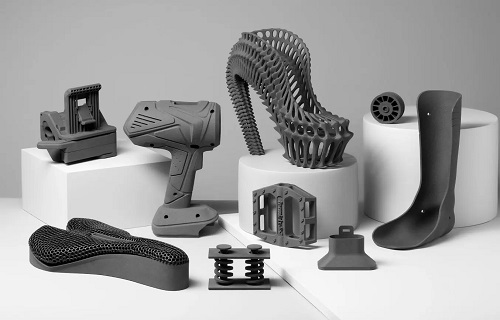
- Lattice structures: Lightweight frameworks with high strength
- Organic shapes: Curves and forms that flow like nature
- Consolidated assemblies: Multiple parts printed as one
How It Differs from Traditional Manufacturing
| Manufacturing Method | Material Waste | Complexity of Geometry | Production Time for Small Batches |
|---|---|---|---|
| Subtractive Manufacturing | High—often 50–90% of material removed | Limited by tool access, complex shapes difficult and costly | Long, each part requires multiple machining operations |
| 3D Printing | Low—only material used for the part | Can create highly complex shapes without added cost | Short, especially for customized or small-batch production |
Visual difference: Imagine a cube. Subtractive manufacturing starts with a large block and cuts away everything that isn't the cube. 3D printing starts with nothing and builds the cube layer by layer. One removes material. The other adds it.
How Does 3D Printing Work?
The Process Step by Step
Step 1: 3D Modeling
Everything starts with a digital model. You create it using:
- CAD software: SolidWorks, Fusion 360, AutoCAD for engineering designs
- Organic modeling: Blender, ZBrush for sculptures, characters
- 3D scanning: Capture real objects and convert to digital models
An industrial designer might spend hours in SolidWorks defining every dimension of a new product. An archaeologist might scan an ancient artifact to create a digital replica. Both end with a 3D model ready for printing.
Step 2: Slice Processing
The 3D model—typically in STL format—gets fed into slicing software like Cura or PrusaSlicer. This software:
- Divides the model into hundreds or thousands of horizontal layers
- Calculates the exact path the printer will follow
- Determines settings like layer height, infill density, and print speed
For a small figurine, the slicer might create 500 layers, each 0.1 mm thick. For a larger object, it could be thousands of layers.
Step 3: Printer Operation
The sliced data—now called G-code—sends to the printer. Different technologies build layers differently:
- FDM (Fused Deposition Modeling) : A filament feeds into a heated nozzle, melts, and extrudes onto the build platform. The nozzle moves in X and Y, depositing material. The platform lowers, and the next layer begins.
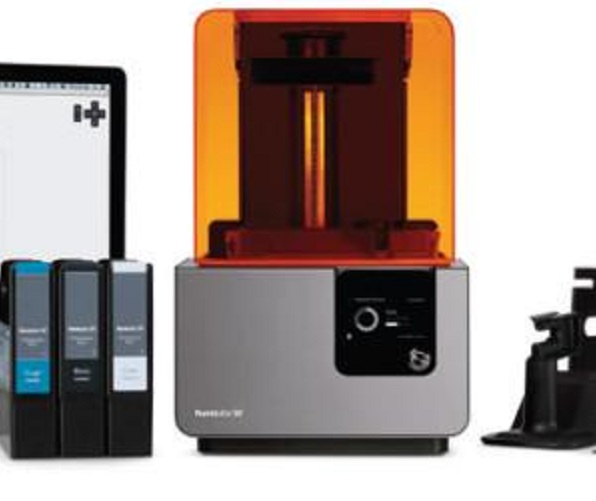
- SLA (Stereolithography) : A UV laser traces each layer on the surface of liquid resin. The resin solidifies where the laser hits. The platform lifts, and fresh resin flows under.
- SLS (Selective Laser Sintering) : A laser sinters powder particles together. The unsintered powder supports overhangs. After each layer, a fresh layer of powder spreads.
Step 4: Finished Product Generation
When printing completes, the object may need post-processing:
- Support removal: Snip or dissolve temporary structures
- Sanding: Smooth layer lines and rough surfaces
- Painting or coating: Add color or protection
- Heat treatment: Relieve stress or improve properties for metal parts
A mechanical part might need careful support removal and sanding to ensure precise fit. A decorative piece might go straight to display.
Key Elements of 3D Printing
Digital File
The blueprint. Usually STL or OBJ format. Contains all geometric information—shape, size, details. Without it, the printer has no instructions.
3D Printer
The machine that brings the file to life. Types include:
- FDM printers: Low cost, easy to use, popular for home and small-scale prototyping
- SLA printers: High resolution, smooth surfaces, ideal for jewelry and dental models
- SLS printers: Industrial, durable parts, no supports needed
- Metal printers: SLM, EBM for aerospace, medical, automotive production
Materials
The stuff objects are made of:
| Material | Properties | Common Uses |
|---|---|---|
| PLA | Biodegradable, easy to print, low heat resistance | Decorative items, educational models, prototypes |
| ABS | Strong, heat resistant, durable | Functional parts, mechanical prototypes, appliance components |
| PETG | Strong, slightly flexible, chemical resistant | Mechanical parts, food containers, outdoor items |
| Nylon | Tough, wear resistant, some flexibility | Gears, bearings, functional parts |
| Resin | High detail, smooth finish, can be brittle | Jewelry, dental models, miniatures, art |
| Metal Powders | High strength, heat resistant, dense | Aerospace components, medical implants, automotive parts |
| Ceramics | Heat resistant, hard, chemically stable | High-temperature applications, dental restorations |
Why Does 3D Printing Matter?
Design Freedom
Traditional manufacturing imposes rules. Draft angles for molds. Tool access for machining. Undercuts that require complex slides. These constraints limit what designers can create.
3D printing removes these fences. Want internal cooling channels that follow a curved path? Print them. Need a lattice structure that reduces weight by 40% while maintaining strength? Print it. Dream of organic shapes that flow like living forms? Print them.
This freedom changes what products can be. Aerospace components become lighter. Medical implants fit better. Consumer goods become more beautiful.
Rapid Prototyping
Before 3D printing, prototyping was slow and expensive. A design change meant weeks of waiting and thousands of dollars. Companies limited iterations not because they wanted to, but because they had to.
Now, a designer finishes work at 5 PM. The printer runs overnight. By 9 AM, they hold a physical part. Test it. Find issues. Modify the file. Print again tomorrow. A week of iteration now accomplishes what used to take months.
Ford uses 3D printing for prototype parts, cutting development time for new components by up to 75% . Tesla printed prototypes that let them test designs before committing to production tooling. Speed matters.
Customization
Mass production assumes everyone wants the same thing. But humans are not identical. Our bodies differ. Our tastes differ. Our needs differ.
3D printing makes serving these differences economical:
- Medical: Custom implants from patient scans. Prosthetics that fit perfectly.
- Consumer: Jewelry designed by you. Phone cases with your name.
- Industrial: Tools shaped for specific workers. Fixtures for unique parts.
In 2022, over 50,000 custom 3D-printed prosthetics were distributed worldwide. Each one unique. Each one changing a life.
Reduced Waste
Subtractive manufacturing is wasteful. Machining a titanium bracket from a solid block might waste 90% of the material. That expensive powder ends up as chips on the floor.
3D printing uses only what goes into the part. For metal printing, unused powder recycles. Waste drops below 10% in most cases. For expensive materials like titanium, this matters enormously.
Complexity Is Free
In traditional manufacturing, complexity costs money. More complex shapes require more machining steps, more complicated molds, more skilled labor.
In 3D printing, complexity costs nothing. A simple cube and an intricate lattice structure take the same time to prepare and print. This inverts the economics of manufacturing. Designers optimize for performance, not simplicity.
Supply Chain Transformation
Digital files replace physical inventory. Need a spare part? Download and print locally. No warehouses. No shipping delays. No obsolescence.
During the pandemic, when supply chains broke, 3D printing kept production running. Companies printed parts they couldn't source. Hospitals printed ventilator components. The technology proved its value.
Where Is 3D Printing Used?
Medical Field
Medicine may be 3D printing's most impactful application:
- Prosthetics: Custom-fit limbs at affordable cost
- Implants: Hip replacements, spinal cages, cranial plates from patient scans
- Surgical models: Practice on replicas before touching patients
- Surgical guides: Ensure precise implant placement
- Bioprinting: Printing living tissue—still research, but advancing rapidly
A study found 3D-printed titanium hip implants achieve 20% higher osseointegration (bone fusion) than traditional implants. Better integration means fewer failures, fewer revision surgeries.
Automotive Industry
Car manufacturers use 3D printing throughout development and production:
- Prototyping: Test designs before tooling
- Tooling: Print jigs and fixtures for assembly lines
- Production parts: Low-volume components, custom options
- Spare parts: Print on demand, no inventory
Ford reports cutting development time for new components by up to 75% using 3D printing. BMW produced over 400,000 3D-printed parts in 2023.
Aerospace Industry
Weight is everything in aerospace. Every kilogram saved saves thousands in fuel over an aircraft's life. 3D printing delivers:
- Lightweight brackets: Up to 40% lighter than machined versions
- Complex cooling channels: In turbine blades and combustion chambers
- Part consolidation: 20-piece assemblies printed as one
GE Aviation's LEAP engine fuel nozzle—formerly 20 parts welded together—now prints as one. Weight down 25%. Durability up 5x. Over 100,000 printed.
Construction Industry
Entire buildings are 3D printed:
- Houses: Printed in days instead of months
- Components: Walls, columns, decorative elements
- Affordable housing: Reduced labor costs, faster construction
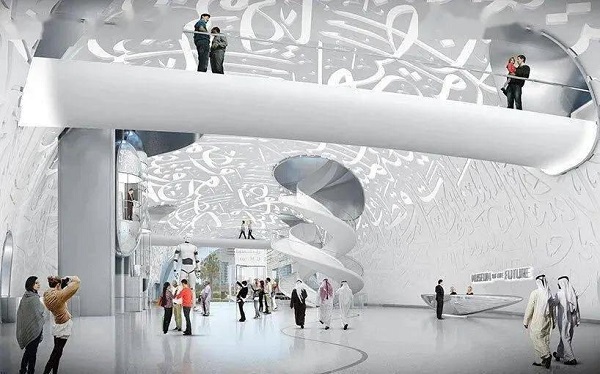
Dubai has a 3D-printed office building. The technology promises to address housing shortages and reduce construction waste.
Consumer Goods
Personalization drives value:
- Jewelry: Custom designs, intricate details
- Phone cases: Personalized with names or patterns
- Eyewear: Frames matching individual face measurements
- Footwear: Custom midsoles for runners
Companies offering customization report 20–30% price premiums and higher customer loyalty.
What Are the Limitations?
Speed
3D printing is slow. A small part might take hours. A large, detailed part can take days. For mass production, injection molding produces parts in seconds.
For complex parts or low volumes, total time including tooling can favor 3D printing. No waiting for molds means parts exist days after design completion.
Cost per Part
For simple parts at high volumes, 3D printing cannot compete with traditional methods. A molded plastic part might cost $0.50. The same part printed might cost $5.00.
For complex parts or low volumes, the equation flips. A machined titanium bracket costing $500 might print for $200. The breakeven point depends on geometry, material, and quantity.
Material Properties
Not all engineering materials exist in printable form. Some alloys are difficult to process. Printed parts can have anisotropic properties—weaker in one direction. Quality control requires understanding these characteristics.
Size Constraints
Most 3D printers have limited build volumes. Large parts must be printed in sections and assembled. Industrial-scale printers exist but cost millions.
Post-Processing
Printed parts rarely go straight to use. Support removal, surface finishing, heat treatment, and inspection add time and cost. For some applications, post-processing dominates total lead time.
How Does Yigu Technology View 3D Printing?
As a non-standard plastic and metal products custom supplier, Yigu Technology sees 3D printing as a transformative tool for custom manufacturing.
Our Experience
Complex plastic components: Clients bring designs with intricate internal features—impossible to mold, difficult to machine. We print them. What once took weeks now takes days.
Metal prototypes: Engineers need functional metal parts for testing. Traditional machining requires programming and setup. We print overnight. Testing happens tomorrow.
Short-run production: Small batches that don't justify tooling become economical. A client needs 50 custom brackets—printed, not molded.
Benefits We See
- Faster delivery: Days instead of weeks
- Design freedom: Complex shapes without cost penalty
- No tooling: Economical for low volumes
- Iteration: Modify designs quickly based on feedback
Challenges We Address
- Material selection: Match material to application
- Quality control: Ensure consistency
- Post-processing: Deliver finished parts, not raw prints
Conclusion
3D printing is more than a novelty. It is a fundamental shift in how we make things. By building objects layer by layer from digital files, it enables designs impossible with traditional methods, delivers prototypes in days instead of months, and makes customization economical.
The technology matters because:
- It frees designers from manufacturing constraints
- It accelerates development cycles
- It enables personalized medicine
- It reduces waste
- It transforms supply chains
Yes, 3D printing has limitations—speed, cost at scale, material constraints. But it is not meant to replace all manufacturing. It complements traditional methods, serving applications where its unique strengths matter most.
For designers, engineers, and businesses, understanding 3D printing means understanding a new set of possibilities. It means asking not "Can we make this?" but "What should we make?" The answers will shape the future of products, medicine, and manufacturing.
Frequently Asked Questions
Q1: What are the common materials used in 3D printing?
Common materials include plastics like PLA (biodegradable, easy to print) and ABS (strong, heat resistant); metals like titanium and aluminum for high-strength applications; resins for detailed parts; ceramics for high-temperature applications; and composites like carbon fiber reinforced filaments.
Q2: Can 3D printing replace traditional manufacturing methods?
No. 3D printing complements traditional methods. It excels at complexity, customization, and low volumes. Traditional methods like injection molding remain more economical for high-volume production. The future is hybrid—using each where it serves best.
Q3: How accurate is 3D printing?
Accuracy varies by technology: FDM ±0.1–0.5 mm, SLA ±0.05 mm, SLS ±0.1 mm, metal printing ±0.02–0.1 mm. Factors include printer quality, settings, and materials. Post-processing can improve accuracy for critical features.
Q4: Is 3D printing expensive?
For prototyping and low volumes, it is often cheaper than traditional methods because no tooling is required. For high volumes, traditional manufacturing is more economical. The breakeven point depends on part complexity, material, and quantity.
Q5: What can I make with a 3D printer?
Almost anything: prototypes, functional parts, medical implants, jewelry, art, tools, molds, and even food and buildings. The limit is largely your imagination and the printer's capabilities.
Q6: Do I need to be a designer to use 3D printing?
Not necessarily. Many online platforms offer ready-to-print files. You can download and print without any design skills. For custom work, learning basic CAD or hiring a designer opens more possibilities.
Q7: What is the future of 3D printing?
Faster printers, better materials, larger build volumes, and wider adoption across industries. Bioprinting organs, printing buildings, and on-demand manufacturing everywhere. The technology is still evolving rapidly.
Contact Yigu Technology for Custom Manufacturing
Ready to explore 3D printing for your project? At Yigu Technology, we combine printing expertise with broader manufacturing capabilities. Our team helps you select the right materials, optimize designs for printability, and deliver quality parts on schedule.
Visit our website to see our capabilities. Contact us today for a free consultation and quote. Let's build something remarkable together.