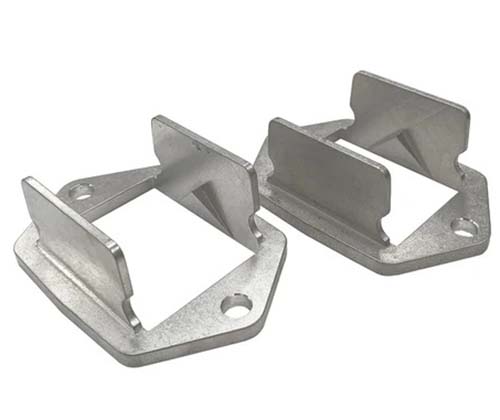
Manufacturers often face a frustrating trade-off. Materials that form easily often lack durability. Corrosion-resistant metals can crack or warp during stamping. This is especially true for components that need both precision and longevity—like food-processing parts, medical instruments, or automotive trim. SUS304 austenitic stainless steel bridges this gap. It is the industry workhorse, known for its excellent formability, corrosion resistance, and mechanical strength. This guide covers SUS304’s properties, stamping techniques, and applications. You will learn how to work with this versatile material to achieve consistent, high-quality results.
What Makes SUS304 the Industry Workhorse?
SUS304 is often called 18-8 stainless steel because it contains 18% chromium and 8% nickel. This composition creates an austenitic structure—a face-centered cubic crystal arrangement that delivers exceptional properties.
Chemical Composition
| Element | Percentage |
|---|---|
| Chromium | 18–20% |
| Nickel | 8–10.5% |
| Carbon | ≤0.08% |
| Manganese | ≤2.0% |
| Silicon | ≤1.0% |
The combination of chromium and nickel gives SUS304 its corrosion resistance and formability. The low carbon content minimizes the risk of sensitization (chromium carbide precipitation) during welding.
Mechanical Properties
| Property | Value |
|---|---|
| Tensile strength | 520 MPa |
| Yield strength | 205 MPa |
| Elongation | 40% |
| Hardness | ≤187 HB |
| Density | 7.93 g/cm³ |
SUS304 balances strength with ductility. It has enough strength for structural applications but remains ductile enough for complex stamping.
Non-Magnetic Nature
Unlike ferritic or martensitic stainless steels, SUS304 is non-magnetic in its annealed condition. Cold working can induce slight magnetism, but the material remains largely non-magnetic. This property is critical for:
- Electronic components that must not interfere with magnetic fields
- Medical devices used near MRI equipment
- Parts that must be non-magnetic for sorting or assembly
How Does SUS304 Compare to Other Stainless Steels?
| Grade | Type | Formability | Corrosion Resistance | Cost | Magnetic |
|---|---|---|---|---|---|
| SUS304 | Austenitic | Excellent | Excellent | Moderate | No |
| SUS316 | Austenitic | Good | Superior | High | No |
| SUS430 | Ferritic | Moderate | Good | Low | Yes |
| SUS410 | Martensitic | Poor | Moderate | Low | Yes |
SUS304 is the most versatile. It offers better formability than SUS316 and better corrosion resistance than SUS430. For most indoor and moderate outdoor applications, it is the standard choice.
How Do You Stamp SUS304 Successfully?
Stamping SUS304 requires techniques that leverage its ductility while managing its tendency to work-harden and gall.
Progressive Stamping
Progressive stamping is ideal for high-volume SUS304 parts. A strip moves through a series of dies, with each station performing an operation.
Key considerations:
- Uniform material flow: Avoid concentrating forming in one station
- Gradual forming: Spread work across multiple stations to prevent work hardening
- Adequate carriers: Keep the strip stable between stations
Deep Drawing
SUS304’s high ductility makes it excellent for deep drawing. Draw ratios up to 2.5:1 are achievable.
Use:
- Slow press speeds: 10 to 20 strokes per minute
- Lubrication for stainless: Chlorinated or synthetic oils with extreme-pressure additives
- Polished dies: Ra ≤ 0.8 μm to reduce friction
A manufacturer stamping deep-drawn sink basins found that switching to chlorinated oil reduced galling by 60% and doubled die life.
Blanking and Piercing
SUS304’s abrasiveness requires durable tooling. Use carbide punches for high-volume production. For moderate volumes, coated tool steel (TiN or AlTiN) works well.
Die clearance should be 10% to 15% of material thickness. Too tight causes tool wear and galling. Too loose creates burrs and rough edges.
Bending and Forming
SUS304 shows 2 to 3 degrees of springback. Compensate with:
- Over-bending: 2 to 4 degrees beyond the target angle
- Bottoming dies: Strike the material to reduce elastic recovery
- FEA simulation: Predict springback for complex parts
Minimum bend radius is typically 1× to 2× material thickness. A 1 mm sheet can bend around a 1 mm radius in the annealed condition.
Tool Wear Reduction
SUS304’s work-hardening nature wears tools over time. Extend tool life with:
- Polished die surfaces: Ra ≤ 0.8 μm or better
- Proper lubrication: Maintain a consistent film
- Regular inspection: Check for micro-chipping every 5,000 to 10,000 strokes
- Carbide tooling: For high-volume runs
What Quality Controls Are Essential?
Standards Compliance
SUS304 stamping should comply with:
- ASTM A240: Chemical composition and mechanical properties
- JIS G4305: Dimensions and tolerances
- ISO 9001: Quality management systems
- IATF 16949: For automotive applications
Inspection Methods
| Inspection | Method | Typical Requirement |
|---|---|---|
| Dimensional | CMM | ±0.05 mm for critical features |
| Surface finish | Profilometer | 2B: Ra ≤ 0.5 μm; BA: Ra ≤ 0.2 μm |
| Surface defects | Visual, optical | No scratches, pits, or galling |
| Internal flaws | Ultrasonic | For thick or critical parts |
Surface Finishes
SUS304 is available in several surface finishes:
| Finish | Description | Applications |
|---|---|---|
| 2B | Cold-rolled, annealed, matte | General stamping, parts to be painted |
| BA | Bright annealed, glossy | Decorative trim, visible components |
| #4 | Brushed, satin | Kitchen equipment, architectural |
| No. 8 | Mirror-like | Decorative, high-end appliances |
Documentation
For automotive and medical applications, provide:
- Material certificates (mill test reports)
- PPAP documentation (for automotive)
- Process validation records (for medical)
Where Is SUS304 Stamping Used?
Food-Processing Equipment
SUS304’s non-reactive surface and easy cleanability meet strict hygiene standards. Applications include:
- Commercial kitchen equipment
- Food processing machinery
- Conveyor components
- Storage tanks and hoppers
The material resists acids from fruits, vegetables, and dairy products without corroding.
Medical Instruments
Medical applications demand corrosion resistance and compatibility with sterilization. Stamped SUS304 parts include:
- Surgical trays and instrument cases
- Forceps and clamps
- Sterilization containers
- Hospital bed components
SUS304 withstands autoclaving (steam sterilization) and chemical disinfectants.
Kitchen Sinks and Cookware
SUS304 is the standard for residential and commercial kitchen products:
- Sinks and faucets
- Cookware and bakeware
- Range hoods
- Refrigerator panels
The material resists water, soap, and food acids without tarnishing.
Automotive Trim and Clamps
Automotive applications leverage SUS304’s corrosion resistance and appearance:
- Exterior trim and moldings
- Exhaust system components (non-high-temperature)
- Hose clamps
- Heat shields
Aerospace Fasteners
Aerospace uses SUS304 for:
- Fasteners and hardware
- Brackets and fittings
- Interior components
The material performs reliably under temperature fluctuations and resists corrosion from de-icing fluids.
What Are the Corrosion and Heat Limits?
Corrosion Resistance
SUS304’s corrosion resistance comes from a passive chromium oxide layer. This layer self-heals when exposed to oxygen.
| Environment | Performance |
|---|---|
| Air, fresh water | Excellent |
| Food acids | Good |
| Dilute acids | Moderate |
| Chlorides (saltwater) | Limited |
| Strong acids | Poor |
SUS304 is vulnerable to chloride stress corrosion cracking in environments with chloride concentrations above 200 ppm and temperatures above 60°C. For marine applications, SUS316 (with molybdenum) is a better choice.
The pitting resistance equivalent (PRE) for SUS304 is approximately 18, calculated as Cr% + 3.3×Mo% + 16×N%. This is adequate for mild conditions but insufficient for saltwater.
Heat Resistance
SUS304 handles:
- Intermittent service: Up to 870°C
- Continuous service: Up to 600°C
Above these temperatures, the material may lose corrosion resistance due to carbide precipitation. For applications with sustained high temperatures, SUS304L (low carbon) or stabilized grades like SUS321 are preferred.
Enhancements
Electropolishing improves corrosion resistance by smoothing surface imperfections. Surface roughness can be reduced to Ra 0.02 to 0.1 μm, removing sites where corrosion could initiate.
What Challenges Come with Stamping SUS304?
| Challenge | Cause | Solution |
|---|---|---|
| Work hardening | Cold working during forming | Use progressive dies with gradual forming; anneal if needed |
| Galling | Material transfers to die | Polished dies, proper lubrication |
| Springback | Elastic recovery | Over-bend, bottoming dies |
| Tool wear | Abrasiveness | Carbide tooling, coated steel |
| Burrs | Improper clearance | 10–15% clearance, sharp tools |
Conclusion
SUS304 is the gold standard of stainless steel stamping for good reason. It combines excellent formability with strong corrosion resistance and good mechanical properties. Its austenitic structure allows complex stamping operations that would crack ferritic or martensitic grades. Its chromium-nickel composition provides reliable performance in most indoor and moderate outdoor environments.
Success with SUS304 requires understanding its behavior. It work-hardens, so progressive dies should spread forming across stations. It galls, so dies must be polished and lubricated properly. It springs back, so over-bending is necessary. It wears tools, so carbide or coated tooling is recommended.
When these factors are managed, SUS304 delivers consistent, high-quality parts for food equipment, medical devices, automotive components, and countless other applications. It is a material that has earned its reputation as the industry workhorse.
FAQ About Metal Stamping SUS304
Can SUS304 be used in marine environments?
SUS304 is not ideal for direct saltwater exposure. Chlorides can cause pitting and stress corrosion cracking. For marine applications, use SUS316, which contains molybdenum for improved chloride resistance. SUS304 may be acceptable for inland watercraft or parts not directly exposed to saltwater.
How does cold working affect SUS304’s properties?
Cold working increases strength and hardness but reduces ductility. Tensile strength can reach 1,000 MPa with heavy cold work. For parts that need maximum formability, start with annealed material. For parts that need strength, cold working may be beneficial—but complex shapes may require intermediate annealing.
What is the difference between 2B and BA finishes for stamping?
2B is a cold-rolled, annealed, and pickled finish. It has a matte appearance and is suitable for parts that will be painted or used where appearance is not critical. BA (bright annealed) is finished with a bright, reflective surface. It is produced by annealing in a controlled atmosphere. BA is used for decorative parts, visible trim, and applications where a smooth, glossy finish is desired.
What lubrication works best for stamping SUS304?
Chlorinated oils and synthetic extreme-pressure (EP) lubricants work best. These lubricants form a protective film under high pressure, reducing galling and tool wear. For deep drawing, high-viscosity EP lubricants are recommended. For lighter operations, lower-viscosity oils may suffice.
How do you restore corrosion resistance after welding SUS304?
Welding can reduce corrosion resistance due to chromium carbide precipitation at the weld zone. To restore properties:
- Use low-carbon SUS304L for welded applications
- Apply post-weld annealing (heat to 1050°C, then quench)
- Passivate after welding to remove free iron and restore the chromium oxide layer
Contact Yigu Technology for Custom Manufacturing
Stamping SUS304 requires precision, experience, and the right equipment. At Yigu Technology, we specialize in custom metal stamping for food equipment, medical devices, automotive, and industrial clients. Our team helps you select the right finish and temper for your application. We design tooling with proper clearances and polished surfaces to prevent galling and wear. Our presses run at optimized speeds with high-quality EP lubricants. Quality control includes dimensional inspection, surface finish verification, and material certification. Whether you need deep-drawn components, progressive-stamped parts, or complex formed shapes, we have the capabilities to deliver. Contact us today to discuss your project.