Introduction
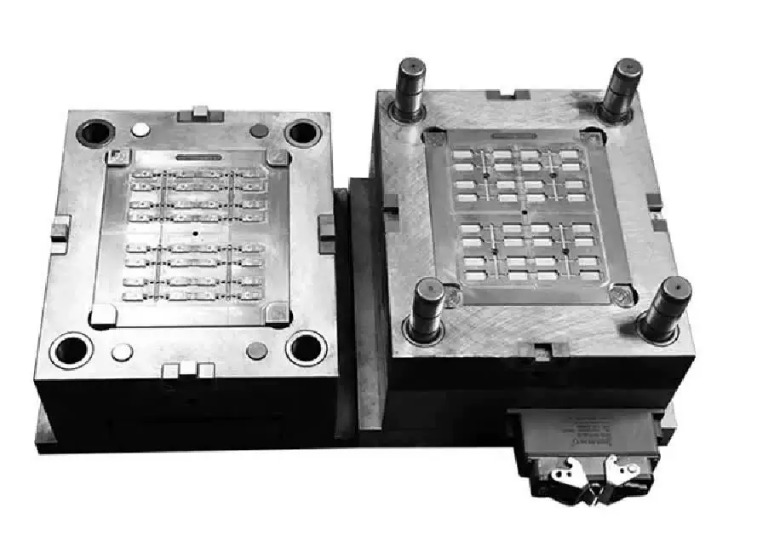
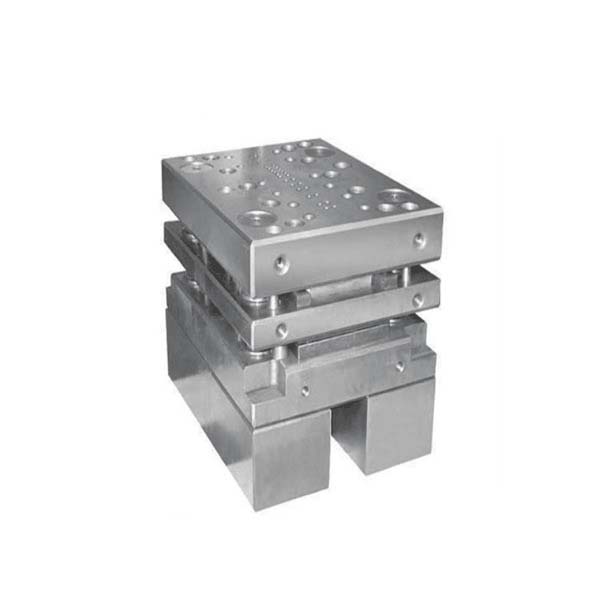
You need a prototype mold. The design isn’t final. Changes are inevitable. A steel mold would take weeks and cost thousands—overkill for a part you might modify tomorrow. But you still need something durable enough to produce functional parts for testing.
Enter 6061-T6 aluminum. It’s the material that fills the gap between soft, short-lived prototyping materials and expensive, time-consuming steel tooling. With excellent machinability, moderate strength, and affordability, 6061-T6 is the workhorse of prototype and low-volume mold making.
This guide explores why 6061-T6 has become the go-to choice for cost-conscious prototyping, its properties, applications, and how to maximize its performance.
What Is 6061-T6 Aluminum Alloy?
A Versatile, Medium-Strength Alloy
6061-T6 is a magnesium-silicon aluminum alloy, part of the 6000 series known for good formability, weldability, and corrosion resistance. The T6 temper indicates it has been solution heat-treated and artificially aged to achieve optimal strength and hardness.
| Property | Value |
|---|---|
| Tensile strength | 310 MPa (45,000 psi) |
| Yield strength | 276 MPa (40,000 psi) |
| Hardness (Brinell) | 95–105 HB |
| Thermal conductivity | 167 W/m·K |
| Density | 2.70 g/cm³ |
| Thermal expansion | 23.6 × 10⁻⁶/°C |
Standard Specifications
6061-T6 complies with:
- ASTM B209 (sheet/plate)
- ASTM B211 (bar/stock)
- ISO 209
Chemical composition ensures consistent mechanical properties:
- Silicon: 0.4–0.8%
- Magnesium: 0.8–1.2%
- Copper: 0.15–0.4%
- Chromium: 0.04–0.35%
How Does 6061-T6 Compare to Other Mold Materials?
| Material | Tensile Strength (MPa) | Machinability | Cost | Best For |
|---|---|---|---|---|
| 6061-T6 (Aluminum) | 310 | Excellent | Low | Prototypes; low-volume (1,000–30,000 cycles) |
| 7075-T6 (Aluminum) | 503 | Good | Medium | Higher-pressure; moderate-volume |
| P20 (Steel) | 800–1,000 | Moderate | Medium-High | Medium-volume production |
| H13 (Steel) | 1,000+ | Moderate | High | High-volume; high-temperature |
Key takeaway: 6061-T6 costs 20–30% less than 7075-T6 and machines 50–70% faster than steel —making it the most cost-effective choice for prototype and low-volume molds.
What Properties Make 6061-T6 Ideal for Molds?
Moderate Strength for Standard Plastics
With tensile strength of 310 MPa and yield strength of 276 MPa, 6061-T6 handles moderate-pressure molding—up to 10,000 psi. This is sufficient for most prototypes and low-volume runs of standard plastics:
- ABS
- Polypropylene (PP)
- Polystyrene (PS)
- Polyethylene (PE)
Real example: A consumer electronics company used a 6061-T6 mold to produce 5,000 prototype housings for a new wearable device. The mold performed flawlessly—and when design changes were needed, modifications took days instead of weeks.
Excellent Machinability
6061-T6 machines exceptionally well. Cutting speeds of 300–500 SFM are typical—far faster than 7075-T6 and steel.
| Material | Machining Speed (SFM) | Relative Time |
|---|---|---|
| 6061-T6 | 300–500 | Baseline |
| 7075-T6 | 200–300 | +30–50% slower |
| P20 steel | 60–100 | +200–400% slower |
Real impact: A mold maker producing a medium-complexity prototype mold reported 60% less machining time with 6061-T6 compared to steel—translating directly to lower cost and faster delivery.
Good Corrosion Resistance
Chromium content gives 6061-T6 good resistance to:
- Water-based coolants
- Humidity
- Mild chemicals
It performs well in typical production environments without additional coatings. For extended life or outdoor applications, anodizing further enhances corrosion resistance.
Excellent Weldability
6061-T6 is one of the most weldable aluminum alloys. This allows:
- Easy assembly of multi-piece molds
- Complex designs made from simpler components
- Repairs and modifications
Post-weld heat treatment can restore 80–90% of original strength —critical for maintaining mold integrity.
High Thermal Conductivity
At 167 W/m·K , 6061-T6 conducts heat:
- Better than 7075-T6 (130 W/m·K)
- 3–4× faster than steel (40–50 W/m·K)
Result: Faster cooling in injection molding, reducing cycle times by 15–20% compared to steel molds. For prototype runs, this means quicker iterations.
Thermal Expansion
6061-T6 expands at 23.6 × 10⁻⁶/°C —similar to other aluminum alloys. Proper mold design (generous cooling channel clearances) prevents dimensional stability issues during temperature cycles.
Where Is 6061-T6 Used in Mold Making?
Prototype Molds (60–70% of Applications)
6061-T6 is the standard for functional prototypes. Its fast machining allows for rapid iterations—critical for validating designs before committing to expensive steel tooling.
Typical uses:
- Design validation
- Material testing
- Market evaluation samples
- Fit and function testing
Low-Volume Production Molds
For runs of 1,000–30,000 parts , 6061-T6 offers the best balance of upfront cost and durability.
| Production Volume | Suitable for 6061-T6? | Alternative |
|---|---|---|
| 1,000–5,000 parts | Ideal | — |
| 5,000–15,000 parts | Good | Consider 7075-T6 for higher wear |
| 15,000–30,000 parts | Possible with proper maintenance | 7075-T6 or P20 steel |
Applications:
- Custom packaging
- Promotional items
- Small-batch consumer goods
- Replacement parts for legacy products
Injection Molding
6061-T6 handles standard injection molding of:
- ABS (accommodates 20,000–30,000 cycles)
- Polypropylene
- Polystyrene
- Polyethylene
Blow Molding
For prototype bottles, containers, and hollow parts, 6061-T6’s ease of machining allows quick adjustments to neck finishes and wall thickness—speeding design validation.
Medical Device Molds (Non-Sterile)
For low-volume prototypes of non-sterile medical parts—equipment housings, diagnostic tool casings—6061-T6’s corrosion resistance and weldability make it practical. It meets basic biocompatibility standards for non-contact applications.
Food-Grade Molds
With proper surface treatment (anodizing), 6061-T6 is suitable for low-volume food packaging prototypes. Anodized surfaces comply with FDA regulations for indirect food contact.
How Do You Machine and Fabricate 6061-T6?
Precision Machining
| Parameter | Recommendation |
|---|---|
| Tools | HSS or carbide |
| Cutting speed | 300–500 SFM |
| Feed | Light to moderate |
| Coolant | Recommended to prevent chip welding |
Advantage: Carbide tools last 2–3× longer in 6061-T6 than in 7075-T6.
CNC Milling
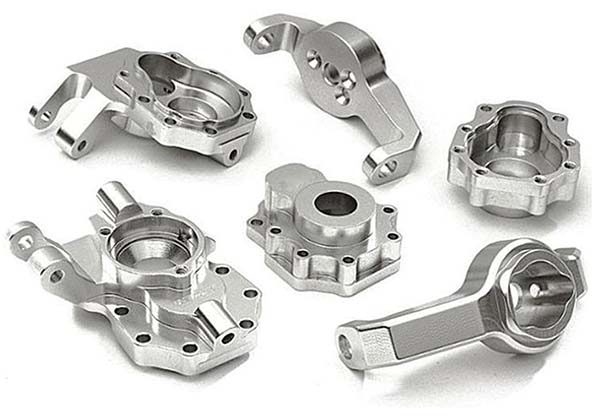
3-axis and 5-axis CNC milling achieve tight tolerances (±0.0005 inches ) with minimal effort. Adaptive milling strategies reduce cycle times by 30–40% for complex geometries.
EDM (Electrical Discharge Machining)
EDM works efficiently with 6061-T6. Its high conductivity requires lower current settings, but the process is faster than with steel. Minimal recast layer means less post-processing.
Grinding
| Parameter | Recommendation |
|---|---|
| Wheel | Silicon carbide or aluminum oxide |
| Grit | 400-grit achieves Ra 0.05 μm |
Surface Finishing
6061-T6 polishes easily to Ra 0.1 μm with 600-grit sandpaper and a buffing wheel.
Anodizing (Type II):
- Adds protective layer
- Improves wear resistance
- Allows color coding of mold components
Machining Challenges
6061-T6 can form stringy chips that tangle tools. Solution:
- Use chip breakers
- Apply high-pressure coolant
- Maintain sharp cutting edges
How Is 6061-T6 Heat Treated?
The T6 temper is achieved through a specific sequence:
| Step | Process | Purpose |
|---|---|---|
| Solution treatment | Heat to 990–1010°F (532–543°C) for 1–2 hours | Dissolve magnesium and silicon into aluminum matrix |
| Quenching | Rapidly cool in cold water (60–80°F) | Trap alloying elements in solution |
| Artificial aging | Heat to 320°F (160°C) for 8–12 hours | Form fine precipitates that strengthen the alloy |
Post-treatment inspection:
- Verify hardness: 95–105 HB
- Verify tensile strength: ≥310 MPa
- Ultrasonic testing checks for internal defects
Important: Avoid exposing 6061-T6 to temperatures >320°F (160°C) during use—this can over-age the alloy and reduce strength.
What Are the Limitations of 6061-T6?
| Limitation | Impact | Mitigation |
|---|---|---|
| Lower strength than 7075-T6 | Not suitable for high-pressure molding | Use 7075-T6 or steel for demanding applications |
| Wear resistance | Not for abrasive plastics (glass-filled) | Use hard anodizing; switch to steel for high wear |
| Hardness | Lower than 7075-T6 | Acceptable for non-abrasive plastics |
| Mold life | 10,000–30,000 cycles | Sufficient for prototypes; for higher volume, upgrade material |
Not recommended for:
- Glass-filled plastics (even 5% filler causes excessive wear)
- High-pressure molding (>10,000 psi)
- Production runs >30,000 parts without careful maintenance
Yigu Technology’s Perspective
At Yigu Technology, 6061-T6 is our go-to material for the majority of prototype and low-volume molds. Its combination of fast machining, moderate strength, and affordability reduces prototype lead times by 50% compared to steel —critical for time-sensitive projects.
We use 6061-T6 for:
- Automotive and consumer electronics prototypes
- Custom packaging molds
- Medical device housings (low-volume, non-sterile)
Key advantages in our shop:
- Machining time: 60% faster than steel
- Tool life: 2–3× longer than with 7075-T6
- Weldability: Enables complex multi-piece mold assemblies
- Cost: 20–30% less than 7075-T6
For clients needing extended mold life, we recommend anodizing. For applications requiring higher strength or abrasive material handling, we guide clients to 7075-T6 or steel.
Conclusion
6061-T6 aluminum is the ideal material for prototype and low-volume molds. It offers:
- Strength: 310 MPa tensile—sufficient for standard plastics
- Machinability: 300–500 SFM cutting speeds; 50–70% faster than steel
- Cost: 20–30% less than 7075-T6
- Thermal conductivity: 167 W/m·K—faster cooling, shorter cycles
- Weldability: Easy assembly of complex designs
For production runs of 1,000–30,000 parts with non-abrasive plastics, 6061-T6 delivers the best balance of performance and cost. It’s not for every application—but for the vast majority of prototype and low-volume needs, it’s the smart choice.
FAQ
How does 6061-T6’s mold life compare to 7075-T6?
6061-T6 molds last 10,000–30,000 cycles for non-abrasive plastics, shorter than 7075-T6’s 10,000–50,000 cycles. However, 6061-T6 costs 20–30% less and machines faster. For most prototype runs (under 5,000 parts), 6061-T6 is more economical. For runs approaching 20,000 parts, 7075-T6 may be worth the premium.
Can 6061-T6 molds handle glass-filled plastics?
No. 6061-T6 is not recommended for glass-filled plastics—even 5% filler causes excessive wear. The glass fibers act as abrasives, rapidly wearing the aluminum surface. For these materials, use 7075-T6 with hard anodizing or steel molds.
Is 6061-T6 suitable for food-grade mold applications?
Yes, with proper surface treatment. Anodized 6061-T6 meets FDA standards for indirect food contact, making it suitable for low-volume food packaging prototypes. Ensure surfaces are thoroughly cleaned to prevent residue buildup. For direct food contact, consult with a materials specialist.
How many cycles can I expect from a 6061-T6 mold?
For non-abrasive plastics (ABS, PP, PE, PS), 10,000–30,000 cycles is typical. Factors affecting life: part complexity, injection pressure, and maintenance. With proper care—regular cleaning, avoiding abrasive materials, and gentle ejection—upper end of the range is achievable.
Does 6061-T6 require heat treatment before machining?
No. 6061-T6 comes pre-treated to the T6 temper. No additional heat treatment is needed before machining. However, if you weld the mold, post-weld heat treatment can restore 80–90% of original strength.
Contact Yigu Technology for Custom Manufacturing
At Yigu Technology, we specialize in prototype and low-volume molds using 6061-T6 aluminum. Our team helps you balance cost, speed, and durability for your specific application.
We offer:
- 6061-T6 prototype and low-volume molds
- Fast turnaround: 2–4 weeks typical
- Precision CNC machining with tight tolerances
- Anodizing and surface finishing
- Design for manufacturability guidance
[Contact Yigu Technology today] to discuss your prototype mold project. Let’s bring your design to life quickly, affordably, and with the quality you expect.