Introduction
You’re manufacturing optical lenses that require tolerances of ±0.0005 mm. Your mold is made from standard steel. The shop temperature fluctuates by 5°C during production. Those tiny temperature changes cause your steel mold to expand and contract—just enough to push your parts out of spec. Scrap rates climb. Rework multiplies. Deadlines slip.
This is the reality of ultra-precision manufacturing. The enemy isn’t the machine or the operator. It’s thermal expansion.
Invar (Fe-Ni36) solves this problem. With one of the lowest thermal expansion rates of any commercial metal, Invar maintains near-perfect dimensional stability across wide temperature ranges. It’s the material of choice for molds that must produce parts with tolerances measured in microns—regardless of heat fluctuations.
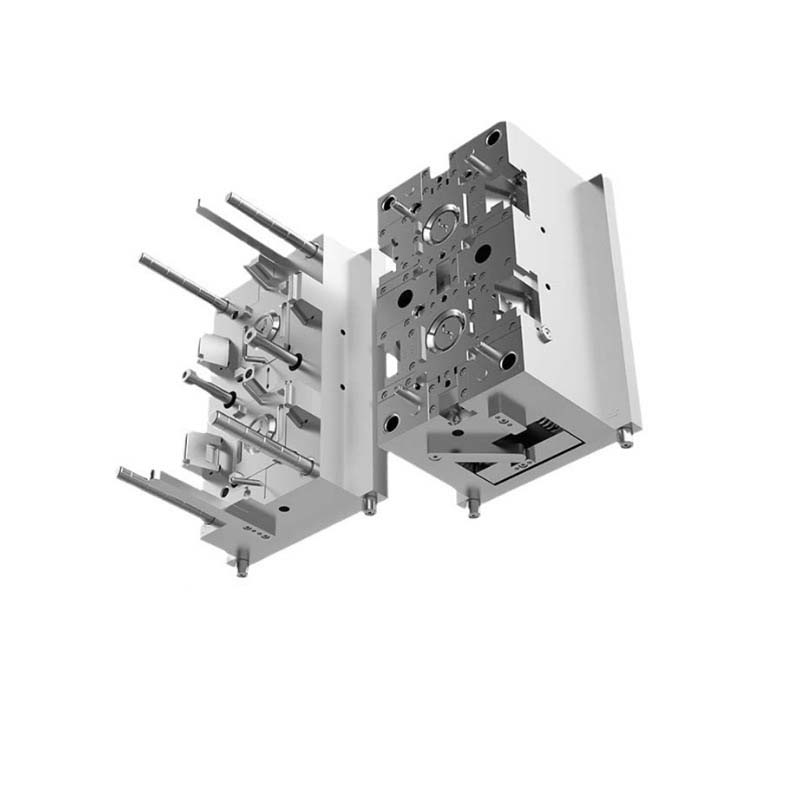
This guide explores what makes Invar unique, its properties, applications, and how to leverage this remarkable alloy for the most demanding precision molding applications.
What Is Invar (Fe-Ni36)?
The “Invariable” Alloy
Invar—short for “invariable”—is a nickel-iron alloy composed of 36% nickel and 64% iron, with trace amounts of cobalt (typically 0.5–1%) to enhance stability. Discovered by Swiss physicist Charles Édouard Guillaume in 1896, it was the first material known to exhibit near-zero thermal expansion.
| Property | Value |
|---|---|
| Composition | 36% Ni, 64% Fe, trace Co |
| Thermal expansion coefficient | ≤1.2 µm/m·°C (-50°C to 100°C) |
| Tensile strength | 450–550 MPa |
| Thermal conductivity | 12 W/m·K |
| Density | 8.05 g/cm³ |
Standard Specifications
Invar complies with:
- ASTM F1684: US standard for nickel-iron alloys with controlled expansion
- ISO 13973: International standard for low-expansion alloys
These standards ensure a thermal expansion coefficient of ≤1.2 µm/m·°C between -50°C and 100°C, guaranteeing consistent performance across manufacturers.
How Invar Compares to Other Mold Materials
| Material | Thermal Expansion (µm/m·°C) | Relative Stability |
|---|---|---|
| Invar (Fe-Ni36) | 1.2 | Baseline |
| Steel | 11–12 | 10× higher expansion |
| Aluminum | 23–24 | 20× higher expansion |
| Stainless steel | 16–18 | 15× higher expansion |
Real numbers: A 100 mm mold component heated from 20°C to 100°C expands by:
- Invar: 0.0096 mm (less than 10 microns)
- Steel: 0.088 mm (almost 10× more)
- Aluminum: 0.2 mm (20× more)
For precision parts with tolerances of ±0.005 mm, steel expansion alone can push parts out of spec. Invar maintains stability.
What Properties Make Invar Unique?
Low Thermal Expansion Coefficient
This is Invar’s defining property. At 1.2 µm/m·°C, its expansion rate is:
- 1/10 that of standard steel
- 1/20 that of aluminum
- Lower than most ceramics and glass
Even when molding temperatures vary by 20–30°C, Invar molds maintain consistent cavity dimensions—essential for optical and microelectronic components where microns matter.
Good Dimensional Stability Over Time
Invar doesn’t just resist thermal expansion. It also resists creep—the gradual dimensional change that occurs in materials under stress over time.
Long-term aging tests show less than 0.0005% dimensional change after 10 years. For molds used in multi-year production runs, this stability prevents gradual drift that would otherwise require mold rework or replacement.
Sufficient Strength for Molding Pressures
With tensile strength of 450–550 MPa, Invar withstands typical molding pressures up to 15,000 psi. While not as strong as tool steel (which can exceed 1,000 MPa), it’s more than adequate for precision applications where dimensional stability is the priority.
Good Corrosion Resistance
Invar resists rust and mild corrosion better than carbon steel, though it’s less resistant than stainless steel. For humid production environments or molds using water-based coolants, a thin nickel or chrome plating (2–5 µm) enhances corrosion resistance without affecting thermal expansion properties.
Low Thermal Conductivity
Invar’s thermal conductivity is 12 W/m·K—significantly lower than:
- Steel: 40–50 W/m·K
- Aluminum: 160–200 W/m·K
This means heat dissipates slowly. Cooling channels must be carefully designed to compensate. However, the trade-off is worthwhile: slower cooling means more uniform temperature distribution and less risk of thermal shock.
Magnetic Properties
Invar is ferromagnetic (magnetic), but its magnetic permeability is low enough for most non-magnetic applications. For fully non-magnetic molds—such as those used in sensitive electronic applications—modified Invar grades with chromium additions are available.
Where Is Invar Used in Mold Making?
Optical Molds
Lenses, prisms, and laser components require tolerances as tight as ±0.0005 mm. Invar molds ensure consistent part geometry regardless of ambient or molding temperatures. This stability prevents optical distortion caused by uneven cooling—critical for high-precision optics.
Real example: A manufacturer of camera lenses for medical endoscopes switched to Invar molds after steel molds produced lens curvature variations with 5°C shop temperature changes. Scrap rates dropped from 12% to under 2%.
Microelectronics Molds
Semiconductor components, sensor housings, and micro-connectors feature features as small as 0.1–1 mm. Invar molds maintain these tiny features across production runs, ensuring proper electrical performance and assembly fit.
Medical Device Molds
Catheter tips, endoscope components, and surgical tools demand dimensional consistency that directly impacts patient safety. Invar molds deliver the repeatability required for FDA-approved manufacturing processes.
Automotive Precision Parts
Fuel injection nozzles, sensor housings, and other precision automotive components require tight tolerances for proper fit and performance. Invar molds ensure these parts meet specifications despite temperature variations in production environments.
High-Precision Prototype Molds
When validating designs with extreme tolerance requirements, Invar prototype molds provide accurate data on part behavior before committing to production tooling. This reduces the risk of expensive revisions later.
How Do You Machine and Fabricate Invar?
Precision Machining
Invar machines similarly to medium-carbon steel but with one critical difference: it work-hardens. Carbide tools with sharp cutting edges are essential. Recommended cutting speeds: 100–150 SFM to minimize heat buildup.
Key practice: Machine to final dimensions in one setup. Work-hardened areas from previous passes make secondary machining difficult.
CNC Milling
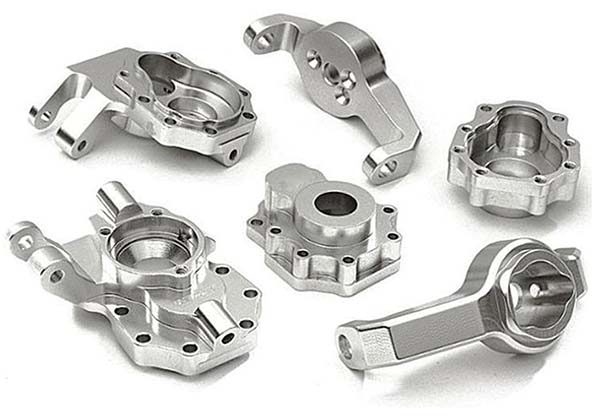
3-axis and 5-axis CNC milling achieve tight tolerances (±0.0001 inches) in Invar, though rigid machine setups are critical to avoid vibration. Coolant is essential to prevent work hardening and maintain dimensional accuracy.
EDM (Electrical Discharge Machining)
EDM is ideal for intricate Invar components. It avoids the heat and pressure of traditional machining that can cause micro-deformations. Wire EDM achieves surface finishes as smooth as Ra 0.05 μm.
Grinding
Invar grinds well with aluminum oxide wheels. Use slower feed rates (10–15 m/min) to prevent overheating. A 600-grit wheel ensures flatness within 0.001 mm/m.
Surface Finishing
Invar polishes to Ra 0.02–0.05 μm with 800–1200 grit sandpaper and diamond pastes. This smooth surface prevents part sticking and ensures easy release in molding.
Machining Challenges
| Challenge | Solution |
|---|---|
| Heat accumulation | Use coolant; maintain sharp tools; moderate speeds |
| Work hardening | Machine in one setup; avoid stopping mid-cut |
| Tool wear | Carbide tools; regular inspection and replacement |
How Do You Maintain and Repair Invar Molds?
Mold Cleaning
Clean Invar surfaces with mild detergents and soft cloths to remove plastic residue. Avoid abrasive cleaners—they can scratch the surface and create stress points that compromise dimensional stability.
Surface Treatment
A thin (2–5 µm) nickel or chrome plating enhances Invar’s wear resistance without significantly affecting thermal expansion properties. Recommended for molds running >100,000 cycles.
Repair Welding
Invar can be TIG welded with matching nickel-iron filler wire. Post-weld heat treatment is critical—anneal at 600–650°C for 1 hour to relieve stresses and restore dimensional stability.
Preventive Maintenance
Inspect Invar molds monthly for signs of wear or deformation. Use laser interferometers to check for dimensional changes as small as 0.0001 mm. Early detection prevents costly part defects.
Inspection
Use coordinate measuring machines (CMM) with ±0.0001 mm accuracy to verify mold dimensions after cleaning or repair. Thermal cycling tests (20°C to 100°C) ensure the mold retains its stability.
Yigu Technology’s Perspective
At Yigu Technology, we recommend Invar (Fe-Ni36) for clients with extreme precision requirements. We’ve used it to produce optical molds with ±0.0005 mm tolerances, where traditional materials failed due to temperature fluctuations.
While Invar’s machining costs are 2–3× higher than steel, its ability to eliminate scrap from dimensional errors justifies the investment. For high-value, low-volume precision parts—optical components, medical devices, microelectronics—Invar isn’t just a choice. It’s a necessity.
Our team uses:
- Precision EDM and grinding for tight tolerances
- Post-machining annealing to ensure stability
- CMM inspection with micron-level accuracy
Conclusion
Invar (Fe-Ni36) is the ultimate material for molds requiring exceptional dimensional stability. Its thermal expansion coefficient of 1.2 µm/m·°C is 10× lower than steel and 20× lower than aluminum—making it indispensable for applications where micron-level precision is required.
Key takeaways:
- Maintains dimensions across temperature fluctuations
- Essential for optical, microelectronics, and medical molds
- Requires specialized machining techniques (carbide tools, EDM, controlled cooling)
- Higher upfront cost justified by eliminated scrap and consistent quality
When tolerances are measured in microns and temperature changes are unavoidable, Invar delivers what no other commercial metal can: true dimensional stability.
FAQ
When is Invar (Fe-Ni36) necessary instead of steel for mold making?
Invar is necessary when part tolerances are ≤±0.001 mm, or when ambient/molding temperatures vary by more than 5°C during production. For less demanding tolerances (±0.005 mm or higher), steel is more cost-effective and easier to machine.
How does Invar’s low thermal conductivity affect mold cooling?
Invar’s thermal conductivity (12 W/m·K) is significantly lower than steel (40–50 W/m·K). This slows cooling, potentially extending cycle times by 10–20%. To compensate, design molds with more cooling channels or use conformal cooling to improve heat transfer without compromising stability.
Can Invar molds be used with abrasive plastics like glass-filled nylon?
Invar has moderate wear resistance—adequate for non-abrasive and lightly filled materials. For highly abrasive plastics (30%+ glass-filled), use Invar for precision-critical areas and carbide inserts for high-wear zones. This hybrid approach balances dimensional stability with durability.
How does Invar compare to steel in terms of cost?
Invar typically costs 2–3× more than tool steel and requires more expensive machining (carbide tools, slower speeds). However, for applications where dimensional stability is critical, the elimination of scrap and rework quickly justifies the premium.
What surface treatments work best for Invar molds?
A thin (2–5 µm) nickel or chrome plating enhances wear and corrosion resistance without affecting thermal expansion properties. For optical molds requiring mirror finishes, polishing alone achieves Ra 0.02–0.05 μm—no plating needed.
Contact Yigu Technology for Custom Manufacturing
At Yigu Technology, we specialize in precision mold manufacturing for the most demanding applications. Our expertise with Invar (Fe-Ni36) enables us to produce molds for optical, medical, and microelectronic components with tolerances as tight as ±0.0005 mm.
We offer:
- Invar mold design and manufacturing
- Precision EDM and grinding
- Post-machining annealing for dimensional stability
- CMM inspection with full documentation
[Contact Yigu Technology today] to discuss your high-precision mold project. Let’s build molds that hold their shape when it matters most.