Introduction
Look at any modern car, and you’re seeing the results of automotive injection molding. From the dashboard you touch to the bumper that protects you in a collision, injection-molded plastic components dominate today’s vehicles.
Why? Because automakers face relentless pressure to reduce weight, improve fuel efficiency, lower costs, and deliver better design—all at the same time. Injection molding delivers on every front. It produces complex shapes with precision, uses materials engineered for specific performance needs, and does it all at scale.
At Yigu Technology, we’ve supplied injection-molded components for everything from electric vehicle battery housings to interior trim pieces. In this guide, we’ll walk through the major applications—inside the cabin, on the exterior, under the hood—and explain why injection molding has become the go-to process for automotive manufacturing.
Why Has Injection Molding Become Standard?
Before diving into specific applications, it helps to understand why injection molding dominates automotive manufacturing.
| Advantage | Impact on Automotive |
|---|---|
| Weight reduction | Plastic parts weigh 30–60% less than metal equivalents, improving fuel efficiency |
| Design freedom | Complex curves, integrated features, and seamless surfaces are achievable |
| Cost efficiency | High-volume production lowers per-part cost significantly |
| Material variety | Different plastics can be tailored for impact resistance, heat tolerance, or aesthetics |
| Corrosion resistance | Plastics don’t rust—critical for exterior and under-hood components |
A typical modern vehicle contains over 300 kg of plastic, with injection-molded parts accounting for the majority. That number continues to grow as automakers pursue electrification and lightweighting.
What Interior Components Rely on Injection Molding?
The cabin is where drivers and passengers interact with the vehicle most. Injection molding shapes the surfaces, structures, and features they touch every day.
Dashboards
Dashboards are among the most complex plastic parts in any vehicle. They combine structural integrity with aesthetic surfaces, all while accommodating airbags, electronics, and HVAC systems.
Materials: Polypropylene (PP) accounts for 30–40% of dashboard material in mass-market vehicles. It offers low cost, good chemical resistance, and light weight. For premium vehicles, ABS provides better impact resistance and surface finish. High-performance cars may use glass-fiber-reinforced plastics (GFRP) , which can increase tensile strength by up to 50% compared to unreinforced materials.
What injection molding enables: Dashboards require precise replication of contoured shapes, recesses for gauges, and mounting points for touchscreens. Injection molding delivers these features in a single part, reducing assembly steps.
Real-world example: A luxury sedan dashboard with an integrated seamless display housing—previously assembled from multiple pieces—can now be molded as a single component with over-molded soft-touch surfaces. This reduces assembly time by 20–30% and eliminates alignment issues.
Door Panels
Door panels must balance weight, durability, and design. Injection molding allows manufacturers to achieve all three.
Weight comparison: A traditional metal door panel in a midsize sedan weighs roughly 10–12 kg. An injection-molded plastic panel weighs 5–7 kg—a reduction of up to 50%.
Design flexibility: Over 80% of new car models now feature door panels with injection-molded designs that incorporate integrated storage compartments, armrests, and speaker grilles. Electric vehicles often add cable routing channels and lightweight structural elements, all molded in.
Integrated features: Instead of assembling separate pieces, injection molding creates one panel with built-in mounting points, clips, and texture. This cuts labor and improves fit consistency.
Seating Components
Seat frames, cushions, and backrests increasingly use injection-molded plastics.
Lightweight frames: Injection-molded plastic seat frames can reduce seat weight by 15–20% compared to traditional metal frames—without sacrificing strength. This matters for both fuel efficiency and vehicle range in EVs.
Comfort engineering: Seat cushions can be molded with multi-density foam structures—firmer base for support, softer top layer for comfort. User surveys show this design reduces driver fatigue during long trips by up to 30%.
Safety integration: Some seat frames incorporate energy-absorbing structures that deform in a controlled manner during collisions. These complex geometries are achievable only through injection molding.
What Exterior Components Use Injection Molding?
Exterior parts face harsh conditions: UV radiation, temperature extremes, road debris, and impact. Injection-molded plastics handle these challenges while enabling aerodynamic designs.
Bumpers
Bumpers are the most visible—and most functional—exterior plastic components. They must absorb impact, maintain appearance, and integrate sensors and lighting.
Impact resistance: Modern bumpers use polypropylene with rubber modifiers. In low-speed collision tests at 15 mph, injection-molded PP bumpers absorb impact without significant damage. A metal bumper of the same weight would dent and require repair.
Weight savings: A typical metal bumper on a midsize SUV weighs 20–25 kg. An injection-molded plastic bumper weighs 8–12 kg—a reduction of up to 60%.
Design evolution: Over 90% of new car models in the past five years feature injection-molded bumpers with integrated fog-light housings, aerodynamic contours, and decorative elements. These features improve aesthetics and reduce drag.
Fenders
Fenders influence both aerodynamics and corrosion resistance.
Aerodynamic impact: Vehicles with injection-molded fenders show a 5–8% reduction in aerodynamic drag compared to stamped-metal fenders. At highway speeds, this translates to a 2–3% improvement in fuel efficiency.
Corrosion resistance: Plastic fenders don’t rust. In regions with road salt or high humidity, injection-molded fenders last 10–15 years without significant degradation. Metal fenders often show rust within 5–7 years.
Integrated features: Off-road vehicles use injection-molded fenders with extra-thick sections and built-in mounting points for mud flaps and accessories—features that would require additional fabrication with metal.
Grilles
Grilles balance aesthetic branding with engine cooling requirements.
Design variety: Over 70% of luxury vehicles use injection-molded grilles with complex patterns—honeycomb, mesh, or horizontal slats—that define brand identity. A sports car grille with a carbon-fiber-look finish is achievable through specialized molding techniques.
Cooling efficiency: Injection-molded grilles can be designed with precisely sized openings that direct air toward the radiator. Thermal management studies show optimized grille designs improve engine cooling efficiency by 15–20%, ensuring consistent operating temperature even under high loads.
What Under-the-Hood Components Are Injection-Molded?
Engine compartments are hostile environments: high temperatures, chemical exposure, and constant vibration. Injection-molded components thrive here.
Air Intake Manifolds
Air intake manifolds deliver air to engine cylinders. Injection molding has largely replaced metal castings in this application.
Flow optimization: Injection-molded manifolds feature smooth internal channels with precisely engineered bends. Research shows they reduce air flow resistance by up to 30% compared to cast-metal manifolds. More air, delivered faster, improves combustion efficiency.
Material: Glass-fiber-reinforced nylon is the standard. It combines strength, heat resistance, and light weight. Major automakers including Ford, Toyota, and Volkswagen have adopted injection-molded air intake manifolds. Ford reported a 5–8% fuel efficiency improvement in some engine models after the switch.
Weight reduction: Plastic manifolds weigh roughly half as much as aluminum equivalents—a meaningful reduction that contributes to overall vehicle efficiency.
Cooling System Components
Radiator end-tanks, coolant pipes, and thermostat housings increasingly use injection-molded plastics.
Corrosion resistance: These components contact coolant containing corrosion inhibitors. Injection-molded polypropylene with additives resists corrosion for 10–15 years under normal operating conditions—outlasting many metal counterparts.
Sealing performance: Injection molding allows integral seals to be molded directly into the part. Studies show injection-molded radiator end-tanks with integrated seals reduce coolant leakage risk by over 80% compared to metal end-tanks with separate gaskets.
Pressure tolerance: Molded coolant pipes withstand internal pressures of 15–20 bar without failure—more than sufficient for modern cooling systems.
Battery Housings (EV-Specific)
As electric vehicles grow, so does the need for lightweight, durable battery enclosures.
Injection-molded battery housings offer several advantages:
- Weight reduction compared to stamped steel or welded aluminum
- Thermal management channels molded directly into the structure
- Electrical insulation inherent to plastic materials
- Complex shapes that optimize space in crowded vehicle platforms
Industry forecasts suggest injection-molded battery housings will grow at 15–20% annually through 2030 as EV production scales.
What Specialized Techniques Add Value?
Standard injection molding does much of the work, but specialized techniques solve specific challenges.
Gas-Assisted Injection Molding
This technique injects nitrogen gas into the molten plastic after a partial fill. The gas pushes plastic to the mold walls, creating hollow sections.
Warpage reduction: For parts with varying wall thickness—like door panels or dashboard supports—gas-assist reduces warping by up to 40% compared to traditional molding. The gas exerts uniform pressure during cooling, preventing uneven shrinkage.
Strength-to-weight improvement: Hollow sections act as internal reinforcements, similar to structural tubes. The result: lighter components with equal or better strength.
Foam Injection Molding
Foaming agents create a cellular structure inside the plastic, reducing density.
Weight reduction: Foam-molded seat cushions can be 20–30% lighter than solid counterparts while providing better shock absorption.
Noise and heat insulation: Foam-molded engine covers reduce interior engine noise by 5–8 dB at idle. The cellular structure also provides thermal insulation, protecting cabin components from engine heat.
How Does Yigu Technology Serve the Automotive Industry?
As a custom supplier of non-standard plastic and metal components, Yigu Technology brings deep experience to automotive injection molding.
Material expertise: We work with a broad range of automotive-grade materials—PP, ABS, nylon, polycarbonate, and engineered blends—selecting the right resin for each application.
Precision capability: Our molds achieve tolerances of ±0.05 mm on critical features, meeting the stringent requirements of automotive interior and exterior applications.
One-stop solution: From mold design to final production, we manage the entire process. This reduces lead times and ensures quality control at every stage.
Case example: An electric vehicle startup needed a lightweight battery housing with integrated cooling channels. We designed and produced an injection-molded enclosure using glass-filled nylon, achieving 30% weight reduction over metal alternatives while meeting all thermal and structural requirements.
Conclusion
Automotive injection molding has transformed vehicle manufacturing. It delivers the weight savings that improve fuel efficiency and EV range. It enables the complex designs that define modern vehicle aesthetics. It provides the material flexibility to meet diverse performance requirements—from impact-absorbing bumpers to heat-resistant engine components.
As vehicles become more electrified and more sophisticated, injection molding’s role will only expand. The ability to integrate multiple functions into single parts, reduce assembly complexity, and tailor material properties makes it indispensable.
For automakers and suppliers, understanding these applications isn’t just technical knowledge—it’s a competitive advantage.
FAQ
What are the most common materials used in automotive injection molding?
The most common materials are ABS, polypropylene (PP) , and polycarbonate (PC). ABS offers high impact resistance and good surface finish for interior components like dashboards. PP provides low cost, chemical resistance, and light weight for bumpers and door panels. PC delivers transparency, heat resistance, and impact strength for headlight lenses and other optical applications. Glass-filled nylons are also widely used for under-hood components requiring high strength and heat tolerance.
How does injection molding ensure the precision of automotive parts?
Precision comes from three factors. First, mold manufacturing uses high-precision CNC machining to achieve tolerances of ±0.05–0.1 mm. Second, process control—modern machines maintain consistent injection pressure, temperature, and cooling time cycle after cycle. Third, automated inspection systems measure critical dimensions on every part or at frequent intervals, rejecting any that fall outside spec.
Can injection molding be used for small-batch production of automotive parts?
Yes, but with economic considerations. The upfront investment in mold tooling can be high—often $20,000 to $100,000 or more. For very small batches (under 1,000 units), alternative processes like 3D printing may be more cost-effective. For batches in the 1,000–10,000 unit range, injection molding becomes competitive, especially if the parts require tight tolerances or specific materials. Some manufacturers use aluminum molds for lower-volume runs to reduce upfront cost.
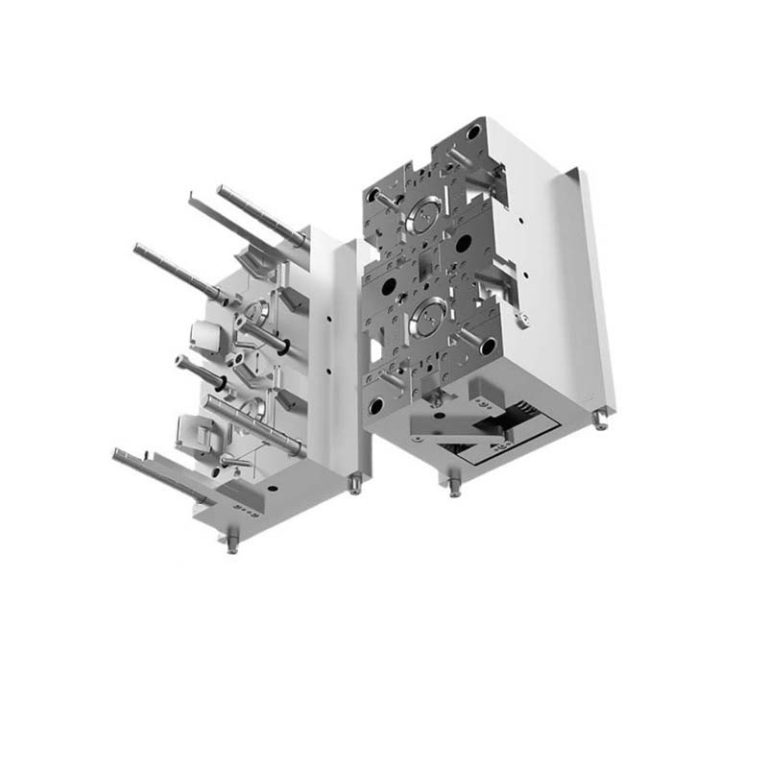
What is the typical lifespan of an automotive injection mold?
A hardened steel mold used for automotive production typically lasts 500,000 to 1 million cycles before requiring major refurbishment. Factors affecting lifespan include the material being molded (abrasive glass-filled materials wear molds faster), the complexity of the part, and maintenance practices. For low-volume applications, aluminum molds may be used; these typically last 10,000 to 50,000 cycles but cost significantly less.
How is injection molding evolving for electric vehicles?
EVs create new demands for injection molding. Battery housings require large, structural components with integrated thermal management. Lightweighting becomes even more critical—every kilogram saved extends range. Wireless charging components demand precision molding of electromagnetic-compatible materials. And as EV platforms vary widely, design flexibility becomes a premium. Injection molding’s ability to produce complex, integrated structures positions it as a key enabler for EV manufacturing.
Contact Yigu Technology for Custom Manufacturing
Need injection-molded automotive components? At Yigu Technology, we combine deep manufacturing expertise with a commitment to quality and precision. We serve the automotive industry with custom solutions—from interior trim to under-hood components—using advanced materials and processes.
Our team works with you from design through production, ensuring your parts meet performance requirements and industry standards. Contact us today to discuss your project and discover how we can help bring it to market.