Introduction
A medical device manufacturer needs a 0.1 mm diameter hole in a titanium implant with ±0.001 mm tolerance. Any error risks patient safety. An aerospace engineer requires a turbine blade with Ra 0.02 μm surface finish to reduce air resistance, but traditional machining cannot achieve that smoothness.
These challenges demand precision advanced machining. This specialized field combines cutting-edge technologies with expert craftsmanship to produce parts with micron-level accuracy, pushing the boundaries of what is possible in manufacturing.
This guide explores precision advanced machining—its fundamentals, technologies, applications, challenges, and quality control. You will learn how this discipline achieves tolerances as tight as ±0.01 μm and surface finishes that enable innovations in aerospace, medical, electronics, and optics.
What Are the Fundamentals of Precision Advanced Machining?
Precision advanced machining goes beyond conventional manufacturing. It focuses on creating parts with high-tolerance machining (often ±0.1 μm or better) and intricate details. At its core is precision engineering—strict control over every aspect of the process, from material selection to tool movement.
| Concept | Description | Capability |
|---|---|---|
| Ultra-precision machining | Tolerances as tight as ±0.01 μm (1/100th the width of a human hair) | Optical lenses, microelectronics |
| Micro machining | Features smaller than 1 mm | 50 μm gears in watches; 10 μm channels in microfluidic devices; tools as small as 0.01 mm; spindles at 100,000+ RPM |
| Machining fundamentals | Accounts for thermal expansion (0.1°C changes alter dimensions); tool deflection (0.1 mm tool bends 5 μm under light forces) | Critical for consistency |
| Tool path programming | Advanced CAM software with sub-micron resolution | Single program for complex optical part: 10,000+ tool paths, each optimized to minimize vibration and tool wear |
A study by the Precision Machining Association found that 80% of failures in high-precision parts stem from inadequate attention to these basics, highlighting the need for specialized expertise.
What Technologies Enable Ultra-Accuracy?
CNC Machines
High-end CNC machines feature linear encoders (0.01 μm resolution) and thermal compensation systems. A 5-axis CNC mill machines complex aerospace components with ±0.5 μm tolerance , adjusting for temperature changes in real time.
Multi-Axis Machining
4- and 5-axis machines eliminate multiple setups, reducing errors. A 5-axis machine machining a turbine blade maintains a constant tool angle, improving surface finish by 30% compared to 3-axis machining.
Electrical Discharge Machining (EDM)
EDM uses controlled sparks to erode material, ideal for hard metals like tungsten (65 HRC). Wire EDM with 0.02 mm diameter wire cuts 0.03 mm slots in medical implants without mechanical stress.
Laser Machining
Femtosecond lasers (pulse durations of 10⁻¹⁵ seconds) ablate material with sub-micron precision. A laser drills 1 μm diameter holes in fuel injectors with 100% consistency across 10,000+ parts—perfect for ceramics and polymers.
Electrochemical Machining (ECM)
ECM uses electrolysis to dissolve material, leaving a stress-free surface. Used for aerospace parts like turbine disks, achieving Ra 0.05 μm finishes without tool wear.
Abrasive Waterjet Cutting
A high-pressure stream (300–900 MPa) of water and abrasives cuts materials from metals to composites. Ideal for heat-sensitive materials like titanium, producing no thermal distortion .
Additive Manufacturing (3D Printing)
Precision 3D printers (stereolithography) produce parts with ±25 μm tolerance , complementing subtractive machining for complex geometries. A medical device company combined 3D printing and CNC machining to create a custom implant with 0.5 mm diameter internal channels .
Where Does Precision Advanced Machining Apply?
| Industry | Applications | Precision Requirements |
|---|---|---|
| Aerospace | Turbine blades, fuel nozzles, structural parts | ±1 μm tolerances; withstand 1,000°C and 10,000 RPM |
| Medical devices | Surgical tools (0.1 mm sharp edges), implants (titanium hip stems with Ra 0.05 μm finishes), micro sensors (50 μm diameter probes) | Biocompatibility, functionality |
| Micro electronics | 10 μm thick connectors, 5 μm wide circuit traces | Smartphone camera image sensors require precision-machined components to focus light accurately |
| Optics and photonics | Lenses, mirrors, prisms | Ra 0.01 μm surface finishes; telescope mirrors focus light from distant galaxies with minimal distortion |
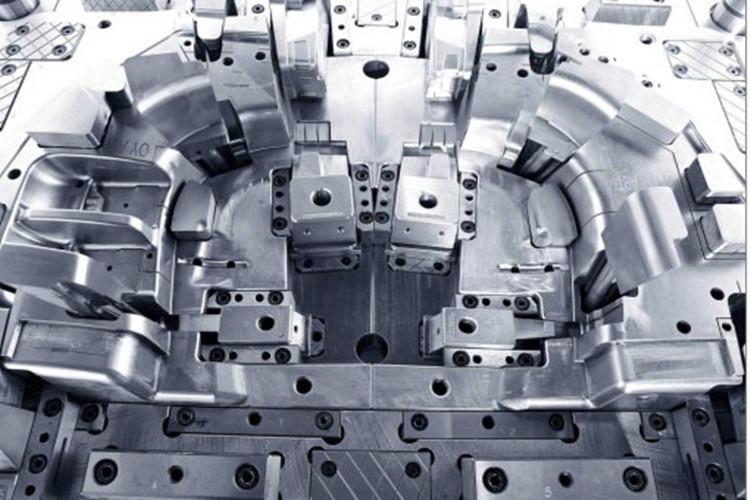
| Mold and die making | Injection molds for plastic parts (smartphone cases) | ±0.5 μm tolerance; reduces post-processing, cutting production time by 20% |
What Challenges Arise and How Are They Solved?
| Challenge | Impact | Solution |
|---|---|---|
| Tool wear and breakage | Micro tools (0.01–0.1 mm) last 1–2 hours on hardened steel | Diamond-coated tools; adaptive machining (adjusting feed rates as tools wear) extends life by 50% |
| Heat generation | Even small amounts distort parts | Cooling systems with ±0.1°C temperature control; cryogenic machining (liquid nitrogen) reduces thermal errors by 70% |
| Surface integrity | High-precision parts require Ra <0.1 μm finishes | Superfinishing or chemical polishing adds 10–15% to production costs |
| Material hardness and brittleness | Ceramics, carbide increase tool wear | Ultrasonic-assisted machining (vibrating tool at 20 kHz) reduces cutting forces by 30%, improving tool life |
| High production costs | 5–10× conventional methods | For critical parts, cost justified by reduced failure rates—from 5% to 0.1% in many cases |
How Is Quality Control Performed?
Inspection Techniques
Coordinate Measuring Machines (CMM) with micro probes (0.1 mm diameter) verify dimensions to ±0.1 μm . A CMM checks 100+ features on a 10 mm × 10 mm part in under 5 minutes.
Surface Roughness Measurement
Profilometers with 0.001 μm resolution ensure finishes meet specs. For optical parts, interferometers detect surface irregularities as small as 0.01 μm .
Non-Destructive Testing (NDT)
| Method | Application |
|---|---|
| Ultrasonic testing | Detect internal flaws |
| X-ray imaging | Detect internal flaws |
| Laser scanning | Check subsurface defects |
A medical implant manufacturer uses NDT to ensure 100% defect-free parts .
In-Process Monitoring
Sensors track cutting forces, vibration, and temperature, adjusting machine parameters in real time. A CNC mill with in-process monitoring reduces scrap rates by 40% compared to manual inspection.
Regulatory Compliance
| Industry | Standard | Requirements |
|---|---|---|
| Aerospace | AS9100 | Material certificates, inspection reports, process validation data |
| Medical devices | ISO 13485 | Strict documentation, traceability |
What Do Real-World Examples Demonstrate?
Aerospace Turbine Blade
A jet engine turbine blade machined with 5-axis CNC and EDM achieves:
- Tolerances: ±1 μm
- Surface finish: Ra 0.02 μm
- Performance: Withstands 1,000°C and 10,000 RPM
- Result: Reduced air resistance, improved fuel efficiency
Medical Implant
A titanium hip stem machined with precision turning and ECM achieves:
- Surface finish: Ra 0.05 μm
- Biocompatibility: Enhanced osseointegration
- Result: Improved patient outcomes, reduced revision surgeries
Micro Electronics Connector
A smartphone camera connector machined with laser machining achieves:
- Feature size: 10 μm thick
- Circuit traces: 5 μm wide
- Result: Precise light focusing for high-quality images
Conclusion
Precision advanced machining achieves what conventional manufacturing cannot. Ultra-precision machining delivers tolerances as tight as ±0.01 μm —1/100th the width of a human hair. Micro machining creates features smaller than 1 mm with tools as small as 0.01 mm and spindles at 100,000+ RPM.
Technologies enable this accuracy. 5-axis CNC machines with 0.01 μm resolution encoders machine aerospace components with ±0.5 μm tolerance. Wire EDM with 0.02 mm wire cuts 0.03 mm slots in medical implants without mechanical stress. Femtosecond lasers drill 1 μm diameter holes with 100% consistency. ECM achieves Ra 0.05 μm finishes without tool wear.
Applications span critical industries. Aerospace turbine blades withstand 1,000°C and 10,000 RPM. Medical implants achieve Ra 0.05 μm finishes for biocompatibility. Micro electronics create 10 μm thick connectors. Optics achieve Ra 0.01 μm surface finishes for telescope mirrors.
Challenges are addressed with specialized solutions. Diamond-coated tools and adaptive machining extend micro tool life by 50%. Cryogenic machining reduces thermal errors by 70%. Ultrasonic-assisted machining reduces cutting forces by 30%. Quality control with CMM (0.1 μm resolution), interferometers (0.01 μm detection), and in-process monitoring reduces scrap rates by 40%.
For critical applications where failure is not an option, precision advanced machining delivers the accuracy, surface finish, and reliability that conventional methods cannot match.
FAQ
What is the smallest tolerance achievable with precision advanced machining?
Ultra-precision machining achieves tolerances as tight as ±0.01 μm for small parts (under 10 mm). Larger components (100+ mm) typically hold ±0.5 μm . These tolerances are 10–100× tighter than conventional machining (±0.01–0.1 mm).
How long does it take to machine a high-precision part?
Cycle times vary by complexity. A simple micro hole (0.1 mm diameter) takes 1–2 minutes . A complex 5-axis aerospace part takes 1–2 hours . Small batches (1–100 parts) are standard, as high precision limits production speed.
What materials are most challenging to machine with precision?
Hard, brittle materials like ceramics, carbide, and titanium alloys are toughest, requiring specialized tools (diamond or CBN) and slow feed rates. Heat-sensitive materials (like polymers) also pose challenges, often requiring cryogenic or laser machining to prevent thermal distortion.
What is the difference between precision machining and ultra-precision machining?
Precision machining typically achieves tolerances of ±0.1–1 μm . Ultra-precision machining targets tolerances of ±0.01–0.1 μm (1/100th the width of a human hair). Ultra-precision is used for optical lenses, microelectronics, and components where even minor deviations affect performance.
How does in-process monitoring improve quality?
Sensors track cutting forces, vibration, and temperature in real time. Machine parameters adjust automatically to maintain optimal conditions. A CNC mill with in-process monitoring reduces scrap rates by 40% compared to manual inspection by catching deviations before they produce defective parts.
Contact Yigu Technology for Custom Manufacturing
At Yigu Technology, we specialize in precision advanced machining for industries demanding the highest accuracy. Our facility features 5-axis CNC machines, EDM systems, laser machining centers, and ultra-precision turning capabilities. We achieve tolerances as tight as ±0.5 μm and surface finishes as low as Ra 0.02 μm .
Our quality control includes CMM inspection (0.1 μm resolution), profilometer measurement, and in-process monitoring. We serve aerospace, medical, electronics, and optics industries with components that meet the most stringent standards.
Contact us today to discuss your precision advanced machining project. Let our expertise help you achieve the accuracy, surface finish, and reliability your application demands.