Introduction
You need a prototype that behaves like the final product—same material, same strength, same precision. 3D printing gives you form. CNC machining gives you function. Rapid prototype machined parts are components produced through machining processes during the rapid prototyping stage. They are made with high precision using advanced CNC (Computer Numerical Control) techniques, delivering production-grade materials and tight tolerances. From automotive engine components to aerospace brackets and medical implants, machined prototypes enable functional testing before mass production. At Yigu Technology, we produce these parts daily. This article covers what you need to know: applications, materials, processes, and how they compare to other prototyping methods.
What Are Rapid Prototype Machined Parts?
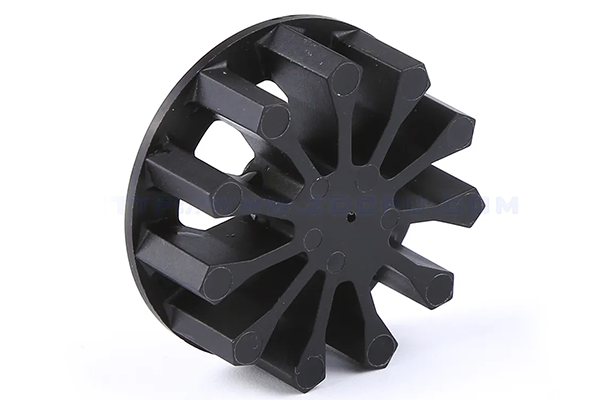
Rapid prototype machined parts are physical components created through machining processes during the rapid prototyping stage—using CNC milling, turning, and other subtractive techniques to produce high-precision models from solid materials.
Unlike additive methods that build layer by layer, machining starts with a solid block of production-grade material (metal or plastic) and removes material to achieve the desired shape. The result is a prototype with:
- Production-grade material properties: Same strength, density, and behavior as final parts
- Tight tolerances: As precise as ±0.001 inches (±0.025 mm)
- Excellent surface finish: Suitable for functional testing and assembly
Where Are They Applied?
Automotive Industry
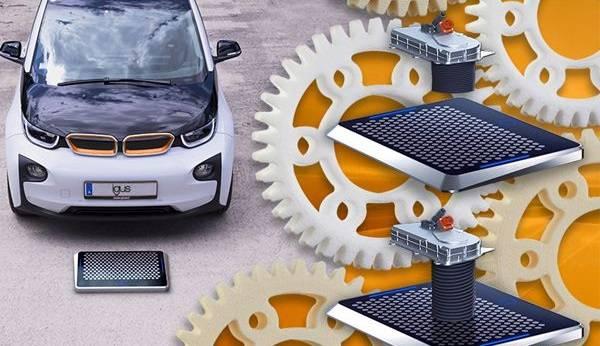
Rapid prototype machined parts are essential for developing new vehicle models.
Applications:
- Engine components (cylinder heads, intake manifolds)
- Transmission parts, brackets
- Structural components
Impact: A leading automotive research firm found that using rapid prototype machined parts can reduce development time for a new car model by up to 30%.
Example: An automotive manufacturer creates a prototype cylinder head to test functionality and performance before investing in production tooling.
Aerospace Industry
Aerospace demands the highest precision and material integrity.
Applications:
- Turbine blades, aircraft brackets
- Structural components, engine parts
- Tooling and fixtures
Impact: According to the Aerospace Industries Association, about 80% of new aircraft components go through a rapid prototyping stage.
Example: A turbine blade prototype must meet strict material strength and aerodynamic performance standards before production.
Medical Device Manufacturing
Medical devices require precision, biocompatibility, and reliability.
Applications:
- Surgical instruments
- Prosthetics, implants
- Diagnostic equipment housings
Example: A new knee implant prototype is machined to test fit, functionality, and mechanical stress resistance before clinical trials.
Consumer Electronics
Plastic machined prototypes are popular for weight reduction and aesthetics.
Applications:
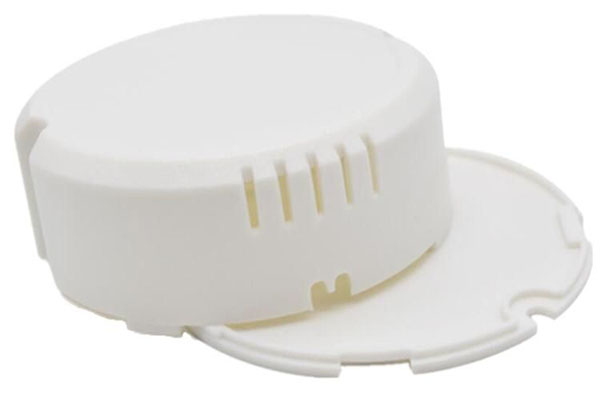
- Smartphone casings, laptop enclosures
- Wearable device housings
- Electronic components
What Materials Are Used?
Plastic Rapid Prototype Machined Parts
| Material | Properties | Applications |
|---|---|---|
| ABS | Good mechanical properties, easy to machine, low cost, withstands up to 90°C | General-purpose prototypes, toy industry |
| Polycarbonate (PC) | High impact resistance, optical clarity, heat-deflection temperature 130–140°C | Lenses, transparent enclosures, high-impact parts |
| POM (Delrin) | Excellent dimensional stability, low friction, wear resistance | Gears, bushings, moving parts |
| Nylon | Tough, flexible, good wear resistance | Mechanical components, functional prototypes |
Metal Rapid Prototype Machined Parts
| Material | Properties | Applications |
|---|---|---|
| Aluminum | Lightweight, high strength-to-weight ratio, good machinability, melting point ~660°C | Aerospace structural components, automotive parts, heat sinks |
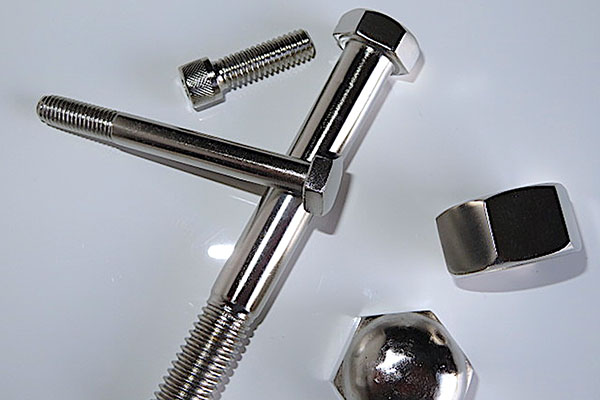
| Stainless Steel (304, 316) | High corrosion resistance, strength, durability | Medical devices, food-processing equipment, marine applications |
| Titanium | Exceptional strength-to-weight, biocompatibility, corrosion resistance | Aerospace, medical implants, high-performance applications |
What Is the Process for Creating Machined Prototypes?
Step 1: CAD Design
The process begins with Computer-Aided Design (CAD). Designers create a precise 3D model of the part—the blueprint for manufacturing.
Key activities:
- Define shape, dimensions, and intricate details
- Perform simulations to check for design flaws (stress points, interference)
- Over 90% of design engineers use CAD for initial product design
Example: In designing a new robotic arm, CAD precisely defines each component’s geometry and tolerances.
Step 2: CAM Programming
The CAD model is translated into machine instructions through Computer-Aided Manufacturing (CAM) programming.
Key activities:
- Analyze CAD model to generate toolpaths
- Determine cutting speed, feed rate, depth of cut
- Calculate efficient paths for complex curves
Impact: CAM programming significantly affects surface finish and dimensional accuracy of the final part.
Step 3: Machining
The actual machining takes place using CNC machines—milling machines, lathes, or EDM (Electrical Discharge Machining).
| Machine | Process | Best For |
|---|---|---|
| CNC milling | Rotating cutter removes material | Plastic and metal parts with complex contours, pockets, flat surfaces |
| CNC lathe | Workpiece rotates; stationary cutter shapes | Cylindrical parts, shafts, discs |
| EDM | Electrical sparks erode material | Hard metals, intricate cavities, tight tolerances |
Precision: Modern CNC machines achieve tolerances as low as ±0.001 inches (±0.025 mm) .
Step 4: Post-Processing
After machining, post-processing improves appearance, functionality, and durability.
| Process | Purpose |
|---|---|
| Sanding | Smooth surface; remove rough edges, tool marks |
| Polishing | Enhance appearance, surface finish for aesthetics |
| Coating | Apply corrosion-resistant, protective, or functional coatings |
How Do Machined Prototypes Compare to Other Methods?
| Factor | Rapid Prototype Machining | 3D Printing | Hand-Made Prototyping |
|---|---|---|---|
| Cost | Medium–high; cost-effective for mid-to-high volumes | Low–medium for small, simple parts; high for large/complex | Low equipment cost; high labor cost |
| Precision | High—tolerances to ±0.001 inches | Medium–high; depends on technology; post-processing often needed | Low–medium; limited by human skill |
| Speed | Medium; depends on complexity; faster than 3D printing for larger parts | Slow for large/complex parts; fast for small/simple | Slow, especially for complex designs |
| Design complexity | Good for complex parts; very intricate internal geometries challenging | Excellent for highly complex, organic designs, internal lattice structures | Limited; difficult to create precise, complex shapes |
When to choose machining:
- Functional testing with production-grade materials
- Tight tolerances required
- Metal prototypes
- Multiple prototypes (mid-to-high volumes)
When to choose 3D printing:
- Complex organic geometries
- Very low volumes (1–10 units)
- Rapid iteration on form and fit
Yigu Technology's Perspective
As a custom manufacturer of non-standard plastic and metal products, Yigu Technology specializes in rapid prototype machined parts.
What we offer:
- State-of-the-art CNC equipment: High-precision milling, turning, and EDM
- Wide material selection: Plastics (ABS, PC, POM, nylon) and metals (aluminum, stainless steel, titanium)
- Design for manufacturability (DFM): Optimize designs for efficient machining
- Quick turnaround: Prototypes in days, not weeks
- Post-processing: Sanding, polishing, coating
Our advantage: We understand that speed is critical in product development. We deliver rapid prototype machined parts in the shortest possible time without compromising quality.
Conclusion
Rapid prototype machined parts are essential for functional testing and design validation across industries.
Key takeaways:
- Applications: Automotive (engine components), aerospace (turbine blades, brackets), medical (implants, surgical instruments), consumer electronics (housings)
- Materials: Plastics (ABS, PC, POM, nylon) and metals (aluminum, stainless steel, titanium)
- Process: CAD design → CAM programming → CNC machining → post-processing
- Precision: Tolerances as low as ±0.001 inches (±0.025 mm)
- Comparison: Machining offers higher precision and production-grade materials than 3D printing; cost-effective for mid-to-high volumes
When to choose machining:
- Functional testing with real materials
- Tight tolerances
- Metal parts
- Medium to high volumes
By understanding the applications, materials, process, and comparative advantages, you can select the right approach for your prototype needs—accelerating development and reducing risk.
Frequently Asked Questions
What materials can be used for rapid prototype machined parts?
Plastics: ABS (general-purpose, cost-effective), polycarbonate (impact-resistant, transparent), POM (dimensional stability, low friction), nylon (tough, flexible). Metals: aluminum (lightweight, high strength-to-weight), stainless steel (corrosion-resistant), titanium (biocompatible, high strength). Choice depends on weight, strength, heat resistance, and cost requirements.
How accurate are rapid prototype machined parts?
Accuracy can reach tolerances as low as ±0.001 inches (±0.025 mm) . Factors affecting accuracy: machining equipment, part complexity, operator skill. High-end CNC machines with advanced control systems offer the best accuracy.
What is the typical lead time for producing rapid prototype machined parts?
Simple parts: 3–5 days. Complex parts with multiple operations and tight tolerances: 1–2 weeks. Factors include design complexity, material availability, and facility workload.
How do machined prototypes compare to 3D printed prototypes?
Machining offers higher precision (±0.001 inches vs. ±0.1–0.5 mm for 3D printing), production-grade material properties, and better surface finish. 3D printing offers lower cost for very low volumes and excels at complex organic geometries. Choose machining for functional testing, tight tolerances, and metal parts; choose 3D printing for rapid iteration on form and complex geometries.
When should I use rapid prototype machining instead of 3D printing?
Use machining when you need: functional testing with production-grade materials, tight tolerances (assembly-critical parts), metal prototypes, or multiple prototypes (mid-to-high volumes). Use 3D printing for early concept models, complex organic shapes, or very low volumes (1–10 units).
Contact Yigu Technology for Custom Manufacturing
At Yigu Technology, we specialize in rapid prototype machined parts and custom manufacturing. Our capabilities include CNC milling, turning, EDM, and post-processing. We serve aerospace, automotive, medical, and consumer goods industries.
If you need functional, high-precision prototypes for testing or validation, contact our engineering team. Let us help you turn designs into reality—with precision, quality, and speed.